An IRGC general has accused some among the public of “aiding the Americans” against the Islamic government, as Tehran faces mounting economic challenges and deals with its recent setbacks in the region.
"In the current situation, the Americans will likely attempt to amplify certain internal issues,” General Mojtaba Fada said on Thursday, referring to a host of domestic problems, chief among them the deteriorating economy.
Iran’s currency, the rial, has fallen by more than 30% since August and with cold weather arriving, the government has been unable to provide electricity on regular basis. The dollar has risen from 600,000 rials to around 800,000, while the British pound has surpassed one million rials. In power supply, current estimates point to a 30% daily deficit, which results in rolling blackouts, idling many industries.
“The issue of energy imbalances is not exclusive to the current administration; it has also existed during Mr. Raisi’s government and previous administrations. Therefore, some individuals within the country should avoid signaling to the Americans through their analyses,” Fada said, referring to a wave of criticism on social media. Even the state-controlled print media has become more outspoken about the closure of hundreds of factories and rising cost of living.
Iran relies heavily on imports for wheat, rice, and other essential goods. As the rial continues to depreciate against major currencies, the cost of imports has risen sharply, placing a greater burden on ordinary citizens. The monthly salaries of workers, when calculated in US dollars, have fallen from $200 last summer to approximately $130 this winter.
Iranian social media reflects a growing sense of crisis in the country and possible political unrest, as the Islamic government is seen defeated in the broader region and weakened at home.
General Fada told his audience on Thursday, “All citizens and officials have a duty to defend the Islamic government in the current situation. We have stood firm for 45 years for the Islamic Revolution of Iran, and we must continue to endure hardships, tolerate criticism, and bear the pain for its sake.”
Iran carried out 883 executions in 2024, marking a significant annual increase and representing the highest number in a decade, US-based rights group HRANA said on Thursday.
Among those executed, 772 were male, 26 were female and 5 were juvenile offenders at the time of their alleged crimes. Just over half of the executions were allegedly related to drug-related charges followed by murder charges at around 40%.
The report said that 94% of these executions were carried out in secrecy and without public notice. Additionally, the issuance of death sentences rose by a third compared to the previous year.
Last year Iran executed 853 people according to rights group Amnesty International.
Iran, Hamas and Hezbollah have condemned Israel's Thursday airstrikes on Houthi targets in Yemen, marking a united stance against the attacks.
Iran’s foreign ministry spokesman, Esmaeil Baghaei, described the strikes as a "clear violation of international peace and security."
Hamas echoed this condemnation, calling the Israeli airstrikes a "brutal terrorist aggression" targeting civilian sites, including Sanaa Airport and the port of Hodeida.
Hezbollah said the attacks were carried out in coordination with British and American forces and aimed at civilian and economic sites.
The group called it "a blatant violation of international law and a continuation of the enemy's wars against the peoples of the region," according to Al Mayadeen.
Iran's ex-President Mohammad Khatami warned Tehran may collapse or be toppled without urgent reforms, joining other Reformist figures who have sounded the alarm in recent days about popular anger over the ailing economy.
Their calls come as costs of living mount and the country faces huge external pressure in the form of military setbacks and renewed sanctions under Donald Trump.
Referring to a 15-point action plan for greater social and economic freedoms, Khatami warned on Thursday that “Iran is in a critical situation“.
Adopting the plan would ensure "the country does not fall into chaos and conflict, to prevent, in my view, an overthrow, while also avoiding self-overthrow," Khatami said.
The former president from 1997 to 2005, rarely comments so stridently on vital policy matters and is out of favor with Supreme Leader Ali Khamenei - the ultimate decider of foreign and domestic policy.
"If no action is taken to improve people’s lives and strengthen hope for change, we will all suffer,” he added.
Khatami and other Reformists have often been caught between the need for change and the constraints imposed by Iran’s conservative political structure.
Their history of seeking to improve the system only for the Islamic Republic to resort to harsher crackdowns and fail to deliver on promises has stoked criticism.
Khatami, who has long been a de facto leader for Iran’s Reformist camp, also called for a return to the ideals of the 1979 revolution, including republicanism, which he argued had been sidelined by the current political order.
“If we have deviated from this goal, what peaceful and fair measures can be taken to bring all—parties, factions, society, and governance—back to republicanism?” he said.
His remarks reflect an ongoing struggle within Iran’s political elite: how to balance the need for reform with the preservation of the Islamic Republic’s fundamental structure, which has been increasingly threatened by internal and external challenges.
Hassan Khomeini and the struggle for hope
Hassan Khomeini, the grandson of the founder of the Islamic Republic, weighed in on the depressed mood in Iran, expressing concern about the erosion of popular hope.
“The enemies have targeted the people’s hope,” he said in a Thursday speech. “If they kill our hope, we are dead; every nation lives through hope.”
Khomeini has emerged as another figure in the Reformist camp, though he has carefully avoided directly criticizing Khamenei’s policies.
Hassan Khomeini, grandson of the founder of the Islamic Republic Ruhollah Khomeini
“Despair is the plague of human activity ... even in difficult situations, people of faith must not fall into despair,” Khomeini’s said.
Azar Mansouri, another prominent Reformist and head of the Islamic Iran Participation Front, also weighed in on the troubled state of the nation, urging national unity.
Speaking at the party’s 10th Congress, Mansouri called for prudence in the face of Iran’s increasing regional and international isolation, particularly with the second act for a Trump administration that has promised a renewed policy of maximum pressure.
“In the current situation, where regional problems for Iran have increased on one hand, and on the other, someone with a history of anti-Iranian policies and maximum pressure is sitting in the US presidency, it is crucial to understand these increasingly complex and challenging conditions,” Mansouri said.
“A strong and dignified presence on the international stage requires the government to have the solid backing of public satisfaction and support,” Mansouri added.
Her call contrasts with the reality of dwindling voter turnout and increasing disillusionment with the political system.
In the 2017, 2021, 2024 elections, voter turnout plummeted, with the 2024 presidential election seeing one of the lowest turnouts in the history of the Islamic Republic. The sense of disengagement from the electorate is palpable, and many Reformists like Mansouri have failed to confront the root causes of the apathy.
As Iran teeters on the edge of deeper political and economic turmoil, the reformists’ calls for change are framed within a difficult paradox: they are both critics and, detractors would argue, enablers of the system they now warn is endangered.
While figures like Khatami, Khomeini and Mansouri continue to push for reform, they are part of a system that has shown little interest in the transformation they advocate.
Reformists and their history of saving the system
While the Reformists are now sounding alarms about Iran’s future, they have historically played a key role in stabilizing the Islamic Republic amid crises.
Khatami’s own presidency was marked by a push for political freedoms and better relations with the West. However, the real turning point came in the post-2009 period, when the Reformists once again rallied behind the system to prevent it from falling.
In 2013, they threw their support behind Hassan Rouhani in the presidential election, hoping he would bring economic relief and mend ties abroad.
Yet after Rouhani’s election, Iran saw little of the promised change. The nuclear deal, which was heralded as a diplomatic breakthrough, quickly unraveled after Trump pulled out.
Under Rouhani, Iran also faced the worst economic crisis in decades, fueled by US sanctions. The Reformists, instead of challenging the system’s hardline approach, largely supported policies that allowed the establishment to remain in power.
This culminated in the suppression of multiple waves of protest, such as in November 2019, when hundreds were killed by security forces during demonstrations against rising fuel prices.
Iran is currently grappling with an intense economic crisis, as the value of the US dollar has surged past 800,000 rials, exacerbating inflation and eroding the purchasing power of ordinary citizens.
The country is facing severe energy shortages, with power outages and gas supply cuts becoming more frequent, leading to the disruption of business and daily life.
Pollution levels are escalating, intensifying the already dire health challenges.
Meanwhile, skyrocketing prices for basic goods, including food and medicine, are placing immense pressure on households, pushing many to the brink of poverty.
The sons of a former high-ranking Iranian judiciary official have been sentenced to a combined total of over 25 years in prison for their involvement in a financial corruption case.
Amir-Hossein Mosaddegh was sentenced to 17 years and 9 months in prison and fined 8.25 trillion rials (about $10,000) for illegal influence peddling and participation in bribery.
His brother, Mohammad-Sadegh Mosaddegh, received an eight-year prison sentence for abuse of office and involvement in eight counts of money laundering.
Their father Mohammad Mosaddegh Kahanmouei, the former first deputy of the Judiciary, resigned in March, several months after a Telegram channel revealed that his two sons were arrested for massive corruption and money laundering.
Apart from Mosaddegh’s sons, the case involves twenty-one other suspects.
The indictment revealed details of the case, including allegations related to the transfer of the "Shohaday-e Gheytarieh" sports complex to a prominent Tehran constructor.
The sons of the former first deputy allegedly held a 20 percent stake in the deal, equivalent to 1.4 trillion rials, approximately $1.75 million at today’s rates.
Another charge against the brothers involved exerting influence in the case of Mohammad Rostami Safa, a known bank debtor, resulting in their acquisition of 2 trillion rials (about $2.5 million).
The Rostami Safa Group, managed by Mohammad Rostami Safa, has a history of accusations, by the Judiciary itself, of receiving substantial loans since 2003 and failing to repay them.
It is not the first time a judiciary official has been caught up in a corruption scandal. In a similar case, another senior judiciary official, Akbar Tabari, was arrested in 2019 for leading a bribery network and personally accepting multiple bribes. He was sentenced to 31 years in prison.
However, Iran ranks 149 out of 180 countries in the 2023 Corruption Perceptions Index (CPI) by Transparency International, scoring 24 out of 100.
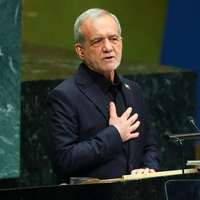
Iranian President Masoud Pezeshkian called for regional and global peace as the country's armed allies around the region continue to weaken.
“We desire friendly relations with the countries of the region and the world, and we are striving to establish peace and security both inside and outside the country,” he said on Thursday during his trip to North Khorasan province.
In a possible bid to publicly align with Khamenei's decades-long policy of arming militias around the region and accelerating the country's nuclear program, he added that Iran's actions were a matter of self-defense.
“We do not intend to invade other countries' territories, nor will we allow anyone to encroach upon our borders or rights. Preserving the integrity of the country is a fundamental principle for us, but at the same time, our focus is on peace and security," he said.
Iran's militias such as Hezbollah in Lebanon and Hamas in Gaza have in recent months suffered huge blows.
Pezeshkian's comments also follow statements in recent days from the new Sunni Islamist leaders of Syria, who have warned Iran to stay out of the country's internal affairs since the fall of President Bashar al-Assad.
Iran had been a heavy presence in the country since 2011, with military bases and personnel across Syria.
Pezeshkian’s call for diplomacy stands in contrast to the Supreme Leader’s persistent rejection of normalization with the West and Israel, suggesting that Iran’s pursuit of peace may remain contingent upon maintaining its ideological and geopolitical conflicts.
President Masoud Pezeshkian (right) sitting next to Supreme Leader Ali Khamenei (left) during a ceremony in Tehran.
In his speech, Pezeshkian also addressed critical domestic issues, acknowledging the impact of mismanagement on the country’s energy crisis.
“Today, we have the largest oil and gas reserves, but consuming three or four times more than Europe has caused us a crisis,” he said, before promising to address the inefficiencies that have led to power and gas shortages.
The government's long-standing narrative, which blames the energy crisis on the people's excessive consumption, has become increasingly ineffective in the face of rising public frustration.
Calls on citizens to conserve energy have become a familiar refrain, yet many Iranians are growing skeptical of these appeals, viewing them as a justification for government inaction rather than a genuine solution.
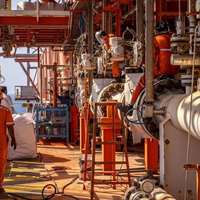
Iran's energy crisis has deepened in this year, marked by frequent power outages and gas shortages. The country, which holds some of the largest reserves of oil and natural gas in the world, has struggled with inefficient energy consumption, outdated infrastructure, and mismanagement.