Iran plans nationwide blackouts as winter energy crisis deepens
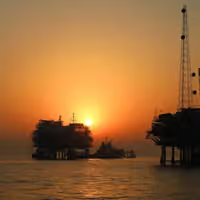
A power plant burning Mazut in Iran
Tehran media carried headlines on Saturday that Iran is set to announce a nationwide blackout schedule, with power cuts planned from 9 a.m. to 5 p.m. starting Sunday, due to fuel shortages.
As winter nears, Iran faces an escalating energy crisis that has forced the government into tough decisions. After enduring summer blackouts from surging electricity demand, Iran now faces a natural gas shortage that could disrupt winter power supplies. With dwindling options, the administration has outlined a controversial plan to either impose blackouts or turn to mazut, a high-pollution fuel source that risks further air pollution.
The government issued a directive on November 3 to halt mazut burning at major plants in Arak, Karaj, and Isfahan, hoping to reduce health hazards in densely populated areas. Yet, with mazut still being used in other parts of the country, concerns persist about air quality and its impact on public health.
Economic pressures on Iran’s industry
The energy shortages have placed Iran’s industrial sector under strain, as frequent blackouts disrupt production and increase costs. In August, the government diverted electricity from industrial clients to meet household needs, causing substantial losses in sectors such as automotive and cement manufacturing. According to Saber Parnian, head of the Industry, Mining, and Trade Organization in West Azarbaijan, frequent power cuts have doubled production costs for cement, while MP Mansour Alimardani described the blackouts as devastating for job stability and business operations.
With cold weather driving up household energy demands, Iranian industries are again feeling the pinch. Gas restrictions this year began earlier than usual, leaving sectors like cement production struggling to maintain output as costs rise.
Environmental and health costs of mazut use
Reliance on mazut has raised alarm among environmental and health experts, given its high levels of sulfur, which are well above global standards for fuel oils. Environmental expert Masoud Tajrishi highlighted the risks in an interview with Rouydad24 website, adding that “Mazut retains hazardous elements from crude oil. When burned, it increases particulate matter, leading to respiratory problems and severe health risks.”
Although Iran’s ministry of energy has expressed concerns over mazut’s environmental effects, it faces limited options as gas supplies continue to fall short of demand.
The air pollution in the Iranian capital Tehran have reached high levels and is considered unhealthy for everyone. (December 2023)
Reliance on Turkmen gas imports
Iran’s reliance on natural gas imports from Turkmenistan to support its northern regions has exacerbated the crisis. An unresolved debt dispute has blocked Turkmenistan from resuming gas exports, leading to fears that residents in northern provinces could be left without sufficient heating this winter.
During a recent cabinet meeting, President Pezeshkian acknowledged the financial hurdles in negotiating with Turkmenistan, noting that payment issues have hampered gas imports in previous winters as well.
Systemic failures and calls for reform
Energy analysts argue that Iran’s crisis stems from years of underinvestment and resource mismanagement. Energy expert Narsi Ghorban estimates that Iran’s infrastructure requires a $250 billion overhaul to meet its energy needs.
“Yet no progress has been made on this front,” Ghorban added, indicating little confidence in swift reforms.
Hashem Oraei, a university professor, in an interview with Aftab News warned that the energy sector’s challenges could leave Iran facing blackouts reminiscent of those in Cuba if solutions are not found.
"Nationwide blackouts like in Cuba and a return to the era of waiting in line for oil and burning wood are not just predictions but something inevitable," he said.
Air Pollution in Tehran
Tajrishi also stressed the need for systemic reforms, citing the Clean Air Act, which requires upgrades to energy systems to reduce consumption, particularly in regions at the end of the gas network. “Reducing household energy use by even 15% could stabilize supplies and lessen the need for mazut,” he said.
With planned blackouts set to begin, Iran’s energy crisis highlights a need for reform. Pezeshkian’s administration now faces mounting pressure to balance energy access with health and environmental concerns as winter approaches.