Iran officials react to Haniyeh killing, revealing security gaps

Iranian officials condemned the Wednesday assassination of Hamas leader Ismail Haniyeh in Tehran, blaming Israel and vowing "retribution," while downplaying security lapses.
Iranian officials condemned the Wednesday assassination of Hamas leader Ismail Haniyeh in Tehran, blaming Israel and vowing "retribution," while downplaying security lapses.
Following the Palestinian leader’s death, Iran’s Supreme Leader Ali Khamenei stated, "The criminal and terrorist Zionist regime, with this action, has paved the way for severe punishment for itself. We consider it our duty to seek justice for him, who was martyred within the territory of the Islamic Republic of Iran."
The Islamic Revolutionary Guard Corps (IRGC) issued a statement blaming “the Zionist regime” for the attack. They declared that this "crime" would be met with a "harsh and painful response" from the Resistance Front, particularly from Iran.
Early indications suggest that Haniyeh and his bodyguard died when a rocket or drone struck the residence where they were staying, raising the possibility of Israeli infiltration. This has inevitably turned attention towards Israel, which had vowed to hunt down and punish all Hamas leaders following the brutal attacks of October 7, resulting in the deaths of approximately 1,200 Israelis and foreigners.
Israel typically refrains from commenting on its operations abroad. However, this attack might mirror the pattern of multiple Israeli operations, the latest being targeting Iranian air defenses around its nuclear facility in Natanz on April 19.
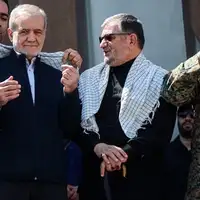
Observers assert that this incident exposes significant vulnerabilities within the Islamic Republic's security apparatus. The assassination occurred on a day designated for heightened security measures due to the inauguration of President Masoud Pezeshkian which took place the day before, underscoring a severe breach. Pezeshkian vowed that the Islamic Republic would defend its territorial “integrity, dignity, honor, and pride,” promising to make the "terrorist occupiers" regret their actions. "Yesterday, I raised his victorious hand, and today, I have to carry him on my shoulders for his funeral," Pezeshkian added.
Members of Iran’s Parliament, in their denunciation of the assassination, emphasized that “the Zionist regime is increasingly mired in the depths of its demise with each passing day,” repeating typical rhetoric of Islamic officials in Iran.
First Vice President Mohammad Reza Aref stated that the assassination was driven by "sinister objectives" aimed at creating a new crisis in the region and complicating Iran's regional and international relations, particularly at the onset of the new administration's term.
Parliament Speaker Mohammad Bagher Ghalibaf announced on his X account that "Iran and the Resistance Front will not disregard the blood of Ismail Haniyeh."
Former Foreign Minister Mohammad Javad Zarif stated on X, "The cowardly assassination of our guest will only strengthen our resolve to defend our territory and support the Palestinian people's fight for their freedom."
The Iranian currency immediately lost value, trading at more than 600,000 rials per one US dollar in the wake of the assassination. For a relatively long time the rial was hovering around 570,000 to 590,000 per dollar.
Many Iranians on social media expressed views highlighting the apparent weakness of the Islamic government in protecting their own high-level foreign guets.