• العربية
  • فارسی
BrandBrand
  • Iran Insight
  • Politics
  • Economy
  • Analysis
  • Special Report
  • Opinion
  • Podcast
  • Live TV
  • Iran Insight
  • Politics
  • Economy
  • Analysis
  • Special Report
  • Opinion
  • Podcast
  • Live TV
  • Theme
  • Language
    • العربية
    • فارسی
  • Iran Insight
  • Politics
  • Economy
  • Analysis
  • Special Report
  • Opinion
  • Podcast
  • Live TV
All rights reserved for Volant Media UK Limited
volant media logo

Iran Aims to Boost Oil Production to 4 Million Barrels per Day

May 26, 2024, 07:52 GMT+1
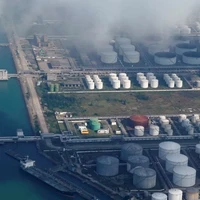
An Iranian oil export facility in the Persian Gulf

The Iranian government says that it has a plan to boost oil production to 4 million barrels per day, a high figure that Iran had not achieved even before the United States imposed sanctions in 2018.

While local media reported on the government’s claim, Iran International learned that in recent days authorities sent a document about purported plans to journalists in Tehran, urging them to report on it. The higher oil production figure is one of the claims made in that document seen by Iran International.

In November, Iran’s oil minister Javad Owji claimed that the country was producing 3.4 million barrels per day (mb/d) of crude oil, about 1.2 mb/d more than in mid-2021. But both OPEC and the International Energy Agency, put the country’s crude oil production at 3.1 mb/d in September, when Owji had claimed 3.3 mb/d output level for that month.

While oil production and exports have increased since late 2020, when the new US administration changed Washington’s approach to Iran, lack of capital for investment and sanctions hamper Iran’s ability to boost both oil and natural gas production. Meanwhile, domestic oil and gas consumption have increased, leading to energy shortages during winter months, and a limited capacity for exports, particularly natural gas.

Facing an economic crisis, the Iranian government has frequently claimed various achievements in recent months. However, Domestic critics remain skeptical, with some media outlets, commentators, and politicians questioning why these purported successes have not translated into improved economic conditions for ordinary people.


Most Viewed

US strikes on Iran now serve the blockade
1
ANALYSIS

US strikes on Iran now serve the blockade

2

Iran sends conflicting signals on US deal as Trump raises prospect of strikes

3
PODCAST

Baluch insurgency tests the limits of a war-weakened Islamic Republic

4

Pakistan talks peace with Iran, defends Saudis against Tehran’s proxies

5

US and Iran trade new threats as diplomacy yields no breakthrough

Banner
Banner
Banner
Banner
Banner

Spotlight

  • From six-day victory to wars of attrition: How has Israel ended its wars?
    ANALYSIS

    From six-day victory to wars of attrition: How has Israel ended its wars?

  • Baluch insurgency tests the limits of a war-weakened Islamic Republic
    PODCAST

    Baluch insurgency tests the limits of a war-weakened Islamic Republic

  • US strikes on Iran now serve the blockade
    ANALYSIS

    US strikes on Iran now serve the blockade

  • Salvation or tragedy? Iranians debate prospect of another war

    Salvation or tragedy? Iranians debate prospect of another war

  • More patrols, slower internet suggest Tehran is bracing for trouble
    VOICES FROM IRAN

    More patrols, slower internet suggest Tehran is bracing for trouble

  • Iran’s evasion network survives, but the crude feeding it has run dry

    Iran’s evasion network survives, but the crude feeding it has run dry

  • Once US blockaded Iran, China’s ‘Malaysian’ oil imports dried up
    ANALYSIS

    Once US blockaded Iran, China’s ‘Malaysian’ oil imports dried up

  • Istanbul meeting: A new division of labor in the Iran war?
    ANALYSIS

    Istanbul meeting: A new division of labor in the Iran war?