King of Bahrain, Hamad bin Isa Al Khalifa attends a sign docs ceremony during his meeting with Russian President Vladimir Putin at the Kremlin in Moscow, Russia, 23 May 2024.
Bahrain's king has expressed a tentative willingness to resume diplomatic ties with Iran despite historical tensions and accusations against Tehran for inciting unrest within Bahrain’s Shi'ite majority.
The revelations were made during a dialogue with Russian President Vladimir Putin, King Hamad bin Isa Al Khalifa opening the door to ties in the wake of both United Arab Emirates and Saudi's thawing tensions.
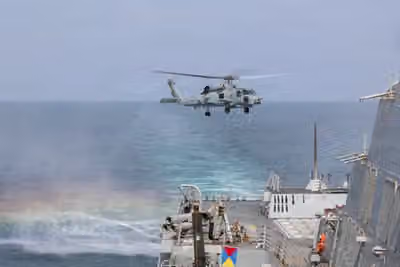
Tiny but geopolitically significant Bahrain, hosting the US Navy's Fifth Fleet, has repeatedly accused Iran of destabilizing efforts by fueling dissent among its Shi'ite population against the ruling Sunni monarchy. The 2011 protests, a part of the broader Arab Spring movement, were suppressed by the government, with Iran being partly blamed for the upheaval—a charge Iran has consistently denied.
The kingdom has a long-standing alignment with US and UK interests, notably highlighted by its sole Persian Gulf state endorsement of the strikes against the Iran-aligned Houthis in Yemen following their Red Sea confrontations earlier this year.
The recent thaw in relations was marked by an Iranian parliamentary delegation's visit to Bahrain last year for the International Inter-Parliamentary Union Assembly, the first official Iranian presence in Bahrain in seven years after Manama’s severance of ties with Tehran in 2015, closely mirroring Saudi Arabia’s diplomatic break-off.
The tentative diplomatic rapprochement comes on the heels of a landmark agreement between Iran and Saudi Arabia, brokered by China last year, which ended a seven-year standoff by agreeing to reopen embassies and diplomatic missions.
In the previous year, ties had also mended between Iran and the United Arab Emirates, known as the region's 'little Sparta' for the power it wields relative to its size.