Iran's Supreme Leader Silent After Election Boycott
Iran’s ruler Ali Khamenei speaking to media after he cast his vote in the elections, March 1, 2024
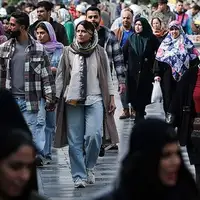
Three days after Iran's elections in which as much as 90 percent of the country boycotted the polls, Supreme Leader Ali Khamenei remains silent, shamed by the country's rejection of the sham elections.
It is the lowest turnout in the regime's history, with voting figures ranging from 10 to 27 percent, reflecting the government's struggle to retain legitimacy in the face of mass discontent.
While Khamenei stays silent, other regime officials attempt to portray the elections in a positive light, with Minister of Interior Ahmad Vahidi labeling them as "magnificent" and boasting of "the highest standards." However, the claims lack substantiation.
Despite efforts to boost participation, including extending voting hours, the government failed to bring people to the polls. The elections also mark the first since the 2022 mass protests sparked by the death of Mahsa Amini, further highlighting underlying tensions within the nation.
Out of the 290 parliamentary races, results show that Iranian hardline politicians maintained dominance, winning 200 out of the 245 decided seats. The remaining 45 seats will proceed to runoff elections due to candidates failing to secure the mandatory 20% of the vote.
Iranians casting their votes in the elections in Shabdolazim shrine, near the capital Tehran, March 1, 2024
Authorities in Iran are evidently manipulating the vote count to secure a predetermined outcome of Friday’s parliamentary elections amidst a notably effective boycott campaign.
Turnout
The Guardian Council’s extensive disqualification of candidates prior to the March 1 parliamentary and Assembly of Experts elections gave rise to huge popular discontent. Authorities resorted to relentless propaganda and various measures to ensure the boycott did not affect the turnout.
In the face of polls conducted by government agencies that predicted a very low turnout, state media and those controlled by hardliners, as well as hardline political parties and groups launched a massive campaign before the elections, to ensure high turnout.
The polls were inexplicably extended by six hours although citizen reports indicated that the polling stations were not busy at all even during the regular voting hours.
Voting regulations including requirement of birth certificates, which was necessary in all previous elections, were abolished and voters were allowed to use one of several other forms of IDs including passports. Ballot boxes were provided in many crowded public venues in addition to polling stations.
These measures, however, backfired and many social media users alleged they were only meant to facilitate fraudulent voting.
Not only anti-regime voters, but also many former regime insiders, including Reformists, abstained from voting.
Iranian Interior Minister Ahmad Vahidi speaks during a press conference after the parliamentary elections in Tehran, Iran, March 4, 2024.
The Phenomenon of Void and Blank Votes
Authorities claim 41 percent of eligible voters participated in the elections. This figure, the lowest in the four-decade history of the Islamic Republic, seems to include the void and blank votes. The total number of votes and blank and void votes has not yet been announced.
Void and blank ballots were abnormally high in nearly every constituency. In some constituencies such as Yazd the number of blank and void ballots is higher than most of the constituency’s top elected representatives.
Blank and void votes are usually cast by those who may have been rounded up and forced to vote against their wish such as government employees, soldiers, and athletes, and could be interpreted as “protest votes”.
According to official figures the number of eligible voters has increased from 57.9 million four years ago to 61.1 million.
A newspaper with a cover picture of Speaker of the Parliament of Iran Mohamed Bagher Ghalibaf, is seen in Tehran, Iran March 3, 2024.
Suspicions of Revolutionary Guards Role in Engineering Results
Given the low turnout, the election headquarters of the interior ministry, has been taking their time, despite claims of employing better technology such as computers, to manipulate the numbers, critics say.
After the closure of the polls, the media affiliated with the Revolutionary Guard, including Fars News Agency, announced what they claimed was the turnout figures before the election authorities had provided any information.
Such moves exacerbated suspicions of involvement of the Revolutionary Guards in election engineering and manipulation of numbers. The interior ministry, the principal election authority, only announced partial turnout figures two days later.
The opaque vote count process, coupled with the slow and irregular announcement of results, bears a striking resemblance to the parliamentary elections of 2004, which reformists alleged were engineered by the Khamenei-appointed Guardian Council.
In the presidential elections of 2009, the interior ministry was accused of joining forces with the Guardian Council to ensure the re-election of Mahmoud Ahmadinejad.
In both cases, the Revolutionary Guards was accused of masterminding the manipulation of the vote.
Dubious Mandate for Those Elected
The very low number of votes cast in nearly every constituency, notwithstanding the doubts about the accuracy of the figures announced officially, casts doubt on the mandate of those who will be representing constituencies in the parliament.
In many constituencies run-off elections are required and many of those who have secured their seats in the parliament in the first round have only managed to get a fraction of the votes of those eligible in their constituencies.
In the capital Tehran, which has 30 seats and over 7.5 million eligible voters, for instance, the front-runner candidate Mahmoud Nabavian is the only one with over 500,000 votes. The other 13 elected candidates in this round have acquired between 316,000 and 487,000 votes and the remaining 16 will be chosen in the run-off.
Nabavian’s 597,000 votes suggest he will be representing less than 8 percent of the eligible voters. In another constituency – Tabriz, Azarshahr and Oskou – the top elected lawmaker’s votes fall below 100,000, making him the representative of less than 10 percent of the eligible voters.
An aerial view of Hirmand River, known as Helmand in Afghanistan
The recent rise in the Hirmand river has sparked renewed tensions as Iran accuses the Taliban of withholding its agreed water allocations.
In spite of both rainfall and flooding, Isa Bozorgzadeh, spokesperson for the Water Industry, told state-owned ILNA on Monday, "The water inflow from Afghanistan to Iran is zero."
Sher Mohammad Abbas Stanikzai, the Taliban's Deputy Minister of Foreign Affairs, claimed Afghan citizens' needs come before international allocations. "Currently, there is only enough water to meet the needs of the Afghan citizens, and it is not sufficient to be released towards Iran."
The river, known as Helmand in Afghanistan, holds significant importance as a primary source for agricultural irrigation and potable water supply.
The statements come as, according to the representative of Sistan and Baluchestan, Afghan authorities divert the water of the Helmand River inside their country through canal construction and dams, preventing it from entering Iran.
In the past two years, Iranian authorities have claimed that the Taliban has agreed to allocate 820 million cubic meters of Iran's water share from the Helmand annually, but neither the Taliban has confirmed such an agreement nor has any water been released towards Iran.
A money changer holds Iranian rial banknotes as he waits for customers in Tehran's business district January 7, 2012.
Iran's national currency plummeted to a historic all-time low on Monday, just days after the controversial elections characterized by a low turnout.
On Monday morning, the US dollar was being traded for 606,000 rials, marking the highest recorded price for the American currency in Iran. This represents a nearly 20 percent drop since early January, coinciding with heightened tensions in the Middle East.
The depreciation comes as a culmination of factors including the failure of nuclear negotiations with the United States and its European allies, and the consolidation of power by Iranian hardliners since March 2022.
In addition to the US dollar, the Euro was traded at 647,000 rials and the British pound hovered near 760,000 rials on Tehran's black market on Monday.
The decline of the rial has been a prolonged trend since the 1979 revolution, but it accelerated notably in 2018 following the US withdrawal from the JCPOA nuclear deal and the imposition of sanctions on Iran's oil exports and banking sector. Remarkably, the currency was valued at 70 rials per dollar in 1978.
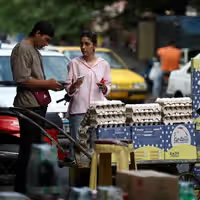
The sharp devaluation of the rial has exacerbated inflationary pressures over the past five years, pushing millions of Iranians below the poverty line. Official government statistics indicate an annual inflation rate of over 40 percent, though many believe the actual figure to be higher.
The ongoing economic crisis has undermined the legitimacy of the Islamic government, particularly in the eyes of voters. The majority of Iranians abstained from participating in the Friday elections due to economic and social disillusionment and discontent.
Heads of states and governments at the 7th Gas Exporting Countries Forum (GECF) Summit in Algiers, Algeria March 2, 2024
While the global gas market undergoes significant shifts with the declining roles of Iran and Russia, Qatar and other Gas Exporting Countries Forum members are bolstering their positions.
During the forum held in Algeria on March 2nd, Iranian President Ebrahim Raisi emphasized Iran's ambition to become a "regional major gas exporter" and an "energy hub." This ambition comes as Iran grapples with a daily gas deficit of 150 million cubic meters (mcm/d), which has spiked to 300 mcm this winter, equivalent to Turkey's total gas consumption. In contrast, Iran’s oil minister Javad Owji announced plans to boost gas production from 1.07 bcm/d to 1.3 bcm in five years, with a $70 billion investment. However, these claims contradict reality, as Iran's current gas production averages 650 mcm/d, with only $3 billion invested annually in the oil and gas sectors.
Projections indicate a significant increase in Iran's gas demand by 2033, reaching 1.4 bcm/d, while production levels are expected to drop below 500 mcm/d due to declining pressure in the South Pars gas field in the Persian Gulf, which contributes 70% to Iran's gas production. As a result, Iran could face a daily gas deficit of 900 mcm/d by 2033, necessitating either increased oil consumption or a shift to renewable energy sources.
Renewable energy currently contributes less than one percent to Iran's electricity generation, with only 2% of Iran's 2023 solar and wind power production targets achieved. This contrasts sharply with global trends, where 570 gigawatts of new renewable power plants were commissioned in 2023.
Model of LNG tanker is seen in front of Qatar's flag in this illustration taken May 19, 2022.
Iran's oil as a substitute
Even if Iran manages to restore its pre-sanction oil production capacity, its surplus oil alone will not be sufficient to cover half of the gas deficit in next decade. Moreover, according to the Energy Information Administration's assessment, 80% of Iran's active oil fields are past their prime, experiencing an annual production decline of 8 to 12 percent.
However, the National Iranian Oil Company's annual investment in oil and gas fields has remained around $3 billion in recent years, significantly lower than Saudi Aramco's investments. Iran's gas exports reached 18 bcm in 2022, but the exact volume for 2023 remains unclear. The government's budget bill for the upcoming fiscal year predicts only 11 bcm of gas exports for 2024, reflecting Iran's struggle to meet export obligations. Meanwhile, Russia, the world's largest gas exporter before Western sanctions, saw a substantial decline in gas exports in 2023.
Iran's gas exports reached 18 bcm in 2022, but the exact volume for 2023 remains unclear. The government's budget bill for the upcoming fiscal year predicts only 11 bcm of gas exports for 2024, reflecting Iran's struggle to meet export obligations.
Iran's failure to meet its gas export contract obligations has led Turkey to cut its purchases from Iran in half in 2023, reducing it to 5.2 bcm. Additionally, Iraq, Iran's second-largest gas customer, has announced a significant reduction in gas imports from Iran since the last quarter of 2023, declaring last week a complete halt in power and gas deliveries from Iran.
Less exports by Russia
Prior to the invasion of Ukraine by Russia and the imposition of Western sanctions in February 2022, Russia held the position of the world's largest gas exporter, with total exports of natural gas and liquefied gas amounting to 242 bcm in 2021. However, in 2022, this figure decreased to 165 bcm, and last year it further declined to 130 bcm.
It's worth mentioning that prior to the Western sanctions, Europe (including Turkey had an 82% share in Russia’s 200 bcm pipeline gas export. However, Russia’s pipeline gas flows to these countries declined to 65 bcm in 2023.
China has doubled Russian gas intake during last two years, but yet the volume remains below 23 bcm in 2023. It is not expected that China or any other Asian country will be able to increase gas purchases from Russia in the medium term, as this requires massive investments in new pipeline projects.
Conversely, according to Chinese customs data, last year, China spent just $6.5 billion on importing 23 bcm of pipeline gas and 11 bcm of liquefied natural gas (LNG) from Russia. This suggests that China purchases Russian gas at half the prevailing global prices.
According to Reuters, Russia's overall revenue from gas exports declined from $80 billion in 2022 to $22 billion in 2023.
Qatar and Other Members
Behind Russia and Iran, Qatar stands as the third-largest holder of gas reserves globally. Most of its reserves lie in the North Dome (South Pars) field, which it shares with Iran. About two-thirds of this reservoir, boasting 56 trillion cubic meters of reserves, are situated in Qatari waters. After a hiatus of approximately 15 years, Qatar resumed the development of the North Dome in 2021. Over the past two years, the country has inked contracts worth $29 billion with Western industry giants to enhance its liquefied gas export capacity. The aim is to elevate the current LNG export capacity by 40% until 2026. Last week, Qatar also announced plans to elevate this capacity to nearly 200 bcm by 2030.
In contrast to Iran, Qatar has addressed the reservoir pressure problem by utilizing 20,000-ton platforms, which are fifteen times larger than Iranian platforms and equipped with substantial compressors. Qatar is currently pursuing efforts to boost production.
Algeria, the host of this year's forum meeting, recorded gas exports of 52 bcm last year, marking a 6% increase compared to 2022. However, it is not anticipated that the growth in gas exports from this country will continue in mid-term.
Azerbaijan participates as an observer member in this forum. Last year, it recorded gas exports totaling 24 bcm, and plans to increase this volume to 26 bcm in 2024 and 32 bcm in 2026. Georgia, Turkey, and seven European nations are among the customers of Azerbaijani gas.
Other main or observer members of this organization are not major gas exporters or are practically importers like the UAE.
Algeria, Iran, Russia, Qatar, Bolivia, Equatorial Guinea, Libya, the UAE, and Venezuela, along with Trinidad and Tobago, are the main members of the forum, while Azerbaijan, Angola, Iraq, Malaysia, Peru, Mozambique, and Mauritania are its observer members.
Government forces in Iran have banned the travel plans of the outspoken Sunni Imam of Zahedan who intended to visit flood-stricken zones in Sistan and Baluchestan.
According to Baluch websites, Mowlavi Abdolhamid, accompanied by his family and supporters, set out for the afflicted Dashtyari region on Monday. However, their convoy was intercepted by security forces at a police checkpoint along the Zahedan-Khash road, resulting in the detainment of two of his teenage sons.
Abdolhamid has opted to remain at the site in protest, awaiting the release of his detained sons.
In recent days, Abdolhamid has been actively advocating for assistance to flood victims while criticizing governmental shortcomings in relief efforts for the affected areas of Sistan and Baluchestan.
Regime officials have disclosed that approximately 1,800 households have incurred damage due to the recent floods in the province. The Housing Foundation has identified 300 demolished residential units and 1500 structures in need of repair, pledging prompt reconstruction measures.
The torrential rains witnessed over the past week in southern Sistan and Baluchestan have triggered extensive flooding, particularly in the Dashtyari region, leading to submerged residential areas and the closure of numerous roads.
According to reports from the IRNA state news agency, the overflow of four dams and the inundation of floodwaters have impacted 16 counties and 1947 villages, exacerbating the crisis gripping the region.