Iran Allocates Nearly $2B For Judiciary Amid Economic Challenges
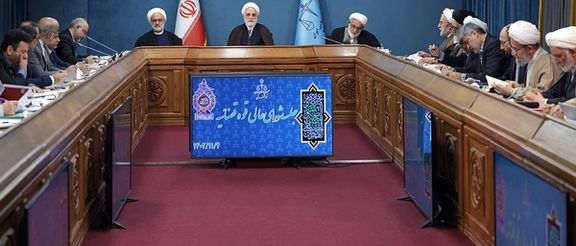
The Iranian parliament approved a budget allocation of 980 trillion rials for the judiciary and its affiliated organizations amidst human rights abuses and crackdowns.

The Iranian parliament approved a budget allocation of 980 trillion rials for the judiciary and its affiliated organizations amidst human rights abuses and crackdowns.
The allocation, amounting to roughly $1.8 billion, is intended to bolster the functioning of the judicial system, currently facing scrutiny for human rights violations and the issuance of death sentences, prompting widespread international condemnation.
The decision comes while only 35 trillion rials, equivalent to around $85 million, was designated for conserving and protecting natural resources.
The total government budget will reach 24,290 billion rials ($49.2 billion) next year, which shows an increase of 16.7 percent compared to this year’s budget.
Despite assertions from the government regarding a balanced budget, concerns over deficits persist. Estimates from various sources, including the Iran Chamber of Commerce, Industries, Mines and Agriculture, suggest a significant deficit, with figures ranging from 4.5 quadrillion rials (approximately $9 billion) to as high as $22 billion, according to a report by the parliament's research center cited by economic website EcoIran.
Iran's economy continues to grapple with challenges, exacerbated by the United States' withdrawal from the Joint Comprehensive Plan of Action (JCPOA) nuclear accord in 2018 and subsequent sanctions. However, underlying economic issues predate the geopolitical developments, with mismanagement of oil revenues since the 1990s contributing to the current economic strain. Despite generating substantial oil revenues estimated at around $1.5 trillion over the past two decades, Iran faces economic difficulties, with the government controlling a significant portion of the economy.

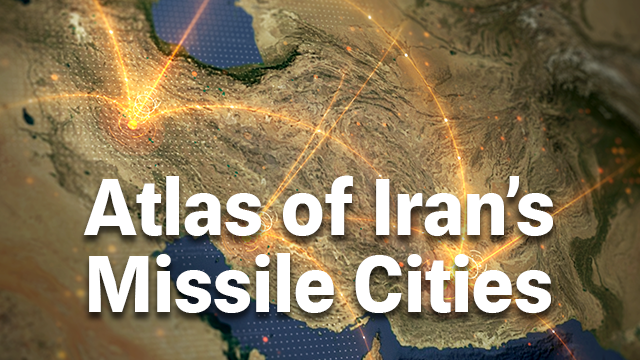
In a joint statement released on Friday, France, Germany, and the United Kingdom voiced their condemnation of Iran's recent launch of the Soraya satellite.
Launched with the aid of the Ghaem-100 Space Launch Vehicle (SLV), the deployment has raised concerns among the three European nations regarding the potential advancement of Iran's long-range ballistic missile capabilities.
The statement expressed apprehension over the technology employed in the SLV, which could potentially enable Tehran to launch weapons over extended distances.
"We remain committed to taking every diplomatic step to prevent Iran from developing nuclear weapons and to hold Iran to account for its destabilizing activity in the region and internationally," the statement said.
The Soraya satellite, developed by the Iranian Space Research Center, was sent into a 750 km Low Earth orbit on January 20th. The launch was overseen by the aerospace division of the Islamic Revolutionary Guard Corps (IRGC), a branch of the Iranian military.
Iran has defended the satellite launch, with the IRGC claiming that it will serve both scientific and defense purposes, enhancing Iran's capabilities in space exploration and technology. However, the launch has faced criticism from the United States and other Western nations.
Accusations have been leveled against Iran saying that its satellite and rocket programs are veiled attempts to advance ballistic missile technology capable of carrying nuclear payloads. The US has imposed sanctions targeting Iran's aerospace sector, citing violations of a UN Security Council resolution urging Iran to refrain from ballistic missile-related activities.
Since 2018, Iran has been subject to severe US sanctions following the US withdrawal from the 2015 nuclear agreement, which aimed to limit Iran's nuclear activities in exchange for sanctions relief. Iran has since reduced its compliance with the agreement, resuming uranium enrichment at higher levels.
It has since been placed under further sanctions following the provision of drones to Russia in its war on Ukraine and the regime's brutal crackdowns on protesters since 2022's uprising.

Fars news agency, affiliated with the IRGC, dismissed reports claiming Washington warned Tehran prior to recent bombings by ISIS in Iran.
The Wall Street Journal reported on Thursday that the US had warned the Islamic Republic of the impending bombings which claimed the lives of 95 people in Kerman earlier this month.
There are “compelling reasons” which demonstrate that such claims, made by the Wall Street Journal and repeated by American and British media, counter “the facts on the ground,” Fars wrote on Saturday.
On Friday, IRNA, the Iranian state news agency, also rejected the reports of Washington’s terror warning to Tehran.
Even the White House officials, including Deputy US State Department Spokesperson Vedant Patel, have refused to confirm the Wall Street Journal’s report, Fars added.
The Fars website further reiterated the usual rhetoric of the Islamic Republic, accusing the US of establishing ISIS and supporting “terrorist and subversive groups” in Iran.
Islamic State’s affiliate in Afghanistan, ISIS-Khorasan, known as ISIS-K, committed the attacks at the commemoration ceremony of slain Qods Force commander Qassem Soleimani.
Separately, Iran International has learned that the US passed the warning to Iran more than one week before the attack.

An area of about 200 square meters collapsed on Friday morning in one of the major streets in Iran’s capital city Tehran.
Officials have attributed the incident to land subsidence.
According to reports, the incident took place at the beginning of Kargar Street on the northern side of Qazvin Square in central Tehran.
As the asphalt of the floor of the street collapsed, the remains of an old public bathroom and toilet were found. No information has been released yet regarding the age and history of the discoveries.
The incident resulted in the closure of the street and the disconnection of water and electricity in the area for several hours.
Over the past years, land subsidence has turned into a serious crisis in various parts of Iran.
Experts warn that the current land subsidence situation in Iran puts the lives of more than 39 million people at risk.
Several factors have caused the situation to reach breaking point, including dam construction, climate change, inefficient water consumption by agriculture and industries, and the use of underground aquifers as sources for illegal agricultural water extraction wells.
In March 2023, Ali Beitollahi, heading the disaster task force on the issue at the Road, Housing and Urban Development Research Center of Iran, said the approximate area of subsidence zones in the country has reached 18.5 million hectares, almost 11% of Iran’s total area.
Back in August, Iran International obtained documents revealing that the Islamic Republic officials were aware of dangerous land subsidence but were unwilling to share it with the public.
According to a leaked confidential letter from Iran’s National Cartographic Center, about 550 square kilometers of land in and around Tehran (about the size of the UK city of Manchester or the US city of El Paso, Texas) is sinking an average of over 13 centimeters (about 5.12 inch) per year.

Iranian Peace Nobel Laureate Shirin Ebadi has urged a top UN human rights official to cancel her visit or meet with those on death row during her stay in Iran.
Nada Al-Nashif, UN Deputy High Commissioner for Human Rights, is scheduled to arrive in Tehran on February 3 to investigate executions and women’s rights violations.
In a message addressed to Al-Nashif on her Instagram Thursday, Ebadi pointed out that at least four prisoners including a protester, Mohammad Ghobadlou, and a Kurdish political prisoner, Farhad Salimi, were executed in one week after unfair trials and in violation of the Islamic Republic’s own laws just ahead of her visit to Iran.
Ghobadlou who had just turned twenty-four was hanged despite his death sentence being overturned by the Supreme Court which ordered a branch of Tehran Criminal Court to retry the case. Carrying out a death sentence despite such a ruling was unprecedented.
Ebadi recommended to Al-Nashif to cancel her visit in protest to “extra judicial and increasing executions to prevent the regime from taking advantage of it and using it for propaganda.
Ebadi also recommended Al-Nashif not to wear a headscarf, as Iranian authorities demand female foreign visitors to do, and to meet and talk with ordinary people alongside meetings with government officials.
“Visit Evin prison and talk with some of the women who are on hunger strike, including [2023 Peace Nobel Laureate] Narges Mohammadi, and the family of Mahsa Amini who was killed by government agents in September 2022 because of her hijab, and with several prisoners who are on death row such as Mujahid Korkur, among others, so that a fuller picture of the deplorable conditions of human rights [in Iran] is shown to you,” Ebadi wrote.
Another post on Ebadi’s Telegram channel Thursday about UN High Commissioner for Human Rights Volker Türk’s expression of concern over the spike in the use of death penalty in Iran, said “Expressing concern is not enough.”
The Islamic Republic which has the highest rate of executions in the world after China has executed 90 people just during December 22-January 21 this year.
Sixty-one female prisoners at Tehran’s Evin Prison from various political backgrounds including Nobel Peace Laureate Narges Mohammadi staged a one-day hunger strike Thursday in protest to the regime’s increasing use of executions including those of political prisoners.
Some activists in Iran and abroad including dissident rapper Toomaj Salehi and pop singer Mehdi Yarrahi, some of the families of prisoners, and political prisoners, including Zeynab Jalali who is serving a life sentence at Yazd Prison, have joined the hunger strike in solidarity with the prisoners at Evin.
Türk said in a statement on Wednesday that he is alarmed by the sharp spike in use of the death penalty in Iran including the two execution last Sunday. “This practice must be stopped immediately,” he said.
UN experts on January 21 also strongly condemned these recent executions and expressed serious concern at credible reports that those executed had been denied access to lawyers during their detention and trial.
The mothers of four death-row political prisoners -- Mohsen Mazloum, Pezhman Fatehi, Vafa Azarbar, and Hazhir Faramarz – have also pleaded with Al-Nashif to urge Iranian authorities to halt the impending execution of their sons as well as other prisoners on death row.
The hashtag #NoToExecution has been trending among Iranian social media users following the announcement of the hunger strike and a tweet storm on Monday has been announced.

Iran’s former foreign minister Ali Akbar Salehi stressed that Tehran will “never” recognize Israel “even if a Palestinian state is established.”
“As long as the [Israeli] entity exists and is active in our region, the crisis will remain between Iran and the regime that is occupying Jerusalem, even if a Palestinian state is established. I am referring to the proposed two-state solution,” Salehi said in an interview with Russia Today.
The Iran-Israel conflict will end only when the latter “ceases to exist,” he pointed out, further noting that “the form and means of this confrontation may change, according to the circumstances of time and place.”
The two-state solution to the Israeli–Palestinian conflict envisions an independent State of Palestine alongside the State of Israel, west of the Jordan River.
The boundary between the two states is still subject to dispute and negotiation, with Palestinian and Arab leadership demanding full Israeli withdrawal from territories it occupied in 1967, which is rejected by Israel.
In 2015, Supreme Leader Ali Khamenei said Israel must be destroyed in 25 years and the government even set up a countdown clock in Tehran and a few other cities. Many Iranians mock the anti-Israel rhetoric and the ticking clock, but the regime is adamant in pursuing the goal.
Regime authorities use every opportunity to stress the necessity of “Israel's destruction,” a slogan that has justified Iran’s huge financial and military support to militant groups such as Hamas and Hezbollah, while Iranians increasingly face poverty and a bleak economic future.