Exiled Prince Calls For Accountability In Ukrainian Airliner Downing

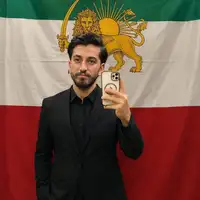
Iranian exiled prince Reza Pahlavi says the perpetrators behind the downing of the Ukrainian flight in 2020 killing 176 passengers, will not escape justice.

Iranian exiled prince Reza Pahlavi says the perpetrators behind the downing of the Ukrainian flight in 2020 killing 176 passengers, will not escape justice.
The Ukraine International Airlines Flight PS752 was downed by two air-defense missiles fired by the Islamic Revolutionary Guard Corps (IRGC) shortly after departing from Tehran's Imam Khomeini International Airport.
In a message released on various social media platforms on Monday, coinciding with the fourth anniversary of the downing of the Ukrainian passenger plane by Revolutionary Guard missiles over Tehran, Prince Reza Pahlavi underscored that the survivors of the victims continue to seek justice.
In the message, he stated: "Four years ago, the Revolutionary Guard committed a heinous act, killing 176 passengers of the Ukrainian plane. After four years, the families of the victims are still seeking justice."
Pahlavi said, "The perpetrators and planners of that terrorist act along with their leader, Ali Khamenei, should know that they cannot escape justice. One day, not long from now, the Iranian nation will try them and hold them to account in a free and fair trial."
Pahlavi's message was released simultaneously with the commemoration ceremony of the fourth anniversary of the incident held in Shahedshahr, Tehran, the site of the plane's downing. Government forces prevented citizens from attending and joining the families of the victims during the ceremony.

Iran's Chief Justice has threatened people who criticize the government in the aftermath of last week’s deadly terror bombings with legal consequences.
Gholamhossein Mohseni Ejei stated that “prosecutors should not overlook the actions of those who, following the Kerman incident, supported the enemy, whether in legal or illegal domains.” The comments come in the wake of two explosions during the fourth memorial of former IRGC commander Qasem Soleimani on January 3, that killed around 90 people.
Iranians have been demanding answers as to why the government failed to ensure the security of the gathering, and why senior officials did not attend, insinuating foreknowledge by the government.
In response, at least 9 social media users have been arrested for their critical comments.
Deputy Police Chief Ramin Pashaei revealed on Saturday the identification of 500 internet pages deemed "insulting to the martyrs of Kerman," with operators under cyber surveillance and some facing warnings to remove criminal content.”"
Reports indicate citizens in various cities, including Tehran, Yazd, Bushehr, Semnan, and North Khorasan, have been detained for allegedly “insulting Qasem Soleimani and his anniversary ceremony.”
Morteza Motiee, the representative of the Supreme Leader in Semnan province, condemned those attributing the Kerman incident to the Islamic Republic, accusing them of "following the devil.”
Meanwhile, Ali Shamsipour, the spokesperson for the Ministry of Science, threatened to expel students critical of the government for the Kerman terrorist incident.

Canada, Britain, Ukraine, and Sweden have filed a complaint with UN civil aviation agency against Iran on the fourth anniversary of the downing of Flight PS752.
Iran's Revolutionary Guards (IRGC) shot down the Ukrainian airliner shortly after it took off from Imam Khomeini International Airport near the capital Tehran on January 8, 2020. All 176 onboard the plane were killed in the incident.
The downing of the plane by two surface-to-air defense missiles, came a few hours after Iran fired missiles at US military bases in Iraq in retaliation for the US drone strike in Baghdad that killed Gen. Qasem Soleimani, commander of IRGC’s extraterritorial Quds Force.
The four countries, announcing their complaint to the International Civil Aviation Organization (ICAO) in Montreal, said Tehran had used “weapons against a civil aircraft in flight in breach of its international legal obligations."

Canada’s Prime Minister Justin Trudeau said the filing was "an important step in our commitment to ensuring that the families of the victims impacted by this tragedy get the justice they deserve."
Iranian authorities for three days claimed technical issues were responsible for the crash. Subsequently and under public and international pressure, Amir-Ali Hajizadeh, the chief of IRGC air operations responsible for airspace security, attributed the downing of the airliner to “human error” of the air defense. The IRGC also alleged that the “risky behavior” of the United States had caused the incident.
Victims’ families chanting “What an agony is this injustice!” at the anniversary ceremony.
Iranian authorities have never explained the reason for not closing the country’s airspace amid such heightened military tensions and allowed flights out of the country’s biggest international airport as usual.
Some of the victims’ families and many Iranians have always alleged that the IRGC intended to use the plane as a human shield on the night of the missile attack on US bases and the downing of the plane was therefore "premeditated”.
A group of victims’ families convened at the site of the crash on Monday to commemorate their loved ones. In their speeches, they condemned the regime’s “fake trial” of those responsible for the tragedy. Some, like Fatemeh Arsalani who lost her son, daughter-in-law, and grandchild fearlessly cursed the Islamic Republic and the Revolutionary Guards.
Manzar Zarrabi who lost four of her loved ones reading the statement of the Association of Families of Flight PS752 Victims at the anniversary ceremony.
A source close to the families told Iran International in October 2020 that the IRGC was using threats of murder and torture to silence those among victims’ families who were contesting the official explanation of "human error" for shooting down the plane.
“Don’t you think you can frighten a person who has nothing to lose with threats of torture and death,” Touran Shamsollahi who lost her daughter-in-law and granddaughter in the crash said. She vowed to stand “to the end” beside her son, Canada-based Hamed Esmaeilion who has made many efforts to bring the Islamic Republic to justice.
The Association of Families of Flight PS752 as well as Canada, Britain, Ukraine, and Sweden had previously brought the case before the principal judicial organ of the United Nations, International Court of Justice (ICI), in the Hague.
Ukraine and Canada which had 63 citizens on the flight have always complained about Iran's uncooperativeness in investigation of the cause of the incident.

Many among the families of the victims were outraged by the light sentencing of those responsible for the tragic crash and refuted the court’s competence to prosecute the crime of downing the airliner.
Iran's judiciary sentenced the unnamed commander of the IRGC’s Tor-M1 surface-to-air missile system that shot down the plane to 13 years of which he would only be required to serve 10 years including the time he has already spent in prison. Nine others were also sentenced to from one to two years.
Mahmoud Alizadeh-Tabatabei, a lawyer who represented the families of several victims, told Didban news website Monday that the unnamed commander was the only one who was imprisoned but has been released on bail because the sentences passed on the defendants have not been finalized.

Iran says the United States has conveyed a message through an Arab Persian Gulf country aimed at addressing the comprehensive resolution of the regional crisis.
In an interview with Lebanon's Al-Ahed news, the ambassador of the Islamic Republic of Iran to Syria, Hossein Akbari stated that “approximately ten days ago, a delegation from an Arab Persian Gulf country visited Tehran, carrying a message from the Americans.”
"They [Americans] called for a resolution to the crisis in the entire region," he added, looking to Iran whose proxies in Iraq, Yemen and Lebanon have all been carrying out attacks on US facilities in the region and Israel, in the wake of the Iran-backed Hamas war on Israel.
No independent source has confirmed Akbari's claim, and US authorities have not issued any response.
The revelations come as Israel has been stepping up attacks on Iran-linked operations in Syria, including killing a senior Quds Force commander and taking out weapons shipments. On Monday, Israel assassinated a top Hezbollah commander in Lebanon, just days after eliminating the deputy political leader of Hamas in Beirut.
Naser Kanaani, the spokesperson for the Ministry of Foreign Affairs, indirectly confirmed the reception of a message from the United States to Iran during a press briefing in Tehran on Monday, while the US Secretary of State Antony Blinken tours the Middle East in a bid to bring peace to the region.
While the Islamic Republic claims the decision for the recent attacks was made independently by its proxies groups, the United States holds Tehran primarily responsible. It has formed a more than 20-nation coalition to combat the blockade of the Red Sea by Yemen's Houthis, which has become a major threat to global trade.
While the US has been attacked more than 100 times since the Gaza war was triggered by Hamas's invasion of Israel, only a handful of responses have been levied by the Biden administration.

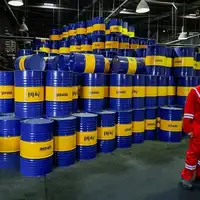
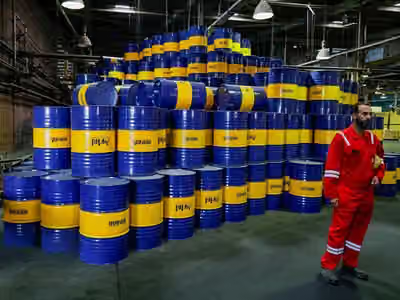
An Iranian official says Iran's soaring gasoline consumption could be slashed if it could produce internationally standard vehicles.
Jalel Salari, CEO of the National Iranian Oil Refining and Distribution Company, emphasized that adopting the standards could lead to a daily reduction of 50 million liters (over 13 million gallons) in gasoline consumption.
"If we were producing standard cars, daily gasoline consumption would decrease to 60 million liters (approximately 16 million gallons), allowing us to export 50 million liters daily."
Salari underscored the stark contrast between Iranian cars' high fuel consumption and the global average, underscoring the substantial gap in meeting international standards. He addressed the inefficiency and fuel wastage in domestically produced low-quality cars, an issue previously criticized by authorities.
Additionally, the deputy minister of oil justified Iran's gasoline deficit, citing an annual increase of two million vehicles that contributes an extra five to six million liters (1.3 to 1.6 million gallons) to daily gasoline consumption.
The country's gasoline shortage is exacerbated by the transformation of one-third of Iran's refining products into mazut and bitumen. While the statement did not specify the status of Tehran's refinery or others, the imbalance significantly contributes to the shortage of petrol.
Official statistics from the National Iranian Oil Refining and Distribution Company indicate that gasoline constitutes only 28% of Iran's refinery products. Modern refineries, exemplified by those in the UAE, convert a mere 4% of received crude oil into mazut, allocating the remainder to high-quality products such as gasoline.
As Iran grapples with an escalating gasoline deficit since last summer, the government has resorted to limited imports of low-priced mazut substitutes. However, the current administration led by President Ebrahim Raisi has faced criticism for a lack of transparency in reporting the volume of gasoline imports.

A targeted Israeli strike killed a commander of Hezbollah's elite Radwan force on Monday in one of the most high-profile attacks in three months of hostilities.
More than 130 of Iran-backed Hezbollah fighters including members of the Radwan force have been killed in skirmishes across the Israeli-Lebanese border since Hamas attacked Israel from Gaza on October 7, igniting a conflict that has rippled around the region.
Wissam al-Tawil, the deputy head of a Radwan unit, and another Hezbollah fighter were killed when the car they were in was struck some 6 km (3.7 miles) from the border. There was no immediate comment from Israel.
Tawil was one of the most senior Hezbollah commanders killed in the hostilities so far.
The group circulated photographs of Tawil with Hezbollah leaders including Secretary General Sayyed Hassan Nasrallah and Imad Mughniyeh, the group's military commander who was killed in Syria in 2008.
Another photo showed him sitting next to the late leader of the Iranian Quds Force, Qassem Soleimani, who killed by a US drone strike in Baghdad four years ago.
One security source called Tawil's death "a very painful strike" in comments to Reuters. Another said, "things will flare up now."

Hezbollah says its campaign aims to support Palestinians in the Gaza Strip. The hostilities between the group and Israel have largely been contained to areas near the border.
Tensions spiked higher last week when an Israeli strike killed deputy Hamas chief Saleh al-Arouri in Beirut's southern suburbs controlled by Hezbollah.
Hezbollah's secretary-general Sayyed Hassan Nasrallah warned Israel last week not to launch a full-scale war on Lebanon.
"Whoever thinks of war with us - in one word, he will regret it," Nasrallah said.