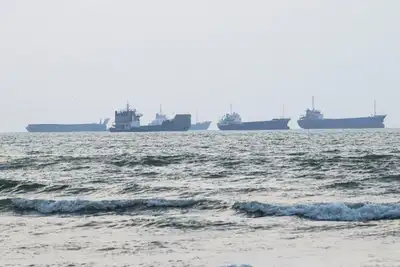
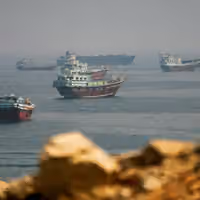
Iranian oil tanker in the Persian Gulf in March 2022
Iran said Tuesday its income from oil exports is up 580% in the first four months of the Iranian year (March 21-July 21) compared with the same period a year ago.
It is not clear how much the volume of crude oil and condensates exports increased, as Tehran keeps oil exports a state secret due to US third-party sanctions that can penalize companies involved in transactions. Global oil prices rose almost by around 50 percent from March 2021 to March 2022, the first full month after Russia’s invasion of Ukraine.
But Iran's claim of a 580-percent rise in revenues is hard to explain. In early July the Supreme Accounting Office reported that from March 21 to May 20, the government was able to realize just 15 percent of projected oil revenues. Although some revenues might not have officially enetred government coffers, but the Tueday claim of a 580-percent increase in revenues just does not add up.
Reports have indicated that the highest month for Iran’s exports was January 2022, when it shipped close to 1.1 million barrels per day (bpd), but have retreated to around 700-800 thousand of bpd, after Russia began shifting cheaper crude exports to China, Iran’s main customer.
Another unknown is how much Iran receives in cash in lieu of the oil shipped to China, Venezuela or Syria. Iran can say that oil revenues increased, but it is not clear if it receives cash payments for all shipments. Some observers have said that a lot of barter takes place, given the difficulty to make banking transactions given that the United States has also sanctioned Iran’s international banking ties.
The Iranian government has said in recent past that it has found ways to repatriate funds to its treasury from energy exports, but when billions of dollars are concerned that is not an easy task when a country is under sanctions and all large international banks would shun any business.
Aside from barter, Iran might be keeping its funds in the accounts of front companies and individuals in Asia and in the Persian Gulf countries and using it to finance essential imports. This involves a lot of extra payments to middlemen, illicit bankers and other expenses that some Iranian officials have put at 25 percent of total foreign trade.
Iran’s oil exports had dropped to less than 300,000 bpd in 2019, after the United States pilled out of the 2015 nuclear agreement the year before and imposed sanctions. Exports began to pick up in the end of 2020 after it became clear that the new administration wanted to revive the nuclear deal, which would mean lifting sanctions. In 2021, Iranian oil shipments more than doubled, reaching to around 750,000 bpd.
Despite these higher exports and claims of rising revenues, Iran economic situation has gotten worse since August 2021, when hardliner President Ebrahim Raisi came to office. Iran’s currency has dropped further to near all-time lows and annual inflation has jumped form 40 to 55 percent, according to official figures. Prices of essential food staples have doubled and tripled since May, when the government ended food import subsidies.
Critics in Iran ask where the higher revenues are as it seems the country still is not exporting more oil. The answer to this question is difficult given all the secrecy, but years of poor economic performance have undercut domestic investments and confidence in the future.
Just recently, central bank figures indicated that while oil exports had brough in an extra $17 in March 2021- March 2022, around $9 billion left the country.