Iran, Russia Ink Agreements To Bolster Energy, Trade Ties

Tehran and Moscow have signed a number of major memoranda of understanding (MoUs) to expand energy and trade ties, as Russian Deputy Prime Minister Alexander Novak visited Iran.
Tehran and Moscow have signed a number of major memoranda of understanding (MoUs) to expand energy and trade ties, as Russian Deputy Prime Minister Alexander Novak visited Iran.
The agreements were signed in Tehran on Wednesday during a meeting attended by Novak and Iranian Oil Minister Javad Owji.
"Iran and Russia are both under oppressive sanctions, which, God willing, can be neutralized by working together and developing relations in various fields," Owji was quoted as saying by the oil ministry’s news agency, Shana.
"Good agreements were reached in the fields of rail, road transport, shipping and aviation," he said, without expanding further, adding that both sides have "good capacities for cooperation in energy, banking, transportation, agriculture, nuclear energy, industry and trade".
"We plan to increase the level of Iran-Russia trade relations in these fields to $40 billion a year," the oil minister added. Current annual bilateral trade is around $4 billion.
According to Russia's Interfax news agency Novak and Owji discussed the potential for oil and gas swaps, as well as "increasing joint investments in oil and gas projects" with the Russian official emphasizing that "Energy is one of the most important sectors of our trade and economic cooperation."
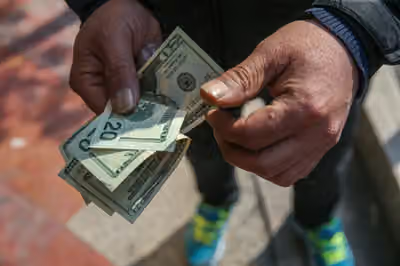
"We agreed to switch over to the use of national currencies as much as possible," Novak added, noting that "A path is being pursued to increasing trade, economic, logistics, investment, financial and banking cooperation, despite the unprecedented pressure that Russia is currently experiencing from unfriendly countries."
While Tehran has been chafing under sanctions for years, especially after the US pulled out of the nuclear deal in 2018, Western governments have imposed tough sanctions on Russia after it invaded Ukraine in February.