Israel Expresses Concern To Visiting German Leader Over Iran Deal

Israeli Prime Minister Naftali Bennett Wednesday discussed developments in Ukraine and the Iranian nuclear talks with German Chancellor Olaf Scholz, who was visiting Israel.

Israeli Prime Minister Naftali Bennett Wednesday discussed developments in Ukraine and the Iranian nuclear talks with German Chancellor Olaf Scholz, who was visiting Israel.
The visit comes as Russia's assault on Ukraine continued for a seventh day, and as Western countries have rallied together against the incursion.
"Our duty as leaders is to do everything to stop the bloodshed," Bennett said at a joint press conference.
Bennett also said Israel was watching with concern as Germany, Britain, France, Russia and China negotiate to revive the 2015 nuclear deal with Iran, which was left in tatters after the US withdrew in 2018.
He said Israel was concerned the deal would not adequately rein in Iran's nuclear program.
Scholz said he understood Israel's worries, but said it was time to move forward on a deal.
In the decades following the Holocaust, in which Nazi Germany killed 6 million Jews, Germany and Israel have become staunch allies.
The countries' Cabinets hold regular joint sessions, and Germany is Israel's most important trade partner in the European Union.
But Germany, like much of Europe, is at odds with Israel when it comes to the Palestinian issue.
Germany has called for a Palestinian state alongside Israel and opposes Israel's settlement activities in the West Bank. Germany is also among world powers negotiating with Iran over its nuclear program.
Reporting by AP

With the Vienna nuclear talks spilling into March, Tehran’s search for ‘guarantees’ and for ending probes into past nuclear work appear to be sticking points.
Sources close to the negotiations have told Iran International that Tehran has demanded western powers ask the International Atomic Energy Agency (IAEA) to drop its requests for information on uranium traces dating to before 2003 in several undeclared Iranian nuclear sites. Analysts have suggested the traces may relate to equipment supplied by the network of Pakistani scientist AQ Khan.
The United States and the three western European countries in the Vienna talks – France, Germany, and the United Kingdom – have argued that they should not ‘interfere’ in any IAEA investigation. Apparently confirming the Iranian demand, the lead British negotiator Stephanie Al-Qaq wrote on Twitter: “Safeguards are a fundamental part of the non-proliferation system and are separate. We will always reject any attempt to compromise IAEA independence.”
Iran has long argued that the IAEA should drop its repeated questioning over Tehran’s past nuclear work, but it is only in recent days that the issue has emerged as a contentious part of the Vienna talks aimed at reviving the 2015 nuclear deal, the JCPOA (Joint Comprehensive Plan of Action).
Rafael Mariano Grossi, the IAEA chief, told reporters Wednesday that such outstanding issues needed clarification regardless of “any other external process,” presumably meaning that he wanted answers over the pre-2003 work regardless of what happened with the JCPOA. But Iran’s view that Grossi’s pursuit of the issue is ‘politicized’ might have encouraged it to raise the matter in Vienna.
Western frustrations
Although restoring the JCPOA would extend IAEA inspections and monitoring of the Iranian nuclear program, the western European powers are showing frustration at the last stages of the Vienna talks.
In Israel Wednesday German Chancellor Olaf Scholz said agreement on reviving the JCPOA "cannot be postponed any longer…Now is the time to make a decision…Now is the time to finally say yes to something that represents a good and reasonable solution."
As Iran International reported Saturday, Iran is also still dissatisfied at proposals to ease United States sanctions in return for Tehran returning its nuclear program to JCPOA limits. Iran’s search for ‘guarantees’ that the US would not once again leave the JCPOA, as it did in 2018, has of late been cited less than disagreements over which US sanctions are incompatible with the 2015 deal.
‘Economic guarantees’
Ahmad Ali-Beighi (Ali-Baygi), a member of parliament, Sunday cited parliament speaker Mohammad-Bagher Ghalibaf (Qalibaf) that “economic guarantees” were part of Iran’s demands. Iran International has also quoted sources close to the Vienna talks that Tehran is seeking the delisting of the Revolutionary Guards (IRGC) by the US, given their economic role, and the removal of the 2019 US presidential executive order allowing the administration to sanction anyone linked to the office of Supreme Leader Ali Khamenei – an order used to sanction then foreign minister Mohammad Javad Zarif and then judiciary chief and now president, Ebrahim Raisi (Raeesi).
Ali Shamkhani, Iran’s top security official, said Monday that “bitter experience” with America had left Tehran with no choice but to seek “guarantees and a balanced agreement.” Mohammad Morandi, advisor to Iranian negotiators in Vienna, told Press TV Tuesday that Iran “can’t be pushed into a bad deal or an incomplete deal or a problematic deal.”

Separating non-proliferation from other issues has been a core assumption for 11 months of talks in Vienna aimed at reviving the 2015 Iranian nuclear deal.
That may be changing. The crisis in Ukraine threatens to impinge on negotiations between Tehran and six world powers – China, France, Germany, Russia, the United Kingdom, and the United States. Exactly how, diplomats are unsure.
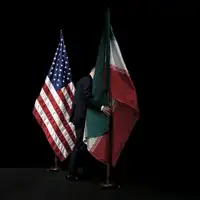
Since the Biden administration took office in January 2021, Washington has eased closer to the western European trio (the ‘E3’), while taking part at Vienna only indirectly as the US maintains ‘maximum pressure’ sanctions introduced by President Donald Trump in 2018 on withdrawing from the 2015 deal, the JCPOA (Joint Comprehensive Plan of Action).
There is no obvious fall-out from the Ukraine crisis on the Vienna talks. Mikhail Ulyanov, Russia’s lead negotiator, has continued his generally optimistic videos and pictures on Twitter showing his meetings with the US and the E3.
But there is a general wariness. "There's a good chance that a crisis of this magnitude will pollute not only the Iranian file, but many others," a French presidential official told Reuters."This is one of the many subjects on which the relationship with Russia is very severely, very significantly changed by the behaviour of President Vladimir Putin."
Iran’s Supreme Leader Ali Khamenei Tuesday, in a televised speech, said Ukraine was “another victim” as the “US regime creates crises, lives off of crises and feeds on various crises in the world.” Khamenei emphasised that the “US and western powers could not be trusted.”
Trust, guarantees, interests
One of the biggest challenges in the Vienna talks, which those involved have generally said are nearing their end, is Iran’s search for guarantees, both that the US will not again renege on the JCPOA and that neither the US nor the European powers will restrict Iran’s access to world markets. The US ‘maximum pressure’ sanctions threaten punitive action against third parties buying Iran’s oil or dealing with its financial sector.
Three diplomats close to the talks told Reuters that developments in Ukraine had heightened a sense of urgency in Vienna, to the point that agreement on restoring the JCPOA needed to be reached this week before the atmosphere soured. A senior US State Department official said Friday that Washington still thought Moscow wanted to negotiate JCPOA revival, which the official called a “common interest” of the US and Russia.
But there has also been speculation that Iran might feel its position strengthened by a desire in Washington to avoid a second crisis and to see Iranian oil returning to world markets, given the Ukraine conflict has sent oil above $100 a barrel.
Sanctions
Another complication lies is that Russia, with a renewed JCPOA, would be expected, as in the past, to ship out stocks of Iranian enriched uranium. Tehran now has around 12 times the 208kg limitset by the JCPOA. While US and western European sanctions on Russia remain limited, and far less than sanctions on Iran or Afghanistan, they might increase if the crisis in Ukraine continues.
In the Financial Times Tuesday, Alistair Milne, professor of financial economics at Loughborough university, wrote that the experience of Iran showed that the “curious narrative” of barring Russia from the international Swift bank-messaging system would not lead to “cutting Russian money out of global finance” – and that broader measures, similar to those used against Iran since 2004, would be needed.

Washington is prepared to walk away from nuclear negotiations in Vienna if Iran displays intransigence, State Department spokesperson Ned Price said on Monday.
“We are prepared to walk away if Iran displays an intransigence to making progress," Price told reporters at a regular press briefing of the indirect talks taking place in Vienna.
The United States and its allies and partners will pursue "alternatives" if Iran is "unwilling to engage in good faith," he added, without detailing those alternatives.
Reuters on Monday quoted two sources close to the talks in Vienna as saying that Iran had submitted new demands, while continuing to insist on existing ones, including the removal of a US foreign terrorist organization (FTO) designation against Iran's Revolutionary Guards (IRGC).
"Iran's stance after Bagheri's trip to Tehran has become even more uncompromising .... they now insist on removal of sanctions on the IRGC and want to open issues that had already been agreed," one of the sources said.
Tehran has been demanding the lifting of more sanctions than the US is willing to accept, including removing its Revolutionary Guard from the list of Foreign Terrorist Organizations. It also demands firm guarantees that in the future the US will not act contrary to the agreement.

Russia’s top negotiator in Iran nuclear talks says intensive work is ahead and a last effort is needed to wrap up the negotiations to revive the 2015 agreement.
Mikhail Ulyanov twitted photos of the Monday evening meeting with JCPOA participants in Palais Coburg, saying, “Tremendous progress has been made since April 2021, when the talks started. But there is a rule: nothing is agreed until everything is agreed.”
He also tweeted about his meeting with chief Iranian negotiator Ali Bagheri-Kani saying that “intensive work is ahead of us to wrap up the negotiations on restoration of the JCPOA”.
Bagheri Kani returned to Vienna on late Sunday to continue the eighth round of talks with representatives of the five remaining parties of the JCPOA to resolve the remaining issues.
The Iranian diplomat, who had gone to Tehran last week to hold consultations and receive necessary directives, flew back from the capital as some Basij hardliners gathered at the airport to protest against the agreement.
They held placards with sentences echoing remarks by Supreme Leader Ali Khamenei and chanted “Death to the America.”
Iran's foreign ministry said on Monday that "97-98 percent" of a draft agreement is ready but three key issues remain that the West has not agreed with.

Media in Iran are hotly debating whether the Ukraine crisis will help Iran in its nuclear talks in Vienna or altogether lead to the failure of the negotiations.
Some commentators see benefits for the Islamic Republic as world powers are entangled in the biggest international confrontation since the 1960s Cuban Missiles crisis.
International relations analyst Mohammad Javad Jamali Nobandegani told Nameh News in Tehran, "We do not support the war, but problems created for some of the negotiators in Vienna could turn out to be in Iran's interest." He added that Russia as a country under sanctions could help Iran against “a common enemy."
He argued the West's inability to support Ukraine, might lead to a change of approach among Iran's neighbors who usually rely on the United States in their confrontation with Tehran.
This could have been a reference to the United Arab Emirates and other regional countries with good ties with Washington.
Former lawmaker Heshmatollah Falahatpisheh, on the other hand belives that the invasion of Ukraine has revealed Russia's weakness and that it is time for Iran to engage in direct talks with the United States and get rid of Russia as a mediator who is normally motivated by its own interest as Iran's rival in the global oil and gas market.
Iranian state TV commentator Jafar Ghannadbashi agreed with Falahatpisheh and said in an interview with Farda News that the situation is ripe for Iran to get concessions from the West. He said Russia's problems in Ukraine can affect Iran's nuclear talks although the extent of the impact of the Ukraine crisis on the nuclear talks depends on many factors.Ghannadbashi added that some analysts have exaggerated the impact of the Ukrainian crisis on the fate of the nuclear talks.
As a result of this crisis, Europe and America on the one hand, and Russia on the other, wish to garner support for their positions. This situation prompts both to offer concessions and this could end up in Iran’s interest, he said, adding that confrontations between big powers, which is reminiscent of the Cold War, can always serve the interests of countries like Iran.
Meanwhile, International relations expert and former diplomat Jalal Sadatian told Nameh News that there is no direct link between the war in Ukraine and the nuclear negotiations in Vienna. He said Iran might change its positions based on new developments but aggression against another country is absolutely not acceptable.
No politician in Iran has taken a tough stance in condemnation of Russia's aggression. This behavior has been criticized by some experts. However, those who support Russia's position expect Moscow to influence the negotiations in Vienna, Sadatian said.
However, he insisted that Iran should not act based on its ties with Russia and should condemn the war. "There is no justification for aggression against another country.
Meanwhile, he ruled out the hypotheses about the West and particularly the United States are tied up with the Ukraine crisis and will possibly cave in to Iran’s demands.
However, Sadatian agreed that the crisis in Ukraine could indirectly affect Iran. "For instance, now that we can sell more oil, the rise in the price of oil is in our interest. But this should not mislead us to believe that Russia, China, the European troika and the United States will forget about Iran's ambitions. I believe that is a simplistic analysis," Sadatian, a former adviser to former President Akbar Hashemi Rafsanjani, said.