• العربية
  • فارسی
Brand
  • Iran Insight
  • Politics
  • Economy
  • Analysis
  • Special Report
  • Opinion
  • Podcast
  • Iran Insight
  • Politics
  • Economy
  • Analysis
  • Special Report
  • Opinion
  • Podcast
  • Theme
  • Language
    • العربية
    • فارسی
  • Iran Insight
  • Politics
  • Economy
  • Analysis
  • Special Report
  • Opinion
  • Podcast
All rights reserved for Volant Media UK Limited
volant media logo

Iran Boosts Oil Exports To Above 1 Million Barrels Amid Nuclear Talks

Iran International Newsroom
Feb 11, 2022, 08:53 GMT+0Updated: 17:30 GMT+1
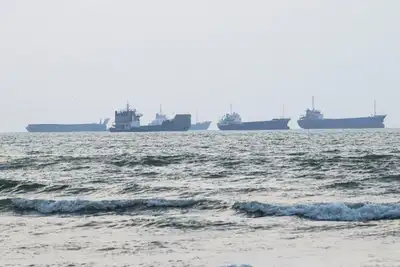
An Iranian oil tanker seen in the Persian Gulf before it delivered oil to Syria in August 2021.

More reports from industry sources confirm that Iran’s oil exports have risen despite US sanctions, as each side tries to build leverage in nuclear talks.

Reuters reported on February 10 that in the past two months daily shipments have surpassed one million barrels a day, the highest since May 2019, when the Trump administration cancelled waivers allowing eight countries to import limited quantities of Iranian oil.

Between May 2019 and late 2020, Iran’s clandestine oil exports hovered around 200,000 bpd, or 10 percent of its sales before Donald Trump withdrew from the Iran nuclear agreement, JCPOA, and imposed sanctions.

However, around the time of US presidential elections in the fall of 2020, reports emerged that Iran had increased shipments to more than half a million barrels per day.

This coincided with the time when candidate Joe Biden announced his decision to reverse Trump’s policy of ‘maximum pressure’ against Iran and start negotiations to revive the JCPOA.

The latest news about higher exports, reported by Reuters quoting industry sources, coincide with the most critical phase of indirect nuclear talks the Biden Administration started with Iran more than 10 months ago. The talks held in Vienna involve all the signatories of the JCPOA, including China that is widely believed to be the biggest customer of Iran’s illicit exports.

The Chinese government that mostly abided by the sanctions, increasingly shows defiance to the Biden Administration. A spokesman responded to questions about its oil imports by Reuters, implicitly confirming and challenging the sanctions.

The "international community, including China, has been conducting normal cooperation with Iran under the global legal framework, which are both reasonable and legitimate. They deserve respect and safeguard," the spokesperson's office of China's Foreign Ministry said.

Tehran clings to these sort positions by China and Russia in order to demand more in Vienna, and Iranian hardliners tell domestic audiences that Tehran is in a strong position and does need to compromise.

Saeed Jalili a former nuclear negotiator and an opponent of the JCPOA tweeted on February 8, before the latest reports, “They were saying that Iran’s oil exports should reach zero, while after three years we are selling 1.2 million barrels pd…and this volume is increasing.”

This is a sign of how more oil exports strengthen the hand of hardliners who oppose any compromise with the United States and push for expansion of the nuclear program.

In another tweet, Jalili posted a video of a speech to supporters of the Iranian regime, in which he says the US policy of pressuring Iran has failed and uses a clip from the State Department spokesperson, Ned Price declaring the sanctions policy as an utter failure, to prove to the public that there is no fear and Iran should stand tall.

American proponents of a tough policy toward Iran accuse the administration of abandoning sanctions enforcement amid nuclear talks and allowing Iran to increase oil exports, which could harm their own leverage in Vienna.


Most Viewed

Iran negotiators ordered to return after internal rift over Islamabad talks
1
EXCLUSIVE

Iran negotiators ordered to return after internal rift over Islamabad talks

2
EXCLUSIVE

Iran’s central bank warns economy may take 12 years to rebuild after war

3
INSIGHT

Iran's digital economy battered by prolonged blackout

4
ANALYSIS

US blockade enters murky phase as tankers spoof signals and buyers hesitate

5
PODCAST

Iran-US ceasefire nudges sidelined Arab states toward Israel, expert says

Banner
Banner

Spotlight

  • Hardliners push Hormuz ‘red line’ as US blockade tests Iran’s leverage
    INSIGHT

    Hardliners push Hormuz ‘red line’ as US blockade tests Iran’s leverage

  • Ideology may be fading in Iran, but not in Kashmir's ‘Mini Iran'
    INSIGHT

    Ideology may be fading in Iran, but not in Kashmir's ‘Mini Iran'

  • War damage amounts to $3,000 per Iranian, with blockade set to add to losses
    INSIGHT

    War damage amounts to $3,000 per Iranian, with blockade set to add to losses

  • Why the $100 billion Hormuz toll revenue is a myth
    ANALYSIS

    Why the $100 billion Hormuz toll revenue is a myth

  • US blockade targets Iran oil boom amid regional disruption
    ANALYSIS

    US blockade targets Iran oil boom amid regional disruption

  • Iran's digital economy battered by prolonged blackout
    INSIGHT

    Iran's digital economy battered by prolonged blackout

•
•
•

More Stories

Russia Says There Is Still A Long Way To Reach A Deal With Iran

Feb 10, 2022, 19:52 GMT+0

Russia has said there is still a long way to go in the Vienna talks before the 2015 nuclear deal between Iran and world powers can be revived.

According to Reuters, Foreign Minister Sergei Lavrov made the remarks on Thursday as indirect talks between Tehran and Washington to salvage the deal resumed on Tuesday after a 10-day break.

Although the negotiating teams in Vienna give little away as to whether they are closer to resolving the thorny issues, Lavrov’s comment is in contradiction to that of Mikhail Ulyanov, Russia’s lead negotiator and its ambassador to the International Atomic Energy Agency, who said the talks were “five minutes” from the finish line.

“A draft of the final document has been crafted,” he said. “There are several points there that need more work, but that document is already on the table.”

Reiterating Iran’s demand that the US remove all sanctions imposed under ‘maximum pressure’ since 2018 when the Trump administration left the 2015 deal (the JCPOA, Joint Comprehensive Plan of Action), Foreign Minister Hossein Amir-Abdollahian said Monday that “the latest texts obtained from the Vienna talks” failed to address “parts of our demands for the lifting of sanctions.”

Rob Malley, the White House Iran envoy leading the American team taking part indirectly in Vienna, told the MSNBC Friday that negotiators had not reached agreement on central issues, such as exactly which US sanctions should be lifted.

Republican Senator Says Iran Nuclear Deal 'Is Horrible'

Feb 9, 2022, 21:00 GMT+0

US Senator Rick Scott (R-Florida) said Wednesday that Iran foments unrest in the Mideast and should not have nuclear weapons and the JCPOA “is a horrible deal.”

Answering questions by Iran International TV, Sen. Scott said, “I believe Iran's whole focus is on unrest, supporting Hezbollah, Hamas, threatening Israel, and it's despicable. I don't believe they should have a nuclear weapon. I think the Iran deal is a horrible deal. ”

As talks in Vienna to revive the Obama-era JCPOA reach what diplomats say its final stage, Republican and some Democratic lawmakers are voicing concern about the Biden Administration strategy in the talks.

An agreement with Iran “should be treated as a treaty and come in front of the Congress; we have to review it. But the Biden admin is a bunch of appeasers...I'd do everything I can to stop them...,” Scott said.

Thirty-three Republican Senators wrote to President Joe Biden on Monday saying that if an agreement with Iran does not get bipartisan support and Senate approval, it will be torn up if they win in 2024. Democratic Senator Bob Menendez also last week questioned Biden’s Iran policy last week in a detailed speech on the Senate floor.

“We in Congress can pass legislation that takes away authority of the executive branch in making a decision, but the truth is they don't have the authority. This deal needs to come back to Congress and should never be done by executive branch by themselves,” Scott reiterated on Wednesday.

US Says Iran Nuclear Talks At Urgent Point, Few Weeks To Get Deal

Feb 9, 2022, 20:39 GMT+0

The White House publicly pressured Iran on Wednesday to revive the 2015 Iran nuclear agreement quickly, saying only a few weeks remain to restore the deal.

"Our talks with Iran have reached an urgent point," White House spokeswoman Jen Psaki told reporters, noting that the US special envoy for Iran, Rob Malley, has returned to Vienna for indirect talks with Iran on both sides resuming compliance with the pact.

"A deal that addresses the core concerns of all sides is in sight, but if it's not reached in the coming weeks Iran's ongoing nuclear advances will make it impossible for us to return to the JCPOA," she said, referring to the deal by the acronym for its official name, the Joint Comprehensive Plan of Action.

Psaki's comments echoed those of a senior U.S. State Department official who told reporters on Jan. 31 that "we only have a handful of weeks left" to revive the agreement.

Under the accord, Iran restricted its nuclear program to make it harder to obtain the fissile material to make a bomb. In return, the United States and other nations eased sanctions that have crippled Iran's economy.

Former US President Donald Trump abandoned the deal in 2018, arguing that it had failed to stop Iran's support for regional proxies and gave Tehran too much sanctions relief for the nuclear restrictions. He then restored U.S. sanctions, prompting Iran to begin violating the deal's nuclear limits a year later.

Reporting by Reuters

US Politicians Cross Swords As Iran Nuclear Talks Reach Endgame

Feb 9, 2022, 20:32 GMT+0
•
Iran International Newsroom

Criticism by opponents of the Biden Administration efforts to revive the Iran nuclear deal continues as Vienna talks reach what diplomats call the final phase.

With talks resumed Tuesday, the United States special Iran envoy Rob Malley took time Wednesday to give a classified briefing to members of Congress on talks in Vienna to revive the 2015 JCPOA (Joint Comprehensive Plan of Action), which the US left in 2018.

Republican opponents of the JCPOA were left unimpressed. Senator Ted Cruz told an Iran International reporter that "I'm deeply concerned this administration is bound & determined to cut a deal, no matter how bad it is. It's catastrophically dangerous. Weakness and appeasement of our enemy does not work."

Republican House member Claudia Tenney said Malley’s briefing had left her with "more questions than answers" and demanded the envoy testify openly to give details of what the US was “offering” in Vienna.

By contrast, Democratic Party Senator Chris Murphy said that what Malley had said about Iran’s expanding nuclear program outside JCPOA limits had been “sobering and shocking” and had confirmed his support for reviving it.

Officials in President Joe Biden’s administration have referred to importance of consulting both with overseas allies and at home. Jalina Porter, the State department principal deputy spokesperson, told a press briefing Tuesday that Biden considered “a bipartisan approach to Iran” as “the strongest way to safeguard US interests for the long term.”

Porter promised that a US return to the JCPOA would involve considering legal implications, including the Iran Nuclear Agreement Review Act, which Republican senators this week pointed out requires the president to submit to Congress any ‘new’ agreement.

In Vienna, with talks resuming Tuesday after a break since January 28, several officials claimed that agreement on restoring the deal was in sight.White House press secretary Jen Psaki told reporters Wednesday that talks were at an urgent point.

CNN cited three US officials Wednesday that agreement was needed by the end of February before the US “changed tack.” Tehran has consistently rejected what it calls “artificial deadlines.”

Describing the Vienna process Tuesday, the European foreign policy chief Josep Borrell said there had been a “US offer” and a “counteroffer.” He said both Iran and the US had been “showing willingness” as the final stage approached: "I don't know if it's going to be one week, two weeks, three weeks, but certainly we are in the last steps of the negotiation."

Limiting ‘break out’ time

Speculation this week has centered on the ‘break out’ time the US would require as underlying any renewed agreement. When the JCPOA was inked in 2015, US experts calculated the deal’s restrictions meant it would take Iran a year to assemble enough sufficiently enriched uranium for a crude bomb.

A restored JCPOA would not achieve the same break out time as in 2015, experts say, because of the advances Iran has made in its expertise, but they say it would extend the current break out time, which some put at weeks rather than months.

“Even if the original terms of the JCPOA can be reimposed, Iran will have cleared many of the technical hurdles that enabled the original agreement to put Iran at least one year away from a weapons capability,” Jon Wolfsthal, a special advisor to Vice-President Biden on nonproliferation,” wrote this week in the Bulletin of Atomic Scientists. “An inability to recreate a one-year breakout timeline is the price that the world must pay for President Trump’s decision to withdraw from the carefully negotiated and verified agreement.”

Iran's Security Chief Criticizes Lack Of Unity In US Over Nuclear Talks

Feb 9, 2022, 20:00 GMT+0

Iran's national security chief has said there is no decision-making consistency in the US government to work towards reentering the 2015 nuclear agreement.

In a tweet on Wednesday, Secretary of the Supreme National Security Council Ali Shamkhani said, “Voices from the US government show that there is no coherence in the country to make political decisions in the direction of advancement in the Vienna Talks”.

He added that “the US administration cannot pay for its internal disputes by violating Iran's legal rights”.

Shamkhani’s comments were in reaction to Republican senators warning that they would work to thwart any new Iran deal if President Joe Biden did not allow Congress to review and vote on any new nuclear deal with Iran.

Led by Senator Ted Cruz, a long-time opponent of the nuclear deal, the senators told Biden in a letter on Monday that they would use "the full range of options and leverage available" to ensure that his government adhered to US laws governing any new accord with Iran.

Republican lawmakers have been warning Biden from the early days of his administration when he criticized his predecessor’s decision to pull out of the Joint Comprehensive plan of Action (JCPOA) and begin talks with Iran to restore the agreement.

Republicans have argued that the JCPOA was a weak arrangement that did not prevent Iran from ultimately acquiring nuclear weapons and did not cover other issues, such as Tehran’s ballistic missiles and its aggressive regional policies through its proxies.