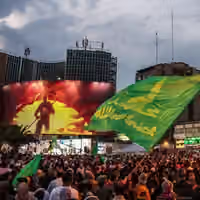
Iran Renews Vow To Avenge Qasem Soleimani's Death

The head of Iran’s Judiciary has vowed that revenge for the killing of Iranian Quds Force commander Qasem Soleiman will deficiently take place.

The head of Iran’s Judiciary has vowed that revenge for the killing of Iranian Quds Force commander Qasem Soleiman will deficiently take place.
Gholamhossein Mohseni-Ejei made the remark on Wednesday during a meeting with staff members in charge of holding the ceremonies for the second anniversary of Soleimani’s killing.
Soleimani was killed in a targeted US drone strike as he arrived at Baghdad airport on January 3, 2020.
Earlier in the week, the former head of Israel’s Military Intelligence, Major-General Tamir Hayman, confirmed his country’s role in the operation to kill the commander.
A lot of high-ranking Iranian military personnel and political figures, including Iran’s Supreme Leader Ali Khamenei himself, have promised revenge for the Soleimani's targeted killing.
“They must know that whenever possible, at the appropriate time, they must face revenge”, Khamenei said some two weeks before the first anniversary of his killing.
Iran has listed a host of US and Israeli officials as responsible for carrying out the attack, ordered by former president Donald Trump.
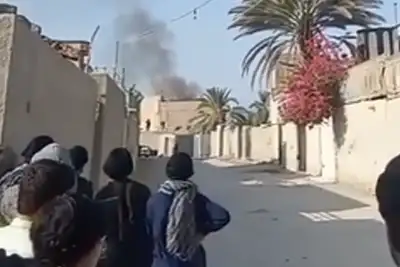

The Saudi-led coalition fighting in Yemen has rejected Iranian accusations that it delayed arrangements for the evacuation of Tehran’s envoy from Sanaa.
The coalition said on Wednesday it had helped get the sick ambassador out of the country before he died.
Iran said on Tuesday that Hasan Irloo (Irlu), its ambassador to Houthi-run north Yemen, had died of Covid-19 after his evacuation from Yemen, and accused Saudi Arabia of delaying his departure from the capital, Sanaa.
The coalition, which has been fighting the Iran-aligned Houthi movement since early 2015, said in a statement it had facilitated Irloo's repatriation and had arranged for an Iraqi medical plane to fly him from Sanaa to Basra in Iraq.
It said it began facilitating Irloo's transfer from Sanaa on humanitarian grounds, considering mediation from Oman and Iraq, within 48 hours of being informed of his health condition.
It had provided permits and logistical support for the Iraqi air force C-130 medical evacuation plane that took Irloo out, coalition spokesperson Turki al-Malki said.

The coalition did not say in the statement what medical condition Irloo had been suffering from. He was buried in Iran on Wednesday.
Fars news agency affiliated with Iran’s Revolutionary Guard repeated Wednesday that Saudi Arabia’s “delay caused the martyrdom” of Irloo, quoting the Houthi foreign minister Hisham Sharaf.
In his funeral ceremony on Wednesday, deputy commander of the IRGC, Ali Fadavi, portrayed Irloo as a longtime “fighter in the resistance front”, a term the Islamic Republic uses to describe its allies and proxies in the region. He accused the United States and “its allies” of delaying Irloo’s evacuation, saying that when he was finally brought to Iran he had been suffering from Covid “for a long time”.
Last week controversy ensued after a Wall Street Journal report said that the Houthis had asked Iran to withdraw Irloo. Both Iran and the Houthi leadership denied the report, insisting that the ambassador suffered from Covid and needed to receive medical attention in Iran.
But speculations on Iranian social media continued that Irloo had been perhaps killed or injured in Yemen and both Tehran and Riyadh preferred to say he was evacuated for medical reasons. Saudi Arabia has been conducting a fierce air campaign on suspected military and Iran-related targets in and around Sanaa.
Saudi Arabia and Iran, the region's Sunni Muslim and Shi'ite powerhouses, are bitter rivals but they launched direct talks this year as global powers try to salvage a nuclear pact with Iran and as UN-led efforts to end the Yemen war have stalled.
The bilateral talks have not resulted in any breakthrough, Iran said on Sunday. The two countries severed diplomatic ties in January 2016, after mobs in Iran attacked and ransacked Saudi diplomatic missions.
Last December, the US Treasury blacklisted Irloo and described him as an official of Iran's elite Quds Force, the overseas arm of Iran's Revolutionary Guards and a pillar of Iranian efforts to project power in Yemen, Syria and elsewhere.
Two Yemeni political sources and a foreign source have said Irloo had recently kept a low profile due to illness and political tension.
With reporting by Reuters

Iran’s Revolutionary Guard (IRGC) has fired cruise missiles and other weapons during its ongoing military drills in the Persian Gulf and the Strait of Hormuz.
On the second day of the military maneuvers on Tuesday, five anti-ship cruise missiles were fired from the shore and Zolfaghar fast patrol naval vessels at designated targets on the sea, the IRGC said.
IRGC also put to test the latest version of its single-engine tactical unmanned aerial vehicle, named Mohajer, capable of carrying a multispectral surveillance payload and up to two precision-guided munitions.
The operations also included Bavar missile air defense system and Sukhoi Su-22, old Russian fighter-bombers, as well as surface-to-surface ballistic missiles.
The five-day drills involve various IRGC units, such as the aerospace force and the cyber-electronic division and covers the coastlines of the southern provinces of Hormozgan, Bushehr, and Khuzestan.
About a fifth of oil consumed globally passes through the strategic Hormuz Strait in the Persian Gulf, where periodic confrontations have taken place between Iran’s military and the US Navy.

A top Israeli intelligence official has confirmed his country’s role in the assassination of Iranian Quds Force commander Qasem Soleimani last year.
The former head of Military Intelligence, Major-General Tamir Hayman, disclosed the information in an interview with an Israeli magazine.
Soleimani was killed in a targeted US drone strike as he arrived at Baghdad airport on January 3, 2020.
A few days after he was killed, NBC News reported that Israeli intelligence helped the US through its informants at the Damascus airport who tipped off the CIA about the time Soleimani's plane took off for Baghdad.
Another report published in Mayhad said that Israel gave the US access to Soleimani’s multiple cellphone numbers to help track him, but no top official had acknowledged Israel’s role before.
“The assassination of Soleimani was an achievement since our main enemy, in my eyes, is Iran,” Hayman said. “It is rare to locate someone so senior who is also the operator on the ground, the strategist and the fighter.”
He added that Israel has carried out multiple operations to disrupt the spread of Iranian weapons and funds throughout the region but described Soleimani’s killing as one of “two significant and important assassinations” during his tenure, the other being Islamic Jihad leader Baha Abu al-Ata.
“We thwarted a lot of ways they tried to smuggle weapons and money and the headline of all of this is stopping the Iranians from entrenching themselves in Syria,” he said.

Iran’s Revolutionary Guard launched large-scale air and naval drills in the Persian Gulf on Monday, while pledging a tough repsonse to Israel in case of attack.
Earlier, some media outlets reported that anti-aircraft fire was heard around Iran’s sole nuclear power plant at Bushehr, on the Persian Gulf.
State media later reported that the sounds were related to an air defense exercise as part of the larger drills, while warning Tehran would give a "crushing response" to any Israeli attack.
"This air defense exercise took place at 5 a.m. local time (0130 GMT) with full preparation and coordination with the armed forces," Bushehr's deputy governor Mohammadtaghi Irani told Iranian state media.
Iran has accused Israel of several attacks on facilities linked to its nuclear program and killing its nuclear scientists over the past years. Israel has neither denied nor confirmed the allegations.
Israel has long threatened military action against Iran, and recently reportedly allocated $1.5 billion for an attack if Iran gets dangerously close to obtaining a nuclear weapon.
The escalation comes as world powers have been discussing the revival of the 2015 Iranian nuclear deal limiting Iran’s nuclear program, which Israel has opposed.
Iran has warned of a "crushing" response to any Israeli move against the Islamic Republic.
"If Israel carries out attacks against Iran, our armed forces will immediately attack all centers, bases, routes, and spaces used to carry out the aggression," Iranian commander Gholamali Rashid said, according to Nournews.
The spokesman of the joint drills, codenamed The Great Prophet 17, said on Monday that the five-day military maneuvers will be conducted by IRGC’s ground forces, air force, and navy in cooperation with the cyber electronic wing of the IRGC along the coastal regions of three southern provinces of Hormozgan, Bushehr, and Khuzestan.
General Abbas Nilforoushan added that the maneuver is simulated based on a hybrid warfare model to display the country's military might.
About a fifth of oil that is consumed globally passes through the strategic Strait of Hormuz Strait in the Persian Gulf, where periodic confrontations have taken place between Iran’s military and the US Navy.
Indirect talks between Iran and the United States to reinstate the nuclear pact have made little discernible progress since they resumed last month for the first time since Iran's hardline president, Ebrahim Raisi, was elected in June.
The 2015 deal lifted sanctions against Tehran in return for restrictions on Iran's nuclear activities aimed at extending the time Tehran would need to obtain enough fissile material for a nuclear bomb if it chose to - so-called breakout time - to at least a year from roughly two to three months.
In response to Trump's "maximum pressure" policy, Iran in 2019 started breaching the deal's nuclear restrictions and pressing ahead further with its atomic activities. Iran has enriched more than 200 kilograms of uranium to 20 and 60 percent purity, substantially reducing the time needed to produce a bomb.
Tehran says its nuclear steps are reversible if all sanctions are lifted in a verifiable process.
With reporting by Reuters, Iran media

Iran’s communication minister said Saturday "there will be good news” about launching a satellite until March, after recent reports about preparations at a launch site.
The Associated Press reported earlier this week that evidence points to Iran preparing a space launch and Iranian media offered a list of upcoming planned satellite launched.
In his first press conference, communication minister Issa Zarepour said that Iran’s space program was put on the backburner during former president Hassan Rouhani’s eight-year administration (2013-2021), but now its budget has increased. He added that the country needs a ten-year plan to expand its satellite program to put vehicles at a higher orbit.
Currently, Iran can reach 500 kilometers into space, which is considered a lower orbit. President Hassan Rouhani ordered officials to aim for the 36,000-kilometer orbit and increased the space program budget up to 12 times.
Foreign observers and governments have charged that Iran's space program is a cover to justify its testing of ballistic missiles. Israel and the United States have said that Iran's space program is against a UN resolution banning Iranian missiles with nuclear weapons capability.