Iran Commander Says 'Misunderstandings' With Gulf States Partly Resolved

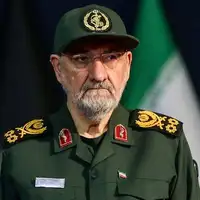
The chief of staff of Iran’s armed forces said Monday that Tehran had meetings with Saudi And Emirati sides and to an extent “misunderstandings” were resolved.

The chief of staff of Iran’s armed forces said Monday that Tehran had meetings with Saudi And Emirati sides and to an extent “misunderstandings” were resolved.
General Mohammad Bagheri was speaking in a meeting with the visiting deputy commander of Oman’s armed forces. He added that no contacts have been established with Bahrain, but Oman can perhaps help in that matter.
Iranian and Saudi officials held meetings earlier this year, that according to Riyadh were exploratory and did not lead to any breakthrough. Saudi Arabia severed ties with Iran in 2016.
Saudi and Iranian experts took part in a security dialogue in the Jordanian capital Amman which discussed confidence-building measures between the regional rivals, Jordan's state news agency Petra reported on Monday.
A senior Iranian diplomat told Reuters that no Iranian official attended the session, which Petra said was hosted by the Arab Institute for Security Studies.
"What was held in Amman was not an official meeting. But of course, such meetings between academics are useful to give better understanding about realities between the two neighbors," the diplomat said.
Israeli Prime Minister Naftali Bennett visited Abu Dhabi and met Abu Dhabi Crown Prince Sheikh Mohammed bin Zayed al-Nahyan on Monday, where they discussed Iran among other issues.


Lawdan Bazargan whose brother was executed as a political prisoner in Iran in 1988, argues that a diplomat who defended prison killings should not teach in a US college.
-------------------------------------------------------------------------------------------------------------------------
Opinion
It's been 33 years, and I still don't know where my brother is buried: and I am not the only one. The families of thousands of victims of the 1988 prison massacre in Iran have never received so much as an acknowledgment from the regime that it ever happened. Moreover, one of the top diplomats from that time, who was covering up the crime, now flourishes as a professor at a top American college. The school has so far refused to hold him accountable. Americans committed to human rights should refuse to be silent. It's time Mohammad Jafar Mahallati, the so-called peace professor at Oberlin College, answer for his crimes.
When the Iranian Revolution happened in 1979, my brother Bijan was a college student in London. He was a brilliant man with his whole life ahead of him. At the same time, Mahallati—now a professor at Oberlin College in Ohio—studied in a college in the United States. Despite my parents' pleas, Bijan returned home soon after the revolution to help rebuild his homeland. He joined one of the country's leftist parties challenging the oppressive Islamic regime that weaponized religion to suppress dissident voices and was soon arrested, jailed, and tortured for years without an indictment.

Meanwhile, Mahallati returned to Iran too and climbed the political ladder. He was named spokesman for the Islamic Republic of Iran's Foreign Ministry, preaching the virtue of Islamic values and becoming one of the faces of the Islamic regime's brutality.
Bijan eventually received a 10-year prison sentence for being a member and supporter of a leftist party. Though he suffered extreme physical and psychological abuse in prison, going on a hunger strike with fellow detainees to demand better conditions, and being denied badly needed care for a medical condition, my family and I maintained hope that we would someday reunite.
That all changed in the summer of 1988, six years and three months into his sentence, when Bijan and thousands of other political prisoners were executed by the Iranian government based on a Fatwa (Islamic Decree) issued by Ruhollah Khomeini, the Supreme Leader. Bijan was buried in an unmarked mass grave. The year prior, while my brother unjustly languished in prison, Mahallati was promoted to Iranian ambassador to the United Nations. Amnesty International estimates that 5,000 political prisoners were murdered in the summer of '88 extrajudicial killings.

For the past 12 years, as a religion professor at Oberlin College, Mahallati has been helping shape the minds of American students. But the fact remainsthat by November 1988, the regime Mahallati represented at the UN was partly denying and partly justifying the executions. And despite a resolution by the UN General Assembly that expressed "grave concern" about "a renewed wave of executions in the period July-September 1988," Mahallati, in his official capacity, said the resolution was based on "fake information."
Political dissidents in Iran remain under threat of unlawful imprisonment or death, yet the eyes of the world stay closed to their struggle. As Iranian freedom of speech activist and blogger Hossein Ronaghi recently wrote in the Wall Street Journal, "For us, it is as if there are two Irans—the one where we live and another that you read about. Your Iran is defined by a pesky nuclear negotiation. Ours is much worse. It is a religious police state where we live in fear, with countless red lines that most dare not cross. It is a country of repression, censorship, and violence."
This isn't a story about so-called "cancel culture" or free speech on college campuses: this is about human rights as a beacon of hope and applying a standard of treatment to all people, no matter where they're born. In a letter to Oberlin President Carmen Twillie Ambar on October 8, 2020, which still remains unanswered, I joined other family members of those killed by the government Mahallati represented, “We want Mahallati removed from his post, we want an apology, and we want to know how someone with Mahallati's past could rise to prominence at such a prestigious institution.”
I cannot sit idly by while Mahallati preaches peace when he's done so much to disrupt it. When I went to the Oberlin campus the first week of November, I hoped the administration would meet with family members of the victims and me on behalf of Bijan and thousands of others who gave their lives for a better world. Unfortunately, the administration decided to ignore us once again.
As an Iranian-American, I have long watched the human rights abuses back home viewed as a sideshow to broader international policy fights. But most difficult of all has been watching Americans who say they're committed to protecting human rights ignore the Iranian people's suffering—past and present. Human right is not a leftist issue or a conservative issue; it is the moral rod that should guide us all.
Opinions expressed by the author are not necessarily the views of Iran International.

Iran has offered citizens a monthly 3-4-dollar cash handout to compensate for the elimination of an $8 billion subsidy for food and medicine in its new budget.
The head of the Planning and Budget Organization, Masoud Mirkazemi on Monday told local media that based on family incomes a monthly cash handout of 900,000-120,000 rials will be paid to citizens. In the current free market exchange rate, the sum equals 3-4 US dollars, or one kilogram of red meat per month. Annual inflation hovers around 45 percent.
President Ebrahim Raisi presented his draft budget for the next calendar year that starts on March 21, 2022, on Sunday. The budget is based on over-optimistic oil export estimates and other revenues that on paper have produced a balanced budget. One measure with a crucial impact on impoverished workers is the elimination of cheap government dollars for imports of basic food items, such as wheat and sugar.
Iran struggles with a deep economic crisis triggered by low oil exports due to US sanctions imposed since 2018. Oil revenues finance more than half the government budget in ordinary circumstances.
Tehran has been engaged in indirect nuclear talks with the United States since April that if successful could lift the economic sanctions, but so far there has been no breakthrough.

Saudi Arabia's envoy to the United Nations said the kingdom wanted more substantive talks with Iran but that Tehran was so far biding its time and playing "games" in the discussions.
Riyadh and Tehran launched direct talks this year at a time global powers are trying to salvage a nuclear pact with Tehran and as UN-led efforts to end the Yemen war stall.
The kingdom, which cut ties with Tehran in 2016, has described the talks as cordial but exploratory, while an Iranian official in October said they had gone a "good distance".
Riyadh's UN envoy Abdallah Al-Mouallimi told Saudi newspaper Arab News in a video interview published on Monday that no major results had been achieved.
"We would like to push these discussions towards substantive issues that involve the behavior of the Iranian government in the region," Mouallimi said.
"But as long as the Iranians continue to play games with these talks, they are not going to go anywhere," he said. "The Iranians take a long-term attitude towards these talks. We are not interested in talks for the sake of talks."
Tensions between the two foes spiked in 2019 after an assault on Saudi oil plants that Riyadh blamed on Iran, a charge Tehran denies, and continue to simmer over Yemen where a Saudi-led coalition is battling the Iran-aligned Houthi group.
"It (Yemen) has proved to be intractable simply because the Houthis continue to receive a continuous supply of weapons and ammunition from their benefactors, particularly Iran," Mouallimi said, reiterating a charge that both Iran and the group reject.

Iran appears to be preparing for a space launch as talks continue in Vienna over its tattered nuclear deal, according to an expert and satellite images.
The likely blast off at Iran's Imam Khomeini Spaceport comes as Iranian state media has offered a list of upcoming planned satellite launches in the works for the Islamic Republic's civilian space program, which has been beset by a series of failed launches.
Iran’s President Ebrahim Raisi visited a space technology exhibition in Tehran on November 26 and asked officials to work on reaching the 36,000 km orbit around the earth in four years.
Currently Iran is attempting to place satellites in the 500-kilometer orbits.
Minister of Communications and Information technology, Issa Zarepour, who supervises Iran’s space program had told local media that the project to reach the high orbit was planned to be accomplished in 10 years, but Raisi asked to speed up the program. The president pledged all the assistance needed to help Iran’s Space Agency.
Iran's Revolutionary Guard runs its own parallel program that successfully put a satellite into orbit last year.
Satellite images taken Saturday by Planet Labs Inc. show activity at the spaceport in the desert plains of Iran's rural Semnan province, some 240 kilometers (150 miles) southeast of Tehran.
A support vehicle stood parked alongside a massive white gantry that typically houses a rocket on the launch pad. That support vehicle has appeared in other satellite photos at the site just ahead of a launch. Also visible is a hydraulic crane with a railed platform, also seen before previous launches and likely used to service the rocket.
Conducting a launch amid the Vienna talks fits the hardline posture struck by Tehran's negotiators, who already described six previous rounds of diplomacy as a "draft," exasperating Western nations. British and German foreign minister have gone as far as to warn that "time is running out for us at this point."
The United States and other countries are concerned that Iran’s satellite program is a cover for developing ballistic missiles that can exceed the current 2,000 km range of Iranian vehicles. Regional and Western countries say that beyond Iran’s nuclear program, its ballistic missiles should also be curbed. Highlighting a space program, Tehran can argue that it needs the technology for peaceful, space related efforts.
But all this fits into a renewed focus on space by Iran's hardline President Ebrahim Raisi, said Jeffrey Lewis, an expert at the James Martin Center for Nonproliferation Studies at the Middlebury Institute of International Studies who studies Tehran's program.
With Iran's former President Hassan Rouhani who shepherded the nuclear deal out of office, concerns about alienating the West with the launches likely have faded.
"They're not walking on eggshells," Lewis told AP. "I think Raisi's people have a new balance in mind."
With reporting by AP

An Israeli media report says the United Arab Emirates insists on buying the Iron Dome aerial defense system, as Prime Minister Naftali Bennett visits the UAE.
Bennett departed Israel on Sunday for Abu Dhabi and is scheduled to meet the de facto ruler, Crown Prince Sheikh Mohammed bin Zayed al-Nahyan on Monday, in the highest-level visit since the countries formalized relations last year.
Israel and the UAE are said to have had security and intelligence cooperation even before they established full relations last year. Both countries are concerned over multiple threats posed by the Islamic Republic of Iran. Now they can have an open cooperation, possibly in the defense field.
Israel has offered the UAE military cooperation but so far has withheld the sale of its tired-and-tested Iron Dome air defense systems. Israel Hayom reported on Sunday that officials are concerned over close ties between some circles in the UAE and Iran, but at the same time Israel is also concerned about a rapprochement between Tehran and Abu Dhabi.
In a surprising move the UAE sent its top security advisor Sheikh Tahnoon bin Zayed Al Nahyan to Tehran on December 6, who met with top officials, including President Ebrahim Raisi. The visit took place as Iran’s nuclear talks with world power in Vienna were making no progress and Tehran presented it as a diplomatic victory that regional Sunni Muslim countries were willing to have meetings at top level.
Raisi in his remarks hinted at UAE’s ties with Israel. "The Zionists in the region pursue their evil plans and wherever they can find a foothold, they try to use it as a tool for expansion and sedition, therefore, regional countries should be careful," he said.
UAE’s motives could be both hedging its bets if Iran decides to pursue a nuclear bomb and as a means of pressure on Israel to acquire the air defense systems it wants.
The UAE and its ally Saudi Arabia have been fighting Iran-backed Houthi forces in Yemen since 2015. They also backed opposing sides in the Syrian civil war. The Sunni Gulf states see Iran’s aggressive regional policies, including arming and financing militant networks as a serious threat to their security. But a nuclear Iran would pose a much higher threat and regional countries might be planning for this contingency.
Current nuclear talks are in deadlock as Iran continues to enrich uranium and gets closer to a nuclear breakout threshold.