Trump’s speech leaves Iranians guessing before Geneva talks
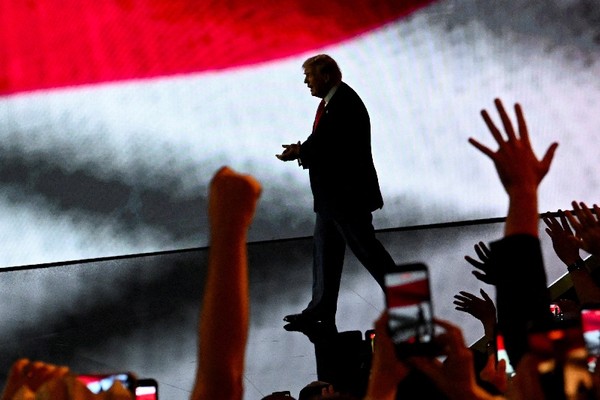
Iranians at home and abroad watched President Donald Trump’s State of the Union address late Tuesday searching for clues about war or peace—and emerged more uncertain than before.

Iranians at home and abroad watched President Donald Trump’s State of the Union address late Tuesday searching for clues about war or peace—and emerged more uncertain than before.

Iran said on Monday it does not support an interim agreement in talks with the United States and is seeking a swift, result-oriented deal focused on lifting sanctions and addressing nuclear issues, as the two sides prepare for another round of negotiations within days.
A sharp increase in US military deployments to the Middle East has intensified uncertainty in Tehran, where analysts and officials are debating whether the buildup signals imminent conflict or a bid to gain leverage in nuclear negotiations.
US President Donald Trump on Thursday warned Iran it must reach a meaningful nuclear agreement with the United States within two weeks or face consequences, as reports indicate Washington is considering limited strikes to force a deal.

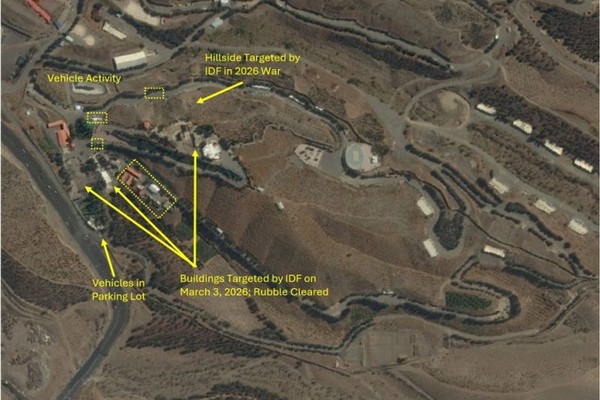
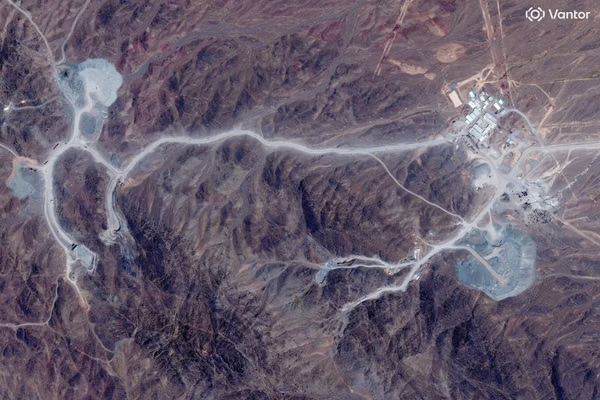
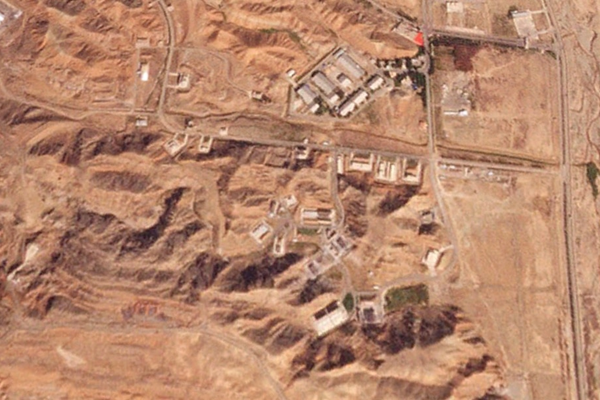
Satellite images published by Reuters on Wednesday show Iran repairing and reinforcing key military and nuclear‑linked sites amid stalled nuclear negotiations with the United States and an expanding US military presence in the region.

The second round of Iran–US nuclear talks was met with a muted and often critical reaction in Tehran, where official outlets questioned Washington’s commitment after American negotiators left Geneva within hours despite Iran’s offer to continue discussions.

Iran, the United States and their Omani mediators struck cautiously optimistic notes on Tuesday after a second round of nuclear talks in Geneva, with officials on all sides pointing to progress while emphasizing that significant hurdles remain.

The United States and Iran have begun indirect talks in Geneva on Tuesday under Omani mediation, with the threat of military action hanging over diplomacy and both sides still far apart on uranium enrichment and missiles.

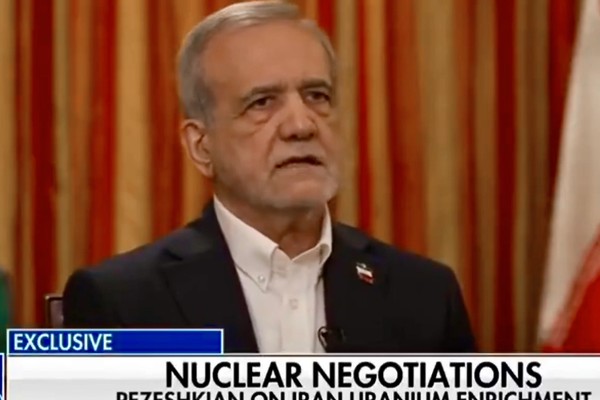
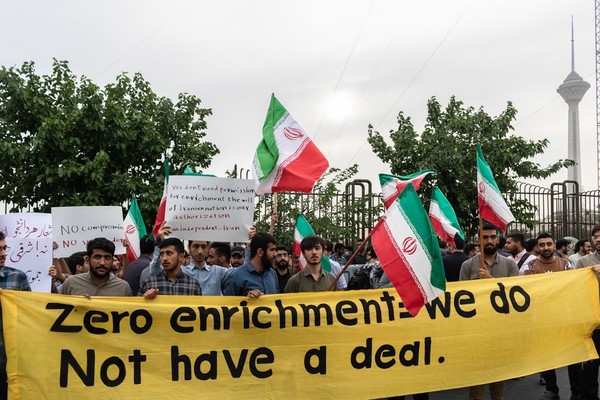
Iran is prepared to consider steps on its stockpile of highly enriched uranium as part of a nuclear deal with the United States, but the demand for zero enrichment is not on the table, Deputy Foreign Minister Majid Takht-Ravanchi said in an interview published on Sunday.

Turkey’s foreign minister has warned that expanding nuclear talks with Iran to include its ballistic missile program and regional activities would risk triggering another war, even as Washington continues to press for a broader agreement.

Israel’s Prime Minister Benjamin Netanyahu believes only direct engagement with US President Donald Trump can prevent a limited nuclear deal with Iran—and turn this moment into a decisive blow against the Islamic Republic.

Iran’s foreign minister said on Sunday that Tehran’s right to enrich uranium on its own soil must be recognized for nuclear talks with the United States to succeed, two days after the two sides held indirect discussions in Muscat aimed at testing whether diplomacy can be revived.

Iran’s leadership is edging toward a war scenario not because diplomacy is necessarily collapsing, but because confrontation is increasingly seen as the least damaging option for a ruling system under intense internal and external pressure.

As Iran and the US convene in Oman for bilateral talks, reports suggest Muslim-majority states are pushing for a framework that would include a non-aggression pact, curbs on Iran’s nuclear program and its arms support for allied militants, and reassurances on its missiles.

As Iran and the United States reshuffle the format and venue of their talks amid military threats, deep mistrust, and hardline red lines, skepticism over a breakthrough appears widespread.

A day of confusion, warnings and behind-the-scenes maneuvering ended with a fresh announcement that US–Iran talks were back on track, underscoring how fragile and contested the diplomatic process remains on the eve of a possible meeting.

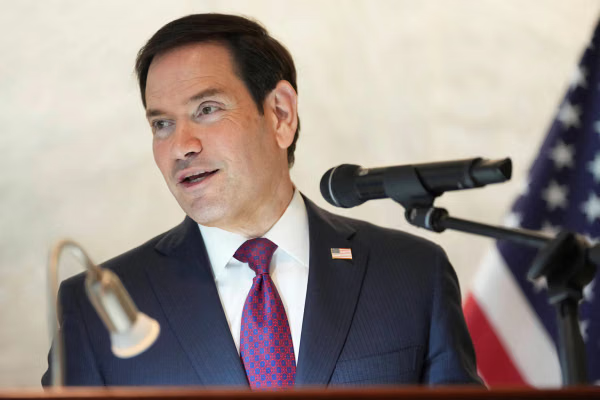
US Secretary of State Marco Rubio doubled down on Washington’s demand that any talks with Iran extend well beyond its nuclear program, while expressing doubt that negotiations would ultimately succeed.

Monday’s cautious optimism about renewed US–Iran diplomacy took several blows on Tuesday, as Tehran reportedly signaled fresh conditions for talks and Iranian and American forces clashed at sea.

Regional powers including Saudi Arabia, Qatar, Egypt and Oman are trying to bring Iran and the United States to talks in Istanbul on Friday, officials say, to stave off war – starting with Tehran’s nuclear file despite a wide gap over US demands on missiles and allied militias.

President Donald Trump on Thursday delivered a characteristically ambiguous message on Iran, pairing talk of overwhelming military force with renewed signals that he may still favor a negotiated deal.

Iran’s Foreign Minister Abbas Araghchi said on Monday that Tehran was ready for diplomacy and said he hoped there would be results soon, as Iran weighs possible talks with the United States.

Iran showed no sign of shifting its stance toward the United States at a joint press conference with Turkey on Friday, with Foreign Minister Abbas Araghchi saying Tehran had no plan to meet US officials and would not negotiate under threats or preconditions.