• العربية
  • فارسی
BrandBrand
  • Iran Insight
  • Politics
  • Economy
  • Analysis
  • Special Report
  • Opinion
  • Podcast
  • Live TV
  • Iran Insight
  • Politics
  • Economy
  • Analysis
  • Special Report
  • Opinion
  • Podcast
  • Live TV
  • Theme
  • Language
    • العربية
    • فارسی
  • Iran Insight
  • Politics
  • Economy
  • Analysis
  • Special Report
  • Opinion
  • Podcast
  • Live TV
All rights reserved for Volant Media UK Limited
volant media logo
ANALYSIS

War damage leaves Iran with few options to avert winter gas crunch

Nov 20, 2026, 22:25 GMT+0

Iran faces a worsening winter energy crisis after wartime damage to its gas infrastructure cut production capacity, with officials warning of shortages in 11 provinces and limited options to make up the shortfall.

The country's daily gas deficit, estimated at around 300 million cubic metres last winter, is expected to reach 430 million cubic metres this winter.

Continue reading

Most Viewed

Tanker loads Iranian crude in Persian Gulf as Tehran weighs resuming exports
1

Tanker loads Iranian crude in Persian Gulf as Tehran weighs resuming exports

2

Houthi missile attack damages Riyadh’s tallest building

3

GTA 6 costs, slow internet frustrate Iranian gamers, fuel satire

4

Iran readies tankers to run US blockade, threatens Persian Gulf oil if fired on

5
ANALYSIS

War damage leaves Iran with few options to avert winter gas crunch

Banner

Spotlight

  • Iran-linked hackers posed as US expert to target Australian broadcaster
    PODCAST

    Iran-linked hackers posed as US expert to target Australian broadcaster

  • Who gets to be a journalist? Iran seeks greater control over press
    INSIGHT

    Who gets to be a journalist? Iran seeks greater control over press

  • Iran hardliners push tanker convoy to defy US blockade

    Iran hardliners push tanker convoy to defy US blockade

  • War damage leaves Iran with few options to avert winter gas crunch
    ANALYSIS

    War damage leaves Iran with few options to avert winter gas crunch

  • A tough winter for Iran's cement industry, a tougher one for steel
    ANALYSIS

    A tough winter for Iran's cement industry, a tougher one for steel

  • How Iranians are turning grief into defiance
    OPINION

    How Iranians are turning grief into defiance

Banner
Banner
Banner
Banner
Banner
Banner
•
•
•

More Stories

War damage leaves Iran with few options to avert winter gas crunch

Nov 20, 2026, 20:14 GMT+0
•
Dalga Khatinoglu
100%
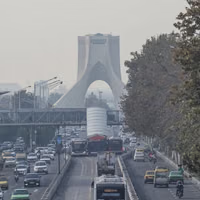
Traffic moves along a smog-covered highway near Tehran's Azadi Tower, as air pollution blankets the Iranian capital, November 18, 2026

Iran faces a worsening winter energy crisis after wartime damage to its gas infrastructure cut production capacity, with officials warning of shortages in 11 provinces and limited options to make up the shortfall.

The country's daily gas deficit, estimated at around 300 million cubic metres last winter, is expected to reach 430 million cubic metres this winter.

Mohammad Sadegh Azimifar, head of the National Iranian Oil Products Distribution Company (NIOPDC), has announced that 60 million litres of kerosene have been stockpiled in some provinces facing severe gas shortages.

He said LPG reserves for household consumption would also be increased.

Azimifar also reported that 3.2 billion litres of diesel and mazut (fuel oil) have been stockpiled to compensate for gas shortages at power plants.

Production below prewar levels

Iranian officials say gas processing facilities in Asaluyeh were targeted during the recent war, reducing the country's daily gas production capacity by 230 million cubic metres.

Some facilities have returned to operation in recent weeks, bringing the daily production shortfall down to 130 million cubic metres.

The latest figures released by Iranian gas officials indicate that the country is currently producing around 690 million cubic metres of gas per day (mcm/d), compared with 793 mcm/d during the same period last year.

During the peak winter consumption period, Iran normally raises daily gas production to more than 830 mcm/d.

It remains unclear whether all production facilities are operating at their full technical capacity. Nevertheless, the available figures suggest that Iran's gas production capacity has declined by at least 100 mcm/d.

These figures refer to raw gas extracted from fields, rather than processed gas delivered to the national network. Non-methane components are removed during processing, while some gas is consumed by production and transmission facilities.

Last winter, for example, Iran extracted around 837 mcm/d of raw gas but delivered approximately 750 mcm/d of processed gas to the national network.

Of that amount, just under 700 mcm/d reached domestic consumers, with around 40 mcm/d exported and the remainder lost through the country's ageing transmission and distribution network.

Winter demand forces cuts to industry

According to Statistical Center data, Iran's daily household gas consumption in winter is more than 2.5 times its average level during other seasons. A similar seasonal pattern applies to the commercial, public and agricultural sectors.

To meet this demand, the government sharply curtails gas supplies to industries, petrochemical plants and power stations.

Last winter, combined gas consumption by households and the agricultural, commercial and public sectors reached 388 mcm/d, compared with an average of 154 mcm/d during other seasons.

By contrast, daily gas deliveries to power plants, petrochemical facilities, industries and the transport sector fell to 311 million cubic metres, down from an average of 493 mcm/d during other seasons.

With little scope to restrict household consumption during winter, the government has to absorb the seasonal surge by reducing supplies to other sectors.

Limited alternatives to natural gas

Iran already made extensive use of alternative fuels in power plants and industrial facilities last winter, leaving limited room to compensate for further gas shortages.

Only 15% of the country's thermal power generation capacity can operate on liquid fuels, namely mazut and diesel, according to the report's figures.

These power plants already switch to alternative fuels during peak winter demand, leaving little additional scope to increase their use.

Meanwhile, half of the industrial sector's winter gas consumption comes from small-scale industries, many operating within urban areas and unable to switch to alternative fuels.

According to Kpler data, Iran exported an average of approximately 256,000 barrels per day of mazut and 378,000 barrels per day of propane and butane (LPG) by sea last year.

These exports have been halted by the US naval blockade. The combined energy content of the fuels is equivalent to around 85 million cubic metres of natural gas per day.

In theory, retaining these fuels for domestic use could help offset part of the winter gas deficit. But doing so would require industries and power plants to substitute mazut and LPG for natural gas wherever possible, alongside a suspension of natural gas exports.

Both scenarios face significant obstacles.

Many industries lack the technical capacity to switch fuels, while Iran urgently needs gas export revenues, particularly given the severe disruption to its oil revenues.

With alternative fuels already widely used last winter, power plants and industrial facilities are unlikely to have much additional capacity to absorb them this year.

Greater reliance on liquid fuels would also come against the backdrop of Iran's winter air pollution crisis. Last winter, government offices and schools were closed for approximately four weeks because of air pollution and energy shortages.

Eleven provinces face gas supply stress

Iranian officials say 11 provinces will face gas supply stress this winter, with the situation expected to be particularly severe in the northern provinces of Mazandaran, Gilan and North Khorasan.

An examination of Ministry of Energy data shows that these three provinces consumed an average of around 50 mcm/d of gas in 2023, including 21 mcm/d used by households and the commercial, public and agricultural sectors.

Azimifar's announcement that 60 million litres of kerosene have been stockpiled in some provinces facing severe shortages underscores the government's preparations for possible supply disruptions.

The stockpile has an energy content equivalent to approximately 59 million cubic metres of natural gas, although the extent to which it can replace gas consumption depends on the availability of suitable equipment and the sectors receiving the fuel.

Eight other provinces are also expected to face supply stress.

Together, the 11 provinces consumed around 240 million cubic metres of gas per day in 2023, accounting for 37% of the country's total consumption that year.

A tough winter for Iran's cement industry, a tougher one for steel

Nov 19, 2026, 04:13 GMT+0
•
Umud Shokri
100%
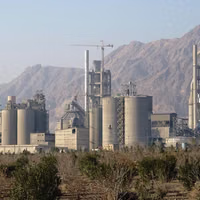
File photo: Tehran Cement factory has faced restrictions because of environmental concerns over air pollution in nearby populated areas of Iran's capital

The question facing Iran’s steel and cement industries this winter is not simply whether their gas supplies are cut, but how much they can continue producing afterward.


Iran faces a peak gas deficit of about 430 million cubic meters daily, compared with 300 million before US-Israeli strikes damaged its energy infrastructure.

Households take priority, but how much of the shortfall will fall on either industry remains uncertain.

Cement needs heat, which can come from alternative fuels. Much of Iranian steelmaking, however, needs gas to transform iron ore itself.

A cement factory that loses natural gas may still have a working kiln tomorrow. A steel plant that loses the gas feeding its iron-reduction unit may not.

Cement: The challenge of getting fuel

Iran's grey-cement producers were receiving only five to eight million cubic meters of gas daily against normal industry demand of 28 million before losing the remainder in late October, according to Tasnim. Most had already turned to mazut, a heavy fuel oil.

Iran nevertheless produced 6.44 million tonnes of clinker in October. That provides a baseline before the cutoff, not evidence that production continued at the same rate afterward.

Using the International Energy Agency's energy benchmark, maintaining October's clinker output without gas would require approximately 19 million liters of mazut daily, equivalent to about 760 deliveries by 25,000-liter tankers.

These are estimates, not forecasts. Kilns differ in efficiency, and the fuel must actually arrive. Losing 200 tanker deliveries would mean losing enough heat to produce roughly 54,000 tonnes of clinker daily, assuming no backup fuel.

Cost is another obstacle. Tasnim reported mazut transport charges of 2,000–2,500 tomans per liter. At 19 million liters, trucking alone would cost 38–47.5 billion tomans daily, excluding fuel purchases. Power plants also compete for the same tankers and mazut.

Iran International reported that 22 cement factories stopped their kilns in December 2024. Tehran Cement could not burn mazut because of pollution restrictions near populated areas. A 2026 report described Lamerd Cement operating at around 60 percent of capacity over the preceding two years because its distance from fuel suppliers made reliable mazut deliveries uneconomic.

Having an alternative fuel, in other words, does not guarantee that a factory can use it.

Cement can outlast its kilns, briefly

Even when a kiln stops, a grinding mill can turn stored clinker into finished cement, provided electricity remains available. This can conceal the scale of disruption.

In July, clinker production fell nearly 39 percent year-on-year, while cement production rose 5 percent.

October cement output averaged approximately 214,000 tonnes daily. Assuming clinker accounts for 80 percent of finished cement, sustaining that rate with every kiln stopped would consume about 171,000 tonnes of stored clinker each day.

At that pace, one million tonnes of accessible clinker would last fewer than six days. Maintaining production for a month would require more than five million tonnes. National inventories are not publicly verified.

October's exports included 668,000 tonnes of cement and 285,000 tonnes of clinker, adding to competition for available supplies. Slower production can stretch stocks but reduces sales, while electricity shortages can stop grinding mills even sooner.

Steel: Gas is an ingredient

Iran's electric-furnace steel industry is particularly exposed because much of it relies on direct-reduced iron, also known as sponge iron.

In these plants, natural gas is converted into hydrogen and carbon monoxide to remove oxygen from iron ore.

Iran produced about 14 million tonnes of sponge iron during January–June 2026. Using a published benchmark of 265 cubic meters of gas per tonne of sponge iron, maintaining that production rate would require approximately 20.5 million cubic meters of gas daily.

A daily gas reduction of five million cubic meters could put roughly 19,000 tonnes of sponge-iron production at risk; a ten-million-cubic-meter cut could put 38,000 tonnes at risk.

These are estimates of potential exposure, not predictions of actual production losses.

Plants also cannot necessarily operate at half capacity when their gas supply is halved. Iron-reduction units require specific gas flows, temperatures and chemical conditions. Below certain levels, an entire unit may have to shut down.

Where the alternatives run out

Steelmakers can keep their furnaces running for a time by using stored sponge iron, purchasing other iron materials or increasing their use of scrap metal. Iran's smaller blast-furnace operations also rely on a different production process.

Replacing just ten days of Iran's recent sponge-iron output would require around 770,000 tonnes of suitable material. Finding that much would be difficult when supplies are tight, prices are high and electricity shortages are already disrupting operations.

Some steel production could therefore continue after gas supplies are cut, but maintaining normal output would become difficult as available materials run low.

Cement producers have more flexibility, but their experience shows that fuel substitution depends on delivery, cost and permission to burn alternative fuels. Neither industry's losses can be reliably forecast without knowing how much fuel and material individual factories have in reserve.

Both industries may continue producing after gas supplies are cut, but their output will depend on the availability and cost of alternative fuels and raw materials.

What matters this winter is not simply whether factories remain open, but how much they can produce, at what cost and for how long.

Iran could launch dirty-bomb attack, but risks make it unlikely

Nov 18, 2026, 11:20 GMT+0
•
Negar Mojtahedi
100%
A US Capitol Police officer patrols the east front of the US Capitol in Washington, US September 15, 2021.

Iran could carry out a radiological or chemical-weapons attack in the United States, but operational hurdles and retaliation risks make it unlikely, experts told Iran International following reports of plots targeting senior US officials.

The assessments followed a CNN report citing seven US officials who said intelligence indicated Iran was developing plans to potentially target senior Trump administration officials in Washington with a dirty bomb or chemical weapon.

"Dirty bomb is not typically what you would use to assassinate someone," said David Albright, a physicist and president of the Institute for Science and International Security.

Farzin Nadimi, a senior fellow at the Washington Institute specializing in Iran's military affairs, assessed the likelihood of an attack as "low to very low," citing operational difficulties and the prospect of US retaliation.

Two sources cited by CNN said the planning included specific locations and targets, although there was no evidence that Iranian leaders had decided to proceed. Officials differed over whether personnel were already in place.

  • Iran developing unconventional warheads for ballistic missiles, sources say

    Iran developing unconventional warheads for ballistic missiles, sources say

The White House said there were "no credible threats to the homeland" at the time. President Donald Trump said Tuesday that Washington was investigating the information and taking the possibility seriously.

Iran denied the allegations, while Homeland Security Secretary Markwayne Mullin described the planning as "aspirational."

Iran's chemical-weapons history

Iran's history of acquiring and transferring unconventional weapons provides grounds for taking the warnings seriously, Behnam Ben Taleblu, senior director of the Foundation for Defense of Democracies' Iran Program, said.

"These are threats that do need to be taken seriously," Taleblu said. "Conversely, the intelligence leaks and the sources should also be scrutinized."

Taleblu cited Iran's past transfers of chemical weapons to Muammar Gaddafi's Libya.

US State Department compliance reports have identified Iran's failure to declare chemical-weapons transfers during the Libya-Chad war as a violation of the Chemical Weapons Convention.

  • Rights groups call for probe into alleged chemical use in Iran protests

    Rights groups call for probe into alleged chemical use in Iran protests

A 2019 report cited chemical-filled artillery projectiles and aerial bombs transferred to Libya, alongside chemical mortar rounds assessed to be of Iranian origin found in Iraq, as evidence supporting Washington's assessment that Iran had filled and possessed chemical weapons.

A subsequent report identified Iran's pursuit of pharmaceutical-based agents for offensive purposes as another compliance violation.

Despite that history, Taleblu did not regard the latest warnings as necessarily signaling a change in Iran's military doctrine.

"I think this is a lot more of the same," he said.

Would a dirty bomb be effective?

The alleged assassination objective raises questions about the choice of weapon, particularly whether a radiological device would be effective against individual targets.

A dirty bomb combines conventional explosives with radioactive material. The US Centers for Disease Control and Prevention says its primary immediate danger generally comes from the explosion, although radioactive contamination can create additional health risks.

Such a device could force evacuations and spread fear, but would be less suited to killing a particular individual, Albright said.

"In terms of an assassination method, I wouldn't consider it very effective," he said.

Chemical agents could be more effective for targeting individuals, Albright argued, citing research published by his institute in 2024 identifying evidence of Iranian work on delivering pharmaceutical-based agents using drones.

Whether that work produced an operational capability or was connected to a specific US attack plan remained unclear.

"I think it's also important to keep in mind that the story said there was no imminent threat," Albright added.

Operational obstacles and retaliation risks

Beyond the choice of weapon, carrying out an attack would require access to materials, reliable personnel and the ability to evade US security measures.

Iranian intelligence services could potentially construct a crude radiological device if they obtained the necessary material inside the United States, Nadimi assessed.

"The likelihood I believe is low to very low, given the risks associated with such an action and the high possibility of retaliation," he said.

Questions about operational readiness also concerned Mark Fowler, a former CIA operations officer with extensive experience involving Iran, who questioned who was discussing the alleged attack and how far preparations had advanced.

"It's not clear to me that they actually have that in hand at this point," Fowler said, referring to the required materials.

CNN reported that Iranian communications suggested bomb-making materials were already inside the United States. Officials disputed the credibility of that information, although some considered it likely that materials had been positioned in advance.

Nadimi considered domestic acquisition theoretically possible, while Albright emphasized US accounting and security measures that make obtaining radioactive material more difficult.

A 2021 National Academies study identified vulnerabilities involving some civilian radioactive sources and warned that even relatively small radioactive releases could have lasting socioeconomic consequences.

The warnings could also strain US security resources even without an attack, Mike Pregent, a former intelligence officer who has testified before Congress about Iran's overseas terrorism networks, said.

"They've already got everybody spinning up on it," Pregent said.

  • FBI adds IRGC member accused in Bolton plot to most wanted terrorists list

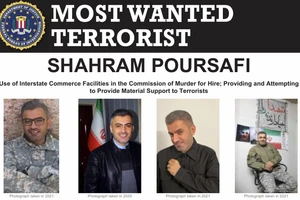
    FBI adds IRGC member accused in Bolton plot to most wanted terrorists list

Any radiological or chemical-weapons attack could also harden American public opinion against the Islamic Republic and provoke severe retaliation, Nadimi said.

The reported consideration of such an operation, however, "does not show a decision is made to act," he added.

Iraq’s move on militia stronghold may do little to curb Iran’s influence

Nov 17, 2026, 04:52 GMT+0
•
Negar Mojtahedi
100%
A mourner attends the funeral of a commander from Iraq's Kataib Hezbollah armed group who was killed in what they called a "Zionist attack" in the Syrian capital Damascus on Friday, during a funeral in Baghdad, Iraq September 22, 2024. REUTERS/Thaier Al-Sudani/File Photo Purchase Licensing Rights

Iraq’s attempt to reclaim a stronghold of Iran-backed militia could test Baghdad’s authority over armed factions while leaving much of Tehran’s influence over the country’s politics, security forces and economy intact, experts told Iran International.

Baghdad ordered troops on Monday to enter Jurf al-Sakher, south of the capital, following an investigation into suspected oil smuggling. The faction has been given until Friday to withdraw, according to a security source cited by AFP.

The move comes amid US pressure to rein in Iran-backed militias, but taking control of the town would not necessarily dismantle the political and financial networks that sustain their power.

“It’s going to be once again a theatrical show,” said Omar Mohammed, an Iraqi historian who documented life under Islamic State through his blog Mosul Eye.

Senior Iraqi officials told Reuters that Kataib Hezbollah had operated an oil-smuggling network for years, generating hundreds of millions of dollars since 2021. The US-designated terrorist organization, which has attacked American forces in the region, has long controlled Jurf al-Sakher, also known as Jurf al-Nasr, in Babil province south of Baghdad. Kataib Hezbollah denied the smuggling allegations, Anadolu reported.

Why Jurf al-Sakher matters

Mohammed described Jurf al-Sakher as a financial hub Iran has used to evade sanctions. He said the town’s location near roads linking Baghdad with Karbala and Anbar gives whoever controls it strategic leverage over the capital. He also pointed to the displacement of Sunni residents, whose prolonged exclusion has fueled sectarian tensions.

More than 100,000 people from Jurf al-Sakher and surrounding communities remain unable to return more than a decade after Iraqi forces retook the area from Islamic State in 2014, Shafaq News reported. Government committees have entered the area in recent months, but such visits have been unusual and required high-level security and political coordination, the outlet said.

Prime Minister Ali al-Zaidi “ordered the armed forces to enter” Jurf al-Sakher, government spokesman Haidar al-Aboudi told the Iraqi News Agency, adding that “a deadline has been set for the armed faction to exit the area.” A security source told AFP the deadline was Friday.

Al-Aboudi said investigators found evidence of pipeline tampering. Nine security and oil officials were dismissed following the investigation, Reuters reported.

Sources told The New Arab that fighting between Iraqi forces and Iran-backed factions was possible. A senior Iraqi official told the outlet that the government had deployed armored vehicles to the town’s outskirts.

The militias’ reach beyond the town

David Patrikarakos, a special correspondent for the Daily Mail and author of Nuclear Iran: The Birth of an Atomic State, recalled seeing a separate line of commercial trucks at a checkpoint outside Mosul when he reported from Iraq a few years ago. His local contacts told him the truck drivers had to pay Iran-backed militias a levy to enter the city.

Patrikarakos welcomed Baghdad’s attempt to push back but said the government had limited room to maneuver. He pointed to the factions’ political wings and their role in the Popular Mobilization Forces, a state-funded security body that formally answers to the prime minister. Some factions, he said, retain their own weapons, separate chains of command and ties to Iran.

“I think maybe the Iranian-backed militias will allow them some cosmetic gains, but there’s no way that Iran is going to allow its footprint in Iraq to disappear,” he told Iran International.

Patrikarakos said Tehran sees Iraq as part of its strategic depth and that Iran-backed factions could make limited concessions while retaining much of their power. He said clashes were possible and questioned whether the Iraqi government could prevail in an armed confrontation.

Mohammed, whose recent memoir is Mosul Eye: A Scholar’s Clandestine War Against ISIS, said al-Zaidi’s reach was limited by how deeply the militias were embedded in Iraq’s economy and politics. He cited their access to US dollars and what he described as their grip on commerce in Mosul. In his view, taking Jurf al-Sakher would leave much of that influence intact.

Even if al-Zaidi is sincere, Mohammed said, his government lacks the political will and institutional capacity to rein in the Iran-backed factions. “Militias are still in control,” he said.

US pressure puts al-Zaidi to the test

Former US Ambassador John Craig called Baghdad’s move “about 10 years overdue.” He said Washington was putting significant pressure on al-Zaidi and that the prime minister appeared to understand that Iraq’s stability depended on reining in Iran-backed militias.

Craig questioned whether Iraqi forces had the training and resources to push back against factions that have had years to entrench themselves. He said some doubt al-Zaidi’s independence from the militias and see the order as an effort to satisfy Washington. The prime minister’s actions, Craig said, would show how serious he was.

Al Arabiya, citing unnamed sources, reported that al-Zaidi left a meeting of the ruling Shiite Coordination Framework after disagreements over Jurf al-Sakher.

An Iranian delegation arrived in Baghdad on Monday for talks aimed at defusing the standoff, Al Arabiya reported, citing sources. The delegation was expected to meet Iraqi officials, Shiite Coordination Framework leaders and armed factions to prevent a military confrontation.

Some Coordination Framework leaders proposed replacing Kataib Hezbollah fighters with Popular Mobilization Forces units affiliated with Iraq's religious shrines as a compromise, according to the report.

Mohammed said the troop order gave Baghdad something to show Washington. He argued that sustained pressure from the United States and Iraq’s neighbors could push the government toward more substantive action.

A lasting crackdown, he said, would require political will, a clear strategy and institutions capable of carrying it out.

2019 crackdown failed to break cycle of Iran street protests

Nov 15, 2026, 11:45 GMT+0
•
Ata Mohamed Tabriz
100%
People protest against increased gas price, on a highway in Tehran, Iran November 16, 2019.

Iran's deadly crackdown on protests in November 2019 failed to prevent successive uprisings, fueling a cycle of unrest driven by economic hardship, restrictions on personal freedoms and increasingly forceful repression.

The November 2019 protests marked a turning point in Iran's political landscape, widening the divide between the Islamic Republic and much of society.

Authorities sought to deter further demonstrations through mass arrests, lethal force and nationwide internet shutdowns. But the grievances that brought people into the streets persisted, and new sources of discontent accumulated.

  • Grieving Mothers Speak Out On Anniversary Of Iran’s Bloody November

    Grieving Mothers Speak Out On Anniversary Of Iran’s Bloody November

The cycle continued through protests in 2021, the Woman, Life, Freedom uprising in 2022 and another nationwide wave in January 2026, which began over economic hardship and faced the deadliest crackdown in recent decades.

November 2019: From fuel prices to mass killings

The November 2019 protests erupted against a backdrop of rising inflation, regional inequality and growing poverty on the outskirts of major cities.

On November 15, authorities announced overnight increases of 200 percent in the price of unsubsidized gasoline and 50 percent for subsidized fuel, without prior public notice.

The decision triggered demonstrations that rapidly expanded beyond opposition to fuel prices into a broader rejection of the political system and Supreme Leader Ali Khamenei.

Within 48 to 72 hours, protests had spread to between 100 and 200 cities across 22 to 28 provinces, with major centers in Khuzestan, the outskirts of Tehran, Alborz and several western and central provinces.

Many participants came from what sociologists describe as the impoverished middle class: residents of smaller cities and urban peripheries whose expectations resembled those of the middle class but whose economic circumstances were closer to those of lower-income groups.

The demonstrations lacked established organizations and coordinated leadership, contributing to their rapid, decentralized spread.

The rejection of Iran's political establishment had already emerged during protests in December 2017 and January 2018, when demonstrators chanted that both reformists and conservatives had exhausted their political relevance.

  • Anatomy of a massacre, and the mothers who refuse to let November end

    Anatomy of a massacre, and the mothers who refuse to let November end

By November 2019, opposition to the Islamic Republic itself was evident from the beginning.

The government, backed by reformist political forces, implemented the fuel price increase and internet shutdown before distancing itself from responsibility for the consequences.

Officials described protesters as "thugs" and characterized the demonstrations as "urban warfare," presenting the crackdown as necessary to protect national security and public order.

Authorities imposed a nationwide shutdown of international internet access under a decision by the country's security council.

Special police units, the Revolutionary Guards and the Basij militia deployed alongside armed personnel using live ammunition. Between 7,000 and 8,600 people were arrested.

In Mahshahr, southern Iran, security forces fired bursts from heavy weapons at protesters and residents who had sought refuge in nearby marshlands.

Reuters subsequently reported, citing sources familiar with the decision-making, that Khamenei had ordered the protests stopped at any cost.

The scale of the killings became a central source of public anger, compounded by the absence of accountability for those responsible.

"Well, shots were fired at their legs too," then-Interior Minister Abdolreza Rahmani Fazli said when questioned about why protesters had been shot in the head, according to former lawmaker Mahmoud Sadeghi.

The remarks did not lead to the prosecution of officials who ordered the crackdown. An effort to impeach Rahmani Fazli also failed to advance in parliament.

Mojtaba Zolnouri, then head of parliament's national security committee, defended the minister's actions as implementation of presidential orders and decisions by the country's security authorities.

Estimates of the death toll varied widely. Then-Interior Minister Abdolreza Rahmani Fazli put the figure at between 200 and 225, while Amnesty International documented hundreds of deaths. Reuters, citing Iranian Interior Ministry officials, reported that approximately 1,500 people had been killed.

The wide differences between official and independent estimates of the death toll, coupled with the lack of accountability, helped sustain demands for justice long after the protests had subsided.

How the memory of 2019 shaped the 2022 uprising

The legacy of November 2019 extended beyond the immediate political consequences of the crackdown.

Cultural sociologist Jeffrey Alexander argues that suffering can become a collective trauma when a wider community identifies with the victims through a shared narrative of their suffering and those responsible.

Families seeking justice for those killed in November 2019 helped construct such a narrative.

Annual commemorations, repeated publication of victims' names and accounts shared by grieving mothers on social media transformed the losses of hundreds of families into a wider public concern.

The protest slogan "Aban continues," referring to the Iranian calendar month in which the killings occurred, captured the persistence of that memory.

The anniversary of the crackdown helped determine the timing of protest calls in November 2022, during the Woman, Life, Freedom uprising.

Families of those killed in 2019 also provided a model for relatives seeking accountability after subsequent crackdowns.

In April 2025, Kamelia Sajadian, whose son Mohammad Hassan Torkaman was killed during the 2022 protests, launched the "I too am someone's mother" campaign.

The initiative drew on words associated with Pouya Bakhtiari, killed in November 2019, and subsequently repeated by his mother, Nahid Shirpisheh. Mothers of victims from both the 2019 and 2022 protests joined the campaign.

But the persistence of protest cannot be explained by collective memory alone.

Economic conditions that helped fuel the 2019 demonstrations deteriorated over the following three years.

Persistent inflation, the declining value of the national currency and shrinking household purchasing power pushed more middle-class Iranians toward poverty and deepened hardship among those already struggling.

The Islamic Republic also consolidated political power following the 2021 presidential election, leaving reformist political forces with little remaining capacity to mediate between the state and society.

At the same time, authorities intensified restrictions on personal freedoms, particularly women's clothing.

A July 2022 decision tightening enforcement of mandatory hijab rules, alongside an expanded presence of morality police patrols, increased pressure on women.

  • Iran's Raisi Orders Strict Enforcement Of Hijab Amid Crackdown

    Iran's Raisi Orders Strict Enforcement Of Hijab Amid Crackdown

The death of Mahsa Amini in September 2022 after her detention by morality police triggered another nationwide uprising.

Unlike the initial fuel-price protests of 2019, the 2022 movement brought together women, young people, middle-class Iranians, lower-income communities and protesters from different ethnic backgrounds.

Its demands centered on personal freedom, dignity and opposition to compulsory hijab, alongside rejection of the Islamic Republic's political structure.

A younger generation with limited attachment to official ideology or traditional political organizations occupied a central role.

The decentralized character of the demonstrations resembled November 2019, although tactics such as nighttime rooftop chanting also drew on earlier protest movements, including those of 2009.

Repression contains protests but leaves grievances unresolved

The November 2019 crackdown did not end nationwide protest in Iran.

Demonstrations over water shortages in Khuzestan in 2021, the 2022 uprising and the protests of January 2026 demonstrated the continued importance of the streets as a place of confrontation between citizens and the state.

Each wave involved different immediate grievances, but all unfolded against a backdrop of accumulated economic and political dissatisfaction.

Authorities repeatedly used arrests, violence and communications restrictions to contain demonstrations.

  • Tehran quelled street protests but economic troubles persist

    Tehran quelled street protests but economic troubles persist

Those measures increased the risks of participation and disrupted protesters' ability to organize, without addressing the conditions that had brought them into the streets.

The January 2026 protests followed the same broader trajectory.

Beginning with economic grievances, the demonstrations developed into a wider challenge to the political establishment and were met with the deadliest crackdown in decades.

The recurrence of protest also highlights the limits of interpreting the absence of demonstrations as public acceptance of existing conditions.

Participation depends not only on the depth of dissatisfaction but also on people's assessment of personal risk, their ability to communicate and their expectations about whether others will join them.

Lethal repression raises the perceived cost of taking to the streets, while internet shutdowns make it harder to coordinate gatherings or learn where protests are taking place.

Such measures can temporarily reduce demonstrations even when the underlying grievances remain.

Economic hardship continues to affect access to basic necessities, while restrictions on clothing and personal behavior sustain another source of dissatisfaction.

Authorities have also linked opposition to some of these restrictions with espionage or cooperation with foreign adversaries, extending security enforcement into everyday life.

That approach can increase the consequences of dissent while generating additional resentment over state interference.

The continuing economic strain, restrictions on personal freedoms and reliance on security measures have left the conditions for renewed protest largely intact.

From November 2019 to January 2026, the Islamic Republic has repeatedly demonstrated its capacity to suppress demonstrations, but not to prevent the emergence of new ones.

The central pattern remains unchanged: authorities can regain control of the streets through force, but suppressing a protest movement has not eliminated the grievances that brought it into being.