Iraqi prime minister makes unannounced Iran visit to discuss easing tensions
Iraqi Prime Minister Ali al-Zaidi’s special, unannounced visit to Iran was aimed at discussing ways to ease regional tensions and avert war, Iraq’s ambassador to Tehran said on Monday, the Iraqi News Agency reported.
“Iraq is not on the sidelines of what is happening in the region, but is acting actively in line with its supreme national interests, under the leadership of Prime Minister Ali al-Zaidi, putting its diplomatic efforts at the service of de-escalation, preventing escalation and strengthening regional stability,” Ambassador Yasser Abd al-Zahra al-Hajjaj said.
A man stands along a street in Tehran after rainfall, with clear skies and snow-covered mountains in the background, November 9, 2026
More than 70% of respondents to an Iran International survey on household finances said they had either reduced food purchases or postponed medical treatment to cope with rising prices, illustrating the difficult choices facing families struggling with Iran's economic crisis.
The survey, conducted between October 30 and November 3, 2026, collected responses from 404 people, alongside personal accounts of mounting debt, unpaid wages, depleted savings and the psychological toll of financial hardship.
Of the 374 respondents who answered a question about coping with rising prices, 230, or 61%, said they had reduced food purchases, particularly meat and dairy products. Another 177, or 47%, reported postponing medical treatment or medication.
A total of 142 respondents had done both, while 265, or 71%, had taken at least one of these measures over the previous year. Cutting spending on recreation, clothing and education was even more common.
The survey was voluntary and conducted among Iran International's audience, rather than a randomly selected sample of the population. Its findings therefore cannot be considered representative of Iranians as a whole.
‘Can’t afford potatoes’
One participant, who identified themselves as a Social Security pensioner, described receiving 32 million tomans a month, of which 25 million went on rent, five million on loan repayments, 1.2 million on building charges and 200,000 on electricity.
That left just 600,000 tomans for other monthly expenses.
“I don't have money for potatoes and onions,” the pensioner wrote.
The respondent also described having diabetes but being unable to afford medical appointments or medication.
Another participant described the cost of sending three children to school.
“My first-grader went to school with a schoolbag his brother used several years ago and the shoes he wore for Nowruz,” the parent wrote.
“I sewed his coat and trousers myself to save a little money so I could buy them school supplies … Thank God I have children who are content with little. They understand.”
In another message, a respondent described buying barbari bread for 25,000 tomans one day and 40,000 the next. The participant said a local baker had warned that flour was running out and production might stop if more supplies did not arrive.
Food prices have risen particularly sharply as the rial's collapse drives up costs across the economy.
Official figures showed food and beverage prices in September were more than 120% higher than a year earlier, compounding the impact of years of inflation, US sanctions and economic mismanagement.
‘Living in name only’
The survey also examined employment and the number of income earners in each household.
Of the 387 participants who reported their number of jobs, 177, or 46%, said they held one job. Another 95, or 25%, reported two jobs, while 23, or 6%, held three or more.
In total, 118 respondents, or 30.5%, held at least two jobs. Another 92, or 24%, said they had no income-generating employment.
A separate question found that 47% of respondents lived in households with only one income earner, while 6% said nobody in their household earned an income.
For some, even holding multiple jobs was not enough to cover basic expenses.
One participant, the sole income earner in their household, said they worked two jobs but had fallen behind on rent and three loan installments, had unpaid electricity and gas bills, and had not received their wages for a month.
“I borrowed about 60 million tomans from people, and I haven't been able to pay back even one million,” the respondent wrote. “Our life is only a life in name.”
Another participant, who reported holding three or more jobs, said their motorcycle had been taken and they could not afford to retrieve it. The respondent had also reduced food purchases and postponed medical treatment or medication.
A worker living with a spouse and three children described similar pressures despite holding two jobs.
“I can't manage even the simplest things,” the worker wrote, adding that low wages and unemployment had made “anger and arguments an inseparable part of life.”
The war has added to an already weak labour market, damaging factories and infrastructure, disrupting trade and forcing businesses to scale back or close.
US sanctions and restrictions on banking and imports have further constrained businesses, while years of underinvestment and mismanagement have left the economy poorly equipped to absorb the shocks.
‘Getting poorer before my eyes’
As rising prices eroded purchasing power, many respondents reported relying on resources accumulated in better times or taking on new financial obligations.
Of the 374 people who answered the question about coping with inflation, 171 reported spending savings and 86 said they had sold possessions.
After accounting for overlap between the two groups, 200 respondents, or 53.5%, had used at least one of these measures. Another 128 had borrowed money, while 97 had postponed rent or bill payments.
Nearly two-thirds of respondents to the question reported taking at least three different measures to cope with rising prices over the previous year. Almost 30% had taken five or more.
The questionnaire did not measure how much money respondents had borrowed, the value of possessions sold or the amount of savings spent. But drawing on savings and selling assets can provide only temporary relief, leaving households with fewer resources to withstand future financial shocks.
The rial has lost more than half its value against the dollar over the past year. The war and US blockade of Iranian ports have sharply curtailed oil exports and government revenues, intensifying pressures on an economy already weakened by sanctions and systemic corruption.
One respondent began a message with a direct appeal: “If you can, please help me a little.”
The participant said their workshop had closed, leaving them without income for six months. They had three children and reported that nobody in the household earned an income, describing the circumstances as “the hardest moments of my life.”
Another participant, who was employed and lived in a household with two income earners, said: “I can see myself getting poorer before my eyes.”
The psychological toll
The financial pressures described by participants were accompanied by widespread anxiety and pessimism about the future.
Of 398 people who answered a question about their household finances over the previous year, 375, or 94%, said their situation had worsened. Three-quarters described the deterioration as severe.
Expectations for the coming year were similarly bleak, with 91% anticipating further financial deterioration. Separately, 90% said inflation and economic uncertainty had significantly affected their psychological well-being, including their sleep and peace of mind.
The prolonged conflict with the United States and Israel has deepened uncertainty over jobs, prices and access to essential goods, while repeated disruptions to everyday life have compounded the strain of years of economic instability.
One participant described being unable to afford dental treatment despite holding two jobs and living in a household with two income earners.
Another message described medical treatment that had been interrupted for three years. The respondent said they suffered from depression, had been dismissed from a government job because of illness-related absences and were living with an ailing mother in a household without an income.
“I'm exhausted right now, and I'm writing this while crying,” the message said.
Another participant, the sole income earner in a household with a disabled daughter, said they worked two jobs but had still postponed medical treatment or medication and sold possessions.
Among the 142 respondents who had both reduced food purchases and postponed treatment or medication, 135 reported a significant or very significant psychological impact.
Three participants expressed thoughts of suicide or a wish to die in their written messages. The questionnaire was not designed to clinically assess depression or suicide risk, and the prevalence of such conditions cannot be determined from these accounts.
Little hope of improvement
The survey also examined the relationship between respondents' experiences over the previous year and their expectations for the future.
Of those who described the previous year as having been much worse, nearly 85% expected similarly severe deterioration in the coming year.
Respondents reporting greater financial hardship also tended to describe more severe psychological distress and to have adopted more measures to cope with rising prices.
These findings show an association between financial hardship, psychological pressure and pessimism about the future among respondents, but do not establish cause and effect.
Prospects for recovery remain clouded by the unresolved confrontation with Washington, continuing sanctions and the damage inflicted on Iran's productive capacity.
Even an end to the fighting would leave the country confronting longstanding structural problems, including corruption, weak investment and economic mismanagement.
One participant wrote: “I wish tomorrow wouldn't come,” explaining that they expected each new day to bring greater hardship.
The survey was conducted among Iran International's audience from October 30 to November 3, 2026, and received 404 voluntary responses. Not all participants answered every question, and percentages were calculated from valid responses. Personal accounts were drawn from written messages submitted by respondents and reviewed without identifying information.
Iranian human rights lawyer Amirsalar Davoudi suffered a heart attack in detention and was hospitalized in Isfahan before being returned to prison a day later following a court appearance, Norway-based Iran Human Rights (IHR) said on Monday, citing an informed source.
Davoudi was taken to Al-Zahra Hospital on Sunday after nearly a month in solitary confinement following his October 11 arrest while representing a protest detainee at the Isfahan Revolutionary Court, the rights group said.
An informed source told IHR that Davoudi was unconscious when he was transferred to the hospital under tight security.
The source disputed an explanation attributed to authorities that a change in medication had caused his deteriorating health, saying Davoudi had not been taking medication when he was arrested.
Davoudi was discharged from the hospital on Monday morning and taken to court, where his arraignment was postponed because the investigation was incomplete, before being returned to prison, IHR said, citing an informed source.
Tehran-based news outlet Emtedad separately reported, citing Davoudi’s lawyer, Seyed Mehdi Karimi-Farsi, that he had attended an investigative hearing with his client at Branch 11 of the Isfahan prosecutor’s office on Monday and that Davoudi appeared to be in good health.
"Today, my client was in good health and personally defended himself," Emtedad quoted Karimi-Farsi as saying, without addressing the reported heart attack.
Karimi-Farsi said Davoudi faced two separate proceedings, with bail granted in one and a temporary detention order issued in the other.
He said the one-month detention order had expired on Monday and expressed hope that it would be replaced with bail, although no judicial decision had been announced.
"A lawyer's place is not in prison," Karimi-Farsi said, expressing hope that his client would be released.
Separately on Monday, UN human rights experts cited Davoudi's arrest as an example of what they described as escalating persecution and judicial harassment of independent lawyers in Iran.
The experts said Davoudi was arrested on October 11 after appearing before the Isfahan Revolutionary Court on behalf of Taraneh and Romina Rahimi, who were prosecuted in connection with January's anti-government protests.
Taraneh was sentenced to death on charges of moharebeh, or "enmity against God," while Romina received a 25-year prison sentence for aiding and abetting moharebeh, according to the UN statement.
"Independent lawyers are increasingly being prosecuted and intimidated for their professional work and for defending human rights," the experts said.
Iran Human Rights said Davoudi had also represented Mahshad Keshani, the partner of Alireza Sepahi, a protest detainee executed on October 5.
Iranian judicial authorities have accused Davoudi of spreading false information online, inciting violence and propaganda against the state, according to the rights group.
Mahmood Amiry-Moghaddam, director of Iran Human Rights, called for Davoudi's immediate release and access to medical care, saying Iranian authorities bore responsibility for his safety.
“We call on the EU and all governments maintaining diplomatic relations with the Islamic Republic to intervene urgently to secure Mr Davoudi’s release. Iranian and international bar associations must raise their voices today for a colleague who has been silenced while defending the rights of others,” Amiry-Moghaddam added.
Davoudi previously received a 30-year prison sentence and 111 lashes over his human rights activities and criticism of Iran's judiciary. Enforcement of that sentence was suspended in 2024 following a judicial review.
Mai Sato, UN Special Rapporteur on the situation of human rights in Iran
UN human rights experts called on Iran to end what they described as escalating persecution of independent lawyers, warning that restrictions on legal representation were leaving defendants vulnerable to arbitrary detention, coerced confessions and unfair trials.
“Independent lawyers are increasingly being prosecuted and intimidated for their professional work and for defending human rights,” the experts said in a statement.
At least 135 lawyers faced judicial or security measures in Iran between September 2025 and September 2026, including arrests, summonses, imprisonment, professional suspensions and travel bans, according to figures documented by the US-based Human Rights Activists News Agency (HRANA) and cited by the experts.
A separate report by the Netherlands-based Lawyers for Lawyers and the London-based Centre for Supporters of Human Rights documented the arrests of at least 23 lawyers across eight Iranian provinces following nationwide anti-government protests.
The experts said Iranian authorities had reportedly instructed lawyers not to take protest-related cases and obstructed independent lawyers from representing defendants in politically sensitive proceedings.
Defendants were often restricted to court-appointed lawyers during initial investigations, while independent lawyers faced limited access to clients and case files, they added.
Iranian human rights lawyer Amirsalar Davoudi was arrested on October 11, 2026.
The statement cited the October 11 arrest of human rights lawyer Amirsalar Davoudi after he appeared before the Isfahan Revolutionary Court on behalf of two clients, Taraneh and Romina Rahimi.
Taraneh was sentenced to death on charges of moharebeh, or “enmity against God,” while Romina received a 25-year prison sentence for aiding and abetting moharebeh in connection with the January 2026 protests, according to the experts.
The experts also raised concerns about pressure on women lawyers, including warnings, suspensions and disciplinary action over alleged violations of compulsory hijab requirements, as well as intimidation and smear campaigns.
They warned that the independence of Iran's bar associations was increasingly under threat, citing interference in elections, the disqualification of candidates critical of the authorities and the expansion of judiciary-controlled licensing outside independent bar associations.
The statement was issued by five UN special rapporteurs, including Mai Sato, the expert on human rights in Iran, and Margaret Satterthwaite, the expert on the independence of judges and lawyers, along with members of UN working groups on arbitrary detention and discrimination against women and girls.
“When independent lawyers are arrested or intimidated for defending their clients, the consequences extend far beyond the legal profession,” the experts said.
“The right to an effective defence, fair trials and the rule of law itself are at stake.”
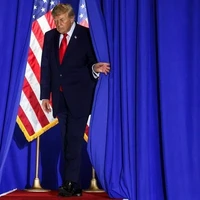
US President Donald Trump gestures while delivering remarks at NASA’s Kennedy Space Center in Cape Canaveral, Florida, November 6, 2026. (White House)
US President Donald Trump said Monday the war with Iran was effectively over militarily but warned US forces remained “locked and loaded,” while Iran's security chief denied reports of talks with Washington and demanded acceptance of Tehran's conditions to end the conflict.
Qatar's prime minister, Sheikh Mohammed bin Abdulrahman Al Thani, met Trump at the White House in an effort to secure more time for diplomacy and advance negotiations between Washington and Tehran.
“Iran, militarily, is effectively over. We're just keeping it the status quo,” Trump told reporters at the White House after meeting with the Qatari prime minister.
While Trump described the war as militarily “effectively over,” he emphasized the continuation of the US naval blockade and Operation Iron Gate in a Truth Social post, saying Iran's neighbors, including Qatar, Saudi Arabia, the United Arab Emirates, Bahrain and Kuwait, favored maintaining the “status quo.”
He warned that American forces remained “locked and loaded” if developments in the Middle East changed, but said further military action appeared unlikely.
Trump also said Iran had accepted that it could never acquire a nuclear weapon, despite publicly denying such a commitment.
“They understand that. They accept that. They don't admit that they accept it,” he told reporters, describing the prohibition on Iranian nuclear weapons as non-negotiable.
Trump told Al Thani during their meeting that he wanted an agreement with Iran and was willing to give negotiations a chance, but could reverse course if Tehran failed to engage seriously, Axios reported Monday, citing a diplomat briefed on the discussions.
Despite reports of Washington's willingness to pursue diplomacy, Iran's Supreme National Security Council secretary Mohsen Rezaei accused the United States of fabricating reports of negotiations and demanded that it accept Tehran's seven conditions.
“STOP manufacturing FAKE NEWS about imaginary talks,” Rezaei wrote on X.
“The war on Iran has already wrecked the US government. But Washington flails like a desperate gambler,” he added, urging Washington to recognize what he described as a new regional order in West Asia.
The Washington Post reported in October that US officials viewed Rezaei as a key contact in Tehran who could help build support for a nuclear agreement.
Vice President JD Vance sent Rezaei a letter in late October expressing his willingness to meet personally to discuss a negotiated settlement, The Washington Post reported, citing a US official familiar with the initiative.
Axios reported that Vance was also closely involved in the indirect talks through frequent contact with Qatar's prime minister.
Following the White House meetings, Al Thani said he had discussed ways to advance US-Iran negotiations with Trump and Vance.
“Grateful for the positive discussions on reaching a deal and bringing peace to the region,” he wrote on X.
The mediation efforts have focused on a proposal setting out reciprocal steps to reduce tensions and restart negotiations over Iran's nuclear program.
Under the proposed two-day plan, Washington would first lift its naval blockade and release some frozen Iranian funds, while Tehran would invite UN nuclear inspectors to damaged sites, Axios reported. The Strait of Hormuz would reopen on the second day, followed by renewed talks over Iran's highly enriched uranium stockpile.
Iranian Foreign Minister Abbas Araghchi said Sunday that Tehran was awaiting Washington's response to the proposal, which also calls for an end to hostilities on all fronts.
US Secretary of State Marco Rubio, however, said Sunday that indirect negotiations had produced little progress and described some Iranian demands as unrealistic.
“I wouldn't say we're on the verge of a breakthrough,” Rubio said, adding that Trump preferred a diplomatic solution but that one was not always possible.
Meanwhile, Turkish intelligence chief Ibrahim Kalin said Monday that Vance and Rezaei were scheduled to meet in Qatar next week, according to Türkiye newspaper.
Speaking at a conference in Ankara, Kalin said the planned meeting in Doha could provide an opportunity to advance negotiations, warning that failure to reach an agreement could lead to another US attack on Iran.
Kalin said regional mediators were working on a seven-point proposal covering sanctions relief, frozen Iranian assets, nuclear commitments and the reopening of the Strait of Hormuz.
The main disagreement, Kalin said, was over which side would take the first step.
FILE PHOTO: US President Donald Trump speaks during a rally at Guardian Centers in Perry, Georgia, US, October 24, 2026.
Two Iranian analysts have offered contrasting assessments of what could prompt Donald Trump to launch another attack on Iran before the new US Congress convenes in January.
Speaking on the popular Tehran-based online talk show Azad, conservative commentator Mehdi Kharratiyan argued that the prospect of surging oil prices and damage to US financial markets could restrain Trump, despite his continued authority to order military action following the Republican defeat in the midterm elections.
International relations analyst Rahman Ghahremanpour disagreed, saying Trump might be willing to accept substantial economic costs if he believed America's international standing or his presidential legacy was at stake.
Kharratiyan warned that another major conflict could further disrupt energy supplies and push Brent crude prices as high as $130 a barrel, exposing the US and global economies to the risk of recession.
He argued that Iran would retaliate against regional infrastructure in the event of a major US attack, potentially worsening the economic consequences for Washington. Following the Republicans' heavy midterm losses, he said, Trump would struggle to justify another war that could further damage his party's prospects in the 2028 elections.
Ghahremanpour, however, argued that preserving American credibility could take precedence over financial considerations.
He drew a comparison with Britain's experience during the 1956 Suez Crisis, when London was forced to abandon its military intervention under international pressure, suggesting Trump would be determined to avoid a similar humiliation for the United States.
The discussion aired on Azad, known for hosting debates among commentators with opposing views. Its YouTube channel has more than 160,000 subscribers, and the episode had attracted nearly 190,000 views.
The platform was shut down by Tehran prosecutors in August over allegations of spreading false information and operating without a licence, but was allowed to resume broadcasting in late October.
Despite their disagreement over Trump's calculations, both analysts warned that the period before the new Congress convenes could be particularly dangerous for Iran.
“As long as Mr. Trump is in the White House and Netanyahu is in the prime minister's office in Israel, even if they are in a weakened position, the possibility of unpredictable actions, even foolish ones, or actions driven by desperation, remains,” Kharratiyan said.
“If we are not alert, we could suddenly be caught off guard, as we have been in the past.”
Kharratiyan said Iranian officials appeared determined not to allow another surprise attack. If Tehran concluded that Washington had decided to strike, he argued, Iranian forces could launch a pre-emptive attack.
He said a major US-Israeli operation would depend on Washington and Israel identifying an intelligence opportunity, finding potential assistance within Iran and believing they could disable Iran's ability to retaliate in the opening minutes.
Ghahremanpour also warned that Trump's midterm defeat could push him in opposite directions, making him either more cautious or more willing to take risks.
“The election results could make Trump more cautious in his foreign policy, but they could also make him act more boldly and recklessly,” he said in recent remarks to the Iranian Students' News Agency (ISNA).
“Which of these happens will naturally depend on Trump's own assessment and that of his team.”
Ghahremanpour, who favours a negotiated settlement, said the absence of substantial concessions from either Tehran or Washington suggested that any agreement reached in the coming days would likely be fragile, temporary and limited.
He argued that an understanding between Trump and congressional Democrats could reduce the risk of renewed war. But if the president anticipated aggressive moves against him once the new Congress convened, he might instead seek a military confrontation to reinforce America's standing and secure his political legacy.