• العربية
  • فارسی
BrandBrand
  • Iran Insight
  • Politics
  • Economy
  • Analysis
  • Special Report
  • Opinion
  • Podcast
  • Live TV
  • Iran Insight
  • Politics
  • Economy
  • Analysis
  • Special Report
  • Opinion
  • Podcast
  • Live TV
  • Theme
  • Language
    • العربية
    • فارسی
  • Iran Insight
  • Politics
  • Economy
  • Analysis
  • Special Report
  • Opinion
  • Podcast
  • Live TV
All rights reserved for Volant Media UK Limited
volant media logo

Iraqi PM seeks approval to arrest Iran-backed factions after Khor Mor attacks - Al-Mada

Nov 10, 2026, 02:06 GMT+0
Members of the Iraqi armed group Kataib Hezbollah attend the funeral of their members, who were killed in an airstrike that targeted a Hashd al‑Shaabi headquarters near the western al‑Qaim district on the Syrian border, amid the U.S.-Israel conflict with Iran, in Baghdad, Iraq, March 2, 2026. REUTERS/Thaier Al-Suda

Iraqi Prime Minister Ali Al-Zaidi is awaiting authorization from the Shiite Coordination Framework to arrest members of Iran-backed armed factions operating outside state control, following renewed drone attacks on the Khor Mor gas field in the Kurdistan region, Al-Mada reported Monday, citing sources close to the prime minister's office.

The newspaper reported that the attacks on Sunday and Monday came amid escalating tensions between the government and armed factions, including Kataib Hezbollah, which had accused Al-Zaidi and members of his government of conducting deals with the United Arab Emirates.

Al-Zaidi ordered a joint investigation with the Kurdistan Regional Government into the attacks, marking the 12th government committee formed since 2022 to investigate strikes on the gas facility. None of the previous investigations has publicly identified or prosecuted those responsible, according to Al-Mada.

On Sunday, an explosive-laden drone struck the Khor Mor gas field in the Kurdistan Region's Sulaymaniyah province, causing a fire and prompting a suspension of production. The regional electricity ministry said nearly 2,800 megawatts of electricity generation had been lost from the grid.

Kataib Hezbollah is an Iran-backed Iraqi Shia armed group that the United States designated a Foreign Terrorist Organization in 2009.

Most Viewed

Tanker loads Iranian crude in Persian Gulf as Tehran weighs resuming exports
1

Tanker loads Iranian crude in Persian Gulf as Tehran weighs resuming exports

2
ANALYSIS

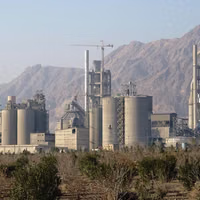
A tough winter for Iran's cement industry, a tougher one for steel

3

Killing of Iranian schoolgirl sparks calls for legal reform

4

Houthi missile attack damages Riyadh’s tallest building

5

GTA 6 costs, slow internet frustrate Iranian gamers, fuel satire

Banner
Banner
Banner
Banner
Banner
Banner
Banner

Spotlight

  • Ideology or history? Analysts clash over the roots of Iran’s enmity with the US

    Ideology or history? Analysts clash over the roots of Iran’s enmity with the US

  • A test of power: Who will control Iran's state TV?
    INSIGHT

    A test of power: Who will control Iran's state TV?

  • GTA 6 costs, slow internet frustrate Iranian gamers, fuel satire

    GTA 6 costs, slow internet frustrate Iranian gamers, fuel satire

  • A tough winter for Iran's cement industry, a tougher one for steel
    ANALYSIS

    A tough winter for Iran's cement industry, a tougher one for steel

  • Tehran seizes on NYT dam report to widen retaliation threats

    Tehran seizes on NYT dam report to widen retaliation threats

  • How Iranians are turning grief into defiance
    OPINION

    How Iranians are turning grief into defiance

  • Iran could launch dirty-bomb attack, but risks make it unlikely
    ANALYSIS

    Iran could launch dirty-bomb attack, but risks make it unlikely

•
•
•

More Stories

Trump says Iran war ‘effectively over’ militarily, but US ready to strike again

Nov 10, 2026, 00:56 GMT+0
100%
US President Donald Trump gestures while delivering remarks at NASA’s Kennedy Space Center in Cape Canaveral, Florida, November 6, 2026. (White House)

US President Donald Trump said Monday the war with Iran was effectively over militarily but warned US forces remained “locked and loaded,” while Iran's security chief denied reports of talks with Washington and demanded acceptance of Tehran's conditions to end the conflict.

Qatar's prime minister, Sheikh Mohammed bin Abdulrahman Al Thani, met Trump at the White House in an effort to secure more time for diplomacy and advance negotiations between Washington and Tehran.

“Iran, militarily, is effectively over. We're just keeping it the status quo,” Trump told reporters at the White House after meeting with the Qatari prime minister.

While Trump described the war as militarily “effectively over,” he emphasized the continuation of the US naval blockade and Operation Iron Gate in a Truth Social post, saying Iran's neighbors, including Qatar, Saudi Arabia, the United Arab Emirates, Bahrain and Kuwait, favored maintaining the “status quo.”

He warned that American forces remained “locked and loaded” if developments in the Middle East changed, but said further military action appeared unlikely.

Trump also said Iran had accepted that it could never acquire a nuclear weapon, despite publicly denying such a commitment.

“They understand that. They accept that. They don't admit that they accept it,” he told reporters, describing the prohibition on Iranian nuclear weapons as non-negotiable.

Trump told Al Thani during their meeting that he wanted an agreement with Iran and was willing to give negotiations a chance, but could reverse course if Tehran failed to engage seriously, Axios reported Monday, citing a diplomat briefed on the discussions.

Despite reports of Washington's willingness to pursue diplomacy, Iran's Supreme National Security Council secretary Mohsen Rezaei accused the United States of fabricating reports of negotiations and demanded that it accept Tehran's seven conditions.

“STOP manufacturing FAKE NEWS about imaginary talks,” Rezaei wrote on X.

“The war on Iran has already wrecked the US government. But Washington flails like a desperate gambler,” he added, urging Washington to recognize what he described as a new regional order in West Asia.

The Washington Post reported in October that US officials viewed Rezaei as a key contact in Tehran who could help build support for a nuclear agreement.

Vice President JD Vance sent Rezaei a letter in late October expressing his willingness to meet personally to discuss a negotiated settlement, The Washington Post reported, citing a US official familiar with the initiative.

Axios reported that Vance was also closely involved in the indirect talks through frequent contact with Qatar's prime minister.

Following the White House meetings, Al Thani said he had discussed ways to advance US-Iran negotiations with Trump and Vance.

“Grateful for the positive discussions on reaching a deal and bringing peace to the region,” he wrote on X.

The mediation efforts have focused on a proposal setting out reciprocal steps to reduce tensions and restart negotiations over Iran's nuclear program.

Under the proposed two-day plan, Washington would first lift its naval blockade and release some frozen Iranian funds, while Tehran would invite UN nuclear inspectors to damaged sites, Axios reported. The Strait of Hormuz would reopen on the second day, followed by renewed talks over Iran's highly enriched uranium stockpile.

Iranian Foreign Minister Abbas Araghchi said Sunday that Tehran was awaiting Washington's response to the proposal, which also calls for an end to hostilities on all fronts.

US Secretary of State Marco Rubio, however, said Sunday that indirect negotiations had produced little progress and described some Iranian demands as unrealistic.

“I wouldn't say we're on the verge of a breakthrough,” Rubio said, adding that Trump preferred a diplomatic solution but that one was not always possible.

Meanwhile, Turkish intelligence chief Ibrahim Kalin said Monday that Vance and Rezaei were scheduled to meet in Qatar next week, according to Türkiye newspaper.

Speaking at a conference in Ankara, Kalin said the planned meeting in Doha could provide an opportunity to advance negotiations, warning that failure to reach an agreement could lead to another US attack on Iran.

Kalin said regional mediators were working on a seven-point proposal covering sanctions relief, frozen Iranian assets, nuclear commitments and the reopening of the Strait of Hormuz.

The main disagreement, Kalin said, was over which side would take the first step.

Oil prices or US prestige? Tehran analysts weigh Trump's next move

Nov 9, 2026, 23:20 GMT+0
•
Maryam Sinaiee
100%
FILE PHOTO: US President Donald Trump speaks during a rally at Guardian Centers in Perry, Georgia, US, October 24, 2026.

Two Iranian analysts have offered contrasting assessments of what could prompt Donald Trump to launch another attack on Iran before the new US Congress convenes in January.

Speaking on the popular Tehran-based online talk show Azad, conservative commentator Mehdi Kharratiyan argued that the prospect of surging oil prices and damage to US financial markets could restrain Trump, despite his continued authority to order military action following the Republican defeat in the midterm elections.

International relations analyst Rahman Ghahremanpour disagreed, saying Trump might be willing to accept substantial economic costs if he believed America's international standing or his presidential legacy was at stake.

Kharratiyan warned that another major conflict could further disrupt energy supplies and push Brent crude prices as high as $130 a barrel, exposing the US and global economies to the risk of recession.

He argued that Iran would retaliate against regional infrastructure in the event of a major US attack, potentially worsening the economic consequences for Washington. Following the Republicans' heavy midterm losses, he said, Trump would struggle to justify another war that could further damage his party's prospects in the 2028 elections.

Ghahremanpour, however, argued that preserving American credibility could take precedence over financial considerations.

He drew a comparison with Britain's experience during the 1956 Suez Crisis, when London was forced to abandon its military intervention under international pressure, suggesting Trump would be determined to avoid a similar humiliation for the United States.

The discussion aired on Azad, known for hosting debates among commentators with opposing views. Its YouTube channel has more than 160,000 subscribers, and the episode had attracted nearly 190,000 views.

The platform was shut down by Tehran prosecutors in August over allegations of spreading false information and operating without a licence, but was allowed to resume broadcasting in late October.

Despite their disagreement over Trump's calculations, both analysts warned that the period before the new Congress convenes could be particularly dangerous for Iran.

“As long as Mr. Trump is in the White House and Netanyahu is in the prime minister's office in Israel, even if they are in a weakened position, the possibility of unpredictable actions, even foolish ones, or actions driven by desperation, remains,” Kharratiyan said.

“If we are not alert, we could suddenly be caught off guard, as we have been in the past.”

Kharratiyan said Iranian officials appeared determined not to allow another surprise attack. If Tehran concluded that Washington had decided to strike, he argued, Iranian forces could launch a pre-emptive attack.

He said a major US-Israeli operation would depend on Washington and Israel identifying an intelligence opportunity, finding potential assistance within Iran and believing they could disable Iran's ability to retaliate in the opening minutes.

Ghahremanpour also warned that Trump's midterm defeat could push him in opposite directions, making him either more cautious or more willing to take risks.

“The election results could make Trump more cautious in his foreign policy, but they could also make him act more boldly and recklessly,” he said in recent remarks to the Iranian Students' News Agency (ISNA).

“Which of these happens will naturally depend on Trump's own assessment and that of his team.”

Ghahremanpour, who favours a negotiated settlement, said the absence of substantial concessions from either Tehran or Washington suggested that any agreement reached in the coming days would likely be fragile, temporary and limited.

He argued that an understanding between Trump and congressional Democrats could reduce the risk of renewed war. But if the president anticipated aggressive moves against him once the new Congress convened, he might instead seek a military confrontation to reinforce America's standing and secure his political legacy.

Debate continues in Tehran over prospects for US deal after midterms

Nov 9, 2026, 22:03 GMT+0
•
Behrouz Turani
100%
An Iranian flag flies above Tehran's sprawling skyline, shrouded in haze, November 9, 2026

Four Iranian reformist intellectuals have urged Tehran to seize an opportunity for diplomacy following Donald Trump's midterm election defeat, while warning that the US president could respond to his political setback by escalating rather than ending the war.

Writing in three articles published in the reformist newspaper Etemad on Sunday, November 8, Mohammad-Javad Haghshenas, sociologist Mahmoud Sadri, international relations analyst Alireza Ghandriz and political analyst Alireza Rajaei offered differing assessments of what Democratic control of Congress could mean for negotiations.

Their shared premise is that the elections have raised the domestic cost of the war for Trump without removing his authority to wage it. Trump himself acknowledged that “part of it was Iran,” while defending his decision to attack.

Haghshenas, a former leader of the National Trust Party, offered the most optimistic assessment, arguing that Tehran should move quickly rather than wait for uncertain political developments in Washington.

Citing reports of a purported letter from Vice President JD Vance proposing direct talks, Haghshenas argued that Vance, a potential contender for the 2028 Republican presidential nomination, had a political interest in ending a war that has damaged his party.

Echoing Qatar's prime minister, he urged both sides to accept a workable agreement rather than hold out for an ideal one.

Making a deal politically possible

Sadri and Ghandriz, writing jointly, argued that any agreement must be politically defensible in both Tehran and Washington.

They warned that Democratic opposition to Trump's handling of the war should not be mistaken for opposition to pressure on Iran.

President George W. Bush, they wrote, responded to the Republican defeat in the 2006 midterm elections by ordering a military surge in Iraq rather than withdrawing.

Citing the gradual normalisation of US-Vietnam relations in 1995 as a model, they proposed starting with limited humanitarian and maritime cooperation before expanding civil, academic and business ties.

Above all, they warned that presenting an agreement in Iran as an American surrender would undermine the very figures in Washington whose support would be needed to sustain it.

The danger of a wounded Trump

Rajaei offered the most guarded assessment, comparing Trump to a political gambler who might raise the stakes rather than accept a visible defeat. He stressed that he was describing political behaviour, not making a psychological judgment.

He outlined three possible scenarios: a limited agreement, continued pressure through sanctions and military threats, or renewed escalation triggered by failed negotiations, Israeli pressure or miscalculation.

Rather than trying to predict Trump's next move, Rajaei urged Tehran to strengthen crisis management, civilian resilience and transparent public communication.

His warning comes as Washington continues to combine diplomatic signals with military and economic pressure.

On the eve of the midterms, Trump said a deal with Iran “could happen,” and Tehran has since conveyed proposals through Qatari mediators. Meanwhile, the US naval blockade and sanctions remain in place.

Reports of preparations for a larger US offensive and the expected arrival of an aircraft carrier group in the region have added to uncertainty.

The conflicting signals make it difficult for Tehran to distinguish genuine negotiating opportunities from attempts to extract concessions under pressure.

Trump's record of abrupt changes in negotiating positions, including his public rejection of Iran's account of the Islamabad memorandum in June, adds to the risks of relying on a sweeping agreement rather than limited, reciprocal steps.

Each reversal could also strengthen Iranian hardliners who argue that Washington cannot be trusted, echoing Supreme Leader Mojtaba Khamenei's November 4 warning against expecting changes in US policy simply because political control shifts between parties.

The three articles offer a snapshot of reformist thinking at a moment when Tehran faces competing pressures to negotiate and maintain its confrontational posture.

Haghshenas sees an opportunity that should be seized quickly. Sadri and Ghandriz argue that any agreement must withstand political opposition on both sides. Rajaei warns that Trump's electoral defeat could encourage escalation rather than compromise.

What unites them is a warning that Trump's electoral defeat is neither an Iranian victory nor a guarantee of American restraint.

We argued about US midterms until someone mentioned rent

Nov 9, 2026, 21:17 GMT+0
•
Tehran Insider
100%
The facade of a residential building in the Ekbatan complex in western Tehran, November 6, 2026

I was at a gathering of about a dozen friends in Tehran on Thursday night. It was hilariously tragic to watch a bunch of slightly tipsy people at each other's throats over an election in which none of us had a vote but whose outcome could profoundly affect our lives.

We spent much of the evening arguing about Democrats and Republicans, Donald Trump and Benjamin Netanyahu, and whether the election of Muslim politicians in America was something to celebrate or fear.

“Imagine being told ten years ago that a man with a name like Abdul El-Sayed would become a United States senator,” one friend said. “You’d ask them what drug they were on.”

“Oh, come on,” another protested. “You think America is turning into another Iran because they've elected a progressive senator or mayor who happens to be a Muslim?”

The greatest strength of American democracy, he argued, was that voters could throw out leaders who made a mess of things, or at least take away some of their power.

Quite a few shook their heads. “The trouble is,” one said, “once political Islam gets into power, you can't necessarily get rid of it with another election.”

It was an argument familiar to anyone who has spent time around politically engaged Iranians, but there was something almost comical about hearing it unfold in a Tehran living room.

We were worrying about whether American democracy could survive the election of a Muslim politician while living in a country where our own ability to choose those who govern us has been contested for decades.

The conversation grew louder when someone admitted she was disappointed by the Democratic gains. She had been hoping that Trump and Netanyahu might finally bring about the end of the Islamic Republic.

“The Democrats will make a deal with the mullahs, and we'll be stuck with this lot for another 50 years,” she said.

Her brother was having none of it: “You seriously think Trump and Netanyahu went to war because they care about you and me? All they ever wanted was to force the regime to give them what they came for. Then they’ll walk away. And it’ll be us and the mullahs all over again.”

I have heard versions of this disagreement many times. Some people still hope that outside pressure might accomplish what years of protest have failed to achieve. Others find that hope almost unbearable, particularly after seeing what war has done to the country and how little it has changed the lives of those who survived it.

What struck me, though, was how easily everyone moved between these positions, sometimes contradicting themselves, sometimes laughing at arguments they had made quite seriously only minutes earlier. Nobody seemed especially interested in convincing anyone else.

“I don't even know why you're burning calories over this,” said one of the two friends who had barely spoken until then. “We don't even know if we'll have enough money to pay next month's rent. To hell with the American elections.”

That took some of the energy out of the argument. We could disagree all night about American politics, but there was rather less to disagree about when it came to paying the rent.

And what was the point of discussing that anyway, one friend said bitterly, as though talking about our problems might somehow make them go away.

Perhaps that is what a year of protests, crackdowns, war and unrelenting financial anxiety have done to us. We do talk about politics all the time. But most of us have stopped expecting much from it.

There was a time when conversations like this came with confident predictions. The regime would fall, a deal would be reached, sanctions would be lifted, or another protest would finally change everything. But we’ve stopped making promises about the future, even to ourselves.

None of us in that room had an answer to the question of how we would afford another month, let alone what the American elections might mean for us. But at least we could argue about the latter without having to check our bank balances.

“Avoid the pain if you can” seems to be how we hang on these days. “Take it one breath at a time.”

Iran picks another IRGC general as new Iraq envoy: who is Mesgarian?

Nov 9, 2026, 20:07 GMT+0
100%
File photo by IRGC-affiliated Tasnim News shows Mesgarian during a speech

Iran has selected Abdolreza Masgarian, another IRGC Quds Force commander, as its next ambassador to Iraq, according to Iraqi and Iranian reporting, extending a pattern of military figures holding a diplomatic post central to Tehran’s regional influence.

The brigadier general’s reported appointment comes weeks after former foreign minister Mohammad Javad Zarif’s criticism of that approach resurfaced, questioning why Iran sends representatives of the Guards’ overseas operations arm to neighboring countries rather than diplomats and businesspeople.

US government-funded broadcaster Al-Hurra first reported the nomination on Monday, citing an Iraqi Foreign Ministry source who said Baghdad had received Masgarian’s name as the proposed replacement for Mohammad Kazem Al-e Sadegh.

Akram Ehghaghi, chief foreign policy correspondent for Iran’s semi-official ISNA news agency, subsequently described Masgarian as the newly selected ambassador in a profile posted on X, saying he would succeed Al-e Sadegh after his four-year tenure.

Iraqi outlet Shafaq News separately cited an informed source as saying Masgarian would take up the post at the beginning of 2027 under his full name, Abdolreza Nobakht.

Iran has not yet officially confirmed the appointment. Al-Hurra said neither country’s foreign ministry had announced the nomination.

Masgarian’s reported responsibilities already place him at the intersection of Iran’s military, political and diplomatic dealings with Iraq.

100%
A photo of Mesgarian in IRGC uniform

According to Al-Hurra, he oversees joint security coordination between Tehran, Baghdad and Erbil, having previously handled security coordination between Iran and Iraq’s Kurdistan Region.

The US advocacy group United Against Nuclear Iran has identified him as commander of the IRGC’s Ramadan Headquarters, with responsibilities that include coordinating with Iraqi Shiite armed factions.

Ehghaghi’s account emphasized his longstanding involvement in Iraqi affairs and his relationships across the country’s political spectrum.

She described him as a Kurd from the western Iranian city of Kermanshah with close ties to Kurdish officials, saying his detailed knowledge of Iraq was among the reasons for his selection.

Diplomatic outreach already underway

Those contacts were on display on Sunday, when, according to Ehghaghi, Masgarian visited Erbil and met Kurdistan Region President Nechirvan Barzani.

Barzani’s office confirmed a meeting with an Iranian delegation on November 8, although its published readout did not name Masgarian. It said discussions covered relations with Iran, security cooperation and security agreements involving Baghdad and the Kurdistan Region. Both sides emphasized diplomacy and peaceful approaches to resolving disputes.

100%
A photo of the Iraqi Kurdistan's president meeting Mesgarian on Nov. 8, released by the KRG office.

The reported selection would continue Tehran’s practice of assigning commanders with experience in Iraq to its embassy in Baghdad, where relations with the central government overlap with ties to Kurdish leaders and Iran-backed armed groups.

One prominent predecessor, Iraj Masjedi, was a senior Quds Force officer and close adviser to its former commander, Qassem Soleimani.

The US Treasury sanctioned Masjedi while he was ambassador in October 2020, accusing him of overseeing support for Iraqi militias and using his diplomatic position to facilitate financial transfers for the Quds Force. Those allegations illustrated Washington’s concern that the embassy served military networks alongside its diplomatic functions.

Zarif’s criticism addressed the thinking behind such appointments.

In footage from a 2025 speech that circulated again last month, he argued that treating neighboring countries primarily as security threats shaped both Iran’s choice of ambassadors and the relationships it pursued.

“Why are our ambassadors in Afghanistan, Syria and Iraq representatives of the Quds Force?” he asked. “Because we see them as threats.”

He argued that an approach centered on opportunities would instead favor businesspeople and diplomats, allowing economic cooperation to play a larger role in Iran’s regional policy.

The remarks drew an angry response from the hardline Kayhan newspaper, which accused him of undermining Iran’s security institutions and helping Washington. Zarif, who served as foreign minister from 2013 to 2021, has defended Iran’s regional military capabilities while advocating greater reliance on diplomacy and economic ties.

The reported change in Baghdad also comes amid friction over US efforts to restrict Iran’s access to trade routes through Iraq.

Al-Hurra linked the nomination to tensions following Iraq’s October 21 closure of the al-Sheeb border crossing in Maysan province. It previously cited Iraqi government sources alleging that Al-e Sadegh was encouraging tribal leaders to pressure Baghdad to reopen it.

Ehghaghi, however, presented the succession as the end of the incumbent’s term. Neither account establishes that the border dispute prompted his replacement.