• العربية
  • فارسی
BrandBrand
  • Iran Insight
  • Politics
  • Economy
  • Analysis
  • Special Report
  • Opinion
  • Podcast
  • Live TV
  • Iran Insight
  • Politics
  • Economy
  • Analysis
  • Special Report
  • Opinion
  • Podcast
  • Live TV
  • Theme
  • Language
    • العربية
    • فارسی
  • Iran Insight
  • Politics
  • Economy
  • Analysis
  • Special Report
  • Opinion
  • Podcast
  • Live TV
All rights reserved for Volant Media UK Limited
volant media logo

Syria sends military personnel to Saudi Arabia amid Houthi attacks - Reuters

Nov 6, 2026, 16:54 GMT+0

Syria has sent military personnel to Saudi Arabia to provide advice and training as the kingdom faces attacks by Yemen’s Iran-backed Houthis, Reuters reported, citing two Syrian military sources and a senior US official.

The Syrian sources said scores of personnel had travelled to the kingdom in recent weeks for advisory and training work, although their mandate could be broader. The US official said Syrian teams were helping train Saudi and Yemeni units inside Saudi Arabia to improve their combat effectiveness.

The move brings former Syrian rebels who fought Bashar al-Assad and Iran-backed forces into a support role for Riyadh in its conflict with another Tehran ally.

Most Viewed

Russia agreed to supply Iran with 90 advanced missile launchers - FT
1

Russia agreed to supply Iran with 90 advanced missile launchers - FT

2

Democrats demand end to Iran war after US midterm sweep

3

Vance blames Iran war for election losses as Trump weighs next move against Tehran

4

Iran steps up diplomacy as Trump reels from midterm defeat

5

Iranian state TV broadcasts mock hanging of Trump live

Banner

Spotlight

  • Opportunity or trap? Vance's Iran war remarks divide Tehran
    INSIGHT

    Opportunity or trap? Vance's Iran war remarks divide Tehran

  • Gas-rich Iran turns to Russia for an energy lifeline

    Gas-rich Iran turns to Russia for an energy lifeline

  • One man’s road from Westminster to the machine that carries Iran’s story abroad
    SPECIAL REPORT

    One man’s road from Westminster to the machine that carries Iran’s story abroad

  • Trump's election defeat fuels debate in Tehran over US deal
    INSIGHT

    Trump's election defeat fuels debate in Tehran over US deal

  • Why social control remains central to Tehran's survival
    ANALYSIS

    Why social control remains central to Tehran's survival

  • Inside the IRGC-linked corporate network controlling Iran’s internet
    SPECIAL REPORT

    Inside the IRGC-linked corporate network controlling Iran’s internet

Banner
Banner
Banner
Banner
Banner
Banner
•
•
•

More Stories

Gas-rich Iran turns to Russia for an energy lifeline

Nov 6, 2026, 15:50 GMT+0
•
Umud Shokri
100%
File photo: A view shows Gazprom's Amur Gas Processing Plant near the town of Svobodny in the Amur Region, Russia September 13, 2023.

Iran, home to the world's second-largest natural gas reserves, is turning to Russia for supplies as war damage and years of underinvestment threaten to deepen an energy crisis ahead of winter.

After meeting President Vladimir Putin in Moscow on November 5, Iranian security chief Mohsen Rezaei said the two countries had discussed pipelines to ease Iran's gas shortages and supply neighbouring markets.

The proposal offers potential relief, but raises a larger question: whether Russian imports will help Iran repair its struggling energy system or merely postpone the reforms needed to make it work.

On November 1, National Iranian Gas Company chief Saeed Tavakoli said attacks on four processing facilities had removed 230 million cubic metres of daily capacity. Repairs had restored 100 million, leaving 130 million unavailable.

Tavakoli warned that Iran could face a peak winter shortfall of around 400 million cubic metres a day. The figure is an official estimate for periods of maximum demand, not a year-round deficit.

The consequences are already visible. Gas supplies to cement plants were cut from October 23, according to an industry representative, forcing factories to switch to fuel oil. Such rationing protects household heating but disrupts production, increases costs and worsens air pollution.

The US Energy Information Administration estimated that the country produced 9.4 trillion cubic feet of gas in 2023 while consuming 8.9 trillion, leaving a narrow margin that conceals much sharper winter shortages.

Heavily subsidised prices encourage consumption, while inadequate investment, limited storage and restricted access to technology constrain supply. The giant South Pars field also needs investment to counter declining reservoir pressure.

Sanctions have obstructed financing and equipment purchases, but Tehran's policies have compounded the problem. Expanding dependence on cheap gas without sufficient investment in efficiency and production has left the economy vulnerable whenever temperatures fall.

Russian imports could provide breathing space. They cannot correct those weaknesses by themselves.

Iran and Russia have discussed gas cooperation for more than two years, but announcements have repeatedly outpaced delivery. Gazprom and the National Iranian Gas Company signed a memorandum in June 2024.

In January 2025, Putin outlined initial supplies of 2 billion cubic metres annually, potentially rising to 55 billion. Iranian officials announced further progress in October 2026, but a firm delivery date and financing for a major pipeline remain unclear.

Two billion cubic metres annually averages just 5.5 million cubic metres a day, less than 2% of Iran's estimated peak winter shortfall. Even the ambitious target of 55 billion annually averages about 151 million cubic metres a day.

These comparisons illustrate scale rather than guaranteed winter deliveries, which would depend on contracts, pipeline capacity and seasonal demand. Initial imports could help particular regions or industries but would make only a modest difference nationally.

Existing infrastructure through Azerbaijan could carry limited initial supplies. Reaching the larger target would require substantial investment in pipelines and equipment, transit agreements and reliable delivery arrangements.

Commercial terms also remain uncertain. Pricing and payment arrangements were still unresolved earlier this year, and subsequent announcements have not disclosed the details. Selling imported gas into Iran's heavily subsidised domestic market could increase pressure on public finances.

US sanctions could complicate financing and payments, although certain natural gas transactions are exempt from specific restrictions. Other sanctions affecting banks, contractors and designated companies would still need to be navigated.

For Moscow, the attraction is clear. Having lost much of its European pipeline market, Russia needs alternative buyers. Iran offers substantial demand and potential access to neighbouring markets.

But the partnership could come with unequal leverage. Tehran urgently needs gas, infrastructure and financing, while Moscow has supplies to sell. Dependence on Russian equipment, funding and deliveries could leave Iran with fewer options when negotiating prices and future commitments.

The arrangement also fits Tehran's ambition to become a regional gas trading hub. Yet that ambition faces a basic credibility test: can Iran reliably supply neighbouring countries when it struggles to meet domestic demand during winter?

Russian gas could support regional trade, but Iran risks becoming primarily a route for Russian exports without gaining meaningful control over prices or supply.

Ultimately, imports could help keep factories operating and reduce emergency fuel switching. Lasting energy security, however, requires repairing damaged facilities, sustaining production at South Pars and improving efficiency, alongside gradual subsidy reform that protects poorer households.

For a country with the world's second-largest gas reserves, the need to import is itself a measure of striking energy system deterioration. Whether the arrangement helps reverse that decline or just deepens Tehran's dependence on Moscow matters far more than the volume of gas promised.

Iran-linked ships go dark over Persian Gulf internet cables after threats - FT

Nov 6, 2026, 13:08 GMT+0
100%
Vessels at the Strait of Hormuz, as seen from Musandam, Oman, October 12, 2026.

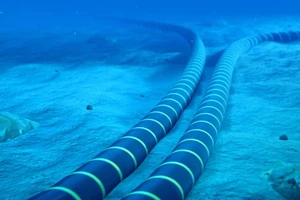
Ships linked to Iran looped, loitered and went dark over undersea internet cables in the Gulf of Oman in the weeks after Tehran threatened the region’s digital infrastructure, the Financial Times reported on Friday. One of them had been boarded by US Marines in May.

At least four vessels tracked by the maritime analytics firm Windward took unusual routes and lingered over cable corridors off Oman in October, the FT said. Three were tankers under US sanctions. The fourth was a small Iranian fishing boat with no known owner.

  • IRGC threatens undersea cables, but can it disrupt global internet?

    IRGC threatens undersea cables, but can it disrupt global internet?

The ships sailed normally “until they reached a specific cable corridor, and only then slowed, looped, turned back, loitered or went dark,” Windward told the newspaper. That behavior “fits the profile of mapping the cable routes, or placing charges or mines on them while dark,” it said.

86 hours in the dark

The most striking case is Celestial Sea, an Iran-flagged products tanker sanctioned by the United States last year and boarded by US Marines in the Gulf of Oman in May on suspicion of trying to run the American blockade.

On October 14 it drifted in a loop for more than four hours beside the 2Africa cable, which will connect Persian Gulf states to Europe and the east coast of Africa, according to Windward’s October 29 report, on which the FT’s story is based. The next day it switched off its transponder inside the 2Africa and Bay of Bengal Gateway corridors off Sohar. It stayed dark for 86 hours and reappeared nine nautical miles away, made a U-turn over the second cable and anchored. It was empty the whole time.

  • Iran finds a new weapon beneath Hormuz

    Iran finds a new weapon beneath Hormuz

  • IRGC-linked media hints at threat to Persian Gulf undersea internet cables

    IRGC-linked media hints at threat to Persian Gulf undersea internet cables

A second sanctioned tanker, a gas carrier loaded with about half a million barrels of Iranian LPG, left the same anchorage for Malaysia on October 23. Ten hours out, it slowed over 2Africa, turned 180 degrees back toward Oman and went dark. Five days later it had not reappeared. A loaded ship with a buyer waiting has no cargo reason to do that, Windward said.

The third, a crude tanker operated by Iran’s state tanker company, loitered at under one knot for about ten days in Iranian waters between Jask and Chabahar, within a few miles of four cable routes, switching off its tracking repeatedly, once for 33 hours.

The fishing boat

The fourth vessel is the odd one. A 34-meter Iranian fishing-support boat whose beneficial owner has been unknown since last year drifted at under half a knot along the Europe India Gateway and Transworld cables between October 21 and 26, in waters it had never entered in two years of tracking. Then it sailed north into Iranian waters and went dark.

Fishing in Iranian waters requires a state license, Windward noted, and the Revolutionary Guards’ navy has organized fishermen and their boats into a naval Basij that its commander has called a shadow navy. Iran has used civilian hulls as intelligence platforms before: the cargo ships Saviz and Behshad fed targeting data to the Houthis off Yemen, and on October 6 US forces destroyed an Iranian-linked dhow in the Gulf of Oman that CENTCOM said was watching American warships.

The threats that came first

The ships’ movements tracked a run of Iranian warnings. On October 12 Mohsen Rezaei, secretary of the Supreme National Security Council, said “data centers and artificial intelligence facilities will be destroyed” if the war resumes. On October 19 the Guards’ spokesman, Hossein Mohebbi, said seven cables ran under the Strait of Hormuz and that “new targets and new weapons shall be unveiled.” On October 21 the Guards’ political deputy, Yadollah Javani, said the cables would be hit in retaliation for attacks on Iranian infrastructure.

Two days later, two senior Iranian security officials told Iran International that Tehran had detailed plans to target the cables if the United States and Israel attacked again, and would try to prevent repairs to prolong any outage. That was the day the gas carrier turned around.

Who would feel it

Iraq, Kuwait, Bahrain and Qatar depend entirely on cables under the strait for their international connectivity, the FT reported, citing TeleGeography. The cables’ owners include Meta, Vodafone, Orange, AT&T, Verizon, BT and China Mobile.

Masha Kotkin of the Center for Strategic and International Studies told the FT that damage would slow financial transactions and disrupt cloud computing in Persian Gulf states that are betting on digital business to diversify from oil. Threats alone had already halted construction on several cable projects, she said.

Iran International reported last month that the strait carries less than one percent of the world’s international bandwidth and that the main Europe-Asia routes run through the Red Sea, so an attack would hurt Iran’s neighbors far more than the global internet.

The experts the FT consulted held back from conclusions. Sidharth Kaushal of the Royal United Services Institute said the maneuvers could be coincidence but that “Iran might be trying to demonstrate its capacity to damage undersea infrastructure if there is a war.” Jon Pentreath, a retired Royal Navy rear admiral, said almost any vessel could be fitted to lay mines. Celestial Sea’s owner did not respond to the FT.

Three of the four ships were still dark when Windward published. Where they reappear, it said, will show whether the cables were the destination or a stop on the way.

Free prisoners first: Jalali's wife challenges Tehran's call for expats to return

Nov 6, 2026, 04:14 GMT+0
100%
Vida Mehrannia and her husband Ahmadreza Jalali, who's been imprisoned in Iran since 2016

The wife of imprisoned Swedish-Iranian researcher Ahmadreza Jalali has challenged Tehran's calls for expatriates to return home, urging authorities to first release those jailed after visiting Iran.

"If you're going to invite people, the door must first be open," Vida Mehrannia told Iran International on Tuesday. "Open that door first. Release those who are inside."

Her husband, a specialist in disaster medicine who worked at universities in Sweden, Belgium and Italy, was arrested during a visit to Iran for an academic workshop in April 2016.

He was sentenced to death on espionage charges in October 2017. Jalali denied spying for Israel and said his confession had been obtained under torture.

Mehrannia said her husband had repeatedly faced the threat of imminent execution and endured solitary confinement and prolonged hunger strikes, leaving his physical and psychological health severely damaged.

The imprisonment has also devastated their family. Their 14-year-old son barely remembers living with his father, while their daughter has completed her education during his detention, Mehrannia said.

She said Jalali had been excluded from two prisoner exchanges, including the 2024 agreement that secured the release of two Swedish citizens in exchange for former Iranian prison official Hamid Nouri.

Jalali's case is among several involving academics, dual nationals and foreign residents arrested during visits to Iran, often on espionage or national security charges.

Princeton University doctoral researcher Xiyue Wang was arrested in 2016 while examining historical archives for his dissertation. Sentenced to 10 years for espionage, the American researcher was released in a prisoner exchange in December 2019.

British-Australian academic Kylie Moore-Gilbert was arrested after attending a conference in Iran in 2018. She spent more than two years in prison on espionage charges before being exchanged for three Iranians detained abroad in November 2020.

British-Iranian charity worker Nazanin Zaghari-Ratcliffe was detained in 2016 after visiting family with her young daughter. She was released in March 2022 after nearly six years.

Mehrannia also questioned why Iranian authorities had failed to respond to repeated requests for judicial review, saying her husband had been told his case was an international matter.

She said the authorities had the power to release Jalali, whose health has deteriorated after years of imprisonment, but had repeatedly failed to act.

Turkey's Mecca pact ratification paves way for military support to Saudi Arabia

Nov 6, 2026, 02:25 GMT+0
100%
FILE PHOTO: Turkey's Foreign Minister Hakan Fidan, Pakistan's Deputy Prime Minister and Foreign Minister Mohammad Ishaq Dar and Saudi Arabia's Foreign Minister Prince Faisal bin Farhan Al Saud leave after a committee meeting of Mecca defence pact in Riyadh, Saudi Arabia, October 5, 2026. Turkish Foreign Ministry/Handout via REUTERS/File Photo

Turkey's approval of a defense pact with Saudi Arabia and Pakistan has paved the way for military support to Riyadh amid attacks by Iran-backed Houthis, though deploying Turkish troops would still require separate parliamentary approval.

Turkey's parliament approved the Mecca Joint Defense Agreement on Thursday by 279 votes to 119, completing a major legislative step toward Ankara's participation in a security arrangement that treats an attack on one member as an attack on all three.

The agreement, signed in August, provides for intelligence sharing, military coordination, joint deterrence and defense industry cooperation. It does not automatically authorize Turkish troop deployments, which would require separate parliamentary approval.

The pact builds on an earlier Saudi-Pakistani defense agreement and reflects Riyadh's efforts to diversify its security partnerships amid the wider conflict involving Iran, the United States and Israel.

Although the pact predates the latest attacks on Saudi Arabia by Iran-backed Houthis, those attacks have given its collective-defense commitments more immediate significance.

Houthi attacks put defense commitments to the test

The three countries agreed during consultations in Riyadh in September to implement collective-defense measures, including arrangements for the rapid deployment of agreed military forces and capabilities to Saudi Arabia.

The decision came as fighting intensified in Yemen, with Houthi forces launching missile and drone attacks against Saudi targets and Riyadh resuming military operations against the group.

The Houthis have described some of their attacks as retaliation for Saudi airstrikes in Yemen. Reuters reported in September, citing Iranian and regional sources, that Iran's Revolutionary Guards had helped direct a Houthi offensive along Yemen's Red Sea coast and that Tehran had encouraged further attacks on Saudi Arabia.

Yemen's internationally recognized government made further allegations this week, accusing Iranian and Hezbollah personnel of directly helping manage Houthi military operations.

Interior Minister Ibrahim Ali Haidan said Tuesday that 14 members of Iran's Revolutionary Guards and seven Lebanese Hezbollah experts were involved in planning operations, developing missile and drone capabilities, and coordinating attacks on international shipping.

Haidan said decisions were made in Tehran and announced in Sanaa, accusing Iran of moving beyond financing, arming and training the Houthis to directly supervising their military activities.

Iran's Foreign Ministry denied Thursday that Iranian military experts were operating in Yemen. Hezbollah rejected the allegations Wednesday, saying it had no personnel working with the Houthis and describing the accusations as baseless.

The allegations and denials come as Saudi Arabia weighs how to respond to Houthi attacks and what military assistance it could receive from its new defense partners.

Turkish officials have indicated that Ankara's contribution would initially focus on equipment, intelligence and weapons systems, Reuters reported. Defense Minister Yasar Guler has said Turkey does not envisage its troops engaging in combat or offensive operations against the Houthis.

Opposition lawmakers warned during Thursday's parliamentary debate that the agreement could draw Turkey into regional wars. Government representatives said any troop deployment would require separate parliamentary approval, according to the Associated Press.

Defense partners keep diplomatic channels with Tehran open

Despite their expanding military cooperation, Saudi Arabia, Turkey and Pakistan have also pursued direct talks with Iran in an effort to prevent another regional escalation.

Saudi Defense Minister Khalid bin Salman, Pakistani army chief Asim Munir and Turkish intelligence chief Ibrahim Kalin met Iranian officials in Tehran on October 26 to discuss ways to prevent renewed regional fighting.

Saudi Arabia said the visit was intended to open negotiating channels and prevent renewed military escalation.

The discussions took place as Washington and Tehran remained divided over terms for ending their confrontation, including sanctions, the US naval blockade of Iranian ports and the future of shipping through the Strait of Hormuz.

Turkish and Pakistani officials have maintained that the Mecca agreement is defensive and is not directed against Iran or any other country.

For Ankara, the immediate question remains how much practical military support it will provide Saudi Arabia. The defense agreement establishes a collective commitment, but the scope of any Turkish deployment and its role in the confrontation with the Houthis have yet to be determined.

Trump's election defeat fuels debate in Tehran over US deal

Nov 6, 2026, 00:11 GMT+0
•
Behrouz Turani
100%
A man and a child sit in front of a large mural depicting senior US and Israeli officials, in Tehran, Iran, November 4, 2026

President Donald Trump's sweeping midterm defeat has sparked a debate in Tehran over whether Iran should seize the opportunity to negotiate a deal with Washington or maintain pressure through its control of the Strait of Hormuz.

Reformist and pragmatic conservative publications have urged Iranian leaders to exploit the shifting political climate in the United States to secure economic concessions, while hardline outlets argue that Tehran should preserve its maritime leverage regardless of the election outcome.

The debate comes as Iran faces mounting economic pressure, with inflation nearing triple digits, industrial shortages and shipping restrictions disrupting supplies of essential goods.

Reformist newspaper Shargh focused on the country's economic struggles, welcoming Foreign Minister Abbas Araghchi's proposal for implementing de-escalation measures in the Strait of Hormuz within two days.

Pragmatic conservative Khorasan, which is close to Parliament Speaker Mohammad Bagher Ghalibaf, urged lawmakers to pursue a negotiated settlement while ensuring parliamentary oversight of the proposed two-day mechanism.

The convergence suggests that support for exploring a deal extends beyond Iran's reformist camp, despite differences in political priorities.

‘Rescue the economy’

Sobh-e No, another conservative newspaper aligned with Ghalibaf, argued that Tehran should make the most of Trump's defeat to secure binding economic commitments.

Even Hamshahri, owned by the hardliner-led Tehran Municipality, called for swift diplomatic action, warning that shipping disruptions in the Persian Gulf were straining domestic supply chains and contributing to soaring food prices.

The US naval blockade has compounded Iran's economic crisis, effectively halting its oil exports and disrupting other maritime trade. Iran has not loaded oil for export since mid-August, according to shipping data from Kpler.

Together, these arguments reflect a calculation that Iran's maritime leverage may be more valuable if converted into immediate economic relief than maintained indefinitely.

‘Maintain pressure’

Hardline publications, however, showed little enthusiasm for changing Tehran's position.

Kayhan argued that the political balance in Washington had no bearing on what it described as Iran's "operational dominance" in Hormuz.

Javan similarly maintained that Tehran should continue using the strategic waterway to pressure Washington, regardless of which party controls Congress.

The English-language Tehran Times argued that the elections had changed neither Iran's ability to restrict maritime traffic nor its conditions for de-escalation.

Some conservative commentary also portrayed Vice President JD Vance's diplomatic outreach as evidence that the Trump administration was under pressure from high energy prices and difficulties securing maritime traffic.

Under this interpretation, the election results reinforced Washington's vulnerability but offered little reason for Tehran to soften its demands.

‘Beware miscalculation’

Other conservative publications struck a more cautious tone.

Resalat warned against assuming the election results would fundamentally change Washington's approach to Tehran, arguing that the United States remained an unreliable negotiating partner regardless of which party controlled Congress.

Jomhouri Eslami, meanwhile, cautioned that assuming Washington would indefinitely tolerate the closure of Hormuz could invite a wider regional war.

The competing assessments come as Tehran pursues diplomatic contacts beyond Washington.

On Thursday, Iran's Supreme National Security Council Secretary Mohsen Rezaei met Russian President Vladimir Putin in Moscow and delivered a message from Supreme Leader Mojtaba Khamenei, Iranian state media reported.

The question facing Iranian policymakers is whether Trump's electoral setback offers a chance to secure concessions or whether maintaining pressure will yield better terms, and how long Iran can afford to wait.