Explosive drones target Iranian Kurdish opposition groups in Iraq - Reuters
Explosive-laden drones targeted Iranian Kurdish opposition groups in Iraq's Sulaymaniyah province and areas east of Erbil, security sources told Reuters on Wednesday.
Explosive-laden drones targeted Iranian Kurdish opposition groups in Iraq's Sulaymaniyah province and areas east of Erbil, security sources told Reuters on Wednesday.








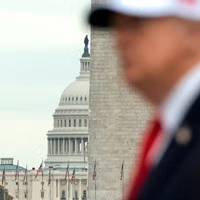


Iran has turned to Beijing and Moscow for backing in talks with Washington over the Strait of Hormuz. Mediators are weighing whether China could help guarantee that Washington delivers on sanctions relief in return for Iranian nuclear concessions.
Al Hadath reported on October 30 that mediators were considering a plan to match each Iranian nuclear concession with a US step to ease sanctions. The draft raised the possibility of China serving as a guarantor. Beijing’s account of its talks with an Iranian envoy on Monday gave no indication it had accepted that role.
The question has practical consequences for Tehran. In 2018, President Donald Trump withdrew the United States from the 2015 nuclear agreement and reimposed sanctions. Matching concessions step by step could limit how much Iran gives up before it sees an economic return. What China would do if Washington later restored sanctions remains unclear.
Beijing also has a stake in reopening Hormuz
Ali Bagheri Kani, deputy secretary of Iran’s Supreme National Security Council, told Chinese Foreign Minister Wang Yi in Beijing on Monday that Tehran wanted China to play a greater role in regional diplomacy. According to China’s foreign ministry, Wang backed Iran’s sovereignty and urged all sides to make concessions to avoid renewed fighting.
Wang’s separate meeting that day with Saudi national security adviser Musaed al-Aiban helps explain the limits of that backing. Wang stressed the need to protect energy supplies and shipping routes. China relies on oil shipped through Hormuz, giving it an interest in reopening the waterway even if Tehran would prefer to keep it closed until Washington meets its demands.
Beijing also announced plans to send its Middle East envoy, Zhai Jun, to Iran, Oman and Saudi Arabia. Oman’s Sultan Haitham bin Tariq welcomed a larger Chinese role during his own visit to Beijing. Qatar, meanwhile, continues to mediate between Tehran and Washington.
Where Moscow and Tehran agree
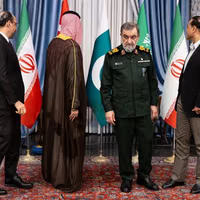
Mohsen Rezaei, who heads Iran’s Supreme National Security Council, spoke by phone with Russian President Vladimir Putin on Monday. The council said they discussed regional developments. Its public account gave no details of any agreement on the US naval blockade.
Putin said in October that he wanted shipping through Hormuz to resume and sanctions on Iran eventually lifted. Russia has also offered to take custody of Iran’s enriched uranium, giving Moscow a potential role if Tehran and Washington can agree on what happens to the stockpile.
For Tehran, the order of concessions matters. Rezaei said Tuesday that Washington must act on Iran’s seven conditions before the strait reopens. A senior Iranian official told Reuters the demands include oil sanctions waivers, an end to the naval blockade and the release of frozen funds. Moscow supports sanctions relief, but Putin has stopped short of endorsing Tehran’s demand that Washington move first.
Iranian students face mounting security pressure, with sit-ins in Tehran after a doctoral student set himself on fire following repeated disciplinary summonses and reports of dozens summoned by intelligence authorities in the southeast.
Students at the University of Tehran's Faculty of Social Sciences staged a sit-in outside the faculty dean's office at 12:30 p.m. on Tuesday, demanding an end to disciplinary measures and greater accountability from university authorities, according to the Telegram channel Daneshjuyan-e Mottahed.
The protest followed the self-immolation of Shahin Shokouhi, a sociology doctoral student who set himself on fire outside the university's Foulad building on Sunday after repeated summonses to a disciplinary committee and pressure from security authorities. He was subsequently taken to a medical facility.
The Telegram channel Daneshjuyan-e Pishro reported that students held sit-ins on Monday and Tuesday in response to the incident.
Protesters chanted slogans including "Free imprisoned students," "Free political prisoners," "Woman, Life, Freedom," "Students are awake and reject tyranny," and "Abolish disciplinary committees."
They also chanted "We want neither war nor bloodshed; long live the university."
Placards displayed during the protest read "Disciplinary committees = student self-immolation" and "University officials are responsible for Shahin Shokouhi's life."
Dozens summoned, students suspended in southeast Iran
Separately, dozens of students at the University of Sistan and Baluchestan have been summoned to the Intelligence Ministry since November 1, with some subsequently suspended from their studies for two semesters, according to the local rights group Haalvsh.
Sources cited by the rights group said students had been accused of "leading protests," "causing unrest at the university" and "acting as mercenaries," with some pressured into making forced confessions.
Students were also reportedly instructed to identify fellow students and provide intelligence authorities with information about their activities and personal connections.
Sources told Haalvsh that the university's disciplinary committee had shared students' information with the Intelligence Ministry.
Haalvsh said large numbers of students at the university had faced expulsion and suspension orders during the nationwide protests in January 2026, raising concerns about a repeat of those measures.
Student groups demand end to security pressure
The Islamic Student Associations of the University of Tehran and Tehran University of Medical Sciences criticized psychological pressure and what they described as arbitrary treatment of students following Shokouhi's self-immolation.
The associations called for reforms to university disciplinary committees, the abolition of unlawful procedures and rulings, and a transparent investigation into the incident.
Student councils from eight universities in Tehran also sent a joint letter to President Masoud Pezeshkian protesting increasingly aggressive actions by campus security offices, interference with students' clothing, restrictions on movement in university dormitories and pressure on student union activities.
"University security cannot be achieved through intimidation and extralegal controls," the letter said.
The councils urged authorities to end arbitrary treatment of students, clarify the limits of campus security officials' powers, review unfair disciplinary rulings and take steps to secure the release of detained students.
The letter was signed by student councils at Iran University of Science and Technology, Tarbiat Modares University, Alzahra University, Sharif University of Technology, Iran University of Art, Shahid Beheshti University, Allameh Tabataba'i University and Amirkabir University of Technology.
Iranian authorities have repeatedly arrested students and academics critical of the Islamic Republic over the past several decades, barring some from studying or teaching and subjecting others to security investigations and judicial proceedings.
Such measures have continued following the 2022 Woman, Life, Freedom uprising and the nationwide protests in January this year, with students and academics facing summonses, expulsions and disciplinary rulings.
Iranian commentators are questioning whether Donald Trump can end the conflict with a short military operation, arguing that the unresolved confrontation over Hormuz and the threat of economic retaliation could frustrate an attempt to strike Iran and declare victory.
Vahid Khazab, a regular commentator on the state television program Be Vaght-e Iran (Iran Time), argued Monday night that the circumstances that allowed the 12-day war to end no longer applied.
He recalled that Trump declared that conflict over after the United States struck Iran’s Fordow nuclear facility and Tehran retaliated against the Al Udeid air base in Qatar. This time, he said, a strike would leave the question of shipping through the Strait of Hormuz unresolved.
“Suppose he attacks Kuh-e Kolang (Pickaxe Mountain) and then says, ‘That’s it, it’s over.’ Well, what happens to the Strait of Hormuz?” Khazab asked.
“This means the war has not ended. That is why a symbolic move like the one during the 12-day war is not possible,” he added.
Khazab argued that Trump needed to end the conflict either through military action or an agreement, while portraying Iran as unwilling to make concessions in negotiations.
He urged Tehran to convey a warning that renewed attacks would provoke retaliation carrying lasting economic and political costs for Washington.
“Trump must understand this. It is very important that this message be conveyed to him — publicly, officially, secretly, in any way — that if you attack again, Iran will respond in a way that will seriously jeopardize the next two years of your future and America’s future, particularly by causing economic problems, including a recession,” he said.
“This would make him refrain from taking risks, including launching even a short war, regardless of the electoral outcome, in order to protect his legacy.”
Nima Akbarkhani, another regular panelist introduced on the program as a military expert, discussed the possibility of Trump staging a “major, spectacular Hollywood-style operation” to declare victory and end the war.
He argued that even such an operation would leave Trump in a difficult political position if Democrats won the midterm congressional elections.
Mehdi Abbasi, a guest introduced as a US affairs expert, speculated that a Democratic victory could prompt Trump to attack Iran during the roughly two months before the new Congress takes office in January.
Limited strikes and plans for further attacks
The discussion came amid limited US military action and reports of preparations for a potentially broader confrontation.
The United States struck Iran’s Qeshm Island on Monday as part of a series of limited attacks in recent weeks, The Wall Street Journal reported, citing US officials.
Trump said Tuesday that US forces had destroyed an Iranian anti-aircraft installation that he said had taken about two months to build.
The New York Times separately reported Tuesday, citing US officials, that US Central Command had a plan to begin strikes against Iran as early as Wednesday, after the midterm elections. The reported plan did not establish that Trump had ordered an attack.
Responding to the Qeshm strike, Deputy Foreign Minister Kazem Gharibabadi said Tuesday that Iran remained in a state of war and retained the right to defend itself until military aggression against it had ended completely and permanently.
Russian Foreign Ministry spokeswoman Maria Zakharova said Monday that reports of plans for further military action against Iran were deeply concerning and urged renewed diplomatic efforts.
Tehran holds to its demands
Tehran and Washington continue to exchange messages through intermediaries, including Qatar. Trump and Vice President JD Vance have expressed optimism about diplomacy, while Iranian officials insist Washington must meet Tehran’s conditions.
Mohsen Rezaei, secretary of Iran’s Supreme National Security Council, said Tuesday that Washington’s response to Tehran’s demands was unconvincing. He said the Strait of Hormuz would reopen only after the United States explicitly addressed and implemented Iran’s seven conditions.
Vance sent Rezaei a letter through Qatar several days earlier. Rezaei did not specify whether his Tuesday remarks referred to that letter or another message conveyed through intermediaries.
Parliament Speaker and chief negotiator Mohammad-Bagher Ghalibaf also warned Tuesday that Tehran’s response to a possible US attack would be unpredictable.
President Masoud Pezeshkian, meanwhile, reiterated that Supreme Leader Mojtaba Khamenei had granted his government additional powers to pursue negotiations.
Pezeshkian said his administration would seek to resolve the conflict through diplomacy but did not specify the scope of that authority.
His emphasis on negotiations drew criticism from hardline commentator and university professor Foad Izadi, who argued that such statements could help Washington choose the timing of another attack.
In a post responding to Pezeshkian, Izadi cited Trump’s remarks that oil prices were falling because people believed there would be no war with Iran and that Tehran wanted an agreement quickly.
Izadi accused Pezeshkian of helping Trump lower public expectations of war and manage oil prices by repeatedly emphasizing negotiations. He warned that Washington could attack again in the middle of diplomatic exchanges, at a time of its own choosing.
Speculation over nuclear weapons
Some Iranian commentary has also raised the possibility of nuclear weapons being used in a renewed confrontation, although Gharibabadi said Tuesday that Washington had not announced an official position on using such weapons against Iran.
Hossein Ajorlou, an international relations academic, told Fararu that a broad but short operation using powerful conventional weapons remained the most likely scenario.
He nevertheless speculated that Washington could consider tactical nuclear weapons if it failed to secure a quick result and reached a military stalemate.
Ajorlou emphasized that he considered conventional weapons, including bunker-busting bombs and precision-guided munitions, the likelier option.
Limits of a change in Congress
Several Iranian commentators have cautioned that a shift toward Democrats in Congress would not necessarily prevent another military confrontation.
Ali Hassan Heydari, an international affairs analyst writing for the hardline Siraj24 website, argued that victory for either party should not be interpreted as a fundamental change in Washington’s strategic approach.
A Democratic victory could nevertheless raise the political and financial costs of continuing the war and restrict Trump’s freedom of action, he wrote.
“This matters for Iran’s calculations, but it should not lead to a strategic miscalculation, because the outcome of the war and the question of the Strait of Hormuz will not be determined solely by the composition of Congress,” Heydari wrote.
“The elections may change the rules of Trump’s game, but resolving the confrontation with Iran requires decisions and agreements that go beyond the US ballot box.”
Amirali Abolfath, a US affairs expert, similarly cautioned against expecting a change in congressional control to end the conflict.
“We should not place too much hope in the idea that a change in the composition of Congress alone will bring the war to a halt, although these changes are not without effect and should not be viewed in absolute, black-and-white terms,” he told ISNA.
Iranians responding to an Iran International appeal said they could not afford emergency supplies or had nowhere safe to go if wider war resumes with the United States and Israel, with others describing exhaustion after repeated rounds of fighting.
Iran International asked its Instagram followers whether they would prepare emergency kits in the event of another war, drawing around 4,000 replies, many of which cited poverty, rising prices and a lack of public shelters.
Others described growing exhaustion after the 12-day war in June 2025 and the 40-day conflict from February to April 2026, both involving the United States and Israel, as well as decades of political and economic uncertainty.
The responses come after The Atlantic reported last month that the Trump administration was considering renewed strikes on Iran following the US midterm elections, with energy infrastructure among the potential targets.
Some respondents said they would not prepare emergency supplies, although their reasons varied.
‘We buy yogurt in four installments’
Financial hardship was a recurring reason cited by respondents, many of whom said meeting everyday needs had become difficult, let alone stockpiling food, medicines and emergency equipment.
"We buy yogurt in four installments, and then they expect us to stockpile three months' worth of food!" one respondent wrote.
Several Iranians pointed to the considerable cost of putting together even a basic emergency kit containing a flashlight, radio, canned food and other essential supplies.
"Putting together this bag costs 200 million rials [about $73]. Where are we supposed to get that money?" another respondent said.
One person questioned how anyone earning 250 million rials ($91) a month could afford an emergency kit costing at least 150 million rials ($55).
Another estimated the cost of a kit at nearly 300 million rials ($109), saying it was difficult for people who could not afford food for the following day.
The concerns reflect a broader cost-of-living crisis in Iran.
Iran's Statistical Center reported that point-to-point inflation, which compares prices with the same month a year earlier, reached 88.7% in the Iranian month of Mehr, which ended in October.
"We have no money, we're unemployed, and even covering the cost of daily food has become difficult," one respondent said.
Some said they could afford only a few basic items.
"Only things like sanitary pads, pills, tissues and biscuits. I can't afford the rest," one person wrote.
Others said they intended to prepare emergency kits despite the costs, particularly because of concerns about prolonged disruptions to water, electricity and gas supplies.
Several respondents with cardiovascular conditions, diabetes or epilepsy said they had stockpiled several months' worth of essential medication.
‘Where are we supposed to go?’
A lack of safe shelter was another major concern among respondents, with some questioning the purpose of preparing emergency supplies when they had nowhere to escape to.
"Even if we pack a bag, where are we supposed to go? The main question is, where do we go?" one person wrote.
Another said sarcastically: "During a war, all I can do is move from one room to another."
The shortage of public shelters has been acknowledged by Iranian officials.
On September 15, Tehran City Council Chairman Mehdi Chamran said metro stations should be equipped to serve as emergency shelters. He had previously acknowledged that the capital lacked fully equipped and ready-to-use shelters for residents.
Some respondents questioned whether emergency supplies would make any meaningful difference if strikes damaged essential infrastructure, leaving households without electricity, running water or gas for extended periods.
"If they strike the infrastructure, what can you possibly do with a backpack that, at most, can get you through one week?" one wrote.
Iran’s First Vice President Mohammad Reza Aref said on September 27 that damage to gas infrastructure during the two recent wars had reduced supplies, adding to the country’s energy shortages.
‘Our entire lives have been a state of emergency’
Beyond financial hardship and the lack of shelter, many responses reflected psychological exhaustion and a growing sense of resignation after repeated conflicts.
Some joked that preparing emergency kits was something only people experiencing war for the first time would do.
"It was only during the 12-day war that the anxiety felt new," one respondent wrote.
Another recalled preparing supplies during the first conflict but gradually abandoning the effort.
"We only packed one the first time. Then we needed our belongings and kept taking them out of the bag. The second time, we just entrusted ourselves to God," the respondent said.
Iran International documented similar sentiments in a June 8 report, when respondents described exhaustion with war, economic pressures and uncertainty about the future.
Despite concerns about the consequences of further fighting, some expressed hope that another conflict could bring political change.
That contradiction was also evident in the latest responses, with some saying they no longer feared renewed war and were instead waiting for it to begin.
"Now I'm more stressed about the possibility that war might not happen," one person wrote.
Others spoke of growing fatigue with the uncertainty surrounding the country's future.
Several respondents blamed the Islamic Republic for keeping Iran in what they described as a state of "suspension and crisis," "constant anxiety" and "living on red alert" throughout its 47 years in power.
One respondent summed up the sentiment shared by many: "Our entire lives have been in a state of emergency."
Iran International journalist Negar Mojtahedi received the 2026 Bill Good Award at the 40th annual Webster Awards in Vancouver on Monday, in recognition of her reporting on war, state violence and human rights violations in Iran, often at great risk to her personal safety.
Mojtahedi, a British Columbia-based investigative journalist, documentary filmmaker and host of Iran International’s Eye for Iran podcast, received the honor during the November 2 ceremony celebrating excellence in journalism across western Canada.
Accepting the award, Mojtahedi dedicated it to the people of Iran, particularly those who have lost their lives demanding freedom, and highlighted the dangers journalists face under the Islamic Republic.
"Journalism is my profession. It's what I've dedicated my life to," she said. "But while journalism is a profession here in Canada, in Iran, it is an extraordinary act of courage. One that can cost you your life."
She recalled the death of Canadian-Iranian photojournalist Zahra Kazemi, who died in 2003 after being arrested for photographing Tehran's Evin Prison, and the imprisonment of two Iranian female journalists who helped expose the death in custody of Mahsa “Jina” Amini in 2022.
Mojtahedi also addressed the Iranian government's deadly crackdown on nationwide protests in January 2026, describing the mass killings on January 8 and 9 and the communications blackout imposed by the authorities.
"On January 8 and 9, the Islamic Republic massacred its own people," she said. "Tens of thousands were killed in just two days. The full scale of the massacre is still being uncovered."
She cited former United Nations war crimes prosecutor Payam Akhavan, who described the killings as "extermination," and accused Iranian authorities of attempting to conceal the violence by cutting internet and telephone connections.
"I am incredibly fortunate to work at Iran International, where we have the freedom, the platform and the responsibility to expose these atrocities, even when the regime is doing everything it can to bury the truth," she said.
Mojtahedi also drew attention to executions and death sentences handed down to protesters, as well as the case of Hesam Alaeddin, a 40-year-old father of two who she said died after being beaten by security agents in a case connected to the possession of Starlink satellite internet equipment.
Reflecting on her own family's experiences, she said growing up hearing about executions in Iran had shaped her understanding of journalism and the responsibility that comes with it.
"Even today, when I see a construction crane here in Canada, my heart sinks. Because I think of Iran. I think of the people who have been hanged from cranes," she said.
"I dedicate it to the people of Iran, especially those who have paid the ultimate price for demanding truth and freedom."
She concluded with a message to fellow journalists: "Our freedom to report means very little if we don't use it to give a voice to those who have been silenced."
Dedication to journalism
The Jack Webster Foundation praised Mojtahedi's work documenting war, state violence and human rights abuses, highlighting her efforts to increase international understanding of Iran.
"Reporting on war, state violence and human rights violations, often at great risk to her personal safety, Negar has helped bridge the gulf between the West and Iran and increased cultural understanding," the foundation said.
It also recognized her contribution as a first-generation immigrant journalist, saying her reporting challenges negative stereotypes and encourages more equitable representation of underrepresented communities in the media.
Effie Klein, a journalism instructor, praised Mojtahedi's dedication and courage, saying she had earned recognition typically associated with journalists who have spent decades in the profession.
"She believes in what she does. She loves what she does, and even if it comes with consequences, she knows that she needs to tell the truth," Klein said. "I think that is very brave, and I think that's why she deserves this award."
Doug Sydora of Global BC recalled Mojtahedi's early enthusiasm and determination in the newsroom.
"She came in like a force," he said, describing her as possessing "an unbelievable, unbridled curiosity and passion."
Bozorgmehr Sharafedin, Iran International's head of digital, also praised her commitment to reporting.
"She's genuinely passionate about the stories that she covers, and add to that her energy, that is unstoppable in a way," Sharafedin said. "I think a combination of these makes Negar a unique reporter."
Excellence in journalism
The Bill Good Award recognizes individuals or organizations that have made significant contributions to journalism in British Columbia or benefited communities through their reporting.
Named in honor of veteran Canadian broadcaster Bill Good, whose career spanned five decades, the award is among three special honors presented by the Jack Webster Foundation.
Mojtahedi previously received the 2025 Freedom of the Media Award from the Washington-based Transatlantic Leadership Network for excellence in international reporting.
The November 2 ceremony also honored journalist Tom Zytaruk with the Bruce Hutchison Lifetime Achievement Award and Anne Penman with the Shelley Fralic Award.
The annual Webster Awards marked their 40th anniversary this year, with recently retired CBS News senior foreign correspondent Elizabeth Palmer appearing as the featured guest.