Iran should use rail corridors to sustain imports and boost exports amid the US “full-scale economic war,” a parliamentary committee spokesperson said on Thursday.
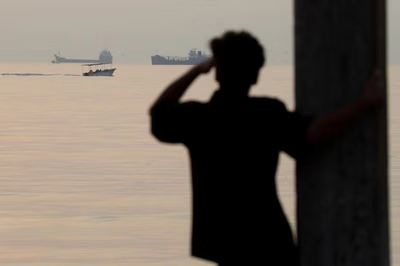
Zahra Saeedi Mobarakeh said maritime, air and some land routes were under blockade.
The MP urged the government to focus on non-oil exports and use rail links to maintain trade with China, Afghanistan and Eurasia.
Still photo of Mai Sato, Special Rapporteur on the situation of human rights in the Islamic Republic of Iran, October 28, 2026 at the UN.
Iranian authorities have executed at least 34 people in connection with the January protests, conducted mass trials resulting in death sentences and detained thousands, UN Special Rapporteur Mai Sato said Wednesday.
Addressing the UN General Assembly, Sato described the scale of human rights violations during her two-year Iran mandate as extraordinary. “I struggled to find its precedent in recent history,” she said, warning that her findings represented only a fraction of the abuses committed against Iranians.
Her report, covering February through August 2026 following the December-January nationwide protests, detailed how the Islamic Republic used the war with the United States and Israel to intensify repression, treating peaceful protesters as agents of hostile foreign powers.
In just one case, 34 defendants were tried in five days, with 12 sentenced to death and seven already executed. She said such proceedings could not establish individual criminal responsibility, rendering the death sentences arbitrary.
Sato said senior Iranian officials had publicly demanded expedited trials, while courts conducted mass proceedings and broadcast alleged confessions within days of arrests. She added that lawyers defending protesters had been summoned, threatened and, in some cases, arrested.
The special rapporteur also reported thousands of arrests on national security charges, with many detainees held incommunicado at undisclosed locations, a pattern she described as enforced disappearance. She said families of protesters killed in the crackdown faced threats of prosecution and asset confiscation for demanding accountability, while some were denied the right to hold funerals.
Sato also described prisoners left locked inside overcrowded cells during airstrikes, with bars reportedly welded to ward doors. Government-imposed internet shutdowns prevented civilians from receiving warnings about incoming attacks and made documenting abuses dangerous. Under Iranian espionage legislation, sharing information with foreign media can carry the death penalty.
She said the authorities continued withholding information about executions and killings by security forces while publishing protest death tolls far below independent estimates.
“The result is that there is no lawful way left to dissent,” Sato said.
The UN's Independent International Fact-Finding Mission, which addressed the same session, concluded that the suppression of January's nationwide protests amounted to crimes against humanity. Sato said she saw no reason to depart from that finding.
Iran and allies challenge UN findings
Iran's representative, Ali Karimi Magham, rejected both UN investigative mechanisms, describing them as illegitimate and politically engineered instruments unrelated to genuine human rights protection.
Russia accused the investigators of advancing Western political interests and disregarding Iran's “complex and unique sociocultural context.”
North Korea similarly rejected the investigations, accusing the UN of the “weaponization of human rights.” Its representative argued that countries should determine their own societal models free from external interference and that country-specific investigations violated national sovereignty.
China concentrated on the consequences of war and sanctions, urging respect for Iran's sovereignty and calling for the removal of unilateral economic restrictions. Beijing said such measures violated economic and social rights and worsened the population's hardship.
Sato responded to Tehran's objections by pointing out that Iranian authorities had engaged with her office throughout her mandate, including extensively over the war, while continuing to withhold information about killings carried out by their own security forces.
Western governments condemn Iran’s crackdown
Other delegations focused on the violations documented by the UN investigators, particularly the killing of protesters, executions and torture.
Britain described the killing of children during the January crackdown as “abhorrent” and condemned the torture of detainees, widespread violence against peaceful protesters and the authorities' internet shutdowns.
Australia accused Iranian authorities of using lethal force, mass arrests and a nationwide communications blackout to silence dissent and isolate Iranians from the outside world.
The European Union called for an immediate halt to executions, condemning the use of capital punishment and torture to suppress political opposition. It also warned about reprisals against critics, including those living abroad.
The Netherlands said the findings confirmed gross human rights violations, particularly a dramatic escalation in lethal force and mass arrests during the protests.
Canada raised concerns about proposed legislation that would criminalize contact with foreign organizations, civil society groups and diplomatic missions, potentially further restricting communication between Iranians and the outside world.
Sato also documented discrimination against Kurds, Baluch, Arabs and Azerbaijani Turks, alongside continuing persecution of Baha'is and Christian converts.
In her concluding remarks, Sato called on the United States and Israel to end hostilities and investigate their strikes, while urging Iranian authorities to halt executions and repression and investigate deaths caused by their forces.
Instead, she said, repression had deepened the grievances driving people into the streets.
Posters of Iran’s late Supreme Leader Ali Khamenei and his successor, Mojtaba Khamenei, hang above a street in Karbala, Iraq, during funeral proceedings for Ali Khamenei. (ISNA)
A reported order by Iran’s supreme leader to end the state of “neither war nor peace” may signal a turn towards diplomacy. But a closer reading suggests Tehran is offering no concessions, only restating its longstanding demands for ending the confrontation with Washington.
On Tuesday, Iranian state media announced that Supreme Leader Mojtaba Khamenei had received Maj. Gen. Mohsen Rezaei, secretary of the Supreme National Security Council, and ordered an end to “the war and the ‘neither war, nor peace’ conditions.”
Abroad, that was read as Tehran wanting out. It wants nothing of the sort. Read the whole sentence, and the “order” is the same demand the Islamic Republic has made since the shooting stopped in April: the stalemate ends when Washington capitulates.
The news cycle started with a readout released by Mojtaba’s official website, which was reproduced word for word across the domestic press. The item is a summary, not a transcript. Every line attributed to Mojtaba is in reported speech, without a single direct quotation.
He is said to have called for “exerting control over the Strait of Hormuz,” declared the enemy “desperate,” bound Iran’s “interests” to those of its regional allies in the “Axis of Resistance,” and called for an end to the war “through realization of the conditions set out by the country’s officials.”
That last clause is the whole message, and the conditions it refers to are no secret. Rezaei himself set them out in September: an end to the war on all fronts, Lebanon included; the release of Iran’s frozen funds; an end to the US naval blockade of Iranian ports; and guarantees against renewed strikes.
Earlier versions added compensation for war damages, the lifting of sanctions and recognition of Tehran’s control over the strait. In short: Tehran keeps its grip on Hormuz, its regional allies stay in place, and Washington concedes. Then, and only then, the stalemate ends. Not one condition softened, not one position moved.
Now consider what the readout is not. It is not independent evidence that a meeting took place. It carries no date and no place. Under Ali Khamenei, the leader’s office opened such items with “this morning” or “this afternoon” and named the venue, usually the Imam Khomeini Hussainiya in Tehran. That convention has quietly disappeared.
The readout carries no image, either. No independently verified new photograph, audio or video of Mojtaba Khamenei has surfaced since the February strike that killed his father. The same was true of the four earlier meetings state media has reported for him, twice with the president, once with the parliament speaker and once with the chief justice.
Eight months in, the authorities have offered only written accounts of these meetings, without independently verifiable visual or audio evidence. When and where they took place, and whether the official accounts are accurate, remain unverified.
Some have nonetheless read the announcement as significant, on the grounds that Mojtaba called for an end to the war. The record says otherwise: the conditional clause simply restates Tehran’s standing terms.
A call to end the stalemate with no change in terms is the oldest tactic in the Islamic Republic’s repertoire: stall, buy time, rebuild; when the pressure rises, flirt with peace; and when an opening appears, strike.
The readout did not specify when or where the meeting took place. Although it was published Tuesday, a day after Saudi, Turkish and Pakistani envoys visited Tehran, the text does not establish that the meeting occurred that day or that it was connected to the diplomatic visit.
What Tehran is actually telegraphing
What “neither war, nor peace” means in the mouth of a Khamenei, the family’s own usage helps explain.
In August 2018, Ali Khamenei told a public audience that there would be no war and no negotiation with the Trump administration, because talks would end to Tehran’s detriment. The government daily Iran bannered it the next morning: “there will be no war, and we will not negotiate.” In May 2019, he called negotiation “poison” and declared the nation’s choice to be “resistance.” The limbo was Tehran’s own posture, and a boast.
After the twelve-day war of June 2025, he flipped the phrase. Addressing the cabinet on September 7, he said hope and productivity had to prevail over the “neither war, nor peace state that the enemy wants to impose on us” as part of its “psychological war.” His remedy was self-reliance: “don’t wait for external developments.” The limbo was now the enemy’s doing; the answer was still not to talk.
President Masoud Pezeshkian has leaned on that speech ever since, most recently on October 24, when he said, “Many are struggling for their evening bread” because of the war and the stalemate, adding, “One cannot plan in limbo... The martyred Leader ordered us to go and finish the job.”
The IRGC’s press corps answered within a day. Javan headlined that exiting the stalemate “will not come through negotiation” but through “changing the enemy’s calculations.” Fars News presented the phrase as the doctrine of the “martyred Imam,” with negotiation a “strategic trap.”
Tuesday’s readout appears to settle that argument in the IRGC’s favor. The son inherits the father’s phrase and makes it a condition for ending the confrontation: the stalemate is over when the other side accepts Tehran’s terms.
Three uses of one phrase, one underlying position. Refuse talks in 2018. Blame the enemy for the stalemate in 2025. Demand an end to the stalemate on Tehran’s terms in 2026. At no point has “ending neither war nor peace” meant Tehran moving an inch.
Meanwhile, the authorities continue to announce meetings involving a leader who has not appeared publicly in independently verified images or recordings. This is not an order to end the stalemate. It is the stalemate, restated as a demand.
FILE PHOTO: The IAEA logo is displayed in front of the agency’s headquarters in Vienna, Austria, June 5, 2026.
The IRGC-linked Tasnim news agency has set out the case for Iran to withdraw from the Nuclear Non-Proliferation Treaty (NPT), adding to a renewed debate over Tehran's nuclear strategy as the region remains caught between diplomacy and war.
In a commentary published Wednesday, Tasnim argued that the treaty had failed to protect Iran's interests and questioned the benefits of remaining a member after successive wars with Israel and the United States.
The intervention comes as Qatar promotes a diplomatic framework reportedly linking the reopening of the Strait of Hormuz, sanctions relief and efforts to reduce tensions involving Yemen's Houthis.
It also follows signals from Tehran that its leadership wants to end the current diplomatic and military stalemate.
Supreme National Security Council (SNSC) Secretary Mohsen Rezaei said Supreme Leader Mojtaba Khamenei had told him during a meeting on Tuesday that it was time to end the state of “no war, no peace.”
President Masoud Pezeshkian said Wednesday that his government would do everything it could to fulfil the leader's wishes.
Tasnim's commentary, titled “Why Should Iran Leave the NPT?”, highlights divisions over how Tehran should respond to international pressure on its nuclear program.
The case for withdrawal
Hardline politicians have repeatedly raised the prospect of leaving the NPT during periods of nuclear negotiations, arguing that the treaty has failed to protect Iran's interests.
Tasnim identified three central objectives of the treaty: preventing the spread of nuclear weapons, encouraging nuclear-armed states to disarm and protecting members' right to use nuclear technology for peaceful purposes.
The agency argued that the treaty had failed on all three counts.
It accused the International Atomic Energy Agency (IAEA) of abandoning its role as an impartial technical body and becoming politically aligned with the United States and Israel.
The agency had failed to defend Iran's rights when its nuclear sites were attacked, so withdrawal would be a legitimate option for Tehran, Tasnim argued.
Tasnim maintained that withdrawal would not necessarily mean developing nuclear weapons. Some lawmakers, however, have explicitly linked the two.
On Tuesday, MP Abolfazl Aboutorabi called for Iran to withdraw from the NPT and begin building a nuclear bomb.
Other hardline figures, including members of the ultraconservative Paydari Front, have advocated withdrawal, arguing that continued membership has failed to prevent attacks on Iranian nuclear facilities despite their being subject to international safeguards.
Divisions within the establishment
The calls have met resistance from other establishment-aligned media, reflecting disagreements over the potential costs of withdrawal.
Khabar Online, a pragmatic-conservative outlet, sharply criticized the campaign in an October 25 report, singling out the Paydari Front and questioning the political judgment of those advocating departure from the treaty.
Its headline described the proposal as a radical demand dating back two decades, with “neither head nor tail.”
The reformist Arman Melli newspaper has also taken a position against withdrawal, broadly reflecting the Pezeshkian administration's preference for maintaining Iran's existing treaty commitments.
Nour News, which is close to the SNSC, adopted a more cautious approach in its own October 25 analysis.
It argued that neither withdrawal nor continued membership could guarantee Iran's security and that dissatisfaction with the IAEA did not, by itself, justify abandoning the treaty.
The outlet also warned that withdrawal from the NPT would create further political and diplomatic complications, while remaining in the treaty would still allow Tehran to restrict aspects of its cooperation with the IAEA.
Withdrawal, it concluded, should not be considered without a clear plan for what would follow.
A consequential decision
Leaving the NPT would have implications beyond Iran's relations with the IAEA.
Under Article X of the treaty, a state party may exercise its right to withdraw if it determines that extraordinary events have jeopardized its supreme interests. It must give three months' notice to other treaty parties and the UN Security Council, explaining the events behind its decision.
Withdrawal could further complicate Tehran's relations with Western governments and raise questions about the future of international monitoring of its nuclear activities.
Despite the calls from hardline lawmakers and media outlets, Iran has announced no decision to leave the treaty.
The government continues to maintain that its nuclear program is peaceful, and neither the SNSC nor Supreme Leader Mojtaba Khamenei has publicly endorsed withdrawal.
The competing arguments underscore a debate within Iran's political establishment: whether abandoning the treaty would strengthen Tehran's position after repeated military attacks or leave it more isolated and vulnerable as regional powers seek a diplomatic settlement.
Players from Persepolis (red) and Esteghlal (blue) compete during the first-ever women's soccer derby between the two clubs at Shahr-e Qods Stadium, west of Tehran, October 28, 2026.
Iran's two biggest soccer rivals met in their first women's derby on Wednesday, a historic occasion overshadowed by restrictions on male spectators and journalists and uncertainty over live television coverage.
Persepolis defeated Esteghlal 2-1 at Shahr-e Qods Stadium west of Tehran, marking the first-ever meeting between the women's teams of two clubs whose rivalry has dominated Iranian men's soccer for decades.
Fatemeh Rezaei and Somayeh Esmaeili scored for Persepolis in the first half before Niloufar Azimi pulled one back for Esteghlal after the break.
Female spectators were eventually allowed to attend following days of uncertainty and intervention by government officials. Men, however, remained barred from women's soccer matches under restrictions that also extended to journalists, photographers and technical personnel.
Persepolis players pose during their historic women's soccer derby against Esteghlal, which they won 2-1, west of Tehran, October 28, 2026.
Prosecutor threatens legal action
Tehran prosecutor Ali Salehi on Tuesday sent separate letters to Sports Minister Ahmad Donyamali and Iranian Football Federation President Mehdi Taj demanding that men be barred from women's soccer matches.
The restrictions covered male spectators, journalists, photographers, camera operators, security personnel and event staff. Salehi warned that prosecutors would take legal action if they were violated.
The warning followed reports of female spectators attending women's league matches without the headscarves required under Iran's mandatory hijab laws, as well as men being present at the games.
Prosecutors described the incidents as violations of Islamic regulations and public decency.
The Iranian Football League Organization had already issued a directive prohibiting men from attending women's soccer matches, including male media workers and club executives.
Farideh Shojaei, the Football Federation's vice president for women's affairs, confirmed ahead of the derby that men would not be permitted to attend.
The restrictions also raised practical questions about organizing the match, particularly the use of video assistant referee (VAR) technology, which relies on technical personnel and match officials.
The league had previously called for a male official to be removed from the VAR team for the derby, adding to uncertainty over how the technology would be operated.
The dispute over attendance came after a series of changes to the arrangements for the historic fixture.
Originally scheduled for Friday, October 23, at Kazemi Stadium, the home ground of Persepolis' women's team, the match was moved to Wednesday, October 28, at Shahr-e Qods Stadium.
The league organization cited anticipated demand from supporters and the need for better facilities, although the change also shifted the match from Iran's weekly day off to a working day.
Ticket sales were suspended twice in the days leading up to the game, while the final decision on whether female spectators could attend was referred to the Tehran Provincial Security Council.
At one point, there were concerns that the encounter could take place behind closed doors despite the anticipated interest from supporters.
Women were eventually permitted to attend following discussions involving Vice President for Women and Family Affairs Zahra Behrouz-Azar and Sports Ministry officials.
Government spokesperson Fatemeh Mohajerani also attended the match, according to Iranian media reports.
Government spokesperson Fatemeh Mohajerani also attended the match, according to Iranian media reports.
Persepolis (red) and Esteghlal (blue) players compete during their first-ever women's soccer derby west of Tehran, October 28, 2026.
Women's soccer struggles for television exposure
The restrictions extended beyond stadium access, raising questions about how widely the first women's derby would be seen.
Iran's state broadcaster, IRIB, had announced no plans to televise the match, while reports ahead of the game indicated restrictions on broadcasts through the two clubs' own platforms.
The uncertainty contrasted with the men's Esteghlal-Persepolis derby, one of Iran's biggest sporting events, which regularly attracts large television audiences.
For the women's teams, limited broadcasting and media access also restrict opportunities to build a following, attract commercial sponsors and gain wider public recognition.
Female soccer players in Iran are required to wear mandatory hijab while competing and have long faced unequal access to sporting facilities and limited media exposure.
The first meeting between the women's teams of Esteghlal and Persepolis offered an opportunity to showcase their talents to a national audience. Instead, much of the attention ahead of the match centered on restrictions over who could attend, photograph or broadcast it.
A different picture elsewhere in the region
The restrictions surrounding Iran's first women's derby contrast with similar fixtures involving major soccer clubs elsewhere in the region, where women's competitions have attracted television coverage, government support and spectators of both sexes.
In December 2021, Turkish rivals Fenerbahce and Galatasaray held their first women's derby as a friendly match at Istanbul's Nef Stadium.
Organized as part of a campaign against violence toward women, the match was attended by male and female supporters, broadcast on national television and watched by Turkey's justice and family ministers.
Then-Justice Minister Abdulhamit Gul said afterward: "Whatever the result, women are the winners."
Saudi Arabia staged its first women's Jeddah derby between Al-Ittihad and Al-Ahli in October 2022, during the opening week of the country's Women's Premier League.
The match took place at King Abdullah Stadium, with spectators attending without gender restrictions.
Saudi women's soccer subsequently secured wider television exposure. Beginning with the 2023-2024 season, Women's Premier League matches were broadcast domestically on SSC sports channels and internationally through streaming platform DAZN outside the Middle East and North Africa.
Alia Al-Rasheed, head of women's soccer at the Saudi Football Federation, described the agreement as an opportunity to attract new audiences and inspire future generations of female players.
While Turkey and Saudi Arabia have expanded opportunities for women's soccer, Iranian female athletes continue to face mandatory hijab requirements, unequal facilities and restrictions on media exposure.
For Iran's women footballers, the first derby between the country's two biggest clubs was a milestone. But the restrictions surrounding it showed how far the women's game remains from enjoying the visibility routinely afforded to its male counterpart.
A woman holds a poster depicting the Islamic Republic's three Supreme Leaders, during a state-organized rally in Bojnourd, Iran, October 27, 2026
The Revolutionary Guards-affiliated Fars news agency has promoted calls for Iran to build an atomic bomb through a video of street interviews, presenting nuclear armament as a popular demand.
“The most frequently repeated demand among Iranians these days: Why should America and Israel have atomic bombs while we don't?” Fars said in its description of the video, circulated on X and Telegram.
The agency presented the selected interviews as evidence of public support for nuclear weapons, although they provide no reliable measure of how widely that view is shared.
The message echoes arguments advanced by several Iranian lawmakers and other establishment figures following the wars with Israel and the United States.
From warnings to calls for a bomb
Discussion of changing Iran's nuclear doctrine predates the wars. In May 2024, former foreign minister Kamal Kharrazi, who later advised Supreme Leader Ali Khamenei, said Iran could reconsider its nuclear doctrine if Israel attacked its nuclear facilities or threatened the country's existence.
Kharrazi died in April 2026 from injuries sustained in a US-Israeli strike on his home in Tehran.
In August, Supreme National Security Council Secretary Mohsen Rezaei argued that international non-proliferation commitments had failed to protect Iran from military attack.
“When America is waging such a war, people naturally ask: Why shouldn’t we pursue nuclear weapons ourselves?” Rezaei told state television, suggesting that the attacks had strengthened arguments for acquiring an atomic deterrent.
Some lawmakers have gone further. On October 18, Ahmad Naderi, a member of parliament's presiding committee, said he had advocated nuclear testing and developing an atomic bomb for more than a decade.
Naderi also suggested that Supreme Leader Mojtaba Khamenei might take a different position from his late father, Ali Khamenei, who maintained that his religious ruling prohibited nuclear weapons.
Lawmaker Ahmad Bakhshayesh Ardestani called in July for Iran to manufacture nuclear weapons, arguing that the country had already paid the price for its nuclear program.
The conservative newspaper Vatan-e Emrooz also endorsed nuclear armament this month, featuring the headline “Iran Should Build a Bomb” and arguing that a nuclear deterrent could prevent further US and Israeli attacks.
Former Iranian foreign ministers Mohammad Javad Zarif (R) and his predecessors Ali Akbar Velayati and Kamal Kharrazi next to him, in a meeting with Supreme Leader Ali Khamenei on July 21, 2018.
Attempts to portray nuclear weapons as a popular demand predate the latest Fars video.
In September 2025, state television aired a commentator's claim that nearly 90% of Iranians favored building a bomb following the 12-day war, without providing verifiable polling methodology.
Former Foreign Minister Mohammad Javad Zarif has argued that nuclear weapons cannot guarantee a country's security or survival, drawing criticism from hardliners who see them as necessary to deter future attacks.