UK offers households ‘breathing space’ as Iran war pushes up energy costs
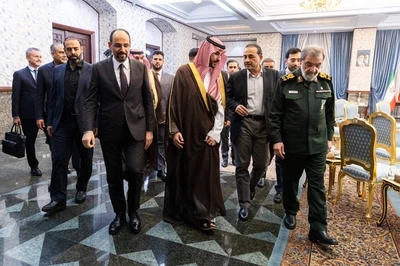
Britain's Chancellor John Healey walks to attend the first cabinet meeting with British Prime Minister Andy Burnham at 10 Downing Street, in London, Britain, July 21, 2026. REUTERS/Chris J Ratcliffe/File Photo
Britain announced measures Wednesday to ease the impact of soaring energy costs on households this winter, as Chancellor John Healey said the Iran war was putting pressure on family budgets and the wider economy.
The government will provide a £100 energy payment to 20 million households in council tax bands A-D and extend a VAT cut on electricity through July, which Healey said would take £50 off the annual price cap.
“I know that with the conflict in the Middle East, rising energy bills are a real worry,” Healey said in his budget speech, adding that the measures were intended to give families “a bit of breathing space.”
Healey said oil had risen from around $70 a barrel to well above $100 and gas prices had nearly tripled since February, increasing costs for British families and businesses.
He also said the government had used some of its fiscal headroom to “absorb the impact of the Iran war” and protect the economy and household budgets.
FILE PHOTO: The IAEA logo is displayed in front of the agency’s headquarters in Vienna, Austria, June 5, 2026.
The IRGC-linked Tasnim news agency has set out the case for Iran to withdraw from the Nuclear Non-Proliferation Treaty (NPT), adding to a renewed debate over Tehran's nuclear strategy as the region remains caught between diplomacy and war.
In a commentary published Wednesday, Tasnim argued that the treaty had failed to protect Iran's interests and questioned the benefits of remaining a member after successive wars with Israel and the United States.
The intervention comes as Qatar promotes a diplomatic framework reportedly linking the reopening of the Strait of Hormuz, sanctions relief and efforts to reduce tensions involving Yemen's Houthis.
It also follows signals from Tehran that its leadership wants to end the current diplomatic and military stalemate.
Supreme National Security Council (SNSC) Secretary Mohsen Rezaei said Supreme Leader Mojtaba Khamenei had told him during a meeting on Tuesday that it was time to end the state of “no war, no peace.”
President Masoud Pezeshkian said Wednesday that his government would do everything it could to fulfil the leader's wishes.
Tasnim's commentary, titled “Why Should Iran Leave the NPT?”, highlights divisions over how Tehran should respond to international pressure on its nuclear program.
The case for withdrawal
Hardline politicians have repeatedly raised the prospect of leaving the NPT during periods of nuclear negotiations, arguing that the treaty has failed to protect Iran's interests.
Tasnim identified three central objectives of the treaty: preventing the spread of nuclear weapons, encouraging nuclear-armed states to disarm and protecting members' right to use nuclear technology for peaceful purposes.
The agency argued that the treaty had failed on all three counts.
It accused the International Atomic Energy Agency (IAEA) of abandoning its role as an impartial technical body and becoming politically aligned with the United States and Israel.
The agency had failed to defend Iran's rights when its nuclear sites were attacked, so withdrawal would be a legitimate option for Tehran, Tasnim argued.
Tasnim maintained that withdrawal would not necessarily mean developing nuclear weapons. Some lawmakers, however, have explicitly linked the two.
On Tuesday, MP Abolfazl Aboutorabi called for Iran to withdraw from the NPT and begin building a nuclear bomb.
Other hardline figures, including members of the ultraconservative Paydari Front, have advocated withdrawal, arguing that continued membership has failed to prevent attacks on Iranian nuclear facilities despite their being subject to international safeguards.
Divisions within the establishment
The calls have met resistance from other establishment-aligned media, reflecting disagreements over the potential costs of withdrawal.
Khabar Online, a pragmatic-conservative outlet, sharply criticized the campaign in an October 25 report, singling out the Paydari Front and questioning the political judgment of those advocating departure from the treaty.
Its headline described the proposal as a radical demand dating back two decades, with “neither head nor tail.”
The reformist Arman Melli newspaper has also taken a position against withdrawal, broadly reflecting the Pezeshkian administration's preference for maintaining Iran's existing treaty commitments.
Nour News, which is close to the SNSC, adopted a more cautious approach in its own October 25 analysis.
It argued that neither withdrawal nor continued membership could guarantee Iran's security and that dissatisfaction with the IAEA did not, by itself, justify abandoning the treaty.
The outlet also warned that withdrawal from the NPT would create further political and diplomatic complications, while remaining in the treaty would still allow Tehran to restrict aspects of its cooperation with the IAEA.
Withdrawal, it concluded, should not be considered without a clear plan for what would follow.
A consequential decision
Leaving the NPT would have implications beyond Iran's relations with the IAEA.
Under Article X of the treaty, a state party may exercise its right to withdraw if it determines that extraordinary events have jeopardized its supreme interests. It must give three months' notice to other treaty parties and the UN Security Council, explaining the events behind its decision.
Withdrawal could further complicate Tehran's relations with Western governments and raise questions about the future of international monitoring of its nuclear activities.
Despite the calls from hardline lawmakers and media outlets, Iran has announced no decision to leave the treaty.
The government continues to maintain that its nuclear program is peaceful, and neither the SNSC nor Supreme Leader Mojtaba Khamenei has publicly endorsed withdrawal.
The competing arguments underscore a debate within Iran's political establishment: whether abandoning the treaty would strengthen Tehran's position after repeated military attacks or leave it more isolated and vulnerable as regional powers seek a diplomatic settlement.
Players from Persepolis (red) and Esteghlal (blue) compete during the first-ever women's soccer derby between the two clubs at Shahr-e Qods Stadium, west of Tehran, October 28, 2026.
Iran's two biggest soccer rivals met in their first women's derby on Wednesday, a historic occasion overshadowed by restrictions on male spectators and journalists and uncertainty over live television coverage.
Persepolis defeated Esteghlal 2-1 at Shahr-e Qods Stadium west of Tehran, marking the first-ever meeting between the women's teams of two clubs whose rivalry has dominated Iranian men's soccer for decades.
Fatemeh Rezaei and Somayeh Esmaeili scored for Persepolis in the first half before Niloufar Azimi pulled one back for Esteghlal after the break.
Female spectators were eventually allowed to attend following days of uncertainty and intervention by government officials. Men, however, remained barred from women's soccer matches under restrictions that also extended to journalists, photographers and technical personnel.
Persepolis players pose during their historic women's soccer derby against Esteghlal, which they won 2-1, west of Tehran, October 28, 2026.
Prosecutor threatens legal action
Tehran prosecutor Ali Salehi on Tuesday sent separate letters to Sports Minister Ahmad Donyamali and Iranian Football Federation President Mehdi Taj demanding that men be barred from women's soccer matches.
The restrictions covered male spectators, journalists, photographers, camera operators, security personnel and event staff. Salehi warned that prosecutors would take legal action if they were violated.
The warning followed reports of female spectators attending women's league matches without the headscarves required under Iran's mandatory hijab laws, as well as men being present at the games.
Prosecutors described the incidents as violations of Islamic regulations and public decency.
The Iranian Football League Organization had already issued a directive prohibiting men from attending women's soccer matches, including male media workers and club executives.
Farideh Shojaei, the Football Federation's vice president for women's affairs, confirmed ahead of the derby that men would not be permitted to attend.
The restrictions also raised practical questions about organizing the match, particularly the use of video assistant referee (VAR) technology, which relies on technical personnel and match officials.
The league had previously called for a male official to be removed from the VAR team for the derby, adding to uncertainty over how the technology would be operated.
The dispute over attendance came after a series of changes to the arrangements for the historic fixture.
Originally scheduled for Friday, October 23, at Kazemi Stadium, the home ground of Persepolis' women's team, the match was moved to Wednesday, October 28, at Shahr-e Qods Stadium.
The league organization cited anticipated demand from supporters and the need for better facilities, although the change also shifted the match from Iran's weekly day off to a working day.
Ticket sales were suspended twice in the days leading up to the game, while the final decision on whether female spectators could attend was referred to the Tehran Provincial Security Council.
At one point, there were concerns that the encounter could take place behind closed doors despite the anticipated interest from supporters.
Women were eventually permitted to attend following discussions involving Vice President for Women and Family Affairs Zahra Behrouz-Azar and Sports Ministry officials.
Government spokesperson Fatemeh Mohajerani also attended the match, according to Iranian media reports.
Government spokesperson Fatemeh Mohajerani also attended the match, according to Iranian media reports.
Persepolis (red) and Esteghlal (blue) players compete during their first-ever women's soccer derby west of Tehran, October 28, 2026.
Women's soccer struggles for television exposure
The restrictions extended beyond stadium access, raising questions about how widely the first women's derby would be seen.
Iran's state broadcaster, IRIB, had announced no plans to televise the match, while reports ahead of the game indicated restrictions on broadcasts through the two clubs' own platforms.
The uncertainty contrasted with the men's Esteghlal-Persepolis derby, one of Iran's biggest sporting events, which regularly attracts large television audiences.
For the women's teams, limited broadcasting and media access also restrict opportunities to build a following, attract commercial sponsors and gain wider public recognition.
Female soccer players in Iran are required to wear mandatory hijab while competing and have long faced unequal access to sporting facilities and limited media exposure.
The first meeting between the women's teams of Esteghlal and Persepolis offered an opportunity to showcase their talents to a national audience. Instead, much of the attention ahead of the match centered on restrictions over who could attend, photograph or broadcast it.
A different picture elsewhere in the region
The restrictions surrounding Iran's first women's derby contrast with similar fixtures involving major soccer clubs elsewhere in the region, where women's competitions have attracted television coverage, government support and spectators of both sexes.
In December 2021, Turkish rivals Fenerbahce and Galatasaray held their first women's derby as a friendly match at Istanbul's Nef Stadium.
Organized as part of a campaign against violence toward women, the match was attended by male and female supporters, broadcast on national television and watched by Turkey's justice and family ministers.
Then-Justice Minister Abdulhamit Gul said afterward: "Whatever the result, women are the winners."
Saudi Arabia staged its first women's Jeddah derby between Al-Ittihad and Al-Ahli in October 2022, during the opening week of the country's Women's Premier League.
The match took place at King Abdullah Stadium, with spectators attending without gender restrictions.
Saudi women's soccer subsequently secured wider television exposure. Beginning with the 2023-2024 season, Women's Premier League matches were broadcast domestically on SSC sports channels and internationally through streaming platform DAZN outside the Middle East and North Africa.
Alia Al-Rasheed, head of women's soccer at the Saudi Football Federation, described the agreement as an opportunity to attract new audiences and inspire future generations of female players.
While Turkey and Saudi Arabia have expanded opportunities for women's soccer, Iranian female athletes continue to face mandatory hijab requirements, unequal facilities and restrictions on media exposure.
For Iran's women footballers, the first derby between the country's two biggest clubs was a milestone. But the restrictions surrounding it showed how far the women's game remains from enjoying the visibility routinely afforded to its male counterpart.
A woman holds a poster depicting the Islamic Republic's three Supreme Leaders, during a state-organized rally in Bojnourd, Iran, October 27, 2026
The Revolutionary Guards-affiliated Fars news agency has promoted calls for Iran to build an atomic bomb through a video of street interviews, presenting nuclear armament as a popular demand.
“The most frequently repeated demand among Iranians these days: Why should America and Israel have atomic bombs while we don't?” Fars said in its description of the video, circulated on X and Telegram.
The agency presented the selected interviews as evidence of public support for nuclear weapons, although they provide no reliable measure of how widely that view is shared.
The message echoes arguments advanced by several Iranian lawmakers and other establishment figures following the wars with Israel and the United States.
From warnings to calls for a bomb
Discussion of changing Iran's nuclear doctrine predates the wars. In May 2024, former foreign minister Kamal Kharrazi, who later advised Supreme Leader Ali Khamenei, said Iran could reconsider its nuclear doctrine if Israel attacked its nuclear facilities or threatened the country's existence.
Kharrazi died in April 2026 from injuries sustained in a US-Israeli strike on his home in Tehran.
In August, Supreme National Security Council Secretary Mohsen Rezaei argued that international non-proliferation commitments had failed to protect Iran from military attack.
“When America is waging such a war, people naturally ask: Why shouldn’t we pursue nuclear weapons ourselves?” Rezaei told state television, suggesting that the attacks had strengthened arguments for acquiring an atomic deterrent.
Some lawmakers have gone further. On October 18, Ahmad Naderi, a member of parliament's presiding committee, said he had advocated nuclear testing and developing an atomic bomb for more than a decade.
Naderi also suggested that Supreme Leader Mojtaba Khamenei might take a different position from his late father, Ali Khamenei, who maintained that his religious ruling prohibited nuclear weapons.
Lawmaker Ahmad Bakhshayesh Ardestani called in July for Iran to manufacture nuclear weapons, arguing that the country had already paid the price for its nuclear program.
The conservative newspaper Vatan-e Emrooz also endorsed nuclear armament this month, featuring the headline “Iran Should Build a Bomb” and arguing that a nuclear deterrent could prevent further US and Israeli attacks.
Former Iranian foreign ministers Mohammad Javad Zarif (R) and his predecessors Ali Akbar Velayati and Kamal Kharrazi next to him, in a meeting with Supreme Leader Ali Khamenei on July 21, 2018.
Attempts to portray nuclear weapons as a popular demand predate the latest Fars video.
In September 2025, state television aired a commentator's claim that nearly 90% of Iranians favored building a bomb following the 12-day war, without providing verifiable polling methodology.
Former Foreign Minister Mohammad Javad Zarif has argued that nuclear weapons cannot guarantee a country's security or survival, drawing criticism from hardliners who see them as necessary to deter future attacks.
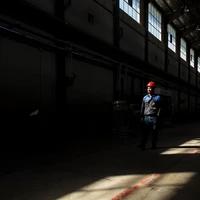
A worker stands inside a production facility at JEMCO, one of Iran’s largest electric motor manufacturers, October 19, 2026
Iran could face an economic contraction comparable in scale to the Great Depression in the United States, economists say, as the loss of oil revenue and wartime disruption threaten to drive an ailing economy into a deeper crisis.
Their assessments follow a prediction by US Treasury Secretary Scott Bessent, who told Iran International that Iran's economy would shrink by more than 25% between March 2026 and March 2027.
Iranian-American economist Ali Dadpay told Iran International that he found Bessent's forecast plausible, particularly as Tehran attempts to finance wartime spending by expanding the money supply.
That risks accelerating inflation and weakening the rial further, he said, creating a cycle of rising prices, falling purchasing power and declining economic activity.
Mohamad Machine-Chian, an Iran International economist, offered a stark comparison.
"The United States lost about 26% of its output in the Great Depression, over four years, from 1929 to 1933. Secretary Bessent is describing a loss of Great Depression size in twelve months," Machine-Chian said.
Iran's economy contracted by 21.6% in 1980, the first year of the Iran-Iraq War, World Bank data shows.
How much worse could it get?
Even the severe sanctions of 2018 and 2019 produced a smaller cumulative contraction of approximately 12%, despite oil exports plunging from about 2.7 million barrels per day to roughly 650,000.
Economic output was already approximately 10% lower in spring 2026 than a year earlier, according to figures from Iran's Statistical Center.
For the economy to contract by more than 25% over the full year, the decline would have to accelerate considerably.
Machine-Chian estimated that even with an 8% contraction over the summer, output would have to fall far more sharply during autumn and winter for the annual decline to approach Bessent's forecast.
The disruption of oil exports is central to that outlook. Energy intelligence firm Kpler reported no new Iranian crude loadings since late August, while revenue from earlier shipments is running out.
But the damage extends beyond the oil industry. Factories depend on imported materials, transportation companies require replacement parts, and businesses need financing to sustain operations.
As supplies and revenue dwindle, manufacturing, construction and other industries face further disruption.
The cost for ordinary Iranians
The economic deterioration is already visible in the price of everyday necessities.
Food prices in September were more than double their level a year earlier, according to Iran's Statistical Center. Eggs cost three and a half times as much, rice nearly twice as much, and official bread prices in Tehran have doubled.
“The minimum wage increased 60% this year while inflation approached 90%,” Machine-Chian said. “In dollar terms, a minimum-wage worker now earns approximately $61 a month, compared with $96 a year earlier.”
He also warned about savings being eroded. With the dollar costing two and a half times as much as a year ago, money held in rials has lost approximately 60% of its value against the US currency.
Further disruption to imports could bring shortages of medicines, industrial materials and vehicle parts, potentially forcing factories to reduce production or close and putting more jobs at risk.
Dadpay described a possible future resembling aspects of the economic crises in Venezuela and Zimbabwe, where severe currency depreciation and inflation pushed people toward dollars, gold, secondhand markets and barter.
As production declines and essential goods become harder to obtain, even those who remain employed could struggle to afford basic necessities.
Sanctions policy analyst Max Meizlish expects pension payments and civilian services to come under pressure as revenues decline, while military and security personnel could continue receiving salaries.
That could allow the Islamic Republic to preserve institutions central to its political survival even as living standards deteriorate.
Political consequences
Economic devastation does not necessarily translate into political collapse, particularly if Tehran can preserve its security institutions and access to financial channels abroad.
Washington has not fully targeted the Chinese financial institutions facilitating Iranian transactions, partly because of concerns about wider economic consequences, Meizlish said.
"It's just not clear that this level of economic constraint on its own will be enough to produce some sort of measurable political change," he said.
Dadpay argued that years of economic mismanagement and decisions prioritizing the survival of the political system had left Iran particularly vulnerable to the current crisis.
"As long as Islamic Republic is in place with this mindset, with this dynamic of decision-making, this is what's going to happen," he said.
For ordinary Iranians, the consequences are already evident in collapsing purchasing power, dwindling savings and rising prices.
Whether Bessent's forecast proves accurate or not, the economic damage could outlast the confrontation that has accelerated it.
A woman takes part in a fitness demonstration as spectators watch and applaud at the Fitex sports exhibition in Tehran, October 2026. (Social media)
Iranian authorities have arrested a female fitness blogger after videos showing women exercising without hijab at a Tehran sports exhibition sparked criticism from hardline media.
The judiciary's Mizan news agency said the woman was arrested on charges including propaganda against the state and offending public sentiment by publishing photographs and videos from the Fitex exhibition.
An arrest warrant was also issued for another person involved in planning the exhibition, Mizan said, without identifying either individual or specifying which images or videos prompted the action.
The fifth edition of Fitex, a fitness and sports equipment exhibition, was held from October 21 to 23 at Goftogoo Park in western Tehran.
Photographs and videos circulated on social media showed female athletes performing fitness routines and acrobatic movements, some without headscarves and others exercising to music.
Under Iran's mandatory hijab laws, women are required to cover their hair in public, including at sporting and cultural events.
The footage prompted criticism from hardline media outlets and supporters of the Islamic Republic, some of whom demanded judicial action against the organizers.
A man performs push-ups as spectators and young boxers watch during a fitness demonstration at the Fitex sports exhibition in Tehran, October 2026. (Social media)
Hardline media demand action
The IRGC-affiliated Tasnim news agency criticized what it called "widespread violations of social norms" at the exhibition on October 25 and urged sports authorities and other institutions to intervene.
The Student News Network, affiliated with the student branch of the Basij militia, quoted one of its reporters as saying anyone viewing the images would experience "secondhand embarrassment."
As criticism intensified, Iran's Sports Ministry issued a statement on October 25 distancing itself from the event, saying neither the ministry nor Tehran's provincial sports authorities had organized the exhibition or granted it a permit.
Tehran prosecutors subsequently opened a criminal case against the organizers and others involved, citing alleged violations of legal and Islamic regulations, and summoned them for questioning.
Mizan said online pages associated with Fitex had been blocked as part of the proceedings and that investigations were continuing.
Restrictions extend to art exhibitions
The action against Fitex comes amid wider pressure on cultural activities and women's public appearance in Iran.
On October 26, Tehran prosecutors initiated legal proceedings against the organizers of Art Fair Tehran, also citing alleged failures to comply with legal and Islamic regulations.
Organizers were summoned to the prosecutor's office, while the exhibition's ticketing website and the organizer's social media account were blocked.
Earlier this month, the US-based Center for Human Rights in Iran said authorities were intensifying their crackdown on artists, writers, musicians and other cultural figures as part of a broader campaign to silence dissent and intimidate communities.
The rights group cited a source in Iran who linked the arrests of cultural activists to authorities' fears of renewed protests, particularly in economically disadvantaged areas amid worsening living conditions.