• العربية
  • فارسی
BrandBrand
  • Iran Insight
  • Politics
  • Economy
  • Analysis
  • Special Report
  • Opinion
  • Podcast
  • Live TV
  • Iran Insight
  • Politics
  • Economy
  • Analysis
  • Special Report
  • Opinion
  • Podcast
  • Live TV
  • Theme
  • Language
    • العربية
    • فارسی
  • Iran Insight
  • Politics
  • Economy
  • Analysis
  • Special Report
  • Opinion
  • Podcast
  • Live TV
All rights reserved for Volant Media UK Limited
volant media logo

Iran’s year-on-year inflation reaches 88.7% in the month to October 22

Oct 28, 2026, 11:56 GMT+0
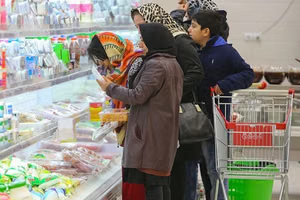
Families shop for school supplies at a store in Mashhad in northeastern Iran.

Iran’s monthly inflation rate stood at 4.4% in the Iranian month of Mehr (September 23–October 22), while prices were 88.7% higher than a year earlier, the Statistical Center of Iran (SCI) said on Wednesday, adding that the 12-month average inflation rate reached 76.8%.

The consumer price index (CPI) reached 761.8, according to Mehdi Fadaei, the center’s deputy for economic affairs and national accounts.

The year-on-year inflation rate fell by 1.1 percentage points from 89.8% in the previous month. Fadaei said this meant prices were rising more slowly than in the same period last year, rather than falling.

Monthly inflation was 2.4% for food, beverages and tobacco, and 5.8% for non-food goods and services. Education recorded the highest monthly rate, at 23.5%, followed by transport at 10.7% and recreation and culture at 9.8%.

Compared with the same month last year, tobacco prices rose 163.2%, furniture and household equipment 128.9%, and transport 128%.

Inflation was higher in rural areas than in urban areas across all three measures. Monthly inflation was 4.6% in rural areas and 4.3% in urban areas. Year-on-year inflation reached 107% in rural areas, compared with 85.5% in urban areas; 12-month rates were 92.3% and 74.1%, respectively.

Most Viewed

Bessent says Iran economy will contract by more than 25%
1
EXCLUSIVE

Bessent says Iran economy will contract by more than 25%

2
INSIGHT

'Iraq-first' message from Iran ally sparks calls for retaliation

3

Oil price surge fuels Iran hardliners’ case against US deal

4
ANALYSIS

Iran talks with Mecca pact states may be ‘last chance’ before military action

5

Two Iran Air retirees died after forgoing treatment over cost

Banner
Banner
Banner
Banner
Banner

Spotlight

  • Inside the alleged IRGC Intelligence takeover of Iran’s sanctioned oil trade
    EXCLUSIVE

    Inside the alleged IRGC Intelligence takeover of Iran’s sanctioned oil trade

  • Tehran plans for $130 oil it struggles to sell
    INSIGHT

    Tehran plans for $130 oil it struggles to sell

  • Tehran summit divides Iranian hardliners over Yemen and US talks

    Tehran summit divides Iranian hardliners over Yemen and US talks

  • Iran’s neighbors push diplomacy, prepare for its failure
    ANALYSIS

    Iran’s neighbors push diplomacy, prepare for its failure

  • Three members of Iranian family die within months after protest killing

    Three members of Iranian family die within months after protest killing

  • Iran talks with Mecca pact states may be ‘last chance’ before military action
    ANALYSIS

    Iran talks with Mecca pact states may be ‘last chance’ before military action

  • 'Iraq-first' message from Iran ally sparks calls for retaliation
    INSIGHT

    'Iraq-first' message from Iran ally sparks calls for retaliation

  • Oil price surge fuels Iran hardliners’ case against US deal

    Oil price surge fuels Iran hardliners’ case against US deal

  • Iran could lose 1.4 million jobs this year, official warns

    Iran could lose 1.4 million jobs this year, official warns

  • War or government failure? Record inflation fuels political battle in Iran

    War or government failure? Record inflation fuels political battle in Iran

•
•
•

More Stories

Iran rejects Qatari peace ideas as Trump leaves door open to new strikes

Oct 28, 2026, 10:38 GMT+0
100%
Iranian President Masoud Pezeshkian meets Qatar’s Emir Sheikh Tamim bin Hamad Al Thani on the sidelines of the 8th Gas Exporting Countries Forum summit in Moscow, October 27, 2026.

A senior Iranian official said on Wednesday that Qatar had presented Tehran with ideas that were unacceptable rather than a new peace proposal, casting doubt on diplomatic efforts to end the US-Israeli war on Iran as Washington weighs further military action.

The unnamed official told Reuters that Tehran would show no flexibility on the nuclear issue, a key point of dispute in efforts to reach an agreement.

The remarks came hours after Reuters cited another unnamed official briefed on the negotiations as saying that Qatari mediators had presented Iran with a new draft agreement in Tehran on Sunday, with a response expected by the end of the week.

Qatar pushes seven-day agreement

According to the official briefed on the negotiations, the draft sets out a seven-day timeline to address concerns on both sides, requiring each side to take daily confidence-building steps.

The process could begin early next week, while several countries would act as guarantors of the agreement. The official also said there had been concerns ahead of Sunday's meeting in Tehran that Israeli Prime Minister Benjamin Netanyahu could resume attacks on Iran this week.

  • Bessent says Iran economy will contract by more than 25%

    Bessent says Iran economy will contract by more than 25%

  • Tehran summit divides Iranian hardliners over Yemen and US talks

    Tehran summit divides Iranian hardliners over Yemen and US talks

  • Iran’s neighbors push diplomacy, prepare for its failure

    Iran’s neighbors push diplomacy, prepare for its failure

Trump leaves military options open

US President Donald Trump on Wednesday declined to rule out further strikes on Iran after the November 3 US midterm elections, saying "anything is possible."

"I can't tell you that," Trump told reporters at Joint Base Andrews in Maryland when asked whether he planned to attack Iran after the elections. "But anything is possible."

Trump said Iran wanted an agreement and might be waiting until after the elections, but warned that delaying a deal "is not going to help."

"We've decimated their military. We've decimated the finances. They have no money. They have inflation the highest in the world, 300 percent. The government is gone. But we'll see what happens," Trump said.

His remarks came as the Wall Street Journal reported that Washington had warned several Arab states in the Persian Gulf to prepare for a possible short, intense military campaign against Iran after the elections.

US and Israel prepare for possible strikes

The United States has sent warnings through diplomatic and military channels as Washington and Israel prepare for a possible new round of attacks aimed at weakening Tehran and pushing it toward negotiations, the Journal reported, citing people briefed on the discussions.

  • Mecca defense pact members hold talks with Iran

    Mecca defense pact members hold talks with Iran

  • Iran talks with Mecca pact states may be ‘last chance’ before military action

    Iran talks with Mecca pact states may be ‘last chance’ before military action

  • Oil price surge fuels Iran hardliners’ case against US deal

    Oil price surge fuels Iran hardliners’ case against US deal

The US military is moving a Patriot missile defense system from Texas to strengthen regional defenses and has relocated troops from vulnerable bases in preparation for a possible escalation, according to the report.

US forces have also been replenishing munitions, while bombers and fighter jets are being prepared for potential operations.

An additional aircraft carrier strike group and a Marine expeditionary unit are expected to join roughly 20 US warships in the Middle East next month, although some vessels could rotate out, the Journal reported.

Trump has not made a final decision but is leaning toward a large-scale attack after the elections that could target Iranian infrastructure and nuclear facilities, the newspaper said, citing people familiar with his thinking.

Israel has also prepared plans and identified targets for possible strikes, while Netanyahu has pushed for renewed military action against Iran, according to the report.

The White House declined to comment on "sensitive military plans that may or may not exist," but said Trump "keeps all options on the table to ensure that Iran can never have a nuclear weapon."

Tehran plans for $130 oil it struggles to sell

Oct 28, 2026, 02:00 GMT+0
•
Behrouz Turani
100%
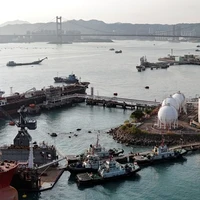
A man looks out at ships off the coast of Bandar Abbas, near the Strait of Hormuz, October 24, 2026

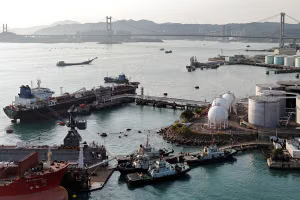
Iran’s budget planners are considering oil at $130 per barrel for the next Iranian year even as the conflict driving global prices higher has severely restricted Tehran’s ability to export crude.

The scenario, reported by the IRGC-linked Fars News Agency, would put the assumed price at more than twice the $55 used in the previous budget and highlights an increasingly difficult calculation for Tehran.

Plan and Budget Organization chief Hamid Pourmohammadi said Sunday that Iran’s Economic Council had approved the directive for drafting the budget for the year 1406, which begins in March 2027, and that the bill would be submitted to parliament within a month.

He did not disclose the baseline oil price the government intends to use. Fars reported separately that the PBO was considering a scenario based on oil reaching $130 per barrel.

An agreement with Washington could ease restrictions on Iranian exports but push global oil prices lower. Continued conflict could keep prices elevated while making Iranian oil even harder to sell.

A $130 scenario

Global oil prices have risen sharply since the war involving Iran, the United States and Israel and the regional conflicts that followed, climbing from around $70 to roughly $117 per barrel.

Some Iranian oil-market commentators say prices could reach $130 if the conflict continues and Tehran and Washington fail to reach an agreement.

But Iranian budgets have traditionally used more conservative oil-price assumptions to reduce the risk of revenues falling short.

Tehran’s Haft-e Sobh newspaper described the $130 figure as a “shock,” while the economic news website Faraz Energy also reported that it was under consideration.

Iran’s ability to sell crude has been severely constrained by the US naval blockade and sanctions. The higher global price therefore does not necessarily translate into higher revenues for Tehran.

Disputed export figures

Iranian officials insist that oil continues to leave the country despite US efforts to stop exports.

Mohsen Zanganeh, a member of parliament’s Planning and Budget Committee, said Iran earned more than $11.5 billion from oil during the first four months of the year and achieved 85% of its projected oil revenue.

He also claimed that Iran continued to export at least 600,000 barrels of crude per day despite the blockade and sanctions.

The US military’s Central Command presents a sharply different picture, saying its blockade of Iranian ports has prevented at least $25 billion in crude exports and that no goods other than humanitarian supplies have moved by sea.

The competing claims from parties to the conflict have not been independently verified.

Iran’s oil infrastructure has also suffered serious damage during the war, while the government has resorted to rationing and other austerity measures to curb domestic energy consumption.

Risk of a shortfall

Hossein Selahvarzi, a former head of Iran’s Chamber of Commerce, warned in comments published by the economic daily Donya-ye Eghtesad that the greatest danger would be to prepare the 1406 budget as though Iran were facing a normal year.

Such an approach, he argued, could combine optimistic revenue forecasts with existing spending commitments, producing a deficit that would fuel inflation and discourage investment.

The uncertainty surrounding both prices and export volumes makes the eventual assumptions particularly important.

If $130 becomes the government’s baseline rather than merely one scenario, and either prices or export volumes fall short, Tehran would have to find other ways to close the revenue gap.

Those could include borrowing from the National Development Fund, selling government bonds or relying indirectly on financing from the Central Bank—measures that could add to inflationary pressure and further weaken the rial.

The government has yet to disclose which oil price or export volume it will ultimately use. But the $130 scenario illustrates the unusual calculation facing Tehran: the conflict that has made oil more valuable has also made Iran’s considerably harder to sell.

Prosecutor says defendants filmed journalists' addresses to plan attacks

Oct 27, 2026, 21:02 GMT+0
100%
Court sketch from Woolwich Crown Court. Credit: SWNS/Julia Quenzler

Two men accused of assisting Iranian intelligence knowingly helped prepare attacks on Iran International journalists, a prosecutor told a London court on Tuesday, citing photographs and videos of addresses linked to them.

At Woolwich Crown Court, prosecutors alleged that Shapoor Qalehali Khani Noori, 57, and Farhad Javadi Manesh, 46, knowingly assisted Mostafa Sepahvand, 41, in targeting Iran International journalists Mojtaba Pourmohsen and Kambiz Hosseini.

All three defendants deny the charges brought under Britain's National Security Act. Prosecutors allege they gathered information for Iranian intelligence to prepare for serious violence against at least one target, with Sepahvand expected to carry out an attack.

Prosecutor Bill Emlyn Jones accused Noori of being a trusted member of Sepahvand's surveillance team, citing photographs, messages and mobile phone location data. Noori denied knowingly participating in the alleged plot, saying he had taken photographs and videos at Sepahvand's request without understanding their purpose.

Late-night filming and repeated visits

Jones questioned Noori about a video filmed on St Dunstan's Avenue, an address linked to Hosseini, and sent to Sepahvand via WhatsApp at 11:56 p.m. on December 12, 2024.

Noori acknowledged taking the video but said they had gone for a drive because they were bored. He said Sepahvand asked him to film near a park, send the recording and delete it.

Jones challenged that account, suggesting the camera had deliberately focused on a particular house rather than randomly filming the area.

The prosecutor also cited phone and vehicle location data indicating repeated visits to the Malthouse Court area, linked to Pourmohsen, arguing that the movements were part of coordinated surveillance.

Noori said he did not know the significance of the locations and believed the recordings might have been connected to Sepahvand's business activities.

Jones also questioned him about four videos recorded over more than three hours in Kingston upon Thames on March 4, 2025, near premises associated with a business called Need a Fixer.

The prosecutor cited messages discussing recordings at hourly intervals to demonstrate Sepahvand's presence at a location, suggesting Noori knowingly participated in reconnaissance intended to help identify and ultimately attack targets.

Noori denied the allegation, saying he had never suspected Sepahvand of planning violence.

Prosecutor challenges Noori over police interviews

Jones questioned why Noori had not identified Sepahvand as a friend or explained the recordings during police interviews following his arrest in May 2025.

The prosecutor suggested Noori had remained silent because he had not yet developed an innocent explanation for his activities.

Noori said he had followed his solicitor's advice and was distressed by accusations that he had assisted a government he had fled.

He told the court he had been imprisoned three times in Iran and fled the country in 2019 because he feared for his life. During questioning by his defense lawyer, the court heard that Noori was granted asylum in Britain in 2024.

Earlier hearing examined £150,000 payment for alleged attack

During Monday's hearing, prosecutors challenged Sepahvand's claim that he had been deceiving the Revolutionary Guards, arguing that he was motivated by money and assistance with a criminal case in Iran.

Sepahvand acknowledged that a proposed £150,000 payment was conditional on harming a journalist but maintained that he demanded the sum to deter the IRGC and never intended to carry out an attack.

Noori and Javadi Manesh accept visiting locations and taking photographs or videos but deny knowing they were assisting Iranian intelligence.

The trial is scheduled to resume on November 2.

Iran, Russia eye joint oil and gas projects amid US blockade

Oct 27, 2026, 18:18 GMT+0
100%
Russian President Vladimir Putin shakes hands with Iranian President Masoud Pezeshkian during the official welcoming ceremony at the Summit of Heads of State and Government of the Gas Exporting Countries Forum (GECF) in Moscow, Russia, October 27, 2026.

Russian President Vladimir Putin and Iranian President Masoud Pezeshkian discussed joint oil and gas projects in Moscow on Tuesday, as Tehran seeks closer economic ties with Russia while its energy exports remain squeezed by a US naval blockade.

The two leaders discussed expanding political, economic, trade and energy cooperation, including joint projects in the oil and gas sectors, according to a readout from the Iranian government.

Pezeshkian also called for greater cooperation on natural gas exports, saying Iran produces around 280 billion cubic meters of gas annually, ranking behind only the United States and Russia.

He said global developments required greater technical and engineering cooperation and “strategic governance” of international energy markets.

The meeting took place on the sidelines of the Gas Exporting Countries Forum summit, which brought together some of the world's largest gas producers.

Putin also met Qatar's Emir Sheikh Tamim bin Hamad Al Thani on Tuesday and said Russia was ready to do everything within its power to help resolve the “complicated situation” in the Middle East.

The Qatari emir told Putin that the region was going through “difficult circumstances” because of tensions between the United States and Iran.

Moscow offers mediation

Russia has sought a role in efforts to end the US-Iran conflict, repeatedly offering to mediate between Washington and Tehran as regional governments push for renewed negotiations.

Putin has previously told US officials that he believes there remains room for diplomacy with Iran, while Moscow has also offered to help resolve one of the central nuclear disputes by taking Iranian highly enriched uranium out of the country.

Iran faces mounting economic pressure from the US blockade and sanctions, which have sharply curtailed its oil exports.

Russia has provided Iran with diplomatic backing, condemning US and Israeli military action and opposing efforts to increase pressure on Tehran at international bodies.

Moscow and Tehran signed a comprehensive strategic partnership treaty in 2025, although cooperation on major energy projects has remained more limited as the two countries are themselves major oil and gas producers.

Iran could lose 1.4 million jobs this year, official warns

Oct 27, 2026, 12:04 GMT+0
100%
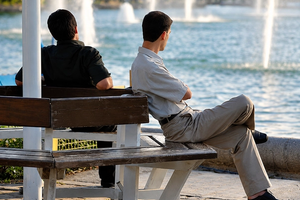
Two men sit beside a fountain in an Iranian park.

Iran could lose up to 1.4 million jobs this year if its economy contracts by seven to eight percent, a senior Labor Ministry official said on Tuesday, estimating that around 2.5 million people are already unemployed.

Malek Hosseini, deputy minister for entrepreneurship and employment development, said Iran's economy contracted by 10 percent excluding oil and 4.6 percent including oil in the spring, citing official figures in an interview with labor-focused ILNA news agency.

According to two decades of Labor Ministry research, every one-percentage-point decline in economic growth corresponds to an average loss of 170,000 jobs, Hosseini said.

“If negative growth of seven to eight percent is recorded by the end of the year, around 1.2 million to 1.4 million people will have completely left the labor market” over the course of the year, he said.

The warning follows remarks by Ali Babaei Karnami, head of parliament's Social Affairs Committee, who said on October 23 that more than 1.7 million Iranian workers had lost their jobs since the start of the 12-day war.

Economist Ahmad Alavi told Iran International on October 18 that poverty, unemployment and declining purchasing power had existed before the war but had since worsened, attributing the country's economic difficulties to the Islamic Republic's policies.

More than one million leave insurance rolls

Around 1.15 million people were removed from Iran's compulsory social insurance rolls between March and August, although further analysis is needed to distinguish retirements, disabilities and new registrations, Hosseini said.

Another 300,000 people joined the unemployment benefits system by the end of August.

Iran's formal labor market recorded a net loss of approximately 500,000 workers during the Iranian year ending March 2026, according to Hosseini.

The official estimated that informal employment accounts for 54 percent of Iran's workforce, compared with 46 percent in formal employment.

“Our labor market suffers from chronic and structural problems,” Hosseini said, adding that the balance had shifted further toward informal and underemployed work since the war.

Government proposes jobs without insurance coverage

The Labor Ministry is developing a public employment program for unemployed people and informal workers affected by the economic crisis, offering short-term construction and service-sector work.

“There is absolutely no social security insurance under the public employment program,” Hosseini said.

Participants will also fall outside the protections of Iran's labor law, although existing employers and workers in registered businesses will remain subject to those regulations.

Hosseini said the ministry was working with the Central Bank to identify informal workers through banking transactions, distinguishing wage income from investment returns.

The official also warned that if raw materials are not adequately supplied, Iran's garment production and distribution chain could suffer losses equivalent to about 60 percent of its pre-war workforce, potentially affecting up to 750,000 jobs.

Workers, retirees and employees across Iran have repeatedly staged protests in recent months over low wages, unpaid salaries, rising living costs, dismissals and job insecurity.