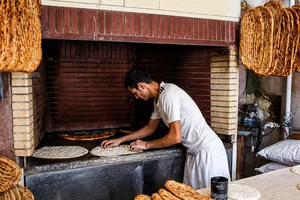
A baker prepares dough for bread at a bakery in Iran.
Flour shortages have forced bakeries to close in several Iranian cities and pushed up bread prices, with residents and bakers reporting disrupted supplies, falling purchasing power and growing uncertainty over their businesses.
Residents in Tabriz, Karaj, Kerman and Hamedan told Iran International that interruptions and delays in flour deliveries had disrupted independent bakeries and producers of various types of bread.
Several bakeries on a street in Tabriz have shut down, a resident said.
“I asked why, and they told me they weren't receiving flour. They keep promising that the flour quotas will be replenished today or tomorrow, but nothing happens.”
Previous reports have also documented flour shortages and bakery closures, with residents describing bread shortages and interruptions to production caused by electricity outages.
Flour supply disruptions shut bakeries and sandwich shops
Independent bakers have reported that difficulties obtaining flour have forced businesses to suspend operations.
A citizen of Hamedan in western Iran said flour shortages and rising prices had affected not only bakeries producing specialty bread but also sandwich shops.
Flour prices have risen, and suppliers are now saying there is no flour available at all, the resident said.
“Our bakery is closed because we have no flour, and nobody is taking responsibility,” a independent baker told Iran International.
The shortages have coincided with declining purchasing power, leaving bakeries struggling to secure supplies as customers struggle to afford bread.
“They don't have flour to give us, and I swear to God, people don't have money to buy bread either. Our economic situation has become critical,” another baker said.
Iran's flour distribution system distinguishes between subsidized bakeries and independent bakeries, which face different purchasing prices and supply arrangements.
Flour allocations to certain independent bakeries had been reduced, Bagher Khodadadi, head of supervision and inspection at the Khorasan Razavi provincial agriculture department, confirmed on October 21.
Khodadadi said the shortages in flour distribution had been addressed.
Bakeries reducing their operating hours because of flour shortages would be committing a violation and could face enforcement measures, he added.
Rising prices disrupt food retailers
The flour supply problems have also affected food retailers that depend on bakeries for their products, according to messages.
Two bakeries supplying bread to a supermarket in Kerman said they no longer had enough flour to continue production, the store's owner said.
“Two of the bakers who supply me called and said there was no flour left and they couldn't bake and deliver bread tomorrow. A famine has officially begun.”
A resident of Karaj also described a sharp increase in bread prices.
“I bought two baguettes and they cost 800,000 rials. The price of flour has also tripled.”
Iran International previously reported on October 8 that residents had described unannounced increases in bread prices and flour shortages in several areas.
Bread prices in Tehran province had risen by as much as 100% for certain varieties by June 23.
The increases have added to the financial pressure on households already struggling with declining purchasing power.
Uncertainty over flour quotas and pricing
The disruption has raised further questions about how flour quotas are allocated and priced for independent bakeries and producers of larger and semi-industrial bread varieties.
Flour allocations to these businesses were suspended about two weeks ago, according to another message received by Iran International.
The sender said suppliers had attributed the suspension to the government's failure to announce new flour prices, leaving bakeries uncertain about when deliveries would resume.
The resident also said certain flour mills were selling supplies on the black market without issuing invoices specifying prices.
Comments by provincial grain officials about flour allocations have added to questions over the distribution system and the availability of supplies.
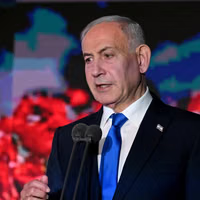
Israeli Prime Minister Benjamin Netanyahu speaks at the State Memorial Ceremony for the three year anniversary of the October 7, 2023, Hamas attack, in remembrance of Israel Defense Forces and security members who fell in the War of Redemption in the Mt. Herzl Cemetery, Jerusalem, on Monday, October 5, 2026.
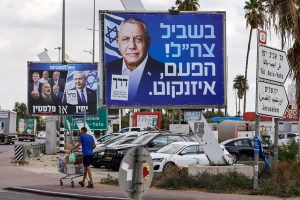
Iranians are looking to Israel's election as a potential turning point in their country's future, with supporters of Benjamin Netanyahu hoping his victory will bring renewed pressure on the Islamic Republic.
“I wish we, the people of Iran, could vote too,” one Persian-speaking Instagram user wrote beneath a post about Netanyahu.
“I've pledged a thousand salawat and 12 candles for Bibi to win,” another wrote, referring to the Israeli leader by his widely used nickname and to a religious practice involving blessings.
The comments are among hundreds of Persian-language reactions to Netanyahu and Israel's October 27 election, reflecting hopes that the vote could help advance efforts against the Islamic Republic.
The comments, however, are not a representative measure of Iranian public opinion, and Persian-language posts alone do not establish whether their authors live inside Iran or abroad.
For Netanyahu's Iranian supporters, his continued leadership offers the prospect of finishing what they consider unfinished efforts to bring down Iran's ruling establishment.
From nuclear warnings to calls for political change
Netanyahu, born in Tel Aviv on October 21, 1949, grew up in an academic family and spent part of his adolescence in the United States.
After serving in an Israeli military special forces unit, he studied at the Massachusetts Institute of Technology before entering politics. He first became prime minister in 1996, aged 46.
The leader of the right-wing Likud party is Israel's longest-serving prime minister, and confronting the Islamic Republic has been a central feature of his political career.
In September 2012, Netanyahu displayed a cartoon drawing of a bomb at the United Nations, drawing a red line across it to warn about Iran's nuclear program.
The confrontation later extended beyond nuclear warnings.
During the 12-day war in June 2025, Israel struck Iranian military and nuclear facilities. Netanyahu told Iranians that the military campaign could pave the way for them to achieve freedom from the Islamic Republic.
Joint Israeli-US strikes on February 28, 2026, which killed Iran's former Supreme Leader Ali Khamenei, marked another stage in the confrontation.
Netanyahu’s military actions against the Islamic Republic and his calls for political change in Iran have earned him support among some opponents of the country’s ruling establishment.
Iran has also emerged as a major issue in Israel's election campaign, with Netanyahu's political rivals advocating tougher action against the Islamic Republic and criticizing his failure to eliminate the threat they say it poses.
Netanyahu speaks directly to Iranians
Netanyahu has repeatedly addressed Iranians directly through video messages and Persian-language social media posts, urging them to seek political change and an end to Islamic Republic rule.
During Iran's water crisis in August 2025, Netanyahu promoted Israeli water technology and promised to send Israeli experts to help tackle the country's water shortages following a change of government.
That outreach has continued during the final days of his election campaign.
“The people of Iran deserve to live in freedom, security and dignity,” Netanyahu wrote in a Persian-language Instagram post on Thursday, October 22, five days before Israel's election.
The message came as Netanyahu faced significant political competition at home, even as Persian-speaking users expressed enthusiasm for his continued leadership.
His messages have resonated with some opponents of the Islamic Republic who hope Israeli pressure will contribute to political change in Iran.
How Bibi became Bibi Joon
Netanyahu's familiar nickname, Bibi, has taken on new forms among Persian-speaking admirers.
They call him Bibi Joon, adding a Persian term of affection, or Bibi Gol, a reference to a popular song by Iranian singer Moein.
The phenomenon has also attracted Netanyahu's attention.
Netanyahu himself referred to the nickname during a CBS News interview in May 2026, saying Iranians called him “Bibi-joon,” meaning beloved Bibi.
Netanyahu's standing among Iranians
More than half of respondents inside Iran, 50.6%, held favorable views of Netanyahu, compared with 38.1% who viewed him unfavorably, according to a survey conducted from June 20 to 27, 2026, by the Netherlands-based research group GAMAAN.
The online survey involved more than 31,000 participants and used statistical weighting to produce its findings.
In Israel, 47% of respondents preferred former military chief Gadi Eisenkot as prime minister, compared with 37% who backed Netanyahu, according to a Madad poll published on October 23.
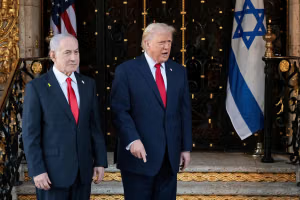
Netanyahu has also received the backing of US President Donald Trump, who urged Israelis to re-elect him to continue their joint campaign against the Islamic Republic.
“Vote for Bibi Netanyahu for Prime Minister, we have to finish the job that we started!” Trump wrote on Truth Social on Sunday.
Persian-language reactions to Israel's election go beyond support for Netanyahu's re-election, expressing hopes that he will resume military action against the Islamic Republic.
“Why don't you finish the job before the vote?” another asked.
Officials from Iran, Pakistan, Turkey and Saudi Arabia attend a four-way meeting in Tehran on October 26, 2026.
Senior officials from Saudi Arabia, Pakistan and Turkey opened talks with Iranian authorities in Tehran on Monday, following increased Iran-backed Houthi attacks on Saudi Arabia and renewed warnings of military action between Tehran and Washington.
Saudi Defense Minister Khalid bin Salman, Pakistani army chief Asim Munir and Turkish intelligence chief Ibrahim Kalin will travel to Tehran, Reuters reported on Monday, citing Saudi and Iranian officials.
Ali Bagheri Kani, deputy secretary of Iran's Supreme National Security Council, confirmed the visit.
The initiative was proposed during Munir's visit to Tehran last week, when he met President Masoud Pezeshkian and other senior officials, according to a senior Iranian official.
Iranian media reported that officials told Munir they would not negotiate with Washington until Tehran's demands were met.
Defense pact faces first major test
The visit marks the first high-level meeting between Iran and all three members of the Mecca defense pact since the escalation of hostilities.
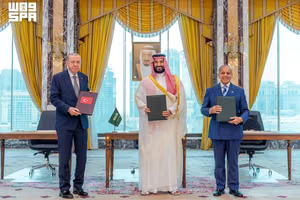
Saudi Arabia, Pakistan and Turkey signed the agreement in August, establishing that a military attack on one member would be considered an attack on all three.
Pakistan has ratified the pact, while ratification remains pending in Turkey's parliament.
Earlier this month, the three countries agreed to implement their defense commitments and rapidly deploy military personnel and capabilities to Saudi Arabia.
The agreement faces its first significant test following increased Houthi attacks on Saudi territory.
Saudi Arabia announced on Sunday that it had intercepted another wave of missiles and drones.
The visit is intended to reduce hostilities and support mediation efforts by Qatar and Pakistan, Saudi Deputy Foreign Minister for Public Diplomacy Raed bin Khalid Qarmali said earlier.
US-Iran confrontation
Qatari officials also visited Tehran on Sunday for talks with Iranian authorities.
Previous mediation by Qatar and Pakistan helped secure a temporary halt to hostilities, but the agreement collapsed when fighting resumed.
Indirect contacts between Tehran and Washington have continued through both mediators, a process also referenced by Iranian Foreign Minister Abbas Araghchi.
US President Donald Trump raised the possibility of renewed military operations against Iran on Friday.
Iranian officials have warned that any further attack would trigger a stronger response.
The diplomatic meetings come as Saudi Arabia seeks to prevent the conflict from spreading to its critical infrastructure, putting the Mecca defense pact and regional mediation efforts under growing pressure.
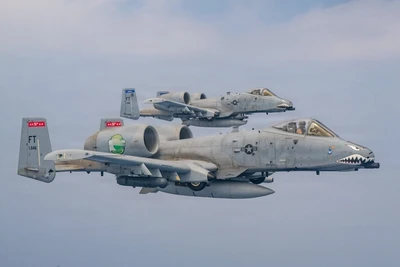
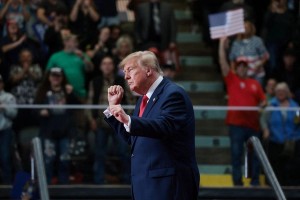
US President Donald Trump dances during a rally, in support of Republican US Senate candidate, former US Representative Mike Rogers, ahead of the midterm elections, at an entertainment complex in Port Huron, Michigan, US, October 25, 2026. REUTERS/Jonathan Ernst
A renewed diplomatic push to avert another round of the US-Iran war gathered pace on Sunday, with Qatari mediators in Tehran as President Donald Trump publicly weighed reaching an agreement with the Islamic Republic against taking further military action.
The Qatari team was in the Iranian capital as part of an effort coordinated with the United States to reduce regional tensions, an official briefed on the matter told Reuters.
The visit puts Doha at the center of an attempt to break a diplomatic deadlock even as the risk of renewed fighting has grown.
The urgency behind that effort was underscored by Trump himself. In an interview with Fox News on Sunday, the US president framed his options in stark terms.
“Do I make a deal with them or do I finish them off? That's the only question,” Trump said.
But Trump also left space for mediators to work. Asked separately on Sunday whether US strikes could resume that day, he said, “There will not be a strike today,” stopping short of ruling out military action later.
Messages continue despite wide gaps
Iran, for its part, is also keeping the diplomatic channel alive without signaling that it is prepared to accept Washington's terms.
Foreign Ministry spokesperson Esmaeil Baghaei said on Sunday that messages were continuing to pass between Iran and the United States through intermediaries and that Tehran had not closed the window on diplomacy.
At the same time, Iranian officials have accused Washington of demanding what Tehran characterizes as its “complete surrender.”
The two sides also remain divided over the terms of a broader settlement. Washington has continued to make Iran's nuclear capabilities central to any settlement. Trump told FOX 2 Detroit on Sunday that the war would not end until the United States was satisfied Tehran did not have nuclear weapons capabilities, while saying he was prepared to take time to reach an agreement.
“I'm going to make a great deal. I'm a longterm person; I'm not a short term person,” he said.
Iran's ambassador to Pakistan said on Saturday that Tehran remained willing to resume negotiations under a Pakistan-brokered interim agreement reached in June. He said Iran had offered through Islamabad to reopen the Strait of Hormuz if Washington lifted its naval blockade.
The June agreement, brokered with Qatar's help, was intended to restore shipping, end the blockade and begin negotiations toward a broader agreement addressing Iran's nuclear program.
The Iranian ambassador accused Trump of undermining the latest diplomatic effort by insisting that the blockade would remain in place.
Regional governments seek an off-ramp
The Qatari intervention follows a broader diplomatic push by regional and European governments concerned that another attack on Iran could expand the war.
Foreign ministers from Turkey, Saudi Arabia, Egypt, Pakistan, Britain, France, Germany and Italy met in Istanbul on Friday, where Turkish Foreign Minister Hakan Fidan warned that renewed attacks on Iran would widen the conflict and said diplomacy remained the only way to end it.
The meetings brought together governments with different relationships with Washington and Tehran but a shared interest in preventing another round of fighting from spreading across the region.
That concern has grown as Iran has threatened retaliation against US and regional interests and attacks on commercial shipping have continued around the Strait of Hormuz.
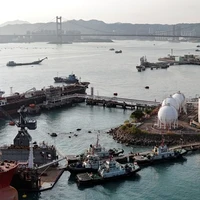
Seven oil tankers were reported attacked or damaged by Iranian forces or naval mines in and around the strait on Friday. Despite the continuing risks, tankers have been moving oil through a US-protected corridor.
CENTCOM commander Adm. Brad Cooper flew over the Strait of Hormuz on Sunday as the US military said it had supported more than 3,000 commercial vessel transits through the waterway over the past six months and helped Persian Gulf partners export more than 1.5 billion barrels of crude oil since summer.
Cooper said the main shipping routes remained clear of mines laid by Iran's Revolutionary Guards. CENTCOM said more than 95% of vessels had passed safely in recent months despite attacks by the Guards.
The confrontation has also spread to Yemen, where renewed Houthi attacks on Saudi Arabia have added to concerns over regional energy infrastructure and shipping routes.
Diplomacy under military pressure
The diplomatic push is therefore taking place while both sides retain significant means of pressure.
Washington continues its naval blockade of Iran while keeping open the possibility of renewed military action. Tehran, meanwhile, retains its ability to threaten shipping through the Strait of Hormuz and US and regional interests.
Those pressures also form part of the bargaining over a possible settlement. Tehran has linked reopening the Strait of Hormuz to an end to the US blockade, while Washington has continued to press Iran over its nuclear program, with the sequencing of concessions remaining a key obstacle.
The result is a diplomatic effort taking place under the threat of escalation rather than after that threat has receded.
For now, both sides continue to signal that an agreement remains possible. But neither has publicly indicated that it is prepared to bridge the differences that have stalled negotiations, leaving Qatar and other mediators seeking an opening while Washington and Tehran prepare for the consequences of another breakdown.
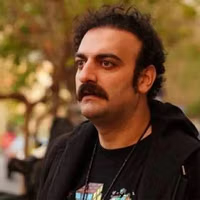
Iran's judiciary has indicted comedian Saeed Shakiba on charges including supporting Israel and the Pahlavi dynasty, state media reported on Sunday, days after authorities opened a case against him over a video impersonating former Supreme Leader Ali Khamenei.
The judiciary-affiliated Mizan news agency said Tehran prosecutors had issued the indictment following an investigation into what authorities described as insulting and offensive content published by the comedian on Instagram.
According to Mizan, the charges include knowingly expressing support for Israel on social media, insult and engaging in propaganda against the Islamic Republic through negative portrayals of the country and support for the Pahlavi dynasty, which ruled Iran until the 1979 Islamic Revolution.
Mizan said the case had been referred to court for further proceedings.
Shakiba came under scrutiny after publishing a satirical video on October 13 in which he imitated Khamenei's voice, parodying his meetings with poets.
On October 14, Mizan announced that Tehran prosecutors had opened a case against a social media personality identified only by the initials S.Sh., accusing him of publishing insulting and offensive content.
The agency said action had been taken against the individual but provided no details about the measures, the specific charges or his whereabouts.
US-based rights group Human Rights Activists in Iran (HRANA) reported on October 14 that authorities had opened a case against Shakiba following the satirical video, saying the judiciary had not disclosed details about the proceedings or his situation.
Shakiba is known for posting comedy videos and voice impressions of prominent figures on Instagram, where he had around one million followers.
Following the announcement of legal proceedings, posts on his Instagram account were removed. A notice bearing the emblem of Iran's police said the account had been restricted by judicial order over what authorities called criminal content.
The Islamic Revolutionary Guard Corps-affiliated Fars news agency also criticized the video, accusing Shakiba of insulting Khamenei and his family.
Shakiba had previously published satirical impressions of other Islamic Republic officials and expressed support for protestors killed during the January uprising.
Previous arrests and prosecutions of Iranian comedians
Iranian authorities have previously arrested and sentenced comedians and satirists over their work, drawing criticism from human rights groups.
Shaker Bori
Last month, Shaker Bori, a comedian and social media personality from the southwestern city of Abadan, was sentenced to 13 months and 20 days in prison for disseminating false information with the intent to harm others, according to the rights group HRANA.
Bori was also fined 45 million rials (approximately $17) for insulting a member of parliament. The case followed a complaint by lawmaker Mousa Ghazanfarabadi over a video Bori had published.
Bori had previously been arrested on July 31, 2023, after reporting to an Islamic Revolutionary Guard Corps intelligence office in Abadan to seek the return of his confiscated mobile phone, according to the Norway-based rights group Hengaw.
He was released on bail on August 10, 2023, after spending 10 days in detention.
Zeinab Mousavi, known for her online character Empress Kuzco
Another comedian, Zeinab Mousavi, known for her online character Empress Kuzco, was sentenced to six months in prison in November 2025 over a satirical video about Ferdowsi, the celebrated Persian poet.
In February 2026, a Tehran appeals court upheld the sentence, which also included a fine of 160 million rials (approximately $59) and an order to write a research paper about Ferdowsi, according to HRANA.
Mousavi had previously been arrested in October 2022 in the central city of Qom during nationwide protests sparked by the death of Mahsa Amini in morality police custody. She was released on bail in November that year and subsequently sentenced to two years in prison.
Mousavi said she had spent 25 days in solitary confinement during her detention.
She was arrested again in 2023 and released several days later, according to HRANA.
Kioomars Marzban
In another case, satirical writer Kioomars Marzban was arrested at his home on August 26, 2018, by Revolutionary Guard intelligence agents.
Marzban was sentenced in August 2019 to 23 years and nine months in prison on charges including insulting the supreme leader, propaganda against the Islamic Republic and cooperating with a hostile state, according to HRANA.
The sentence, of which 11 years were enforceable under Iranian law, was upheld on appeal in October 2019.
Marzban was released from Tehran's Evin prison in February 2021 after serving approximately two and a half years. His lawyer, Mohammad Hossein Aghasi, said six years of his sentence had been pardoned and the remainder suspended, according to freedom of expression organization ARTICLE 19.
Following his release, ARTICLE 19 condemned his prosecution, saying he should never have been imprisoned for his writing.
"His case is emblematic of the Iranian authorities' zero tolerance for freedom of expression and the Judiciary's lack of independence," said Saloua Ghazouani, then director of ARTICLE 19's Middle East and North Africa program.
PEN America has also criticized Iran's treatment of satirical artists. In June 2023, the organization condemned the arrest of cartoonist Atena Farghadani following the publication of a satirical drawing on Instagram.
"Cartoonists should not be persecuted for their creative expression," said Julie Trébault, then director of PEN America's Artists at Risk Connection.
PEN America said the arrest reflected broader efforts by Iranian authorities to intimidate artists, journalists and activists.