• العربية
  • فارسی
BrandBrand
  • Iran Insight
  • Politics
  • Economy
  • Analysis
  • Special Report
  • Opinion
  • Podcast
  • Live TV
  • Iran Insight
  • Politics
  • Economy
  • Analysis
  • Special Report
  • Opinion
  • Podcast
  • Live TV
  • Theme
  • Language
    • العربية
    • فارسی
  • Iran Insight
  • Politics
  • Economy
  • Analysis
  • Special Report
  • Opinion
  • Podcast
  • Live TV
All rights reserved for Volant Media UK Limited
volant media logo

Iran's military chief claims IRGC has full control of Strait of Hormuz

Oct 26, 2026, 17:12 GMT+0

Iran's armed forces chief of staff Ali Abdollahi claimed Monday that the Islamic Revolutionary Guard Corps (IRGC) had full control and oversight of the Strait of Hormuz, the Persian Gulf coast and its islands, with all movement in the region under close surveillance.

"The IRGC's naval and ground forces have full control and oversight of the Persian Gulf coast, its islands and the Strait of Hormuz, and all movement through the region is under close surveillance," Abdollahi said.

Most Viewed

Iran sends conflicting signals on US deal as Trump raises prospect of strikes
1

Iran sends conflicting signals on US deal as Trump raises prospect of strikes

2

Iran nearing mental-health emergency, psychology chief says

3

Qatar pushes for Iran deal, new US strikes remain possible

4
ANALYSIS

From six-day victory to wars of attrition: How has Israel ended its wars?

5

Iran indicts comedian over alleged support for Israel, Pahlavi dynasty

Spotlight

  • Oil price surge fuels Iran hardliners’ case against US deal

    Oil price surge fuels Iran hardliners’ case against US deal

  • Netanyahu’s Iranian supporters pin hopes for change on his re-election

    Netanyahu’s Iranian supporters pin hopes for change on his re-election

  • Iran indicts comedian over alleged support for Israel, Pahlavi dynasty

    Iran indicts comedian over alleged support for Israel, Pahlavi dynasty

  • From six-day victory to wars of attrition: How has Israel ended its wars?
    ANALYSIS

    From six-day victory to wars of attrition: How has Israel ended its wars?

  • Baluch insurgency tests the limits of a war-weakened Islamic Republic
    PODCAST

    Baluch insurgency tests the limits of a war-weakened Islamic Republic

  • US strikes on Iran now serve the blockade
    ANALYSIS

    US strikes on Iran now serve the blockade

Banner
Banner
Banner
Banner
Banner
•
•
•

More Stories

Two Iran Air retirees died after forgoing treatment over cost

Oct 26, 2026, 16:05 GMT+0
100%
Iran Air retirees gather in Tehran on August 8, 2026, to protest over healthcare coverage, pension payments and suspended welfare benefits.

Two retired employees of Iran's national airline died after being forced to abandon medical treatment they could not afford, the semi-official ILNA news agency reported on Monday, citing the head of the airline's retirees' association.

Jalal Hashemi, chairman of the Iran Air Retirees Association, said the deaths occurred over the past two to three weeks amid worsening financial and healthcare problems affecting around 13,000 retirees and pensioners of the airline, also known as Homa.

"The situation has become so catastrophic that in just the past two or three weeks, two of our retired colleagues were forced to abandon treatment because they could not afford hospital expenses, and unfortunately lost their lives," Hashemi told ILNA.

Iranian households face mounting economic hardship after years of inflation, sanctions and economic mismanagement, compounded by two rounds of war with the United States and Israel.

Iran Air retirees have staged repeated protests over pension payments, healthcare coverage and the management of their retirement fund.

In August, retirees gathered outside the airline's headquarters in Tehran to demand improvements to healthcare services and the reinstatement of suspended welfare payments.

Hashemi said Iran Air had paid only two of 12 installments owed to Iran Insurance Company under its insurance contract for the Iranian year ending in March 2026, prompting the insurer to suspend inpatient hospital coverage for retirees.

According to Hashemi, Iran Air retirees receive an average monthly pension of around 270 million rials (about $100), while approximately 5,600 receive minimum pensions of just over 180 million rials (about $66).

He estimated the shortfall in the airline's healthcare insurance fund at 4 trillion rials (about $1.5 million), saying no institution had accepted responsibility for covering the deficit.

Recent reductions in government-subsidized foreign currency for medicine imports, drug price increases and rising out-of-pocket healthcare costs have further strained the fund.

Hashemi also said Iran Air management had suspended a monthly welfare allowance of 60 million rials (about $22), citing financial losses from the war and reduced flights.

Oil price surge fuels Iran hardliners’ case against US deal

Oct 26, 2026, 15:45 GMT+0
•
Behrouz Turani
100%
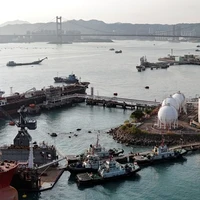
A drone view shows a Chinese-flagged oil tanker moored at an oil terminal at Tsing Yi port, with Tsing Ma bridge in the background, in Hong Kong, China March 19, 2026.

Hardliners in Tehran are hailing a surge in global oil prices as evidence that pressure on shipping is paying off, even as moderates warn that the same confrontation is inflicting mounting damage on Iran's economy and strengthening the case for a deal with Washington.

Crude prices rose above $116 a barrel on October 24 following reports of two attacks involving supertankers near Oman, prompting hardline newspaper Kayhan to portray the increase as vindication of the Islamic Revolutionary Guard Corps Navy's strategy of asymmetric pressure around the Strait of Hormuz.

Under the headline “Minefields near Musandam Prove Diplomacy Is Obsolete,” Kayhan argued that disruption to shipping and the resulting pressure on global energy markets had strengthened Iran's bargaining position rather than demonstrated the need for compromise.

The newspaper accused moderates and more pragmatic conservatives of “begging for an agreement,” singling out the centrist Sazandegi newspaper, which supports reaching a deal with the United States.

But the same confrontation is taking a growing toll on Iran's economy.

Moderate daily Shargh warned that higher crude prices offer little relief to private-sector manufacturers facing bankruptcy and argued that keeping negotiations with Washington alive is essential to Iran's economic survival.

The economic daily Donya-ye Eghtesad has also highlighted pressure on factories in industrial centers including Isfahan, Tabriz and Arak, reporting an unprecedented wave of corporate bankruptcies as the maritime blockade continues.

The competing assessments expose an increasingly important argument in Tehran: whether the economic disruption caused by the confrontation is leverage to be exploited or damage Iran can no longer afford.

Signs of diplomatic movement

The debate comes as signs of diplomatic movement feed cautious optimism among some Iranian political figures that an agreement with the United States may be becoming more likely than another round of war.

Former deputy parliamentary speaker Ali Motahari gave voice to that view on Monday, saying that for the first time in several weeks, the prospects of an agreement with Washington appeared greater than the likelihood of renewed conflict.

Speaking to reporters in Tehran, Motahari argued that war was becoming less likely because the United States was facing multiple problems and might therefore be prepared to accept some of Iran’s conditions.

Monday’s high-level talks with regional powers have added to that sense. Saudi Defense Minister Khalid bin Salman, Pakistani army chief Asim Munir and Turkish intelligence chief Ibrahim Kalin are in Tehran to meet national security chief Mohsen Rezaei and Foreign Minister Abbas Araghchi.

According to Iranian state outlets, Tehran has reiterated its proposal for reducing tensions in the Strait of Hormuz. Following technical discussions in Doha, it resubmitted a plan to restore shipping through the waterway in stages over seven days.

Foreign Ministry spokesman Esmaeil Baghaei said on Monday that Iranian technical negotiators were examining US counterproposals on procedures for lifting the naval blockade.

Tehran insists the seven-day window will not begin until $24 billion in foreign reserves becomes fully accessible and restrictions on container clearance at Bandar Abbas are lifted.

Iran has also insisted that its seven-point de-escalation plan, based on the Islamabad Memorandum of Understanding, remain separate from negotiations over uranium enrichment, International Atomic Energy Agency inspections and regional missile defense arrangements.

It remains unclear whether Washington accepts that separation. Tehran's position suggests it is seeking immediate economic relief while avoiding concessions on broader strategic issues.

The divide leaves Tehran confronting an awkward calculation. The disruption around Hormuz may be imposing higher costs on Iran's adversaries just as hardliners intended, but it is also increasing the economic pressure driving others in Tehran toward a deal.

Flour shortages force bakeries to close across Iran

Oct 26, 2026, 12:08 GMT+0
•
Saba Heidarkhani
100%
A baker prepares dough for bread at a bakery in Iran.

Flour shortages have forced bakeries to close in several Iranian cities and pushed up bread prices, with residents and bakers reporting disrupted supplies, falling purchasing power and growing uncertainty over their businesses.

Residents in Tabriz, Karaj, Kerman and Hamedan told Iran International that interruptions and delays in flour deliveries had disrupted independent bakeries and producers of various types of bread.

Several bakeries on a street in Tabriz have shut down, a resident said.

“I asked why, and they told me they weren't receiving flour. They keep promising that the flour quotas will be replenished today or tomorrow, but nothing happens.”

  • Iranians say basic food slipping beyond reach as bread prices soar

    Iranians say basic food slipping beyond reach as bread prices soar

Previous reports have also documented flour shortages and bakery closures, with residents describing bread shortages and interruptions to production caused by electricity outages.

Flour supply disruptions shut bakeries and sandwich shops

Independent bakers have reported that difficulties obtaining flour have forced businesses to suspend operations.

A citizen of Hamedan in western Iran said flour shortages and rising prices had affected not only bakeries producing specialty bread but also sandwich shops.

Flour prices have risen, and suppliers are now saying there is no flour available at all, the resident said.

“Our bakery is closed because we have no flour, and nobody is taking responsibility,” a independent baker told Iran International.

The shortages have coincided with declining purchasing power, leaving bakeries struggling to secure supplies as customers struggle to afford bread.

“They don't have flour to give us, and I swear to God, people don't have money to buy bread either. Our economic situation has become critical,” another baker said.

  • Tehran bread prices jump up to 100% in latest increase

    Tehran bread prices jump up to 100% in latest increase

Iran's flour distribution system distinguishes between subsidized bakeries and independent bakeries, which face different purchasing prices and supply arrangements.

Flour allocations to certain independent bakeries had been reduced, Bagher Khodadadi, head of supervision and inspection at the Khorasan Razavi provincial agriculture department, confirmed on October 21.

Khodadadi said the shortages in flour distribution had been addressed.

Bakeries reducing their operating hours because of flour shortages would be committing a violation and could face enforcement measures, he added.

Rising prices disrupt food retailers

The flour supply problems have also affected food retailers that depend on bakeries for their products, according to messages.

Two bakeries supplying bread to a supermarket in Kerman said they no longer had enough flour to continue production, the store's owner said.

“Two of the bakers who supply me called and said there was no flour left and they couldn't bake and deliver bread tomorrow. A famine has officially begun.”

A resident of Karaj also described a sharp increase in bread prices.

“I bought two baguettes and they cost 800,000 rials. The price of flour has also tripled.”

  • Iranian wheat farmers face planting cash crunch as payments lag, rial slides

    Iranian wheat farmers face planting cash crunch as payments lag, rial slides

Iran International previously reported on October 8 that residents had described unannounced increases in bread prices and flour shortages in several areas.

Bread prices in Tehran province had risen by as much as 100% for certain varieties by June 23.

The increases have added to the financial pressure on households already struggling with declining purchasing power.

Uncertainty over flour quotas and pricing

The disruption has raised further questions about how flour quotas are allocated and priced for independent bakeries and producers of larger and semi-industrial bread varieties.

Flour allocations to these businesses were suspended about two weeks ago, according to another message received by Iran International.

The sender said suppliers had attributed the suspension to the government's failure to announce new flour prices, leaving bakeries uncertain about when deliveries would resume.

The resident also said certain flour mills were selling supplies on the black market without issuing invoices specifying prices.

Comments by provincial grain officials about flour allocations have added to questions over the distribution system and the availability of supplies.

Netanyahu’s Iranian supporters pin hopes for change on his re-election

Oct 26, 2026, 11:35 GMT+0
•
Farnaz Davari
100%
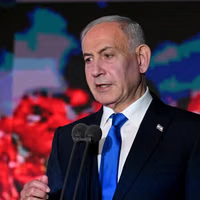
Israeli Prime Minister Benjamin Netanyahu speaks at the State Memorial Ceremony for the three year anniversary of the October 7, 2023, Hamas attack, in remembrance of Israel Defense Forces and security members who fell in the War of Redemption in the Mt. Herzl Cemetery, Jerusalem, on Monday, October 5, 2026.

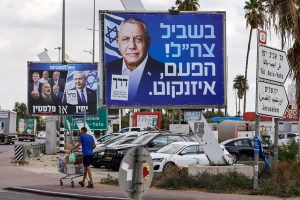
Iranians are looking to Israel's election as a potential turning point in their country's future, with supporters of Benjamin Netanyahu hoping his victory will bring renewed pressure on the Islamic Republic.

“I wish we, the people of Iran, could vote too,” one Persian-speaking Instagram user wrote beneath a post about Netanyahu.

“I've pledged a thousand salawat and 12 candles for Bibi to win,” another wrote, referring to the Israeli leader by his widely used nickname and to a religious practice involving blessings.

The comments are among hundreds of Persian-language reactions to Netanyahu and Israel's October 27 election, reflecting hopes that the vote could help advance efforts against the Islamic Republic.

  • Iran in Israeli election: Netanyahu all-in on regime change, rivals want more

    Iran in Israeli election: Netanyahu all-in on regime change, rivals want more

The comments, however, are not a representative measure of Iranian public opinion, and Persian-language posts alone do not establish whether their authors live inside Iran or abroad.

For Netanyahu's Iranian supporters, his continued leadership offers the prospect of finishing what they consider unfinished efforts to bring down Iran's ruling establishment.

From nuclear warnings to calls for political change

Netanyahu, born in Tel Aviv on October 21, 1949, grew up in an academic family and spent part of his adolescence in the United States.

After serving in an Israeli military special forces unit, he studied at the Massachusetts Institute of Technology before entering politics. He first became prime minister in 1996, aged 46.

The leader of the right-wing Likud party is Israel's longest-serving prime minister, and confronting the Islamic Republic has been a central feature of his political career.

In September 2012, Netanyahu displayed a cartoon drawing of a bomb at the United Nations, drawing a red line across it to warn about Iran's nuclear program.

The confrontation later extended beyond nuclear warnings.

During the 12-day war in June 2025, Israel struck Iranian military and nuclear facilities. Netanyahu told Iranians that the military campaign could pave the way for them to achieve freedom from the Islamic Republic.

Joint Israeli-US strikes on February 28, 2026, which killed Iran's former Supreme Leader Ali Khamenei, marked another stage in the confrontation.

Netanyahu’s military actions against the Islamic Republic and his calls for political change in Iran have earned him support among some opponents of the country’s ruling establishment.

Iran has also emerged as a major issue in Israel's election campaign, with Netanyahu's political rivals advocating tougher action against the Islamic Republic and criticizing his failure to eliminate the threat they say it poses.

Netanyahu speaks directly to Iranians

Netanyahu has repeatedly addressed Iranians directly through video messages and Persian-language social media posts, urging them to seek political change and an end to Islamic Republic rule.

  • Israel’s leaders have long wanted Iran’s rulers gone. They differ only on how

    Israel’s leaders have long wanted Iran’s rulers gone. They differ only on how

During Iran's water crisis in August 2025, Netanyahu promoted Israeli water technology and promised to send Israeli experts to help tackle the country's water shortages following a change of government.

That outreach has continued during the final days of his election campaign.

“The people of Iran deserve to live in freedom, security and dignity,” Netanyahu wrote in a Persian-language Instagram post on Thursday, October 22, five days before Israel's election.

The message came as Netanyahu faced significant political competition at home, even as Persian-speaking users expressed enthusiasm for his continued leadership.

His messages have resonated with some opponents of the Islamic Republic who hope Israeli pressure will contribute to political change in Iran.

How Bibi became Bibi Joon

Netanyahu's familiar nickname, Bibi, has taken on new forms among Persian-speaking admirers.

They call him Bibi Joon, adding a Persian term of affection, or Bibi Gol, a reference to a popular song by Iranian singer Moein.

The phenomenon has also attracted Netanyahu's attention.

Netanyahu himself referred to the nickname during a CBS News interview in May 2026, saying Iranians called him “Bibi-joon,” meaning beloved Bibi.

Netanyahu's standing among Iranians

More than half of respondents inside Iran, 50.6%, held favorable views of Netanyahu, compared with 38.1% who viewed him unfavorably, according to a survey conducted from June 20 to 27, 2026, by the Netherlands-based research group GAMAAN.

The online survey involved more than 31,000 participants and used statistical weighting to produce its findings.

In Israel, 47% of respondents preferred former military chief Gadi Eisenkot as prime minister, compared with 37% who backed Netanyahu, according to a Madad poll published on October 23.

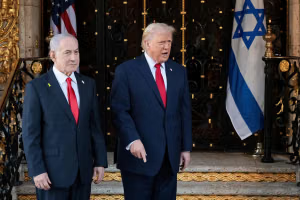
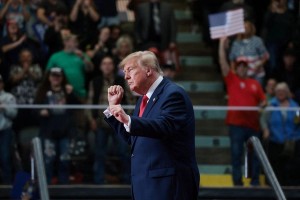
Netanyahu has also received the backing of US President Donald Trump, who urged Israelis to re-elect him to continue their joint campaign against the Islamic Republic.

  • Trump says US may ‘soon finish the job’ on Iran, Netanyahu vows to topple regime

    Trump says US may ‘soon finish the job’ on Iran, Netanyahu vows to topple regime

“Vote for Bibi Netanyahu for Prime Minister, we have to finish the job that we started!” Trump wrote on Truth Social on Sunday.

Persian-language reactions to Israel's election go beyond support for Netanyahu's re-election, expressing hopes that he will resume military action against the Islamic Republic.

“Why don't you finish the job before the vote?” another asked.
Mecca defense pact members hold talks with Iran

Oct 26, 2026, 09:56 GMT+0
100%
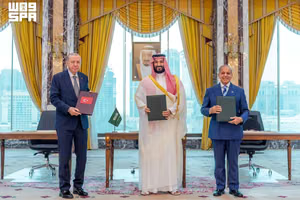
Officials from Iran, Pakistan, Turkey and Saudi Arabia attend a four-way meeting in Tehran on October 26, 2026.

Senior officials from Saudi Arabia, Pakistan and Turkey opened talks with Iranian authorities in Tehran on Monday, following increased Iran-backed Houthi attacks on Saudi Arabia and renewed warnings of military action between Tehran and Washington.

Saudi Defense Minister Khalid bin Salman, Pakistani army chief Asim Munir and Turkish intelligence chief Ibrahim Kalin will travel to Tehran, Reuters reported on Monday, citing Saudi and Iranian officials.

Ali Bagheri Kani, deputy secretary of Iran's Supreme National Security Council, confirmed the visit.

The initiative was proposed during Munir's visit to Tehran last week, when he met President Masoud Pezeshkian and other senior officials, according to a senior Iranian official.

Iranian media reported that officials told Munir they would not negotiate with Washington until Tehran's demands were met.

Defense pact faces first major test

The visit marks the first high-level meeting between Iran and all three members of the Mecca defense pact since the escalation of hostilities.

Saudi Arabia, Pakistan and Turkey signed the agreement in August, establishing that a military attack on one member would be considered an attack on all three.

Pakistan has ratified the pact, while ratification remains pending in Turkey's parliament.

  • Mecca pact ties three Sunni powers together as Iran-backed attacks loom

    Mecca pact ties three Sunni powers together as Iran-backed attacks loom

Earlier this month, the three countries agreed to implement their defense commitments and rapidly deploy military personnel and capabilities to Saudi Arabia.

The agreement faces its first significant test following increased Houthi attacks on Saudi territory.

Saudi Arabia announced on Sunday that it had intercepted another wave of missiles and drones.

The visit is intended to reduce hostilities and support mediation efforts by Qatar and Pakistan, Saudi Deputy Foreign Minister for Public Diplomacy Raed bin Khalid Qarmali said earlier.

US-Iran confrontation

Qatari officials also visited Tehran on Sunday for talks with Iranian authorities.

  • Qatar pushes for Iran deal, new US strikes remain possible

    Qatar pushes for Iran deal, new US strikes remain possible

Previous mediation by Qatar and Pakistan helped secure a temporary halt to hostilities, but the agreement collapsed when fighting resumed.

Indirect contacts between Tehran and Washington have continued through both mediators, a process also referenced by Iranian Foreign Minister Abbas Araghchi.

US President Donald Trump raised the possibility of renewed military operations against Iran on Friday.

  • US and Iran trade new threats as diplomacy yields no breakthrough

    US and Iran trade new threats as diplomacy yields no breakthrough

Iranian officials have warned that any further attack would trigger a stronger response.

The diplomatic meetings come as Saudi Arabia seeks to prevent the conflict from spreading to its critical infrastructure, putting the Mecca defense pact and regional mediation efforts under growing pressure.