Saudi-led coalition says it intercepted two Iran-backed Houthi missiles
The Saudi-led coalition said it intercepted and destroyed two ballistic missiles launched by Yemen’s Iran-backed Houthi forces toward the Saudi cities of Taif and Yanbu.
The Saudi-led coalition said it intercepted and destroyed two ballistic missiles launched by Yemen’s Iran-backed Houthi forces toward the Saudi cities of Taif and Yanbu.

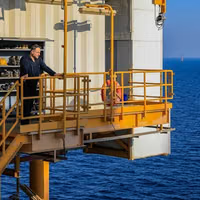
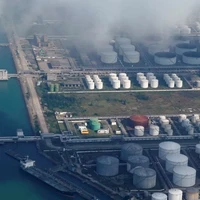


Pakistan is mediating between Iran and the United States even as it sends troops to defend Saudi Arabia against attacks by Tehran’s allies, placing Islamabad in the conflicting roles of peace broker and military partner to Iran’s rivals.
On Tuesday, Pakistan's military chief, Field Marshal Asim Munir, met Iranian President Masoud Pezeshkian, Foreign Minister Abbas Araghchi, Parliament Speaker Mohammad Bagher Ghalibaf and security chief Mohsen Rezaei in Tehran.
Munir has also cultivated a close relationship with President Donald Trump, including meetings at the White House.
Islamabad helped broker the June agreement between Washington and Tehran. The truce did not last, but Pakistan has kept its mediation channel open.
Commitment to Saudi Arabia
Pakistan has taken a direct military role in Saudi Arabia's defense.
Reuters reported in May that Islamabad had deployed approximately 8,000 troops, a squadron of fighter jets and air-defense systems to the kingdom under a bilateral agreement. Saudi Arabia financed the deployment, according to Pakistani officials cited by Reuters.
Pakistan’s commitment to Saudi security deepened in August when Pakistan, Saudi Arabia and Turkey signed the Makkah Joint Defense Agreement, treating an attack against one member as an attack against all.
This week, Islamabad announced that Pakistan and Saudi Arabia had completed ratification, while Turkey's remained pending. The partners have also discussed further military mobilization following attacks by Iran-aligned Houthis on Saudi territory.
On Wednesday, Pakistan signed another defense agreement, this time with Turkey, Qatar and Indonesia. The Badr agreement, signed in Doha, offers opportunities for industrial cooperation and defense production.
Together with Makkah, the agreements deepen Pakistan's military, diplomatic and economic ties across countries pursuing different regional agendas.
Pakistan's balancing act
That tension was evident during Munir's Tehran visit. Pakistani government sources told Turkey's state-run Anadolu news agency that the talks focused more on stopping Houthi attacks against Saudi Arabia than on reviving US-Iran negotiations.
Munir pressed Iranian leaders to use their influence over the Houthis, citing Pakistan's commitment to defend the kingdom.
Saudi Arabia and other Persian Gulf states supply much of Pakistan’s energy, while millions of Pakistani workers live in the region. Defense cooperation brings financial support and industrial opportunities, while diplomacy helps protect relations with competing partners.
Pakistan appears to be carving out an unusual role: mediating between Iran and the United States, helping defend Saudi Arabia against the Houthis, and joining new regional defense ventures while retaining direct access to Iranian leaders.
But the same network could become harder to manage if regional tensions escalate. The more security commitments Pakistan assumes, the greater the chance that relationships which currently give Islamabad leverage could eventually force it to choose between them.
A possible resumption of US strikes on Iran would serve an increasingly economic war, weakening Tehran’s ability to challenge a blockade that Washington appears prepared to maintain for the foreseeable future.
A strike on Iran could "absolutely" come this weekend, the US ambassador to Turkey, Tom Barrack, said Friday, and the administration hasn’t said what it would be for.
The New York Times reports that US and Israeli planners have drawn up a short, intensive campaign for after the November 3 midterms, aimed at Iran’s missile and drone arsenal, nuclear sites and energy infrastructure.
Critics read the reports as proof that there is no strategy anymore. That reads the war through the lens of February, when the economic campaign existed to support the war. Whether the administration designed it this way or simply ended up here, the strikes now serve the economic campaign, which is proving more harmful to the regime than the strikes ever were.
Washington has committed to the blockade and treats the strikes as optional. Speaking to reporters Friday, President Trump said the choice was whether to finish it off or let it wither, and that with oil moving through Hormuz the US was getting everything it wanted. Mike Waltz, the US ambassador to the United Nations, told the Financial Times the same day that the president and the Navy can maintain the blockade for the foreseeable future while the administration keeps tightening economic pressure.
The US is now running a siege. It has sharply restricted Iran’s access to oil buyers, international finance and regional trade. The job of the military is to keep the cordon from being broken. The shift in strategy came in July, when the US restored the blockade after the June memorandum collapsed and the strikes that followed were about the strait.
Central Command said its July strikes were meant to degrade Iran’s ability to attack commercial shipping. The next round of strikes would be the first planned campaign since the blockade and the sanctions began doing real damage to the regime.
Iran’s imports since the war began show its priority — bringing in the supplies it needs to be able to fight its way out of the blockade. It is bringing in truck parts, missile fuel ingredients and missile and drone components to rebuild the launchers and stockpiles. The Wall Street Journal counted about 1,300 shipments of dual-use components from Chinese suppliers to Iran’s defense ministry in the first half of the year.
On October 1 the Treasury sanctioned Iran’s truck and auto makers, which it called an essential part of Iran’s defense industrial base, and the suppliers in Turkey, the Emirates and East Asia feeding them parts. Iran is assembling missiles from stockpiled components in small numbers, the Journal reported in September, and the blockade has made the solid-fuel components it can’t make harder to import.
Iran loaded no crude oil onto tankers in September, according to Bloomberg. CENTCOM says the blockade has stopped $25 billion in oil exports. The United Arab Emirates halted all trade and financial dealings with Iran in August. The regime has no way to persuade its own base or the Persian Gulf states that it has an answer.
That leaves Tehran a short list of cards to play against the blockade and the sanctions.
The first is attacking commercial shipping in the strait. Maritime security sources recorded at least 12 attacks on tankers around the Strait of Hormuz in the week to October 5, the highest weekly total of the war.
The second is pressuring its neighbors. Iran threatens Persian Gulf energy infrastructure, US bases and undersea cables, and it has the Houthis at Bab el-Mandeb, all meant to push the Persian Gulf states to lobby Washington to end the blockade.
The third is to strain US munition supplies. Mohsen Rezaei, Iran’s security chief, said this week that a long war favors Iran because the test is which side can sustain a cycle of production, deployment and response.
The fourth is to keep offering a deal that it likely won’t make. Tehran’s standing offer is to reopen the strait in seven days in exchange for ending the blockade, easing oil sanctions and releasing frozen assets.
The fifth is the nuclear program, which the regime can negotiate to death over enrichment and dangle in front of Washington for the same price.
A strike goes down that list. The missile and drone arsenal the Times describes, and the launchers, mine-layers, naval sites, radars and air defenses CENTCOM has hit since July, are the hardware behind the regime’s threat to the strait and its neighbors.
Fewer launchers means fewer ships hit and a weaker threat to the Persian Gulf. Hitting stockpiles and production sites limits its ability to strain and outlast US munition supplies, and a strike tests Rezaei’s claim directly. Destroying enough of those capabilities would weaken Iran’s offer to stop attacking shipping in exchange for lifting the blockade.
Washington would have less reason to pay for a threat Iran could no longer credibly sustain. Hitting Pickaxe Mountain doesn’t end the nuclear program, but it leaves Tehran less to bargain with when it asks for sanctions relief.
Holding a blockade is expensive. Destroyers are doing work that cheap systems should do, and the Navy is stretched thin. Fewer Iranian launchers firing at the escort mission means the Navy can hold the line longer without forcing a decision in Washington.
The regime has shown it will take the strikes. Ali Khamenei and Ali Larijani are dead, Mojtaba Khamenei succeeded his father, and Tehran still won’t concede on any deal the US could accept. What it can’t take is the economic war.
The blockade turned the clock against Tehran. The regime’s strategy since February has been to wait — for the administration to lose patience, for the midterms, for the next policy swing.
The US can hold a blockade for the foreseeable future at a cost it can carry. A prolonged loss of oil revenue will make Tehran’s strategy of waiting out Washington increasingly difficult to sustain. The strikes exist to keep that clock running.
Washington and Tehran traded increasingly hostile threats on Friday, with President Donald Trump raising the possibility of further military action and Iranian officials warning of attacks on regional infrastructure, while diplomatic efforts in Istanbul produced no breakthrough.
Trump said the United States “may do another little Epic Fury,” referring to the US military operation against Iran, but gave no details on the timing or scope of any renewed action.
His remarks came after US Ambassador to Turkey Tom Barrack said an American strike could come as early as this weekend, while stressing that Trump remained open to a deal. Trump later distanced himself from Barrack’s suggestion, saying he knew nothing about plans for a weekend strike.
The possibility of renewed strikes has also been under discussion in Washington and Israel. The Atlantic reported that Trump was considering several days of strikes after the November 3 midterm elections, potentially targeting Iranian missile and drone capabilities, energy infrastructure and nuclear facilities. ABC News separately reported on Thursday that US and Israeli military planners had drawn up plans for renewed attacks.
Tehran threatens wider response
Tehran, meanwhile, has been preparing its response to another potential round of attacks, with its threats increasingly directed at infrastructure beyond Iran’s borders.
Two senior Iranian security officials told Reuters that Tehran had developed plans to strike undersea communications cables in the Persian Gulf if the United States and Israel resumed military operations. One official said Iran could also seek to prevent repairs to prolong the disruption.
The Wall Street Journal separately reported that Iran had threatened to attack airports, pipelines and other civilian and economic infrastructure in neighboring Persian Gulf countries if US-Israeli strikes resumed.
The Revolutionary Guards added to the warnings. Senior commander Yadollah Javani said Iran would become a killing field for American troops attempting a ground invasion, while Guards spokesman Hossein Mohebbi circulated a graphic showing a burning oil tanker and oil prices climbing to $117 a barrel.
The Guards’ navy also said two supertankers had struck mines in the Strait of Hormuz, where disruption to shipping has become a central part of the confrontation.
Istanbul talks yield no breakthrough
Against this backdrop, Turkey hosted foreign ministers from Egypt, Pakistan, Saudi Arabia, Britain, France and Germany in Istanbul on Friday for talks focused on regional conflicts, including the Iran war, shipping security and the fighting in Yemen.
The four regional countries, known collectively as the R4, also met separately and issued a declaration supporting the Islamabad memorandum, calling for a negotiated settlement and opposing attacks on civilians and civilian infrastructure, including commercial vessels.
They called for the swift restoration of safe and unrestricted passage through the Strait of Hormuz, warning that disruptions threaten global supplies of energy, fertilizer and food. The ministers also agreed to maintain close consultations on regional security.
The Istanbul meetings brought regional and European governments together in support of diplomacy but produced no announced progress toward a US-Iran agreement.
With Washington considering further military action and Tehran threatening to widen its response to renewed strikes, the gap between the two sides remained considerable despite continuing mediation efforts.
Escalating war rhetoric from Iran, the United States and Israel, coupled with military movements across the region, has heightened fears of another conflict, as Iranians debate online whether war could bring political change or deepen the country's crises.
Iranian social media users are closely following statements by US President Donald Trump and Israeli Prime Minister Benjamin Netanyahu, as well as diplomatic and military movements across the region.
Many view the developments as possible signs of an impending US-Israeli attack.
A central debate is whether another war could bring down the Islamic Republic or simply inflict further damage on Iran.
Those supporting military action describe war as a necessary evil to end the political system, arguing that previous attempts to bring about change have failed.
Opponents warn that another conflict could destroy energy infrastructure and refineries, deepen economic hardship and leave Iranian society in an even worse position.
“We are inside Iran and face all kinds of financial, security and social problems, but we are willing to pay the price to end this nightmare,” one user wrote.
Another user wrote: “This uncertainty is really a thousand times worse than war. We cannot even plan a trip, let alone make decisions about work, education or running a business.”
Others strongly rejected that view.
“War brings destruction, chaos, disease and so many other problems,” one user wrote. “The outcome will not necessarily be what you imagine. It could be much worse than things are now.”
Another highlighted the vulnerability of people without secure salaries, who could lose their livelihoods if fighting disrupted economic activity.
One user summed up the conflicting attitudes they had encountered.
“I have seen many people in Iran waiting for an attack so that things can finally be settled… and others who wanted an agreement to be reached,” the user wrote. “Feelings differ, but everyone is tired of this situation.”
Some are urging others to stock up on water, food and medicine and keep cash on hand. Others warn people living near military or government facilities to consider leaving.
Users have also expressed concern for elderly people, those with illnesses and people living alone.
Hardliners push for confrontation
Ultra-hardline voices have also expressed enthusiasm for military confrontation, but for very different reasons.
They argue that negotiations with Washington have merely given Iran's adversaries time to regroup and prepare for a stronger attack.
Some have sharply criticized officials who pursued diplomacy and called for Iran to launch a pre-emptive strike if war appears imminent.
“Why shouldn't Iran start the war this time instead of always waiting to be caught off guard?” one user wrote.
Another argued that Iran did not need nuclear weapons to inflict serious damage on its adversaries.
“We don't even need an atomic bomb to retaliate,” the user wrote, arguing instead for strikes on nuclear power plants in Israel and the United Arab Emirates.
The calls for confrontation reflect a very different political outlook from anti-government users hoping outside military action could bring down the Islamic Republic.
But both illustrate how repeated rounds of fighting and failed diplomacy have led some on opposing sides of Iran's political divide to see another war as preferable to the current uncertainty.
Parents prepare for the worst
Parents' concerns about children's safety have intensified following the deaths of more than 100 schoolchildren in a US attack on Minab at the beginning of the recent war.
Some are urging families to keep children home from school if the likelihood of an attack increases. Others are discussing plans to collect children from schools and move them to safer locations as quickly as possible if fighting resumes.
An Instagram post featuring a firefighter has attracted particular attention. The firefighter said that while inspecting safety arrangements at a girls' high school, a school official told them instructions had been issued to prepare identification tags for students.
On Friday, an Education Ministry spokesperson denied that such measures were being implemented and accused “enemies or ignorant individuals” of spreading fear.
One user said they had checked with relatives in Tehran and concluded that the reports were accurate, claiming families they contacted had requested identification tags and were awaiting their delivery.
Fear of another internet blackout
The prospect of another shutdown of international internet access is adding to the anxiety.
Users fear authorities could cut international connectivity immediately if hostilities resume. The prospect is particularly troubling after previous shutdowns made it difficult to contact relatives and access reliable information.
One user recalled that during the war in June last year, the internet was cut several days after fighting began. When war broke out again at the end of February, the shutdown came within hours.
“Now, instead of checking the news in the morning, I open Google's domain to see whether it loads,” the user wrote, “so I can find out whether the war has started.”
Armed security forces and checkpoints have become more visible across Iran, according to witness reports sent to Iran International, while internet access has deteriorated amid fears of fresh unrest and another round of war.
Accounts from Tehran, Mashhad, Isfahan, Dezful, Hamedan and other cities over the past week describe armed Basij members and riot police at major intersections and public squares, new checkpoints and additional surveillance cameras.
Users in several provinces also say internet speeds have fallen sharply, circumvention tools have stopped working and access to social media has become increasingly difficult.
The individual reports cannot all be independently verified, but describe similar changes across widely separated parts of the country.
More armed forces on the streets
In Dezful in southwestern Iran, one resident said the city had become “heavily securitized,” particularly around the city center and Shariati Street.
The resident attributed the increased presence to government concern about possible protests around the anniversary of the November 2019 uprising, when demonstrations triggered by a sudden increase in fuel prices were met with a deadly crackdown.
In Tehran, a resident reported a Basij checkpoint on Khavaran Street from Thursday evening, while other accounts described increased security patrols elsewhere in the capital and neighboring Karaj.
Residents of Mashhad reported armed Basij members around Mellat Park.
In Isfahan, armed deployments were reported around major squares, while residents of Hamedan and Borujerd described increased security activity.
Iran International reported similar deployments in September around the fourth anniversary of the death in custody of Mahsa Jina Amini.
More cameras and surveillance
Residents have also reported an expansion of surveillance infrastructure.
A resident of Astara, a small city on the Caspian coast near the Azerbaijani border, said security cameras were being installed in squares and neighborhoods across the city.
“They are installing cameras neighborhood by neighborhood in a city this small,” the resident said. “Look how afraid they are of the people.”
Another resident reported more surveillance cameras around Tehran's Sadeghieh district.
Tehran municipality announced last year that it planned to install 15,000 surveillance cameras across the capital, while security agencies have used camera footage to identify protesters and enforce government restrictions.
Internet slowdown
Residents in Semnan, Shiraz, Tabriz, Kerman, Tehran and elsewhere told Iran International that connections had slowed markedly, VPNs had stopped functioning and social media platforms had become increasingly difficult to reach.
A Shiraz resident said internet access had been extremely slow for about six days, while in Kerman one user said even paid VPN services were failing.
A resident of Tonekabon on the Caspian coast said Irancell mobile internet was being cut at night. Other users reported disruption to both fixed and mobile connections.
The cause of the disruptions is unclear, and the accounts do not establish that the security deployments and deteriorating internet access are part of a coordinated operation.
But they come against the backdrop of Iran's extensive use of internet shutdowns during periods of political unrest and conflict.
Tech outlet Zooman reported this week that authorities had issued instructions for international internet access to be cut immediately in the event of another war.
When Israel and the US attacked Iran in February, authorities imposed a nationwide internet blackout that lasted about 88 days, the longest recorded in any country, according to NetBlocks.
The latest disruptions also coincide with sharp increases in the cost of getting online.
Iran's two largest mobile operators, Hamrah-e Aval and Irancell, raised prices for calls, text messages and internet packages by as much as 40% on Friday, citing higher equipment, maintenance and infrastructure costs.
“By making the internet more expensive, they have closed our last route to the free world,” one resident told Iran International. “For me, when the internet was my only comfort and source of income, even being present in this space is no longer possible.”