The US naval blockade has exposed a limitation in Tehran’s sanctions-evasion machinery: ship-to-ship transfers, false paperwork and steep discounts can disguise and sell crude once it is at sea, but they cannot get fresh cargoes out of Iranian ports.
For months, Iran was able to keep selling oil to China because millions of barrels had already left the country on tankers and were sitting in Asian waters. That reserve is now effectively exhausted.
Kpler analysts cited by The Wall Street Journal on Wednesday estimated Iran had about 135 million barrels in overseas storage when the war began in February. By October 5, that had fallen below one million barrels.
Vortexa gave a different figure, estimating Iranian stocks off Singapore at roughly six million barrels on October 9. The difference reflects varying tracking methods and locations, but both show that the offshore stocks that sustained Iranian exports have been largely depleted.
The Malaysia route dries up
Malaysia sits at the heart of how Iranian oil has reached China, serving mainly as a transfer point rather than the true source of much of the crude.
The Wall Street Journal reported in May on ship-to-ship transfers of Iranian crude off the Malaysian coast.
A sharp drop in China’s purchases recorded as Malaysian crude could therefore provide another indication that the flow of Iranian oil through the system has dried up.
But the figures are not a one-for-one measure of Iranian exports. Chinese customs data record the declared origin of cargoes, while ship tracking can miss transfers or vessels operating without transponders.
The timing nevertheless coincides with the depletion of the offshore stocks that had fed the trade. If no new Iranian crude is available for transfer near Malaysia, fewer cargoes would be expected to appear in Chinese data under a Malaysian origin.
China turns to other suppliers
China remains Iran’s most important potential buyer, but its independent refineries are already lining up alternatives.
Reuters reported on October 6 that Chinese “teapot” refineries had purchased at least 12 million barrels of Iraqi and Qatari crude for delivery in October and November. Traders suggested the total could reach 15 million to 20 million barrels.
Iranian oil had been attractive largely because of its steep discount. Iraqi and Qatari cargoes may cost more, but they arrive through normal channels and carry less risk of sanctions trouble or sudden interruptions.
Iran could offer deeper discounts or rely more heavily on intermediaries to retain Chinese customers. Neither solves the central obstacle: the oil still has to be loaded and shipped.
Reuters reported in August that offers of Iranian oil to Chinese buyers had already fallen as stored cargoes were sold.
Few alternatives to tankers
Jask, on the Gulf of Oman, is often cited as Iran’s alternative export outlet. The Goreh–Jask pipeline and terminal were built so oil could reach the sea without passing through the Strait of Hormuz.
So far, however, the facility has not shown it can replace Iran’s main export system.
The International Energy Agency’s February 2026 factsheet described Jask as effectively out of regular service. S&P Global later reported tanker activity there between March and July, indicating occasional use.
That suggests the route can handle some cargoes, not that it can support exports on the scale Iran needs. A port outside Hormuz is also not necessarily beyond the reach of a blockade aimed at Iranian ports.
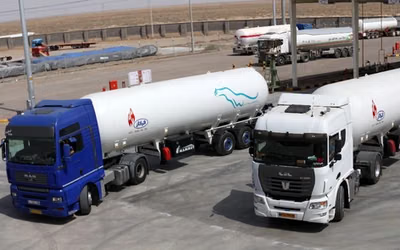
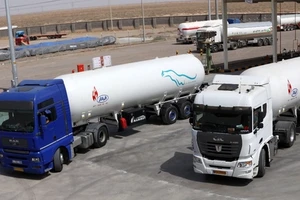
Rail and trucking through neighboring countries offer still less capacity. They face high costs, limited infrastructure, border procedures and sanctions risks.
The pressure shifts onshore
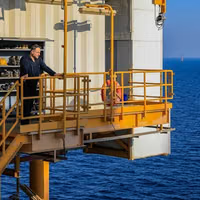
If crude cannot be exported, Iran’s problem moves from the sea back to its oil fields.
Tehran can send more crude to domestic refineries, use available storage or cut production. Kpler estimated earlier in the blockade that Iran had already begun reducing output as inventories rose and usable storage space tightened.
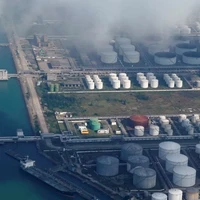
Usable storage is not the same as total tank capacity: some tanks hold condensate, and not all can simply be switched to crude.
Further production cuts would mean less revenue and could make restarting output more difficult. But continuing to pump oil with nowhere to send it risks filling remaining storage and eventually forcing deeper cuts.
The financial impact will also emerge gradually because payments for cargoes already delivered can arrive weeks later.
The United States says the blockade has denied Iran at least $25 billion in oil revenue, a CENTCOM estimate cited by the Journal rather than an independently verified measure of Tehran’s net losses.
Iran has not forgotten how to evade sanctions or lost the network it built to sell oil despite them. But before Tehran can disguise a cargo, transfer it between ships or sell it at a discount, it first has to get the oil out of Iran.