IRGC says it shot down 54th US MQ-9 drone
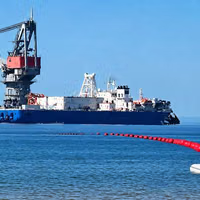
Iran’s Islamic Revolutionary Guards said on Tuesday that they had shot down a US MQ-9 drone over the Strait of Hormuz, describing it as the 54th such drone they had destroyed.
Iran’s Islamic Revolutionary Guards said on Tuesday that they had shot down a US MQ-9 drone over the Strait of Hormuz, describing it as the 54th such drone they had destroyed.


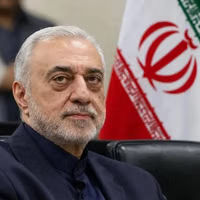





Iran’s new defense minister threatened the US and Israel during a parliamentary session held online over fears of attack, but even the virtual meeting faltered when poor internet connections prevented 25 lawmakers from voting on his appointment.
Mehrdad Akhlaghi was elected defense minister on Sunday with 237 votes in favor and 15 against. Alireza Salimi, a member of parliament’s presiding board, said 277 lawmakers attended the virtual session but 25 were unable to register their votes because of internet connectivity problems.
Akhlaghi issued his warning during the same session, saying another US or Israeli “miscalculation” would trigger Iran’s response.
Parliament has relied heavily on remote sessions during the war, after lawmakers amended its internal rules in July to allow virtual plenary meetings during emergencies.
Iranian media have also raised questions about attendance and voting participation during virtual sessions. At one virtual session on July 28, held to examine the International Crime Countermeasures Bill, 50 lawmakers were absent. Of the 240 lawmakers present, 37 did not participate in the vote.
No explanation was given for why the 37 lawmakers did not vote.
Hardline lawmaker Meysam Zohourian has also criticized the pace of parliamentary work. He said online sessions were being held no more than twice a week and warned that, at the current pace, approving the so-called “Infiltration Bill,” which lawmakers are examining, could take a year.
Political dispute over remote sessions
Restrictions on in-person sessions have intensified a dispute between parliament Speaker Mohammad-Bagher Ghalibaf and his hardline opponents, including members of the Paydari Front and allies such as the Masaf group.
Some of Ghalibaf’s hardline critics have accused him of supporting restrictions on in-person sessions to reduce his exposure to possible US or Israeli attacks and to shield President Masoud Pezeshkian’s government, including Foreign Minister Abbas Araghchi, from parliamentary pressure.
Hamid Rasaei, a hardline Tehran lawmaker who was sentenced to prison on charges of defaming Ghalibaf and recently began serving his sentence, has been among the most vocal opponents of holding parliamentary sessions online.
Another hardline lawmaker, Mojtaba Zolnouri, recently said 117 lawmakers had signed a letter calling for a return to in-person parliamentary activity. According to Zolnouri, the signatories argued there was no longer any reason to hold meetings remotely.
Media outlets supportive of Ghalibaf and his political allies have strongly rejected the accusations.
On October 11, Iman Shamsaei, head of parliament’s communications center, rejected claims that restrictions on in-person plenary sessions were intended to protect Ghalibaf’s life. Instead, he argued, it was necessary to prevent parliament from losing its quorum.
Shamsaei argued that if the number of representatives fell below the constitutional two-thirds quorum, parliament would be unable to carry out its legislative and oversight functions and new elections could become necessary.
Criticism spreads on social media
The dispute has also played out on social media, particularly among hardline supporters of the Paydari Front and Ghalibaf’s political allies.
On Sunday, hardline journalist Fereshteh Sadeghi criticized the claim that parliament remained operational because some meetings were being held online.
“Parliament is closed. The fact that its committees have held meetings here and there, or that online sessions have been arranged — with many lawmakers unable to connect — does not mean parliament is open,” she wrote on X.
Reformist journalist Davoud Heshmati focused on the internet problems that prevented lawmakers from voting.
“This is no joke. Twenty-five lawmakers did not have a decent internet connection to carry out their parliamentary duties and participate in an important vote to elect the defense minister. This is a clear and real example of the situation we live in,” he wrote.
Other users defended the continuation of remote sessions, arguing that some hardline lawmakers were pushing for a return to in-person meetings because in-person sessions provided them with a platform to obstruct the government.
Questions over parliament’s public legitimacy
The controversy comes amid broader questions about the parliament’s standing with the public.
Turnout in Iran’s 2024 parliamentary elections fell to a record low for the Islamic Republic, with participation particularly weak in Tehran, where only 24% of eligible voters cast ballots.
Despite the dispute over whether parliament is functioning effectively, lawmakers have continued to advance controversial legislation during the war, including the so-called Infiltration Bill.
The dispute underscores a broader contradiction: critics say remote sessions have impaired parliament’s ability to function effectively, even as lawmakers continue advancing legislation that could impose further restrictions on Iranian society.
Washington and Tehran may still reach a limited deal, but fundamental disagreements leave open the prospect of renewed escalation, analysts told Iran International, with the period after elections in Israel and the United States emerging as a potential turning point.
Diplomatic efforts are continuing, with Qatar and Pakistan pushing for an agreement and The New Arab reporting Monday, citing sources familiar with mediation efforts, that a breakthrough could be announced this week.
The analysts interviewed by Iran International were more cautious, however, seeing little evidence that either side has made the concessions required for a broader agreement and identifying the coming elections as a factor that could shape the timing of diplomacy or renewed military action.
Danny Citrinowicz, an Iran specialist and former head of the Iran branch in Israeli Defense Intelligence, said continuing diplomatic exchanges did not amount to evidence of an imminent breakthrough because neither side appeared ready to make the compromise required for one.
"In order to have a breakthrough, one side needs to show significant compromise. And I don't see that in the Iranian side," he told Iran International.
Washington wants substantial restrictions on Iran's uranium enrichment capabilities, while Tehran is prioritizing relief from the US blockade and sanctions, alongside the restoration of maritime traffic through the Strait of Hormuz.
Iranian Foreign Minister Abbas Araghchi said Sunday that Tehran's seven-day proposal remained on the table. Under the proposal, Iran would reopen the strait within seven days if Washington accepted Tehran's conditions, paving the way for renewed negotiations.
Alex Vatanka, director of the Iran Program at the Middle East Institute, saw greater scope for a limited arrangement than a comprehensive settlement, arguing that both Trump and Tehran have short-term incentives to reduce tensions without resolving their fundamental differences.
Trump, he argued, faces political pressure ahead of the November 3 midterm elections and could benefit from a diplomatic achievement. Tehran, meanwhile, needs economic relief as the blockade continues to undermine its finances.
"You might have a deal that could create ceasefire conditions for a short period of time, of weeks and months," Vatanka told Iran International.
But he said he had seen little indication that Tehran was willing to accept the kind of comprehensive agreement Trump could present as a major improvement over the 2015 nuclear deal.
Iran's leadership, Vatanka argued, believes it has paid a heavy price for its nuclear program while demonstrating its ability to disrupt the global economy through the Strait of Hormuz. Economic pressures could encourage a narrow agreement, but sweeping concessions risk exposing divisions within the Islamic Republic's leadership.
A deal under the threat of force
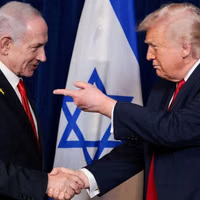
The diplomatic activity comes as US President Donald Trump and Israeli Prime Minister Benjamin Netanyahu have intensified warnings of renewed military action.
On Sunday, Trump threatened to "soon finish the job" against Iran unless Tehran changed course, while giving Netanyahu his endorsement ahead of Israel's October 27 election.
Netanyahu, who has explicitly identified the removal of the Islamic Republic as an Israeli objective, has said Israel is prepared to act independently of Washington if necessary.
On Monday, Netanyahu released a video of a telephone conversation with Trump following the US president's endorsement of his reelection campaign.
"Donald, we have a job to finish, you said it, and we'll finish it together. We'll finish it, and no one else will do it," Netanyahu told Trump.
Shayan Samii, a geopolitical and national security analyst, said Trump's combination of negotiations and military threats allowed him to preserve both outcomes: claiming a diplomatic victory if talks succeed or demonstrating resolve through military action if they fail.
"The United States wants to keep the diplomatic avenue still open and valid. Why? Because it helps for domestic political purposes," Samii told Iran International.
"It allows Trump to say, I'm giving diplomacy all the chances in the world, but at the same time I'm keeping the pressure on them."
He also interpreted Trump's endorsement of Netanyahu as an attempt to increase Washington's leverage over the Israeli leader should he remain in power.
Samii suggested Iran or its regional allies could provoke a confrontation ahead of Israel's election, potentially providing a pretext for renewed strikes. He presented this as a possible scenario, not evidence of a planned operation.
Russia could influence the diplomatic track
Russian Foreign Minister Sergei Lavrov's visit to Tehran on Monday added another dimension to the diplomatic maneuvering.
Vatanka said Russia possesses considerably greater leverage over Iran than mediators such as Pakistan, Qatar or Oman, partly because Tehran depends on Moscow for diplomatic support.
That influence could become significant if negotiations require difficult concessions, including a possible arrangement to transfer Iran's highly enriched uranium to Russia.
But Vatanka questioned whether Moscow's interests necessarily aligned with Tehran's.
Russia would mediate "primarily to use it to get what Putin wants from Trump on the Ukraine front," he said.
Vatanka suggested Moscow could seek concessions from Washington over Ukraine in exchange for helping facilitate an agreement with Iran.
Tehran, however, may resist being used as a bargaining chip, particularly if Russian pressure requires abandoning positions the Islamic Republic considers fundamental.
Why the post-election period could prove decisive
If diplomacy fails to produce a breakthrough, Citrinowicz sees renewed escalation as increasingly difficult to avoid — but the elections may affect when it happens.
"With no breakthroughs, escalation is inevitable, because the status quo is unstable," he said.
He cautioned, however, that inevitable did not necessarily mean imminent.
The upcoming elections could influence the timing of any military operation. Israelis vote on October 27, followed by the US midterms on November 3.
Citrinowicz identified the period after the November 3 US midterms but before the newly elected Congress takes office in January as a possible window for military action, particularly if Republicans lose control of one or both chambers.
Vatanka similarly identified the post-election period as a potential turning point, arguing that Washington and Israel could consider additional pressure against Tehran once immediate electoral calculations had passed.
He said options could include continued enforcement of the blockade, limited military strikes and other measures designed to weaken or divide the Iranian establishment.
Yet the prospect of renewed military action raises a deeper question: whether Trump and Netanyahu ultimately seek the same outcome.
Citrinowicz argued that while the two leaders might agree on military targets, their strategic objectives could diverge.
"Netanyahu seeks to topple the regime, and Trump seeks to reach a good agreement with the same regime that Netanyahu seeks to topple," he said.
"Operationally, maybe there will be eye to eye in terms of what to attack, but strategically, I'm not sure if they see eye to eye."
That divergence leaves a central question unresolved: even if Washington and Israel agree on another round of strikes, they may not agree on what those strikes are ultimately meant to achieve.
Russia pledged to maintain its political and economic cooperation with Iran during Foreign Minister Sergei Lavrov's visit to Tehran on Monday, as US President Donald Trump welcomed what he described as limited Russian and Chinese support for Tehran.
Trump said Moscow and Beijing had the capacity to provide Tehran with far greater assistance but had so far refrained from doing so.
“Russia could have done a lot more to help Iran. Russia's done very little for Iran,” Trump told reporters on Monday. He said China could also have provided much more assistance and described the limited help from both countries as “a very positive thing.”
Trump's remarks came as Lavrov held talks with Foreign Minister Abbas Araghchi and President Masoud Pezeshkian in Tehran, where Moscow reaffirmed its commitment to its strategic partnership with Iran while calling for a diplomatic solution to the regional conflict.
At a joint press conference with Araghchi, Lavrov said Russia had no intention of abandoning economic and investment agreements with Iran despite the war.
He said Russian specialists were gradually returning to work at Iran's Bushehr nuclear power plant and pointed to continued cooperation on energy and transport projects, including the planned Rasht-Astara railway.
Lavrov also said Moscow had provided humanitarian assistance during the war and would continue supplying food to Iran.
Tehran and Moscow call for diplomacy
Araghchi said Iran and Russia agreed that regional disputes should be addressed politically rather than through military action.
“Our shared view is that regional issues have no military solution and must be pursued through political means,” he said.
Araghchi blamed the United States for insecurity and tensions in the Strait of Hormuz and called on neighboring countries to work toward a joint security arrangement.
“We welcome any initiative that leads to security from within without the presence of foreign forces, and consider it the right move,” he said.
Lavrov said Moscow was prepared to assist efforts to resolve the conflict and called for the restoration of maritime traffic through the Strait of Hormuz.
He also reiterated a longstanding Russian proposal for a collective security framework involving Iran and the six Gulf Cooperation Council countries.
Lavrov arrived in Tehran after talks in Bahrain, where GCC countries had pressed Russia to use its influence with Iran to encourage dialogue and help restore security and navigation through the Strait of Hormuz.
Pezeshkian thanks Russia for wartime support
Pezeshkian thanked Russian President Vladimir Putin, the Russian government and people for their support during the war in his meeting with Lavrov, according to the Iranian presidency.
He called for faster implementation of agreements between Tehran and Moscow and said Iran was ready to expand political and security cooperation with Russia and China, including through BRICS and the Shanghai Cooperation Organization.
Pezeshkian also said Iran would not accept countries imposing their will on others through force and supported resolving regional disputes through dialogue and regional mechanisms.
Lavrov reaffirmed Moscow's willingness to help resolve the conflict and briefed Pezeshkian on his discussions in Bahrain with representatives of countries on the Arabian Peninsula.
The two sides also discussed expanding trade, investment and cooperation on transport, logistics and energy projects.
Iran and Russia have deepened their relationship in recent years. A 20-year Comprehensive Strategic Partnership Treaty signed by Pezeshkian and Putin in January 2025 covers defense, security, energy, trade and transport, but does not require either country to come to the other's defense.
Russia and China aid under scrutiny
Trump's description of Russian and Chinese support as limited follows months of conflicting accounts over the extent of assistance provided to Iran during the war.
Last week, Trump said he did not believe Russia or China was helping Iran “at all,” while acknowledging that any assistance could be at “a very low level.”
US intelligence assessments from recent months, however, have found that both countries have provided military support to Iran in the form of satellite imagery for targeting and components for weapons, Reuters reported, citing two people briefed on the assessments.
Trump has previously warned Moscow and Beijing against deeper involvement in the conflict. He said in July that he trusted both countries not to help Tehran, while warning that involvement would be “very bad for them.”
Trump also said last month that Chinese President Xi Jinping had assured him Beijing would not support Iran after the US president raised the issue during talks in Washington.
China has remained Iran's dominant oil customer despite US sanctions, providing Tehran with an important source of revenue. Reuters has reported that Iran arranged to acquire Chinese-made air-defense missile systems through a Hong Kong-based intermediary, though Beijing denied the report. US intelligence assessments have also found that China provided Iran with weapons components and satellite imagery for targeting, according to people briefed on the assessments.
Russia, meanwhile, has maintained economic, diplomatic and security cooperation with Tehran while stopping short of entering the war directly.
Lavrov's visit underscored that distinction: Moscow pledged to continue its partnership and economic projects with Tehran while simultaneously presenting itself as a potential intermediary in efforts to end the conflict.
At Monday's press conference, Lavrov said Russia was ready to help find a diplomatic solution, while Araghchi said Tehran and Moscow agreed that the region's disputes could not be resolved militarily.
At least 15 women and girls have been reported killed across Iran over the past month, many allegedly by husbands, brothers or other male relatives, Iranian news outlet Rokna reported, as legislation aimed at protecting women from violence remains stalled.
The killings come amid renewed calls to pass legislation aimed at protecting women from violence, which has remained stalled for more than a decade.
Rokna documented cases in Tehran, Isfahan, Tabriz, Kermanshah and Qeshm, among other locations, with victims ranging from teenage girls to elderly women.
The cases included suspected so-called “honor” killings and killings reportedly linked to disputes over separation and family finances. The motives behind several deaths remain unclear, and investigations are ongoing.
Among the victims was 16-year-old Yeganeh Hosseinzai, who died on October 9 in Bakharz, in northeastern Iran's Razavi Khorasan province, with signs of severe physical assault.
Hosseinzai had been married to a relative at the age of 10 and began living with him at 14. Her husband was arrested on suspicion of her murder.
In the central city of Isfahan, 40-year-old Mina Soltani, a mother of two, was killed by her husband on October 8. Before the killing, the man reportedly sent their 21-year-old son out of the house and locked their younger child, aged 10, in a room.
On Qeshm island in southern Iran's Hormozgan province, 28-year-old Maryam Yarmohammadi, a mother of two, was stabbed to death by her brother on October 5. Reports cited a suspected so-called "honor" motive.
An 18-year-old woman was shot dead in Shahroud, in north-central Semnan province, on October 4. Her 19-year-old brother confessed to killing her the following day, with financial and family disputes cited as possible motives.
In Tehran's Majidiyeh neighborhood, a man confessed to strangling his 70-year-old wife, citing suspicions about her as the motive.
In another incident in the capital's Khak-e Sefid neighborhood, a 47-year-old man set fire to a building where his mother-in-law lived after his wife refused to resume their marriage. The September 30 attack killed four people, including two women. The perpetrator also died.
In Dehloran, in western Iran's Ilam province, 38-year-old Fereshteh Yousefzadeh and her three children, aged nine and 14, were shot dead by her husband, Mohammad Mohammadi, who subsequently died by suicide.
In the western city of Kermanshah, 46-year-old Fatemeh Lotfi and her 26-year-old daughter, Zahra Shahbazi, were shot dead. The family's 18-year-old son was identified as the main suspect.
In Tabriz, northwestern Iran, a 45-year-old man killed his wife and two children before dying by suicide. The children's genders were not disclosed.
In a separate case in the same city, a man killed his wife and moved her body onto a street in an attempt to make her death appear to have resulted from a traffic accident.
In Bam, in southeastern Kerman province, the husband of Fatemeh-Sadat Tabatabaei was arrested in connection with her killing. Investigators were also reportedly examining the possible involvement of her father-in-law.
Not all the reported killings involved relatives.
In Tehran, a 27-year-old woman was shot dead at her workplace on October 10 by a man with whom she had previously been in a romantic relationship.
In Saravan, in southeastern Iran's Sistan and Baluchestan province, Mahsa Bozorgzadeh, a young mother, died on October 11 after unidentified assailants poured gasoline over her and set her on fire. The perpetrators and their motive remain unknown.
Rokna said it had excluded additional reported killings because investigations were ongoing or details about the victims and circumstances could not be confirmed. The exact dates of some of the killings it documented were also unavailable.
Separate report highlights wider toll
Separately, the Iranian newspaper Sazandegi reported Friday that at least nine women and girls had been killed by family members or people close to them since September 23.
The newspaper warned that the true scale of femicide in Iran remained unknown because of the lack of comprehensive and transparent official statistics.
The two reports should not be treated as separate tallies, as the extent of overlap between them is unclear
The human rights organization Hengaw documented at least 207 femicides across Iran in 2025, including 31 involving suspected so-called "honor" motives.
According to Hengaw, at least 13 women were killed after rejecting marriage proposals, 10 after seeking divorce, and 10 victims of child marriage were killed by their husbands during the year.
The organization said many of the killings were committed by people close to the victims, including husbands, former husbands, fathers, brothers and other family members.
Lawmaker urges action on stalled protection bill
The reported killings come as legislation intended to protect women against violence remains stalled after more than a decade of disagreements between the government and parliament.
Iranian lawmaker Ahmad Bigdeli, a member of parliament's Social Affairs Committee, called for the bill's passage on October 14, saying it could help prevent killings of women by family members.
"We should not wait for an incident to occur before thinking about legislation or amending the law," Bigdeli told Iranian news outlet Jamaran.
He said the legislation had been moving between parliament and the government for 12 years, with disagreements over its name and wording, including the use of terms such as "violence" and "crime," contributing to delays.
Bigdeli said the proposed law included measures aimed at prevention, criminalization and punishment, arguing that disputes over wording should not stand in the way of its passage.
Iran has no comprehensive domestic violence law to prevent abuse and protect survivors, according to Human Rights Watch, which has criticized discriminatory legal provisions affecting women.
Under Iranian law, fathers and paternal grandfathers who kill their children or grandchildren are exempt from qisas, or retaliatory punishment, although other penalties may apply.
Former President Mohammad Khatami’s criticism of the costs of Iran’s intervention in Palestinian affairs has fueled debate over Tehran’s policy, with hardliners defending its role and some opponents of the Islamic Republic questioning the motives behind his remarks.
The disagreement goes beyond whether Iran should support Palestinians. It concerns who decides the extent of that support, what costs Iranians should bear and whether a change in rhetoric would translate into a different foreign policy.
In remarks circulated from an October 13 meeting of the Baran Foundation in Tehran, Khatami who is considered the leader of Iran’s Reform Front said the Islamic Republic’s intervention in Palestinian affairs had imposed heavy costs on its people and that he disagreed with the policy.
He challenged Israel’s legitimacy while drawing a distinction between moral support for Palestinians and intervening in their affairs or making decisions on their behalf.
Part of his speech recalled an exchange during a visit to the United States in 2006, when he said he had argued that Palestinians should determine their own future and that Iran should not put itself in their place.
That distinction drew criticism from different directions. Hardliners portrayed support for Palestinians as a religious, legal and security obligation. Some opponents of the Islamic Republic questioned whether Khatami’s remarks reflected a meaningful policy rethink or an effort to preserve the political system through a more conciliatory approach.
Hardliners defend Iran’s role
Javan, a newspaper affiliated with the Revolutionary Guards, rejected Khatami’s argument in an October 15 article titled “Mr. Khatami! Defending Palestine Is Islamic and Moral, as Well as Legal.”
The newspaper argued that Iran’s support rested on religious and legal grounds as well as moral ones, citing Ali Khamenei’s declaration in 2022 that Tehran would defend Palestinians “in any way we can.”
It accused Khatami of reducing the issue to a moral responsibility and denying a legal basis for intervention. Iran, other countries and international organizations were obliged to defend Palestinian self-determination, the newspaper argued.
Javan also framed his remarks against the backdrop of what it called a war imposed by the United States and Israel on Iran and the “Axis of Resistance,” Tehran’s network of regional allies.
“Khatami is aware of all these obvious facts, probably deliberately refrains from mentioning them, and, worse still, distorts reality against Iran’s national interests,” it said.
Some pro-establishment social media users made a security argument, saying Iran could not separate its own interests from the Palestinian issue.
“Let us even disregard our human and religious duty,” an X user named Hossein Harandi wrote, before asking: “But what about our own security? Can we disregard that?”
A shift in emphasis, with a longer history
Khatami’s remarks place greater emphasis on the costs to Iranians, though his argument that Palestinians should decide their own future has precedents in his earlier statements.
During his presidency from 1997 to 2005, he defended the Palestinian intifada as a legitimate struggle against repression and called for a boycott of Israel, the return of Palestinian refugees and an independent Palestinian state with Jerusalem as its capital.
In a 2006 Financial Times interview, he said Iran would accept a Palestinian state alongside Israel if the elected Hamas government freely accepted that outcome. He also said Hamas’s rights as an elected government had to be respected.
His support for Palestinian self-determination has coexisted with praise for armed action against Israel.
Following the Hamas-led October 7, 2023, terrorist attack, Khatami described it as “a great achievement for the Palestinian people after 70 years,” attributing it to decades of humiliation, repression and oppression.
He also accused Western countries of unconditional support for Israel and argued that the territory’s future should be determined by Palestinians, including Muslims, Christians and Jews, whether living there or displaced as refugees.
His latest remarks therefore raise a question about the extent of the change: whether he is challenging Iran’s underlying policy or drawing a sharper line between support for Palestinians and intervention on their behalf.
Opponents question reformists’ motives
Khatami’s criticism comes from within the Islamic Republic’s political establishment. Opposition to Tehran’s regional spending has long featured in anti-government protests as part of a broader challenge to the system itself.
“Neither Gaza nor Lebanon, my life for Iran,” a slogan that gained prominence during the 2009 Green Movement and returned during successive waves of unrest, expresses demands to prioritize Iranians over Tehran’s regional allies amid economic hardship.
For some opponents of the Islamic Republic, the question is whether reformists’ criticism reflects a policy rethink or an effort to preserve the system. They interpreted Khatami’s comments alongside former Foreign Minister Mohammad Javad Zarif’s recommendation that Iran abandon calls for revenge over the killing of Revolutionary Guards commander Ghasem Soleimani.
They suggested that reformists were trying to present themselves to US President Donald Trump as more acceptable negotiating partners, though the remarks themselves provide no evidence of a plan to replace Iran’s leadership.
Their broader criticism concerned whether reformists could change the relationship between the Islamic Republic’s foreign policy and the interests of its citizens.
One government opponent characterized Khatami’s position as an acknowledgment that Iran had paid a devastating price for its Palestine policy, without a willingness by those associated with the system to relinquish power.
Another described reformism as a means of preserving the Islamic Republic while giving it a more acceptable image abroad.
“The issue is not simply who governs,” the user wrote. “The issue is who, in the name of ‘rationality and negotiations,’ pays for the system’s survival at the expense of the people and by surrendering national interests.”
Other users welcomed Khatami’s distinction between supporting Palestinians and intervening in their affairs. One described his approach to the Palestinian issue as “very constructive and worthy of respect,” regardless of his other positions.
The debate also highlights the limits of reformist influence: President Masoud Pezeshkian’s administration, backed by reformists, has shown no willingness to change Iran’s Palestine policy.
Even if it were willing to do so, authority over Iran’s strategic direction rests with the supreme leader rather than the elected government.