Oman flight suspension disrupts Iran’s mobile phone imports


The suspension of flights from Oman has effectively halted mobile phone shipments to Iran, creating problems for importers who rely heavily on air freight, an industry representative said.
“More than 90% of the mobile phones needed in the country are imported by air,” Abdolmahdi Asadi, a member of Iran’s Chamber of Commerce and Mobile Phone Association, told ILNA on Sunday.
Phones had been shipped from Dubai to Oman before being transported to Iran, but importers have faced international transportation problems for about a week since Oman flights stopped, Asadi added.
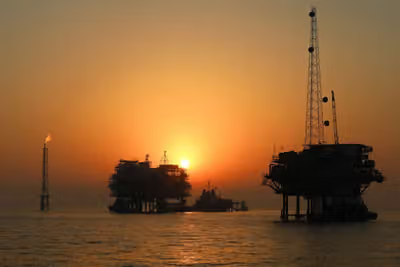


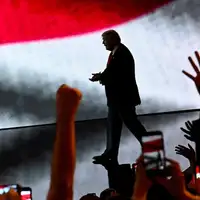

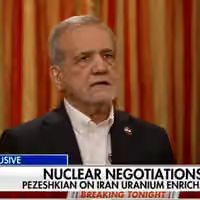
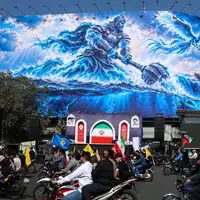
US President Donald Trump’s rejection of Iran’s proposal for a swift reopening of the Strait of Hormuz may say less about Washington’s opposition to a deal than about its changing assessment of Tehran’s most important bargaining chip.
Trump publicly rejected the proposal on Saturday. The plan would have reopened the strait within seven days and resumed nuclear negotiations in return for measures including lifting the US naval blockade of Iranian ports.
The president plainly wants normal shipping restored, but he appears unwilling to pay the price Tehran is asking for it.
Iranian officials have repeatedly described Hormuz as a strategic asset and a source of leverage. Disruption of the narrow waterway affects energy markets, shipping costs and inflation far beyond the region.
That importance has not disappeared. What may be changing is Iran’s ability to convert that disruption into immediate political concessions from Washington.
The US military has spent months trying to reduce Iran’s ability to attack shipping while expanding escorts for commercial vessels. CENTCOM commander Adm. Brad Cooper said last week that US forces had facilitated the transit of more than 2,000 commercial vessels and more than one billion barrels of crude oil through the strait.
The operation has not restored normal shipping, but it has allowed substantial volumes of oil to move without an agreement with Tehran, helping Washington turn Hormuz from an Iranian energy veto into what it increasingly appears to regard as a manageable risk.
Why Trump can wait
If Washington believes it can keep significant quantities of oil moving without Tehran’s cooperation, there is less incentive to lift the naval blockade and ease economic pressure simply to secure the full reopening of the strait.
Trump’s rejection also comes as his administration is increasing rather than reducing that pressure. At the UN General Assembly this week, he called for Iran’s “complete economic isolation” and said he expected an agreement after the November midterm elections
The administration has expanded restrictions on Iranian banking and aviation. Iranian airlines have lost access to several international destinations, while companies servicing sanctioned Iranian carriers face the threat of secondary US sanctions.
Trump’s rejection therefore suggests Washington believes time is, for now, working more in its favor than Tehran’s.
Hormuz still matters
None of this means Iran’s Hormuz strategy has failed.
Keeping commercial traffic moving requires a major US military operation, while shipping and insurance costs remain elevated and the threat of attacks has not disappeared. Washington is paying a price for managing the disruption.
But the balance may have shifted. Tehran still views reopening Hormuz as something it can exchange for relief from economic and military pressure. Washington appears to believe it has reduced the costs of disruption enough that it does not yet need to meet Iran’s asking price.
Seen that way, Trump’s “no” becomes more significant. He has not necessarily rejected diplomacy: contacts through mediators continue, and Iran says it is still awaiting Washington’s formal response to its proposal. US officials have also described indirect discussions as continuing.
What Trump has rejected, for now, is Tehran’s price for ending the Hormuz crisis.
Iran still holds the Hormuz card. Washington’s calculation appears to be that it no longer has to pay as much to take it off the table.
Relatives of protesters killed during Iran’s January crackdown challenged President Masoud Pezeshkian’s portrayal of the unrest as foreign-driven, saying their family members were unarmed and had no links to foreign governments, after his UN General Assembly address on Wednesday.
Pezeshkian accused protesters of being incited by the United States and Israel and receiving weapons to disrupt Iran’s security. He also defended system supporters who took to the streets during the unrest.
The sisters of Sina Kazemi, Emad Mavedatipour and Babak Sadeghi Mohseni responded on X, saying their brothers were unarmed when they were killed on January 8 or 9 and were not acting on behalf of any foreign government.
“I testify that my brother was unarmed when he was killed by the Islamic Republic of Iran’s forces on January 8, 2026,” Kazemi’s sister wrote. “He was not acting on behalf of any foreign government. I seek truth, justice, and accountability.”
Mavedatipour’s sister posted the same account of her brother, saying he was unarmed when he was killed on January 9 and denying that he acted for a foreign government.
Sadeghi Mohseni’s sister said her brother was unarmed when he was killed on January 8 and also called for “truth, justice, and accountability.”
The sister of Ahmad Khosravani, a 21-year-old professional basketball player, said her brother was completely unarmed when Iranian forces killed him on January 9.
“He was not acting on behalf of any foreign government,” she wrote. “They shot him directly in the heart.”
Fathers challenge Pezeshkian
Two other bereaved fathers challenged the government's account in separate video messages sent to Iran International.
The father of Erfan Abdipour, an architecture student who also worked at his brother’s restaurant, called on Pezeshkian to publish evidence if authorities had any showing that his son had received military training or carried a weapon.
“My request is that if you have evidence showing that he received military training, was instructed or had a weapon, or anything else that night, publish it,” Abdipour’s father said.
Abdipour had gone to protest on the night he was killed, his father said, questioning what his son could have been trying to seize in an area he described as having no military barracks or security facility.
The father of Pouria Bagheri separately rejected the government's explanation for the scale of the killings.
“I categorically reject the overall argument that such widespread killing was foreign actors work.”
Bagheri’s father questioned why authorities shut down the internet and electricity and said that security agents removed surveillance cameras from shops. He also asked why officials brought government supporters onto the streets two days later if foreign-backed armed groups posed the extensive threat described by authorities.
“Why did you bring your own supporters into the streets two days later? With what guarantee?” he said. “Was it not because you were in control?”
January crackdown
The protests began on December 28, 2025, following a sharp fall in the rial and rising prices before spreading across all 31 provinces and developing into a broader challenge to the Islamic Republic.
The deadliest violence came on January 8 and 9. Amnesty International said verified videos and eyewitness testimony showed security forces using rifles and shotguns against protesters, frequently firing at heads and torsos.
Iran International’s Editorial Board concluded in January that more than 36,500 people were killed by security forces on January 8 and 9 after reviewing classified government documents, field reports and accounts from medical workers, witnesses and victims’ families.
The UN Fact-Finding Mission on Iran later said security forces used lethal force against protesters and bystanders, including children, who posed no imminent threat of death or serious injury.
Iranian authorities initially put the death toll at 3,117. The government subsequently published 3,038 names, according to the UN mission, which said it believes the actual number may be significantly higher.
US President Donald Trump cited increasingly higher death tolls from Iran’s January protest crackdown in successive remarks, putting the number at 32,000 on February 20, 42,000 in later comments and subsequently 45,000.
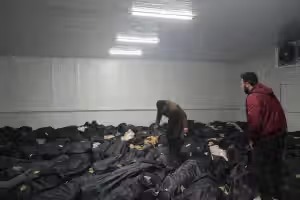
Iran says a negotiated settlement remains the only way out of the war and is awaiting a formal US response to its latest proposal, despite President Donald Trump saying he has rejected Tehran’s offer.
Iranian Foreign Minister Abbas Araghchi said Sunday that Tehran had seen an initial reaction from Trump but was still waiting for Washington’s formal response through mediators before deciding its next step.
“Only a negotiated solution can get them out of this deadlock. That is our position,” Araghchi said, according to Iranian state media. He reiterated that reopening the Strait of Hormuz depended on Iran’s conditions being met.
Trump said Saturday that he had rejected Iran’s proposal, which envisaged a phased process involving relief from the US blockade and economic pressure and the reopening of Hormuz.
The exchange leaves diplomacy in an unusual position: Washington says the Iranian offer is unacceptable, while Tehran says it is still awaiting a formal answer through the diplomatic channel.
The proposal emerged from contacts around the UN General Assembly in New York, where Trump called for Iran’s “complete economic isolation” while saying he expected an agreement after the November 3 US midterm elections.
Iranian President Masoud Pezeshkian has said Tehran would prefer an agreement before the vote. But Pezeshkian has also stressed how little trust remains between the two sides.
“We have talked with them four or five times already,” he told Al Jazeera. “We no longer trust these talks, because however much we negotiate, after a while they start attacking, imposing sanctions and doing the things they have done so far.”
US Treasury Secretary Scott Bessent said Sunday that Turkey and Oman had stopped Mahan Air flights, the UAE had halted flights by Iranian airlines and major banks in Turkey and the UAE had stopped transactions with Iran following US pressure.
Bessent thanked the governments of Turkey, Oman, the UAE and the UK for their cooperation, saying the campaign was “delivering results.” The measures further restrict Iran’s access to regional aviation and banking networks as the rial trades at record lows.
China, meanwhile, has sought to keep diplomacy alive. President Xi Jinping told Trump last week that Beijing supported a return to the June Islamabad agreement aimed at ending the war and reopening Hormuz.
For now, the central dispute remains one of sequencing. Iran wants relief from the US blockade and economic pressure before relinquishing its leverage over Hormuz. Washington wants the waterway reopened on acceptable terms before offering Tehran the relief it seeks.
Iran on Saturday expanded limited imports of South Korean home appliances through its border trade system, five years after Ali Khamenei ordered restrictions on products from LG and Samsung.
Iran’s Trade Promotion Organization said the change applies to goods brought in by border carriers, seafarers and border cooperatives, while imports of major appliances through normal commercial channels remain prohibited.
The clarification came after Iranian media initially reported a broader lifting of restrictions on Samsung and LG.
Rather than reopening commercial imports, the measure expands a narrow exception tied specifically to Iran’s border economy.
It allows more trade and income to flow through border areas without formally abandoning a policy associated directly with Khamenei and the state’s longstanding protection of domestic manufacturers.
Destitute and discontent
Poverty and scarce employment have pushed even children and teenagers in western border regions into kolbari, the hazardous practice of carrying goods on one’s back across the border.
Allowing more goods through cooperatives and border traders could therefore provide a limited economic pressure valve.
Officials have not described the measure as an attempt to reduce discontent, but the decision to channel the exception through mechanisms designed around border employment gives it a distinct geographic focus.
Economic deprivation in Iran’s border regions also overlaps with longstanding political and security tensions. Kurdish-majority areas along the Iraqi border, where kolbari is widespread, have repeatedly seen deadly crackdowns and armed confrontations with security forces.
Protectionism
The move also comes as the industry the ban was designed to protect is itself struggling. Five years later, the objectives of the protectionist policy remain elusive.
Refrigerator production has fallen 25% year-on-year, television production 36% and washing-machine output 42%, according to the Statistical Center of Iran.
Home-appliance prices in August were 117% higher than a year earlier, while Iranian producers still import roughly $1.2 billion of components annually for four major appliance categories.
Protection has also reduced consumer choice, with the burden falling unevenly. Foreign appliances have continued to reach more affluent Iranians through unofficial channels, while lower-income consumers have fewer alternatives.
With Samsung and LG outside the normal import network, access to authorized sales, spare parts and after-sales service has also become more difficult.
Who bears the cost?
The pattern resembles Iran’s automobile industry, where imports were banned or severely restricted for years while domestic producers were shielded from foreign competition.
Khamenei himself acknowledged in 2022 that domestic car quality was poor and that public complaints were justified. Subsequent attempts to reopen imports have remained tightly controlled.
Here too, the burden has been uneven. Lower-income consumers have fewer alternatives, while wealthier Iranians have greater ability to obtain imported and luxury vehicles through more expensive channels.
The result is a recurring pattern in Iran’s protected industries. Import restrictions create scarcity and opportunities for intermediaries while imposing the greatest costs on consumers with the fewest resources.
The latest appliance measure loosens one part of that system without dismantling it: a narrow opening at the borders, while the protectionist structure that produced many of the distortions remains intact.
The problem facing Iran’s oil industry is not just sanctions or a shortage of investment. It is a question of governance: who makes decisions, who signs contracts, who receives the money and, ultimately, who is accountable?
Iran’s oil industry is more than a collection of wells, pipelines and refineries. What turns those assets into an industry is an integrated chain of reservoir expertise, production planning, engineering, safety, financing, sales and accountability.
That chain has been badly fragmented. In the past two decades, especially under President Mahmoud Ahmadinejad, projects have been handed to military institutions, shares and assets transferred to pension funds and quasi-state bodies, and even oil cargoes used to cover budget shortfalls in organizations outside the Oil Ministry.
Unless a future Iran addresses that fragmentation, billions of dollars in investment and the most advanced technology could simply reproduce the old disorder on a larger scale.
From privatization to quasi-state ownership
The Ahmadinejad government accelerated the sale of state assets in the name of privatization, but much of the process did not produce an independent private sector.
Academic Kevan Harris has described the process as a form of pseudo-privatization: assets and privileges moved from one part of the state to pension funds, foundations, affiliated companies and military institutions without producing genuinely competitive markets, transparent ownership or public accountability.
In oil and gas, the Oil Ministry and its subsidiaries lost some of their practical authority over contractors, projects, procurement and, at times, the sale of oil.
One of the starkest examples was the decision to give oil cargoes to Iran’s police force to sell. Esmail Ahmadi-Moghaddam, then commander of Iran’s police, acknowledged in 2014 that during Ahmadinejad’s presidency the force had been given two oil cargoes to sell, with some of the proceeds intended to cover a salary shortfall.
The budgets of the police, ministries or pension funds should be recorded in the state budget and paid through the treasury, not financed by giving individual institutions a company, refinery, oilfield or oil cargo. Such arrangements erase the boundaries between owner, policymaker, client, contractor and seller.
Khatam al-Anbiya: one name, a network of interests
Khatam al-Anbiya Construction Headquarters is the economic and engineering arm of the Islamic Revolutionary Guard Corps, but it should not be understood as a conventional, integrated company.
It serves as an umbrella over numerous holdings, affiliated companies and subcontractors. Reuters reported in 2015 on the extensive network of companies linked to the IRGC and the difficulty of identifying their ultimate owners. A “contract with Khatam,” therefore, did not necessarily mean a clear chain of command, auditing and responsibility.
Under Ahmadinejad, the network received major contracts without effective competition. In 2011, Reuters reported that two pipeline contracts, each worth $1.3 billion, had been awarded to Khatam. Development of phases 15 and 16 of the South Pars gas field had also been awarded to the organization.
The result was multiple centers of power, allowing projects to be divided among different entities and responsibility to become diluted along the chain.
The consequences were technical as well as financial. Oil production requires reservoir engineers, drilling specialists, safety personnel and procurement departments to work under common standards and a coherent system.
Fragmenting projects among institutions with different missions and unclear accountability also fragments expertise and decision-making.
‘One sheikh in Bahrain, forty sheikhs in Iran’
I saw something of this problem during my own time working for Shell in the Netherlands.
I once asked the Dutch manager responsible for Iran why Shell had ended its activities in the country. I remember the essence of his answer like this: “We went to Bahrain because there we dealt with one sheikh; in Iran, we had to deal with forty sheikhs.”
Khatam might formally be the contracting party on a project, he explained, but another unit within the same network could then say it was responsible for security along part of the pipeline and demand a separate payment.
His point, as I understood it, was that instead of one accountable client, a foreign company could find itself dealing with multiple centers making separate demands for payment.
This is my recollection of an unrecorded conversation, not documentary evidence explaining Shell’s departure from Iran. The public record points principally to sanctions and political pressure: Reuters reported in 2008 that Shell withdrew from a planned Iranian gas project amid US pressure.
But sanctions and domestic disorder are not mutually exclusive explanations. Sanctions raised the cost of entering Iran; multiple centers of power raised the cost of staying.
The conversation illustrated the problem: when the contractual counterparty is known but the number of parties making demands is not, neither the true cost of a project nor responsibility for it can easily be calculated.
The Baku lesson
Another experience may offer a useful lesson for Iran’s future.
While working for BP, I travelled to Baku on a short assignment concerning contractor-selection models. An Azerbaijani colleague described how the country had used foreign partnerships after the collapse of the Soviet Union to modernize technology and develop its domestic workforce.
Azerbaijan did not hand its oil industry to BP. Under a production-sharing agreement signed in 1994, BP became operator of the Azeri, Chirag and deepwater Gunashli fields, while Azerbaijan’s state oil company SOCAR remained the principal domestic partner.
More important for Iran was the emphasis on local capacity. Training technicians, developing local suppliers and progressively replacing foreign personnel with Azerbaijani workers became part of the project. BP says it now directly employs around 2,380 Azerbaijani citizens, while Azerbaijanis have made up around 90% of its professional workforce in the country.
The lesson is not that Iran should hand management of its oil industry to BP. It is that an international operator can be selected for a particular project, targets set for training and localization, and domestic personnel left with greater technological knowledge and experience.
An architecture for Iran’s oil industry
Rebuilding Iran’s oil industry should begin with rebuilding its institutions, not redistributing the spoils.
Oil and gas should remain public assets. Parliament should establish the legal and financial framework, the government determine energy policy, and an independent professional regulator oversee licensing, safety, reservoir protection and environmental standards.
The referee must also be separated from the player. The National Iranian Oil Company should operate as a commercial and technical enterprise rather than simultaneously acting as regulator, client, partner, supervisor and arbiter of disputes.
Military and non-specialist institutions should gradually be removed from the industry. The process should be legal, audited and phased so existing projects are not abandoned.
Specific fields, refineries and infrastructure projects could instead be offered through transparent international tenders. Foreign companies could compete to operate or participate in individual projects, but no company or country should acquire a monopoly over the industry.
Contracts should be time-limited and contain measurable requirements for costs, production, environmental standards, Iranian employment and technology transfer, with extensions dependent on independent assessments rather than political connections.
Contracts, ownership, payments, costs, production and project revenues should generally be public, with auditing independent of the Oil Ministry, NIOC and contractors.
Iran will also have to reassemble its human capital. Specialists inside the country, Iranian oil professionals abroad and a younger generation of engineers should be connected through a national program of training and succession. Foreign contractors should be required to build Iranian counterpart teams, not foreign islands inside the industry.
Rebuilding trust
Iran will need foreign investment and technology to restore production and modernize its refineries. But the need for capital should not be confused with surrendering sovereignty.
A homeowner can hire international architects and contractors without handing them ownership of the house. A future Iranian government can similarly benefit from competition among foreign companies while keeping ownership of resources, policymaking and ultimate authority in Iranian hands.
Iran’s oil can become a national asset again only when every contract has an accountable party, every project an auditable account and every decision a clearly defined legal authority.
The answer to the problem of “forty sheikhs” is not to create a new sheikh, Iranian or foreign. It is to build a single, transparent and professional system in which no commander, foundation, ministry or foreign company stands above the law.