Iraq PM says Iran blocking Iraqi tankers from Hormuz
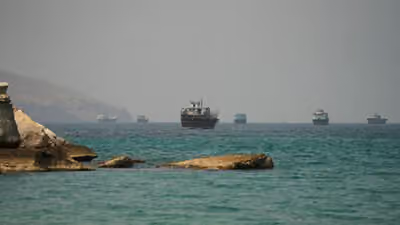
Iraqi Prime Minister Ali al-Zaidi said Monday that Iran has not allowed Iraqi tankers to pass through the Strait of Hormuz, even though Baghdad considers Tehran a regional partner.
“We spoke at length. The decision emerging from Iran is firm,” al-Zaidi told the New York Times. “Their goal is to drive up global oil prices. This is not about being close to them or not. Regardless, they want to create pressure.”
Al-Zaidi also said Iraq had lost about $60 billion in revenue since the Iran-US war began. Earlier in the interview, he said the war had cut Iraq’s monthly oil export revenue by 60% as shipping through the Strait of Hormuz was choked off.
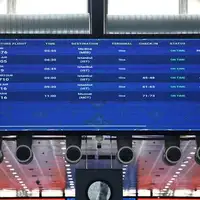
File photo shows a flight board displaying flight information after flights resumed at Imam Khomeini International Airport, amid a ceasefire between U.S. and Iran, in Tehran, Iran, April 25, 2026.
Travel to and from Iran is becoming harder as major foreign airlines, including the flag carrier of Turkey, a key affordable hub for Iranians, suspend services and new US sanctions threaten remaining international routes operated by Iranian carriers.
For Iranians visiting relatives abroad, returning home has become increasingly uncertain. For those living outside the country, reaching parents, children and other loved ones in Iran is becoming just as difficult.
The disruption has left travelers trying to determine which flights are still operating, whether future bookings can be relied upon and what alternatives remain if they cannot fly.
US Treasury Secretary Scott Bessent said Monday that US sanctions would effectively shut Iranian airlines out of international operations from September 23, warning foreign companies against providing them with fuel, ground services or ticket sales.
“All the Iranian airlines will be shut down around the world,” Bessent told CNBC. “If they land, you cannot provide them with fuel, you cannot provide them with landing services, you cannot sell them tickets, or you will be knocked out of the dollar system.”
The warning does not itself close foreign airspace to Iranian aircraft, but raises the risk of US penalties for companies and financial institutions that continue doing business with sanctioned carriers. The practical impact will depend on how governments, airports and service providers respond.
Iran International contacted multiple international airlines and four travel agencies specializing in travel to Iran to establish what options remain for passengers.
Which flights are still available?
Options are increasingly limited and can change at short notice.
Turkish Airlines has suspended all flights to Iran until at least March 2027, a company representative told Iran International by phone, adding that no services are currently scheduled before then and there is no guarantee they will resume in March.
Emirates said it is no longer operating flights to Tehran, while Lufthansa and Austrian Airlines confirmed that flights to and from Iran are suspended until at least October 24, 2026.
Both Lufthansa and Austrian Airlines said they were monitoring the situation and could not guarantee that flights would resume after that date.
Qatar Airways told Iran International that its flights to Iran are currently suspended because of airspace restrictions. Services are tentatively scheduled to resume on November 29, but the airline said that date could change depending on conditions.
Four travel agencies specializing in Iran travel said they were also unable to book operating services on airlines from Russia, China and Oman, as well as Turkey’s Pegasus Airlines and carriers serving routes from Armenia, at the time they spoke to Iran International.
One agency said it had seen Pegasus continue to accept some bookings for Iran routes that were later cancelled at short notice, forcing passengers to change their travel plans.
Iran International found some Pegasus itineraries between Turkey and Iran displayed on booking platforms from November 29, but the listings do not guarantee that the flights will operate.
Iran also did not appear as a destination option in searches on Flydubai’s or Expedia’s booking systems. Other routes checked by Iran International produced no available itineraries before March 2027.
Those searches provide only a snapshot of what booking platforms were displaying at the time and do not establish when international services will resume or whether other routes may remain available.
How are people getting to and from Iran?
The travel agencies, which requested anonymity, said their businesses had been severely affected as passengers looked for alternatives to flying directly into Iran.
They said some travelers arriving from Western countries were flying to Turkey and then taking a roughly 17-hour bus journey to Van, near the Iranian border.
From there, travelers could cross into Iran and continue by road. The agencies estimated that reaching Tehran from Van could take another 16 to 17 hours by bus or car.
That can mean more than 30 hours on the road alone, excluding the initial flight, border crossings and waiting times.
The agencies said Mahan Air had already stopped operating from Turkish airports after losing access to ground-handling services.
The disruption followed the US Treasury’s September 8 sanctions package, which designated all Iranian airlines and also targeted three Turkey-based companies accused of providing services to Mahan Air. Treasury described the 27 sanctioned carriers as Iran’s remaining airlines not already covered by US sanctions.
Other Iranian carriers were still operating through Turkish airports as of September 21, the agencies said, but they expected those services to come under increasing pressure after September 23 as companies assessed the risk of continuing to service sanctioned aircraft.
What changes on September 23?
The US Treasury sanctioned 36 targets connected to Iran’s aviation sector on September 8, including 27 Iranian airlines. Treasury accused the aviation sector of being used to transport weapons, military personnel and illicit cargo.
Bessent said on September 21 that the restrictions would effectively shut Iranian airlines out of international operations from September 23 by targeting the foreign services they rely on.
The sanctions do not automatically prohibit Iranian aircraft from entering every country or close foreign airspace to them. But airlines need access to airports, fuel, ground handling, ticketing, banking and other services to operate internationally, giving Washington significant leverage over their ability to continue flying abroad.
Some countries have already moved to restrict Iranian carriers.
Flights by US-sanctioned Iranian airlines to Georgia stopped from September 21 after the affected carriers operated their final services the previous day, according to Georgian media. Georgia’s Civil Aviation Agency had earlier said it takes US and European sanctions mechanisms into account when granting foreign airlines access to its aviation market.
Iraq is moving even earlier than Bessent’s September 23 deadline. Two Iraqi government sources told AFP that Baghdad would suspend flights operated by Iranian airlines from dawn on Tuesday, September 22.
One official said Iraq would implement the restriction in accordance with the US Treasury decision and warned that countries failing to comply risked sanctions. A second source confirmed the decision.
The suspension could particularly affect Shiite pilgrims travelling from Iran to the Iraqi holy cities of Najaf and Karbala, as well as families and other passengers who rely on flights between the two countries.
For travelers, the central problem is that schedules displayed today may offer little certainty about what will actually operate in the coming weeks. With foreign airlines withdrawing and Iranian carriers facing new barriers abroad, travelling both into and out of Iran is increasingly dependent on a shrinking number of routes — or long overland journeys through neighboring countries.
File photo shows a group of Iranian Shia clerics wearing Revolutionary Guard uniforms.
Iran’s Revolutionary Guards warned they would widen the battlefield and use new weapons if US attacks resume, as two tankers were hit in the Strait of Hormuz and Qatar said it seeks a short-term deal aimed at reviving talks between Tehran and Washington.
The warnings came as President Masoud Pezeshkian prepared to travel to New York for the UN General Assembly and regional mediators stepped up contacts with both sides.
Iran would change the “geography of the war” if it came under renewed attack, Revolutionary Guards spokesperson Hossein Mohebbi said Monday, warning that Tehran would also use weapons it has not yet deployed and strike new targets.
“If a new aggression occurs, we will certainly change the weaponry and the geography of the war,” Mohebbi said.
“We will introduce new weapons with new capabilities into the battlefield, and the world will be astonished,” he added.
Mohebbi said Iran was prepared for a prolonged conflict and that its targets in another round would not necessarily be the same as before.
Iran’s armed forces also pledged in a joint statement to make the United States, Israel and their allies “taste the bitterness of further defeats,” while Army Commander Amir Hatami said the military remained on full alert.
New ship attacks in Hormuz
The threat came with tensions still high around the Strait of Hormuz, where two tankers were hit in separate incidents within hours on Monday.
An inbound tanker was struck by an unknown projectile, leaving two crew members with minor injuries, according to the United Kingdom Maritime Trade Operations. The vessel remained under its own power and continued toward its next port.
UKMTO later reported that an LPG tanker leaving the strait had been hit by debris from unknown projectiles. Its crew was safe and no environmental damage was reported. Authorities were investigating both incidents.
Shipping through Hormuz remains far below pre-war levels. Seventeen commodity vessels crossed the waterway over the weekend, down from 37 a week earlier, according to shipping data cited by Reuters. Before the war, about 125 large commercial vessels typically transited the strait each day.
Qatar seeks short-term deal to revive talks
Qatar, meanwhile, said mediators were exchanging proposals between Iran and the United States in an effort to secure a short-term agreement that could reopen negotiations.
Foreign Ministry spokesperson Majed Al-Ansari said Qatari mediators had been discussing proposals for nearly two weeks and traveling between capitals in search of a formula acceptable to both sides. Doha had also received assurances from US officials that Washington wanted an agreement, he said.
Pakistan has also remained involved in efforts to reduce tensions. Interior Minister Mohsin Naqvi met his Iranian counterpart Eskandar Momeni in Tehran on Monday, weeks after Naqvi and Pakistan’s army chief Asim Munir visited Iran as part of Islamabad’s mediation efforts.
Iranian media said the latest visit was focused on bilateral relations and that Naqvi was not carrying a US message. Iran’s Foreign Ministry had earlier said it was unaware of any specific proposal being brought by the Pakistani minister.
Pezeshkian is due to leave for New York on Tuesday for the UN General Assembly, where the Iran-US conflict is expected to feature prominently in diplomatic contacts.
Washington tightens pressure
Washington showed no sign Monday of easing economic pressure while those contacts continued.
Treasury Secretary Scott Bessent said Iranian airlines would effectively be shut out of international operations from September 23 by threatening sanctions against airports and companies that provide them with fuel, landing services or ticket sales.
“If they land, you cannot provide them with fuel, you cannot provide them with landing services, you cannot sell them tickets, or you will be knocked out of the dollar system,” Bessent told CNBC.
The effects were already spreading. Turkish Airlines told Iran International it had suspended all flights to Iran until at least March 2027, while Iraqi government sources said Baghdad would stop Iranian airlines from operating in the country in line with the US measures.
Pezeshkian’s arrival in New York on Tuesday will give mediators another opportunity to test whether the proposals being exchanged can produce a path back to negotiations. The US airline measures are due to take effect the following day.
An illustrative image of a fetus in an amniotic sac.
An informal market for frozen embryos appears to be emerging on Iranian social media and online marketplaces, where sellers are advertising them for cash outside the country’s donation system, local media reported on Monday.
One advertisement offered eight frozen embryos for one billion rials (about $4400), although it was unclear whether the price applied to each embryo or the entire group, Jahan-e Sanat newspaper reported on Monday.
Another seller advertised 18 frozen embryos and asked prospective buyers to suggest a price. Similar advertisements for embryos, eggs, sperm and surrogacy services have appeared on Instagram and Telegram.
The advertisements directed prospective buyers away from the original platform to continue discussions elsewhere, with little information about the people offering the embryos or how any transfer would take place.
Iranian law provides for donation, not direct sales
Iranian legislation passed in 2003 permits embryo donation to infertile married couples under specified conditions, with implementing regulations adopted the following year also covering frozen embryos.
Under those regulations, embryo donation is defined as the voluntary and free transfer of one or more embryos to authorized infertility treatment centers. Written consent from the couple providing the embryo is required, and transfers must take place through authorized specialist centers.
A newborn baby rests in a hospital neonatal care unit in Iran.
Prospective recipients must apply jointly as a married couple to a court and meet requirements covering infertility, legal capacity, health, drug use and Iranian citizenship.
The regulations therefore provide a formal route for donating frozen embryos but do not define them as commodities that can be sold directly between individuals.
Sociologist points to poverty and intermediaries
The online advertisements could reflect a combination of financial hardship among potential sellers and the desperation of couples struggling with infertility, sociologist Alireza Sharifi-Yazdi told Jahan-e Sanat.
“Behind this are a number of digital intermediaries who operate on Instagram, Telegram, and similar platforms and exploit the poverty and financial vulnerability of families, particularly women, as well as the desperation and confusion of infertile couples,” Sharifi-Yazdi said.
He distinguished regulated infertility treatment from an informal market in which intermediaries seek to profit from reproductive services.
Some infertile couples may turn to such channels after unsuccessful treatments including intrauterine insemination, or IUI, and in vitro fertilization, or IVF, he said.
Lengthy adoption procedures and the cost and waiting times associated with infertility treatment can also make unofficial alternatives appear easier, Sharifi-Yazdi added.
The financial circumstances of people offering embryos, he said, are another part of the picture, with worsening poverty potentially making them more susceptible to intermediaries seeking to profit from their situation.
Questions over oversight and identity
Sharifi-Yazdi also raised concerns about the possible consequences for children born following informal embryo transactions, including questions about their genetic parentage and legal status.
Modern DNA testing could allow children conceived through such arrangements to discover that the people raising them are not their genetic parents, potentially creating psychological and legal complications later in life, he argued.
Iran also lacks a transparent centralized national system through which people seeking to donate embryos without payment can readily register and navigate the legal process.
Iran’s economic crisis and rising currency costs are making essential safety equipment harder for coal mines to obtain, increasing risks for workers already operating in dangerous conditions, labor news agency ILNA reported on Monday.
Rising foreign exchange rates, sanctions and difficulties obtaining specialized equipment have become major challenges for the industry, where many mines still rely on traditional or semi-mechanized methods, said the report.
“There is an inverse relationship between the exchange rate and the provision of equipment; the more expensive foreign currency becomes, the less financial capacity employers have to provide safety,” Ebrahim Rahimian, executive secretary of the Tabas Workers’ House, told ILNA.
Many components used in mine monitoring and safety systems are imported and have no domestically produced alternatives, Rahimian said.
Employers, he added, still have options to obtain equipment if they prioritize worker safety, including raising the necessary funds to purchase imported products at market exchange rates.
Deadly record in Iran’s mines
Workplace accidents, according to ILNA, remain a persistent problem in Iran, with coal mines among the most dangerous workplaces because of the conditions involved in underground extraction.
A collapse at the Parvadeh Tabas Coal Company mine killed a worker on April 29 in one of the latest fatal accidents.
A methane explosion at a coal mine in Tabas killed 53 workers in September 2024, drawing renewed attention to safety standards in Iran’s mining industry.
The economic pressures affecting mine operators have intensified as the rial has lost value, making imported machinery and specialized equipment more expensive.
Sharp currency fluctuations have also complicated financial planning for businesses as Iran contends with sanctions and persistent inflation.
Underground mines need advanced monitoring
Coal miners working underground require more than personal protective equipment such as boots and gloves, Rahimian said.
Advanced systems, he added, are needed to continuously monitor gas concentrations and pressure in layers above underground workings, providing information directly connected to workers’ safety.
Workers at mining companies in Tabas, Kerman, Zarand and Jiroft continue to operate using traditional or semi-mechanized methods, with only one company providing an exception, according to Rahimian.
Training is another essential part of reducing the dangers workers face underground, particularly in preparing them to respond to emergencies, he said.
“Continuous training and retraining is the minimum right of the workforce and must not be stopped at any cost.”
The combination of aging mining practices, costly imported safety technology and mounting economic pressure has left workers exposed to hazards that previous deadly accidents have already demonstrated can carry severe consequences.
US President Donald Trump weighed military action, economic pressure and a possible deal with Iran, while Iranian leaders paired diplomatic overtures with warnings over the Strait of Hormuz on Sunday.
Trump told Fox News he was in a “deciding mode” over Iran and expected “very big things” soon. The network described the options under consideration as military action, allowing economic pressure to continue or reaching an agreement.
“My question is, if and when, do I blow the entire nation up? They better behave,” Trump told Fox News.
Trump also said he would probably be open to meeting Iranian President Masoud Pezeshkian during the UN General Assembly, leaving diplomacy on the table despite his warnings.
Hormuz remains central
Iranian officials continued to present the Strait of Hormuz as a source of leverage. Parliament Speaker Mohammad Bagher Ghalibaf responded to a September 17 JPMorgan oil-market report that said the bank no longer had a baseline view for how the conflict would end.
“This endgame cannot be modeled. It will be opened, and Iran's hand is already on the lever,” Ghalibaf wrote on X.
JPMorgan said assumptions underlying its earlier outlook had been overtaken by events and that it could no longer confidently model an endgame.
“For the first time since the start of the Iran conflict, we don't have a baseline view. We simply don't know how to model the endgame,” the report said.
Pressure around the waterway was also visible in maritime traffic. US Central Command said its forces had redirected 109 commercial vessels to ensure compliance by September 20.
A separate maritime security update from the UKMTO-linked Joint Maritime Information Center recorded four tankers involved in attacks or suspicious activity near the Strait over the past week. Two cases were recorded on September 17 and another two on September 18.
The economic consequences remain significant for Persian Gulf producers. QatarEnergy chief executive Saad al-Kaabi said normal gas operations could resume within weeks of the Strait reopening, but warned that disruption to shipments of critical equipment could delay the country’s expansion plans.
Iran keeps diplomatic channel open
Iranian officials also emphasized their willingness to negotiate. President Masoud Pezeshkian said Iran did not want war and considered conflict harmful to both the country and the wider world, but would not yield to force or intimidation.
“We do not want war and conflict and consider them harmful not only to the people of our country but to the world. At the same time, we will in no way yield to force and bullying,” Pezeshkian said.
Meanwhile, Foreign Minister Abbas Araghchi left for New York with a diplomatic delegation to attend the UN General Assembly, state media reported. Araghchi made a brief stop in Qatar before continuing to New York.