President Masoud Pezeshkian was also preparing to travel to New York for the UN General Assembly, putting renewed diplomatic activity alongside intensifying US economic pressure and Iranian warnings of further military action.
The military warnings, diplomatic contacts and new economic measures unfolded with commercial traffic through the Strait of Hormuz sharply reduced and a tanker struck by an unknown projectile while entering the waterway.
Revolutionary Guards threaten wider response
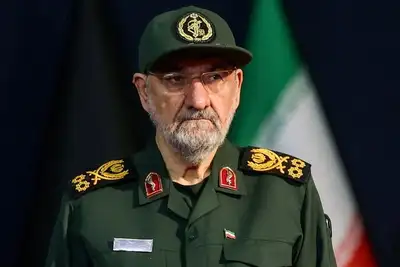
A renewed attack on Iran would change both the scale of Tehran’s response and the geographical reach of the conflict, Revolutionary Guards spokesperson Hossein Mohebbi said.
“We will introduce new weapons with new capabilities into the battle, and the world will be astonished,” Mohebbi said, adding that Iran had identified targets that had not previously come under attack.
Mohebbi said the Revolutionary Guards had no formal or informal contact with Washington and would fight US forces if required, but had no role in diplomacy.
Iran’s armed forces separately pledged in a joint statement to make the United States, Israel and their allies “taste the bitterness of further defeats.” Army Commander Amir Hatami said the military remained on full alert.
The Revolutionary Guards also said they had shot down another US MQ-1 drone over the Strait of Hormuz. The force has announced several drone interceptions over the waterway in recent days but has provided limited supporting evidence.
Pezeshkian heads to UN, mediators seek talks
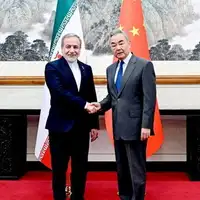
Pezeshkian was due to leave for New York on Tuesday to attend the UN General Assembly, state news agency IRNA reported, with regional governments continuing efforts to reopen negotiations between Iran and the United States.
Mediators were exchanging proposals and traveling between capitals in an attempt to narrow differences between Washington and Tehran, Qatari Foreign Ministry spokesperson Majed Al-Ansari said.
Pakistan has also been involved in mediation, with Interior Minister Mohsin Naqvi due to visit Tehran on Monday. The Revolutionary Guards-affiliated Tasnim News said Naqvi was not carrying a message between Iran and the United States.
Neither Washington nor Tehran has publicly indicated that an agreement is close.
US targets Iran’s international air links
Washington, meanwhile, is preparing to use secondary sanctions to cut Iranian airlines off from services needed to operate abroad.
All Iranian airlines will be shut out of international operations from September 23 through the threat of sanctions on companies providing aviation services, Bessent told CNBC on Monday.
“When Iranian airlines land at an airport, you cannot provide them with fuel, you cannot provide them with landing services, you cannot sell them tickets, or you will be knocked out of the dollar system,” Bessent said.
Bessent spoke after talks with Chinese Vice Premier He Lifeng on Sunday night and said Chinese officials had been “very engaged” in Washington’s economic pressure campaign against Iran.
The United States was also holding positive discussions with Chinese financial authorities, including People’s Bank of China Governor Pan Gongsheng, over compliance with US sanctions on Iran, Bessent said.
Pressure builds around Hormuz
Economic disruption was also visible around the Strait of Hormuz, where a tanker entering the waterway was struck by an unknown projectile on Monday, leaving two crew members with minor injuries, the United Kingdom Maritime Trade Operations said.
The vessel continued toward its next port under its own power, with no environmental damage reported.
Commercial shipping through the strait has fallen sharply. Seventeen commodity vessels crossed the waterway over the weekend, compared with 37 a week earlier, according to shipping data cited by Reuters.
Before the war began on February 28, about 125 large commercial vessels typically passed through the Strait of Hormuz each day, Reuters reported.
Monday’s developments left military preparations, diplomatic contacts and economic pressure advancing on parallel tracks, with mediators seeking a return to negotiations and both Washington and Tehran preparing for the possibility that the conflict will continue.