Iranian airlines face global shutdown from Sept. 23, Bessent says

All Iranian airlines will be shut out of international operations from September 23 through the threat of US secondary sanctions on companies providing them with aviation services, Treasury Secretary Scott Bessent told CNBC on Monday.
“When Iranian airlines land at an airport, you cannot provide them with fuel, you cannot provide them with landing services, you cannot sell them tickets, or you will be knocked out of the dollar system,” Bessent said.
The comments came after Bessent concluded talks with Chinese Vice Premier He Lifeng on Sunday night.
Bessent said Chinese officials had been “very engaged” in Washington’s economic pressure campaign against Iran.
The United States was also holding positive discussions with Chinese financial authorities, including People’s Bank of China Governor Pan Gongsheng, over compliance with US sanctions on Iran, Bessent said.






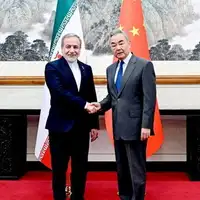




President Masoud Pezeshkian was also preparing to travel to New York for the UN General Assembly, putting renewed diplomatic activity alongside intensifying US economic pressure and Iranian warnings of further military action.
The military warnings, diplomatic contacts and new economic measures unfolded with commercial traffic through the Strait of Hormuz sharply reduced and a tanker struck by an unknown projectile while entering the waterway.
Revolutionary Guards threaten wider response
A renewed attack on Iran would change both the scale of Tehran’s response and the geographical reach of the conflict, Revolutionary Guards spokesperson Hossein Mohebbi said.
“We will introduce new weapons with new capabilities into the battle, and the world will be astonished,” Mohebbi said, adding that Iran had identified targets that had not previously come under attack.
Mohebbi said the Revolutionary Guards had no formal or informal contact with Washington and would fight US forces if required, but had no role in diplomacy.
Iran’s armed forces separately pledged in a joint statement to make the United States, Israel and their allies “taste the bitterness of further defeats.” Army Commander Amir Hatami said the military remained on full alert.
The Revolutionary Guards also said they had shot down another US MQ-1 drone over the Strait of Hormuz. The force has announced several drone interceptions over the waterway in recent days but has provided limited supporting evidence.
Pezeshkian heads to UN, mediators seek talks
Pezeshkian was due to leave for New York on Tuesday to attend the UN General Assembly, state news agency IRNA reported, with regional governments continuing efforts to reopen negotiations between Iran and the United States.
Mediators were exchanging proposals and traveling between capitals in an attempt to narrow differences between Washington and Tehran, Qatari Foreign Ministry spokesperson Majed Al-Ansari said.
Pakistan has also been involved in mediation, with Interior Minister Mohsin Naqvi due to visit Tehran on Monday. The Revolutionary Guards-affiliated Tasnim News said Naqvi was not carrying a message between Iran and the United States.
Neither Washington nor Tehran has publicly indicated that an agreement is close.
US targets Iran’s international air links
Washington, meanwhile, is preparing to use secondary sanctions to cut Iranian airlines off from services needed to operate abroad.
All Iranian airlines will be shut out of international operations from September 23 through the threat of sanctions on companies providing aviation services, Bessent told CNBC on Monday.
“When Iranian airlines land at an airport, you cannot provide them with fuel, you cannot provide them with landing services, you cannot sell them tickets, or you will be knocked out of the dollar system,” Bessent said.
Bessent spoke after talks with Chinese Vice Premier He Lifeng on Sunday night and said Chinese officials had been “very engaged” in Washington’s economic pressure campaign against Iran.
The United States was also holding positive discussions with Chinese financial authorities, including People’s Bank of China Governor Pan Gongsheng, over compliance with US sanctions on Iran, Bessent said.
Pressure builds around Hormuz
Economic disruption was also visible around the Strait of Hormuz, where a tanker entering the waterway was struck by an unknown projectile on Monday, leaving two crew members with minor injuries, the United Kingdom Maritime Trade Operations said.
The vessel continued toward its next port under its own power, with no environmental damage reported.
Commercial shipping through the strait has fallen sharply. Seventeen commodity vessels crossed the waterway over the weekend, compared with 37 a week earlier, according to shipping data cited by Reuters.
Before the war began on February 28, about 125 large commercial vessels typically passed through the Strait of Hormuz each day, Reuters reported.
Monday’s developments left military preparations, diplomatic contacts and economic pressure advancing on parallel tracks, with mediators seeking a return to negotiations and both Washington and Tehran preparing for the possibility that the conflict will continue.
One advertisement offered eight frozen embryos for one billion rials (about $4400), although it was unclear whether the price applied to each embryo or the entire group, Jahan-e Sanat newspaper reported on Monday.
Another seller advertised 18 frozen embryos and asked prospective buyers to suggest a price. Similar advertisements for embryos, eggs, sperm and surrogacy services have appeared on Instagram and Telegram.
The advertisements directed prospective buyers away from the original platform to continue discussions elsewhere, with little information about the people offering the embryos or how any transfer would take place.
Iranian law provides for donation, not direct sales
Iranian legislation passed in 2003 permits embryo donation to infertile married couples under specified conditions, with implementing regulations adopted the following year also covering frozen embryos.
Under those regulations, embryo donation is defined as the voluntary and free transfer of one or more embryos to authorized infertility treatment centers. Written consent from the couple providing the embryo is required, and transfers must take place through authorized specialist centers.
Prospective recipients must apply jointly as a married couple to a court and meet requirements covering infertility, legal capacity, health, drug use and Iranian citizenship.
The regulations therefore provide a formal route for donating frozen embryos but do not define them as commodities that can be sold directly between individuals.
Sociologist points to poverty and intermediaries
The online advertisements could reflect a combination of financial hardship among potential sellers and the desperation of couples struggling with infertility, sociologist Alireza Sharifi-Yazdi told Jahan-e Sanat.
“Behind this are a number of digital intermediaries who operate on Instagram, Telegram, and similar platforms and exploit the poverty and financial vulnerability of families, particularly women, as well as the desperation and confusion of infertile couples,” Sharifi-Yazdi said.
He distinguished regulated infertility treatment from an informal market in which intermediaries seek to profit from reproductive services.
Some infertile couples may turn to such channels after unsuccessful treatments including intrauterine insemination, or IUI, and in vitro fertilization, or IVF, he said.
Lengthy adoption procedures and the cost and waiting times associated with infertility treatment can also make unofficial alternatives appear easier, Sharifi-Yazdi added.
The financial circumstances of people offering embryos, he said, are another part of the picture, with worsening poverty potentially making them more susceptible to intermediaries seeking to profit from their situation.
Questions over oversight and identity
Sharifi-Yazdi also raised concerns about the possible consequences for children born following informal embryo transactions, including questions about their genetic parentage and legal status.
Modern DNA testing could allow children conceived through such arrangements to discover that the people raising them are not their genetic parents, potentially creating psychological and legal complications later in life, he argued.
Iran also lacks a transparent centralized national system through which people seeking to donate embryos without payment can readily register and navigate the legal process.
Rising foreign exchange rates, sanctions and difficulties obtaining specialized equipment have become major challenges for the industry, where many mines still rely on traditional or semi-mechanized methods, said the report.
“There is an inverse relationship between the exchange rate and the provision of equipment; the more expensive foreign currency becomes, the less financial capacity employers have to provide safety,” Ebrahim Rahimian, executive secretary of the Tabas Workers’ House, told ILNA.
Many components used in mine monitoring and safety systems are imported and have no domestically produced alternatives, Rahimian said.
Employers, he added, still have options to obtain equipment if they prioritize worker safety, including raising the necessary funds to purchase imported products at market exchange rates.
Deadly record in Iran’s mines
Workplace accidents, according to ILNA, remain a persistent problem in Iran, with coal mines among the most dangerous workplaces because of the conditions involved in underground extraction.
A collapse at the Parvadeh Tabas Coal Company mine killed a worker on April 29 in one of the latest fatal accidents.
A methane explosion at a coal mine in Tabas killed 53 workers in September 2024, drawing renewed attention to safety standards in Iran’s mining industry.
The economic pressures affecting mine operators have intensified as the rial has lost value, making imported machinery and specialized equipment more expensive.
Sharp currency fluctuations have also complicated financial planning for businesses as Iran contends with sanctions and persistent inflation.
Underground mines need advanced monitoring
Coal miners working underground require more than personal protective equipment such as boots and gloves, Rahimian said.
Advanced systems, he added, are needed to continuously monitor gas concentrations and pressure in layers above underground workings, providing information directly connected to workers’ safety.
Workers at mining companies in Tabas, Kerman, Zarand and Jiroft continue to operate using traditional or semi-mechanized methods, with only one company providing an exception, according to Rahimian.
Training is another essential part of reducing the dangers workers face underground, particularly in preparing them to respond to emergencies, he said.
“Continuous training and retraining is the minimum right of the workforce and must not be stopped at any cost.”
The combination of aging mining practices, costly imported safety technology and mounting economic pressure has left workers exposed to hazards that previous deadly accidents have already demonstrated can carry severe consequences.
The index measuring manufacturers’ raw material inventories fell to 39.3 in August from about 44.5 in July, while the Purchasing Managers’ Index for the overall economy dropped to 46.9, according to the survey. A reading below 50 indicates contraction.
Continued depletion of raw material inventories, combined with weakness elsewhere in the supply chain, could become one of the “most serious constraints on industrial production growth” in the coming months, the Iran Chamber of Commerce warned.
War damage adds to supply pressure
Part of the shortage cannot be explained by restrictions on imports alone. Iran was a major producer and exporter of several affected products, including petrochemicals and steel, before the war.
Major petrochemical facilities in Asaluyeh and Mahshahr and the Mobarakeh Steel and Khuzestan Steel complexes were targeted during the war. Asaluyeh and Mahshahr together accounted for roughly three-quarters of Iran’s petrochemical production before the strikes.
Mobarakeh and Khuzestan Steel also sustained damage to production infrastructure.
The chamber attributed pressure on raw material stocks to limited access to foreign currency, difficulties with imports and customs clearance, goods being held at customs, logistical disruptions and higher procurement costs.
The oil and gas products sector recorded the lowest raw material inventory index at 23.3, followed by vehicles and related parts at 28.7. Rubber and plastics and the clothing and leather industries each recorded 32.2.
Only the food industry and the wood, paper and furniture sector recorded raw material inventory readings above 50.
Input costs climb
Manufacturers also reported a sharp rise in raw material costs, with the purchase-price index increasing to 88.2 in August from 80.4 in July.
The index exceeded 100 for oil and gas products, while machinery and household appliances and non-metallic mineral products recorded readings above 92. Raw material purchase-price indices were above 50 across every industrial sector surveyed.
Other major PMI components remained below 50, including output or service activity at 47.8, new customer orders at 47.5, suppliers’ delivery times at 48.6 and employment at 47.3. All deteriorated from July except employment, which was unchanged.
Consumer prices were more than 84% higher in August than a year earlier, while annual inflation stood at about 69%, according to the Statistical Center of Iran.
The sharp increase in manufacturers’ input costs adds to inflationary pressure on consumer prices. The Chamber warned that shrinking inventories could also reduce production capacity and disrupt or halt some production lines if current conditions persist.