• العربية
  • فارسی
Brand
  • Iran Insight
  • Politics
  • Economy
  • Analysis
  • Special Report
  • Opinion
  • Podcast
  • Live TV
  • Iran Insight
  • Politics
  • Economy
  • Analysis
  • Special Report
  • Opinion
  • Podcast
  • Live TV
  • Theme
  • Language
    • العربية
    • فارسی
  • Iran Insight
  • Politics
  • Economy
  • Analysis
  • Special Report
  • Opinion
  • Podcast
  • Live TV
All rights reserved for Volant Media UK Limited
volant media logo

QatarEnergy says normal gas operations can resume within weeks of Hormuz reopening

Sep 20, 2026, 16:33 GMT+1

QatarEnergy could restore normal gas operations within a few weeks of the Strait of Hormuz reopening, though the disruption could delay some expansion projects by blocking deliveries of critical equipment, CEO Saad al-Kaabi said on Sunday.

QatarEnergy is producing only a “very minute” volume of liquefied natural gas, Kaabi said at the Qatar Economic Forum in New York.

Several LNG trains under the North Field East expansion are scheduled to begin operating in 2027, with production from the North Field South expansion expected to start in 2028, Kaabi said.


Banner

Most Viewed

Iran executes man it accused of spying for Israel on missile sites
1

Iran executes man it accused of spying for Israel on missile sites

2

Iran sets seven terms for renewed US talks, says ready for escalation

3
PODCAST

Death-row Iran protester denied hospital treatment, family says

4
ANALYSIS

Will shutdowns forced by US blockade damage Iran’s oil wells?

5
ANALYSIS

Tehran sees ‌Beijing as potential bridge to Washington

Banner

Spotlight

  • Will shutdowns forced by US blockade damage Iran’s oil wells?
    ANALYSIS

    Will shutdowns forced by US blockade damage Iran’s oil wells?

  • Tehran ‘ashamed’ as Iranians struggle to make ends meet

    Tehran ‘ashamed’ as Iranians struggle to make ends meet

  • Iran faces postwar winter with a third of gas capacity lost
    ANALYSIS

    Iran faces postwar winter with a third of gas capacity lost

  • Iran’s nightly pro-state rallies become factional battleground
    INSIGHT

    Iran’s nightly pro-state rallies become factional battleground

  • Woman, Life, Freedom and the Iran that cannot go back
    OPINION

    Woman, Life, Freedom and the Iran that cannot go back

  • From Halkbank to Golden Global: Turkey’s Iran banking ties under US scrutiny

    From Halkbank to Golden Global: Turkey’s Iran banking ties under US scrutiny

Banner
Banner
•
•
•

More Stories

Iran threatens regional strikes as MPs question nuclear policy

Sep 20, 2026, 12:12 GMT+1
100%
People walk past a mural featuring the Islamic Republic flag in Tehran, Iran, May 5, 2026.

Iran’s military threatened sustained attacks on US bases and interests across the Middle East on Sunday, while parliament speaker Mohammad-Bagher Ghalibaf argued that Tehran must both fight and negotiate.

Some lawmakers, meanwhile, raised the prospect of withdrawing from the Nuclear Non-Proliferation Treaty and changing the country’s nuclear-weapons policy.

The developments highlighted the competing signals coming from Tehran as President Donald Trump’s administration weighed its next move in the nearly seven-month war. Trump returned to the White House from Camp David on Saturday evening, a day earlier than scheduled, without an official explanation.

Iran’s Khatam al-Anbiya joint military command said it had received information that Washington, with approval from some regional countries, was preparing at a meeting in Europe to resume action against Iran.

“Every US base and interest in the region, without restriction or consideration, will be targeted by sustained, effective and painful attacks,” the command said.

It also warned that regional states supporting an American attack would be treated as participants and “could no longer expect restraint or leniency from Iran’s powerful armed forces.”

US diplomatic missions in nine Middle Eastern countries have meanwhile urged Americans to exercise heightened vigilance, warning of possible rapid escalation, flight cancellations and airspace closures. The alerts said Iran and Tehran-aligned groups could target US interests or locations associated with Americans.

The US military has also said it is strengthening regional air defenses, forming a coalition attack-drone unit and working with partners to keep the Strait of Hormuz and surrounding waters open.

Iranian officials responded with renewed assertions of control over the strategic waterway. IRGC deputy commander Mostafa Izadi said the strait remained under the control of Iran’s armed forces, while lawmaker Mohsen Zanganeh said restrictions there could impose significant economic pressure on the United States and other countries.

“The Strait of Hormuz is in Iran’s hands,” Zanganeh said, arguing that disruption would raise energy and production costs in East Asia and affect US technology companies with manufacturing operations there.

Against the military threats, Ghalibaf rejected the idea that Iran must choose between war and diplomacy.

“We must fight rationally and forcefully, and negotiate at the appropriate time with authority and reason,” he told a virtual session of parliament on Sunday.

Ghalibaf criticized two positions within Iran’s political establishment. He said one advocated war without presenting a credible path toward ending it and rejected diplomacy at the risk of drawing Iran into an open-ended conflict. The other, he said, underestimated the country’s capabilities and promoted accepting the adversary’s unilateral demands.

The first approach would keep Iran in a state of permanent crisis, while the second would sacrifice national resources and dignity, Ghalibaf said.

His remarks followed comments by Supreme National Security Council Secretary Mohsen Rezaei, who said Tehran had sent Washington seven conditions for renewed negotiations. Rezaei told Al Jazeera that Iran was seeking an end to the war on all fronts, the release of frozen Iranian assets and an end to the US naval blockade.

Rezaei said Qatar had conveyed Iran’s terms and Tehran was awaiting Trump’s response. Turkish Foreign Minister Hakan Fidan also said Turkey and other countries had presented new proposals to Washington and Tehran.

The diplomatic signals were accompanied by increasingly explicit statements by lawmakers about Iran’s nuclear policy.

Ebrahim Azizi, chairman of parliament’s national security committee, said renewed negotiations with the United States would be meaningless and warned that Iran could reconsider its NPT membership if remaining in the treaty no longer served its national interests.

Azizi also threatened the International Atomic Energy Agency with “serious and regrettable responses” if it continued what he described as one-sided conduct.

Another lawmaker, Hosseinali Hajideligani, said remaining in the NPT brought Iran nothing but harm and urged parliament’s leadership to consider an urgent motion submitted by a group of lawmakers seeking withdrawal from the treaty.

“It is in our interest to withdraw from the NPT,” he said.

Tehran representative Kamran Ghazanfari went further, raising the possibility of a change in the country’s position on nuclear weapons if the survival of the Islamic Republic came under serious threat.

“If conditions change in such a way that we feel the existence of the Islamic Republic is seriously threatened, the leadership could take a position on nuclear weapons,” Ghazanfari said.

The comments stopped short of announcing a policy change. Rezaei said Saturday that Tehran remained committed to slain Supreme Leader Ali Khamenei’s fatwa prohibiting nuclear weapons and had not altered its doctrine, while adding: “We do not know what will happen in the future.”

The growing debate nevertheless marked a sharper public challenge to Iran’s longstanding declared nuclear position at a moment when military threats, maritime pressure and mediated diplomatic efforts were unfolding simultaneously.

Iran mobilisation drive extends to children under 15

Sep 20, 2026, 02:56 GMT+1
100%
Children carrying rifles take part in a Janfada mobilisation rally in Iran, September 18, 2026

The spokesman for Iran’s mass mobilisation campaign said children under 15 could be introduced to military concepts, while denying that minors were receiving formal weapons training as authorities expand a civilian defence drive launched during the war.

Sasan Zare, spokesman for the Janfada campaign, said the main organisation of volunteers would be based around adults aged 18 and over, but acknowledged that younger people were also being brought into the initiative.

“The stronger their value system is formed from childhood, and the more familiar they become with concepts such as patriotism and self-sacrifice, the more significant the impact can be on their future,” Zare told the Iranian news agency ILNA.

Those registered with the campaign were over 15, he said, while women taking part in its training courses were over 18. For children below that age, Zare said the emphasis should be on patriotism, responsibility, first aid, safety and what he called a “culture of self-sacrifice and resistance.”

The Islamic Republic has stepped up a broad campaign to mobilise civilians since the US-Israeli war began in February.

The Janfada initiative was launched in late March, and authorities have since promoted registration through mosques, Basij bases and public events, alongside plans for military and emergency-response training.

The campaign has drawn scrutiny over the involvement of minors, with rights groups accusing Iranian authorities of recruiting children into the Basij and using them at checkpoints.

Amnesty International said in April that Iranian law allows children under 15 to join as ordinary Basij members, while those aged 15 and over can become active Basij members and collaborate with the Revolutionary Guards on assigned missions.

The rights group said it had verified evidence of children as young as 12 deployed at checkpoints and patrols, including some carrying rifles.

Iran International has separately received accounts from several provinces describing children and teenagers taking part in checkpoint operations and handling weapons at state-sponsored gatherings.

Asked specifically about teenagers being used at checkpoints, Zare said he did not know how such deployments were being carried out because checkpoints fell under the authority of local police and security bodies.

His campaign, he said, provided training related to urban and public security, while the units deploying volunteers would decide whether they were used at checkpoints.

Will shutdowns forced by US blockade damage Iran’s oil wells?

Sep 19, 2026, 22:15 GMT+1
•
Mehdi Moslehi
100%
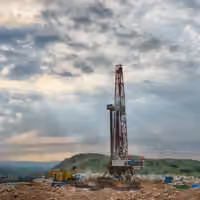
File photo: An oil rig in Iran

The sharp fall in Iran’s oil loadings is forcing it to curb production, raising costs beyond lost sales, from restarting aging wells to maintaining reservoir pressure and protecting shared fields. But could the shutdowns cause lasting damage?

Iranian officials often speak about oil as if the only question were whether crude can be sold today or tomorrow. In that telling, if exports stop, the oil simply stays underground until sanctions or a blockade ease, after which production can resume from where it left off.

Oil Minister Mohsen Paknejad said earlier this month that Iran’s oil exports did not stop “even for an hour” during the 40-day war. He had previously said there was not even a single day of production decline during that period.

Even if those claims are accurate for the war itself, they do not answer a more important question about what followed: how much production must be shut in when exports collapse and storage fills, and what will it cost to bring those wells and facilities back?

Energy intelligence firm Kpler estimated Iranian oil loadings fell from about 1.83 million barrels per day in March to around 255,000 bpd in August. It also estimated crude production dropped from about 3.24 million bpd to 1.755 million bpd, while inventories at terminals, refineries and other onshore storage sites increased.

Some Iranian crude may still be discharged in China, but much of that oil had already left Iran before the blockade intensified and remained for a time on tankers in Asian waters. Selling those cargoes is not the same as moving fresh crude out of Iranian wells and export terminals.

When exports fall, producers can initially divert crude into onshore storage, refineries and tankers. But storage is finite. Once it fills, the pressure moves upstream, forcing the National Iranian Oil Company to reduce production from some wells or shut them altogether.

An oil field is not an underground warehouse

An oil reservoir is sometimes imagined as an underground lake that can simply be tapped, closed and reopened months later.

In reality, oil sits within porous rock and networks of natural fractures. Its movement toward a producing well depends on reservoir pressure, rock properties, fluid composition and the way the field is managed.

That means shutdowns do not affect every well in the same way.

Some conventional Middle Eastern reservoirs can tolerate short shutdowns without serious damage. In certain fractured reservoirs, temporarily reducing output may even allow pressure to recover and oil to migrate from the rock matrix into fractures.

Robin Mills, a researcher at Columbia University’s Center on Global Energy Policy, has argued that production shutdowns are unlikely to cause catastrophic or permanent damage across most of Iran’s oil industry.

He has pointed to Iran’s relatively rapid production recovery after previous declines caused by sanctions and the Covid-19 pandemic.

That distinction matters. There is little basis for claiming that shutting production will inevitably destroy Iran’s oil wells.

But recoverable does not mean free, immediate or risk-free.

Iran has many mature fields and aging wells. Ahvaz, Marun, Gachsaran and Aghajari, among the country’s most important producing areas, have been in operation for decades.

Low-pressure wells, or wells producing large volumes of water alongside crude, may fail to flow naturally after a prolonged shutdown. Restarting them can require pumping, nitrogen injection, chemical treatment or other well-servicing operations.

During a shutdown, mineral scale, asphaltenes and other heavy compounds can accumulate around the wellbore, in production tubing or in flow lines.

Corrosion, sand and solids deposition, pump failures and unwanted flows between zones with different pressures are also recognized risks.

An analysis by the Society of Petroleum Engineers’ Reservoir Advisory Committee on prolonged shut-ins warned that corrosion, deposits, pump damage and plugging can leave some wells requiring repairs, stimulation or recompletion before they return to production.

For weak-performing wells, remediation can also become expensive enough to call their economics into question.

None of those costs appears in a simple calculation of barrels that were not sold.

Rotating shutdowns also cost money

NIOC has experience managing production cuts during earlier rounds of sanctions.

One option is to rotate shutdowns among wells rather than take an entire field offline, reducing the amount of time any single well remains idle.

That can limit the risks, but it requires continuous monitoring of reservoir pressure, fluid composition, gas injection, corrosion, pumps and surface facilities.

Repeated shutdowns and restarts, changes in chemical injection and the recalibration of processing equipment also add to operating costs.

In other words, not producing oil still costs money.

If falling oil revenues squeeze maintenance budgets, what begins as a manageable shutdown can develop into a far more expensive repair problem.

The question is therefore not whether every shut well will be lost. It is how many will return without additional work, how long the others will take to restart and how much that process will cost.

Gas injection links the oil problem to Iran's gas crisis

Many of Iran’s mature oil fields rely on gas injection to maintain reservoir pressure and improve recovery.

Kpler has estimated historical gas injection into Iranian oil fields at about 4.8 billion cubic feet per day. Even before the current crisis, Iran was injecting less gas than its reservoirs required.

That problem could become more acute.

Gas production from South Pars also produces condensate. If Iran becomes unable to export, store or consume enough of that condensate, it may eventually have to reduce gas output.

The government would then face harder choices over how to allocate gas among households, power plants, industry, exports and injection into oil reservoirs.

Lower gas injection does not destroy a well overnight. But over time, it can reduce reservoir pressure and potentially lower ultimate oil recovery.

A crisis that begins with crude exports can therefore feed back into oil production through constraints on condensate and natural gas.

This part of the cost rarely features in official statements.

Iranian officials emphasize continued exports and efforts to circumvent restrictions, but disclose little about how much gas, equipment and investment is needed to maintain reservoirs while production is being curtailed.

Shared fields create another risk

Not all Iranian fields can be treated in the same way.

Azadegan and Yadavaran are shared with Iraq, Forouzan with Saudi Arabia and Salman with the United Arab Emirates, with production taking place from different parts of connected geological structures.

A reduction in Iranian output does not mean crude immediately flows across a border toward a neighboring country’s wells. Reservoir behavior is more complicated and depends on geology.

But if Iran reduces production and development for an extended period while the other side continues drilling and extracting oil, Iran’s economic position in those shared resources can weaken.

Oil left underground in such fields is not necessarily being preserved exclusively for Iran to produce later.

Continued extraction across the border can, in some reservoirs, reduce Iran’s future recoverable share or economic opportunity.

The real cost of shutting production

The impact of a forced production cut cannot be measured by lost sales alone.

It also includes the cost of storing crude, maintaining idle wells, carrying out repairs and restarts, any loss in future productive capacity or reservoir recovery, and missed opportunities in shared fields.

There can be broader consequences as well.

Lower gas production would put more pressure on power generation, petrochemical feedstock and industrial consumption, forcing the government to make increasingly difficult choices over scarce energy supplies.

A prolonged blockade and collapse in exports therefore affects more than the Islamic Republic’s immediate oil revenue.

If wells and facilities are not adequately maintained, part of the cost can persist long after exports recover.

Paknejad can point to uninterrupted exports or production during a limited period, but more important questions remain unanswered.

How many Iranian wells are now producing at full capacity? How many have been throttled back or shut? How has gas injection changed? How much is being spent to manage shut-ins, maintain equipment and eventually restore production?

Without those figures, claims of continued production offer only a partial picture of the state of Iran’s oil industry.

Most Iranian wells may eventually be recoverable. But shutting them is neither cost-free nor necessarily quick to reverse.

The longer production remains constrained, the more maintenance, reservoir management and restart costs may accumulate — costs whose full scale cannot be known without far greater transparency about the condition of Iran’s wells and fields.

Iran sets seven terms for renewed US talks, says ready for escalation

Sep 19, 2026, 19:30 GMT+1
100%
File photo: Mohsen Rezaei attends a farewell ceremony for Iran's late Supreme Leader Ayatollah Ali Khamenei, who was killed on February 28 during Israeli and U.S. airstrikes on Iran, for international delegates at the Imam Khomeini Grand Mosalla in Tehran, Iran, July 3, 2026.

Iran has conveyed seven conditions to Washington for the start of any negotiations, Supreme National Security Council Secretary Mohsen Rezaei said Saturday, as President Donald Trump weighs whether to resume major attacks on Iran.

“The United States, if it wants to extricate itself from the predicament it has created, must accept Iran’s rights and conditions,” Rezaei wrote on X, saying the seven demands had been communicated to Washington.

He did not spell out all seven in the post. Earlier Saturday, however, Rezaei told Al Jazeera that Tehran was demanding an end to the war “on all fronts,” the release of frozen Iranian assets and an end to the US naval blockade as conditions for a settlement.

He said a Qatari mediator had conveyed Iran’s terms to Washington and that Tehran was awaiting Trump’s response.

Iran and the United States have remained engaged in indirect diplomacy throughout months of fighting and since the collapse of the Islamabad memorandum of understanding.

The memorandum, signed in June after Pakistan-hosted talks, was intended to halt the fighting and pave the way for a broader agreement. Both sides later accused the other of violations, and it expired in August without producing a lasting settlement.

Trump told Axios on Thursday that he had a “big decision” coming over whether to resume large-scale attacks on Iran, while saying Tehran remained in direct contact with Washington and wanted a deal. He is due to discuss the war with leaders of six Persian Gulf states in New York next week.

Pakistan, another key intermediary, is sending Interior Minister Mohsin Naqvi to Tehran on Sunday. Iranian Foreign Ministry spokesperson Esmaeil Baghaei said the visit was focused on bilateral ties and previous agreements between the two countries and that he was not aware of any specific US message or proposal due to be conveyed.

Baghaei acknowledged Pakistan’s continuing mediation role, saying it was natural for Islamabad to pursue diplomatic efforts, but said he had no information about any particular initiative attached to the visit.

Rezaei meanwhile struck a harder military tone, saying Iran had changed its strategy toward Washington after the United States withdrew from the memorandum. He said Tehran had recently tested an anti-ship missile near a US aircraft carrier and claimed Iran was better prepared to confront American air attacks after identifying weaknesses in the US military.

Nuclear pressure

On nuclear policy, Rezaei said Tehran remained committed to the late supreme leader’s fatwa against nuclear weapons and had not changed its nuclear doctrine, though he added that “we do not know what will happen in the future.”

He said Israeli and US actions already provided grounds for Iran to withdraw from the Nuclear Non-Proliferation Treaty (NPT), but Tehran had not made such a decision and any move would depend on Washington’s conduct.

Last month, Rezaei suggested Tehran could reconsider its longstanding rejection of nuclear weapons, arguing that US attacks on Iran have strengthened the case for acquiring an atomic bomb as a deterrent.

Rezaei told the state TV Washington had demonstrated that adherence to the global nuclear non-proliferation system offered countries little protection from military attack.

Saudi-Yemen escalation

In his Saturday interview, Rezaei also said Iran wanted the fighting between Saudi Arabia and Yemen to end and believed the Yemeni side also sought an agreement with Riyadh.

Hours earlier, an air attack struck a jet-fuel storage facility at Riyadh’s King Khalid International Airport, marking the first direct assault on the Saudi capital in months, The Wall Street Journal reported.

The Houthis later claimed two operations using missiles and drones, saying they struck “sensitive and important” targets in Riyadh and Saudi Aramco facilities in Yanbu. Military spokesman Yahya Saree did not explicitly identify the airport as a target.

Iran executes man it accused of spying for Israel on missile sites

Sep 19, 2026, 07:31 GMT+1
100%
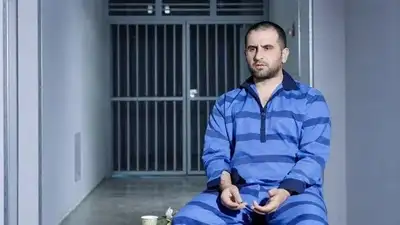
Hossein Pedaran during televised confession

Iran has executed a man it accused of passing information about missile sites in Isfahan to Israel's Mossad, the judiciary said on Saturday, the latest in a series of espionage executions that rights groups say rest on confessions extracted in detention.

The judiciary's news agency, Mizan, identified him as Hossein Pedaran and said he had been convicted of espionage and intelligence cooperation with Israel and sentenced to death, with the sentence upheld by the Supreme Court. He had been arrested in Isfahan on charges related to the war.

Mizan published a long account of what it described as Pedaran's confessions. According to that account, he first messaged the CIA offering to cooperate and received no reply, then contacted Mossad and was answered days later by an officer who introduced himself as "Ben" using a Dutch WhatsApp number.

The agency said he sent encrypted reports on military facilities and on staff who worked at them, including personal details and their spouses' phone numbers, used numerous SIM cards registered to others, and was given a remote-control device capable of taking hidden photographs.

It said he was paid in euros collected from a magnetic box behind a guardrail near a Tehran bridge and, on another occasion, from a coffee shop bathroom, and that a notebook on missile subjects marked "highly confidential" was found at his home.

Mizan said Pedaran had cut contact before the war and tried to reach Mossad again by Telegram once it began, and was arrested. It said he had a lawyer, that a forensic examination found no impairment of his judgment, and that the court held his information had contributed to strikes in which personnel were killed or wounded.

None of these claims can be independently verified, and Mizan did not provide any evidence for the allegations.

  • Iran executes student on charges of spying for Israel

    Iran executes student on charges of spying for Israel

  • Iran family says executed nuclear scientist confessed after threats to mother

    Iran family says executed nuclear scientist confessed after threats to mother

Iran's espionage cases are heard by Revolutionary Courts, which operate without public scrutiny of the evidence, and the state routinely broadcasts and publishes confessions that defendants and their families have later said were obtained through torture, prolonged solitary confinement and threats against relatives.

Rights organizations have documented the pattern for years, and have recorded cases in which people detained during protests were subsequently charged with working for Israel.

  • Iran sentences two more protesters to death as executions surge

    Iran sentences two more protesters to death as executions surge

Iran has executed at least a dozen people on espionage or Mossad-collaboration charges since the June 2025 war with Israel, according to human rights groups, and the pace has increased since the recent war began in February.

Those executed this year include Ali Ardestani in January, Mehdi Farid, a former employee of the atomic energy organization, in April, and Omid Behzad and Pouria Safvat in August. Iran Human Rights recorded at least 1,639 executions in the country in 2025, the highest annual total since 1989.