Iran FM heads to New York for UN General Assembly - State media


Iranian Foreign Minister Abbas Araghchi left for New York at the head of a diplomatic delegation to attend the United Nations General Assembly, state media reported on Sunday.
Araghchi will travel to New York after a brief stop in Qatar, according to the report.




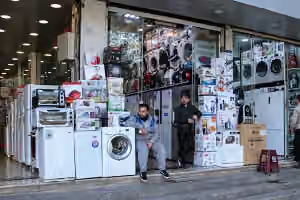
Iranian manufacturers are rapidly running down stocks of raw materials as supply disruptions and rising costs deepen pressure on industrial production, according to the latest survey by the Iran Chamber of Commerce.
The index measuring manufacturers’ raw material inventories fell to 39.3 in August from about 44.5 in July, while the Purchasing Managers’ Index for the overall economy dropped to 46.9, according to the survey. A reading below 50 indicates contraction.
Continued depletion of raw material inventories, combined with weakness elsewhere in the supply chain, could become one of the “most serious constraints on industrial production growth” in the coming months, the Iran Chamber of Commerce warned.
War damage adds to supply pressure
Part of the shortage cannot be explained by restrictions on imports alone. Iran was a major producer and exporter of several affected products, including petrochemicals and steel, before the war.
Major petrochemical facilities in Asaluyeh and Mahshahr and the Mobarakeh Steel and Khuzestan Steel complexes were targeted during the war. Asaluyeh and Mahshahr together accounted for roughly three-quarters of Iran’s petrochemical production before the strikes.
Mobarakeh and Khuzestan Steel also sustained damage to production infrastructure.
The chamber attributed pressure on raw material stocks to limited access to foreign currency, difficulties with imports and customs clearance, goods being held at customs, logistical disruptions and higher procurement costs.
The oil and gas products sector recorded the lowest raw material inventory index at 23.3, followed by vehicles and related parts at 28.7. Rubber and plastics and the clothing and leather industries each recorded 32.2.
Only the food industry and the wood, paper and furniture sector recorded raw material inventory readings above 50.
Input costs climb
Manufacturers also reported a sharp rise in raw material costs, with the purchase-price index increasing to 88.2 in August from 80.4 in July.
The index exceeded 100 for oil and gas products, while machinery and household appliances and non-metallic mineral products recorded readings above 92. Raw material purchase-price indices were above 50 across every industrial sector surveyed.
Other major PMI components remained below 50, including output or service activity at 47.8, new customer orders at 47.5, suppliers’ delivery times at 48.6 and employment at 47.3. All deteriorated from July except employment, which was unchanged.
Consumer prices were more than 84% higher in August than a year earlier, while annual inflation stood at about 69%, according to the Statistical Center of Iran.
The sharp increase in manufacturers’ input costs adds to inflationary pressure on consumer prices. The Chamber warned that shrinking inventories could also reduce production capacity and disrupt or halt some production lines if current conditions persist.
A local network tied to state-backed cultural and media groups helped Iranian authorities identify protesters during the January crackdown, with footage passed to Revolutionary Guards intelligence, sources familiar with the operation told Iran International.
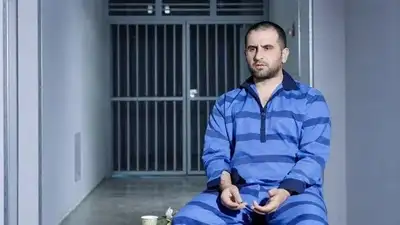
The network operated in Fariman in northeastern Iran. Sadegh Maloul, a local figure with a background in cultural and media activities connected to the Basij and Revolutionary Guards, coordinated teams that filmed protesters, according to the sources.
Images gathered by the network were sent to the Islamic Revolutionary Guard Corps (IRGC) Intelligence Organization in Fariman and Mashhad and used to identify people who had taken part in demonstrations and add evidence to security cases against them, the sources said.
Iran International’s investigation indicates that the process contributed to the arrest of 23 people.
Maloul has been identified as the head of the Basij Artists Center in Fariman and had previously collaborated with the IRGC’s public relations department.
Local media material reviewed by Iran International identifies him with the Fariman Basij Artists Center, while biographical information attributed to him described him as an “honorary reporter” cooperating with the IRGC’s public relations department.
These records link Maloul’s cultural and media activities to organizations affiliated with the Basij and IRGC.
From culture to surveillance
At the Basij Artists Center, Maloul organized members to produce cultural and media content aligned with the Islamic Republic’s messaging.
In late 2024 or early 2025, he called on young people he described as “soft-war officers” to produce films on subjects including Basij security activities, hijab and online activity.
The center’s performance and training programs also brought it into contact with teenagers and young adults interested in art and filmmaking.
During the January protests, the teams coordinated by Maloul recorded demonstrators, according to sources familiar with the operation.
The footage was subsequently transferred to IRGC intelligence offices in Fariman and Mashhad, where it was used to identify demonstrators and add evidence to security cases against them.
Iran International could not independently determine how many people took part in the filming teams or whether everyone involved in the cultural organizations knew how the material would later be used.
Crackdown across Razavi Khorasan
The operation unfolded during a wider crackdown across Razavi Khorasan, where protests spread to at least 20 counties in January.
Mashhad, the provincial capital, was a major center of protests, while Fariman also saw demonstrations and arrests.
Iran International has previously reported that security forces used live fire against protesters in several parts of Mashhad and restricted internet access and communications in areas where demonstrations were taking place.
The Fariman case indicates how surveillance may extend beyond formal security agencies into local cultural and media networks.
New role after protests
Several months after the January protests, Maloul became head of the Sadaqat charitable center.
His new role indicates that he continued to hold positions within organizations connected to the Islamic Republic’s institutional network after the crackdown.
The Fariman case offers a glimpse into a less visible part of Iran’s protest-control machinery: not only the forces deployed in the streets, but local networks capable of recording demonstrators, identifying them and passing information to security agencies after the crowds disperse.
Iran’s military threatened sustained attacks on US bases and interests across the Middle East on Sunday, while parliament speaker Mohammad-Bagher Ghalibaf argued that Tehran must both fight and negotiate.
Some lawmakers, meanwhile, raised the prospect of withdrawing from the Nuclear Non-Proliferation Treaty and changing the country’s nuclear-weapons policy.
The developments highlighted the competing signals coming from Tehran as President Donald Trump’s administration weighed its next move in the nearly seven-month war. Trump returned to the White House from Camp David on Saturday evening, a day earlier than scheduled, without an official explanation.
Iran’s Khatam al-Anbiya joint military command said it had received information that Washington, with approval from some regional countries, was preparing at a meeting in Europe to resume action against Iran.
“Every US base and interest in the region, without restriction or consideration, will be targeted by sustained, effective and painful attacks,” the command said.
It also warned that regional states supporting an American attack would be treated as participants and “could no longer expect restraint or leniency from Iran’s powerful armed forces.”
US diplomatic missions in nine Middle Eastern countries have meanwhile urged Americans to exercise heightened vigilance, warning of possible rapid escalation, flight cancellations and airspace closures. The alerts said Iran and Tehran-aligned groups could target US interests or locations associated with Americans.
The US military has also said it is strengthening regional air defenses, forming a coalition attack-drone unit and working with partners to keep the Strait of Hormuz and surrounding waters open.
Iranian officials responded with renewed assertions of control over the strategic waterway. IRGC deputy commander Mostafa Izadi said the strait remained under the control of Iran’s armed forces, while lawmaker Mohsen Zanganeh said restrictions there could impose significant economic pressure on the United States and other countries.
“The Strait of Hormuz is in Iran’s hands,” Zanganeh said, arguing that disruption would raise energy and production costs in East Asia and affect US technology companies with manufacturing operations there.
Against the military threats, Ghalibaf rejected the idea that Iran must choose between war and diplomacy.
“We must fight rationally and forcefully, and negotiate at the appropriate time with authority and reason,” he told a virtual session of parliament on Sunday.
Ghalibaf criticized two positions within Iran’s political establishment. He said one advocated war without presenting a credible path toward ending it and rejected diplomacy at the risk of drawing Iran into an open-ended conflict. The other, he said, underestimated the country’s capabilities and promoted accepting the adversary’s unilateral demands.
The first approach would keep Iran in a state of permanent crisis, while the second would sacrifice national resources and dignity, Ghalibaf said.
His remarks followed comments by Supreme National Security Council Secretary Mohsen Rezaei, who said Tehran had sent Washington seven conditions for renewed negotiations. Rezaei told Al Jazeera that Iran was seeking an end to the war on all fronts, the release of frozen Iranian assets and an end to the US naval blockade.
Rezaei said Qatar had conveyed Iran’s terms and Tehran was awaiting Trump’s response. Turkish Foreign Minister Hakan Fidan also said Turkey and other countries had presented new proposals to Washington and Tehran.
The diplomatic signals were accompanied by increasingly explicit statements by lawmakers about Iran’s nuclear policy.
Ebrahim Azizi, chairman of parliament’s national security committee, said renewed negotiations with the United States would be meaningless and warned that Iran could reconsider its NPT membership if remaining in the treaty no longer served its national interests.
Azizi also threatened the International Atomic Energy Agency with “serious and regrettable responses” if it continued what he described as one-sided conduct.
Another lawmaker, Hosseinali Hajideligani, said remaining in the NPT brought Iran nothing but harm and urged parliament’s leadership to consider an urgent motion submitted by a group of lawmakers seeking withdrawal from the treaty.
“It is in our interest to withdraw from the NPT,” he said.
Tehran representative Kamran Ghazanfari went further, raising the possibility of a change in the country’s position on nuclear weapons if the survival of the Islamic Republic came under serious threat.
“If conditions change in such a way that we feel the existence of the Islamic Republic is seriously threatened, the leadership could take a position on nuclear weapons,” Ghazanfari said.
The comments stopped short of announcing a policy change. Rezaei said Saturday that Tehran remained committed to slain Supreme Leader Ali Khamenei’s fatwa prohibiting nuclear weapons and had not altered its doctrine, while adding: “We do not know what will happen in the future.”
The growing debate nevertheless marked a sharper public challenge to Iran’s longstanding declared nuclear position at a moment when military threats, maritime pressure and mediated diplomatic efforts were unfolding simultaneously.
The spokesman for Iran’s mass mobilisation campaign said children under 15 could be introduced to military concepts, while denying that minors were receiving formal weapons training as authorities expand a civilian defence drive launched during the war.
Sasan Zare, spokesman for the Janfada campaign, said the main organisation of volunteers would be based around adults aged 18 and over, but acknowledged that younger people were also being brought into the initiative.
“The stronger their value system is formed from childhood, and the more familiar they become with concepts such as patriotism and self-sacrifice, the more significant the impact can be on their future,” Zare told the Iranian news agency ILNA.
Those registered with the campaign were over 15, he said, while women taking part in its training courses were over 18. For children below that age, Zare said the emphasis should be on patriotism, responsibility, first aid, safety and what he called a “culture of self-sacrifice and resistance.”
The Islamic Republic has stepped up a broad campaign to mobilise civilians since the US-Israeli war began in February.
The Janfada initiative was launched in late March, and authorities have since promoted registration through mosques, Basij bases and public events, alongside plans for military and emergency-response training.
The campaign has drawn scrutiny over the involvement of minors, with rights groups accusing Iranian authorities of recruiting children into the Basij and using them at checkpoints.
Amnesty International said in April that Iranian law allows children under 15 to join as ordinary Basij members, while those aged 15 and over can become active Basij members and collaborate with the Revolutionary Guards on assigned missions.
The rights group said it had verified evidence of children as young as 12 deployed at checkpoints and patrols, including some carrying rifles.
Iran International has separately received accounts from several provinces describing children and teenagers taking part in checkpoint operations and handling weapons at state-sponsored gatherings.
Asked specifically about teenagers being used at checkpoints, Zare said he did not know how such deployments were being carried out because checkpoints fell under the authority of local police and security bodies.
His campaign, he said, provided training related to urban and public security, while the units deploying volunteers would decide whether they were used at checkpoints.
The sharp fall in Iran’s oil loadings is forcing it to curb production, raising costs beyond lost sales, from restarting aging wells to maintaining reservoir pressure and protecting shared fields. But could the shutdowns cause lasting damage?
Iranian officials often speak about oil as if the only question were whether crude can be sold today or tomorrow. In that telling, if exports stop, the oil simply stays underground until sanctions or a blockade ease, after which production can resume from where it left off.
Oil Minister Mohsen Paknejad said earlier this month that Iran’s oil exports did not stop “even for an hour” during the 40-day war. He had previously said there was not even a single day of production decline during that period.
Even if those claims are accurate for the war itself, they do not answer a more important question about what followed: how much production must be shut in when exports collapse and storage fills, and what will it cost to bring those wells and facilities back?
Energy intelligence firm Kpler estimated Iranian oil loadings fell from about 1.83 million barrels per day in March to around 255,000 bpd in August. It also estimated crude production dropped from about 3.24 million bpd to 1.755 million bpd, while inventories at terminals, refineries and other onshore storage sites increased.
Some Iranian crude may still be discharged in China, but much of that oil had already left Iran before the blockade intensified and remained for a time on tankers in Asian waters. Selling those cargoes is not the same as moving fresh crude out of Iranian wells and export terminals.
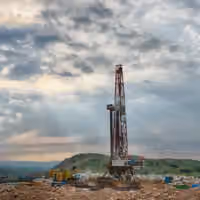
When exports fall, producers can initially divert crude into onshore storage, refineries and tankers. But storage is finite. Once it fills, the pressure moves upstream, forcing the National Iranian Oil Company to reduce production from some wells or shut them altogether.
An oil field is not an underground warehouse
An oil reservoir is sometimes imagined as an underground lake that can simply be tapped, closed and reopened months later.
In reality, oil sits within porous rock and networks of natural fractures. Its movement toward a producing well depends on reservoir pressure, rock properties, fluid composition and the way the field is managed.
That means shutdowns do not affect every well in the same way.
Some conventional Middle Eastern reservoirs can tolerate short shutdowns without serious damage. In certain fractured reservoirs, temporarily reducing output may even allow pressure to recover and oil to migrate from the rock matrix into fractures.
Robin Mills, a researcher at Columbia University’s Center on Global Energy Policy, has argued that production shutdowns are unlikely to cause catastrophic or permanent damage across most of Iran’s oil industry.
He has pointed to Iran’s relatively rapid production recovery after previous declines caused by sanctions and the Covid-19 pandemic.
That distinction matters. There is little basis for claiming that shutting production will inevitably destroy Iran’s oil wells.
But recoverable does not mean free, immediate or risk-free.
Iran has many mature fields and aging wells. Ahvaz, Marun, Gachsaran and Aghajari, among the country’s most important producing areas, have been in operation for decades.
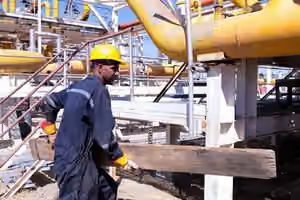
Low-pressure wells, or wells producing large volumes of water alongside crude, may fail to flow naturally after a prolonged shutdown. Restarting them can require pumping, nitrogen injection, chemical treatment or other well-servicing operations.
During a shutdown, mineral scale, asphaltenes and other heavy compounds can accumulate around the wellbore, in production tubing or in flow lines.
Corrosion, sand and solids deposition, pump failures and unwanted flows between zones with different pressures are also recognized risks.
An analysis by the Society of Petroleum Engineers’ Reservoir Advisory Committee on prolonged shut-ins warned that corrosion, deposits, pump damage and plugging can leave some wells requiring repairs, stimulation or recompletion before they return to production.
For weak-performing wells, remediation can also become expensive enough to call their economics into question.
None of those costs appears in a simple calculation of barrels that were not sold.
Rotating shutdowns also cost money
NIOC has experience managing production cuts during earlier rounds of sanctions.
One option is to rotate shutdowns among wells rather than take an entire field offline, reducing the amount of time any single well remains idle.
That can limit the risks, but it requires continuous monitoring of reservoir pressure, fluid composition, gas injection, corrosion, pumps and surface facilities.
Repeated shutdowns and restarts, changes in chemical injection and the recalibration of processing equipment also add to operating costs.
In other words, not producing oil still costs money.
If falling oil revenues squeeze maintenance budgets, what begins as a manageable shutdown can develop into a far more expensive repair problem.
The question is therefore not whether every shut well will be lost. It is how many will return without additional work, how long the others will take to restart and how much that process will cost.
Gas injection links the oil problem to Iran's gas crisis
Many of Iran’s mature oil fields rely on gas injection to maintain reservoir pressure and improve recovery.
Kpler has estimated historical gas injection into Iranian oil fields at about 4.8 billion cubic feet per day. Even before the current crisis, Iran was injecting less gas than its reservoirs required.
That problem could become more acute.
Gas production from South Pars also produces condensate. If Iran becomes unable to export, store or consume enough of that condensate, it may eventually have to reduce gas output.
The government would then face harder choices over how to allocate gas among households, power plants, industry, exports and injection into oil reservoirs.
Lower gas injection does not destroy a well overnight. But over time, it can reduce reservoir pressure and potentially lower ultimate oil recovery.
A crisis that begins with crude exports can therefore feed back into oil production through constraints on condensate and natural gas.
This part of the cost rarely features in official statements.
Iranian officials emphasize continued exports and efforts to circumvent restrictions, but disclose little about how much gas, equipment and investment is needed to maintain reservoirs while production is being curtailed.
Shared fields create another risk
Not all Iranian fields can be treated in the same way.
Azadegan and Yadavaran are shared with Iraq, Forouzan with Saudi Arabia and Salman with the United Arab Emirates, with production taking place from different parts of connected geological structures.
A reduction in Iranian output does not mean crude immediately flows across a border toward a neighboring country’s wells. Reservoir behavior is more complicated and depends on geology.
But if Iran reduces production and development for an extended period while the other side continues drilling and extracting oil, Iran’s economic position in those shared resources can weaken.
Oil left underground in such fields is not necessarily being preserved exclusively for Iran to produce later.
Continued extraction across the border can, in some reservoirs, reduce Iran’s future recoverable share or economic opportunity.
The real cost of shutting production
The impact of a forced production cut cannot be measured by lost sales alone.
It also includes the cost of storing crude, maintaining idle wells, carrying out repairs and restarts, any loss in future productive capacity or reservoir recovery, and missed opportunities in shared fields.
There can be broader consequences as well.
Lower gas production would put more pressure on power generation, petrochemical feedstock and industrial consumption, forcing the government to make increasingly difficult choices over scarce energy supplies.
A prolonged blockade and collapse in exports therefore affects more than the Islamic Republic’s immediate oil revenue.
If wells and facilities are not adequately maintained, part of the cost can persist long after exports recover.
Paknejad can point to uninterrupted exports or production during a limited period, but more important questions remain unanswered.
How many Iranian wells are now producing at full capacity? How many have been throttled back or shut? How has gas injection changed? How much is being spent to manage shut-ins, maintain equipment and eventually restore production?
Without those figures, claims of continued production offer only a partial picture of the state of Iran’s oil industry.
Most Iranian wells may eventually be recoverable. But shutting them is neither cost-free nor necessarily quick to reverse.
The longer production remains constrained, the more maintenance, reservoir management and restart costs may accumulate — costs whose full scale cannot be known without far greater transparency about the condition of Iran’s wells and fields.