• العربية
  • فارسی
Brand
  • Iran Insight
  • Politics
  • Economy
  • Analysis
  • Special Report
  • Opinion
  • Podcast
  • Live TV
  • Iran Insight
  • Politics
  • Economy
  • Analysis
  • Special Report
  • Opinion
  • Podcast
  • Live TV
  • Theme
  • Language
    • العربية
    • فارسی
  • Iran Insight
  • Politics
  • Economy
  • Analysis
  • Special Report
  • Opinion
  • Podcast
  • Live TV
All rights reserved for Volant Media UK Limited
volant media logo

Iranian actress dedicates Venice award to ‘brave women of Iran’

Sep 12, 2026, 21:53 GMT+1
Laleh Marzban in Iranian feature film Falling House / Photo by Venice International Film Festival

Iranian actress Laleh Marzban dedicated her best actress award at the Venice Film Festival to the “brave women of Iran,” saying they were enduring immense pressure and paying a heavy price for basic freedoms.

Marzban won best actress in the festival’s Orizzonti section for her performance in Falling House (Moragheb, or “Watchman”), directed by Mohsen Gharaei.

“I dedicate my award to the women of my country who have paid the highest price for the smallest freedoms,” she said in an emotional acceptance speech.

“These women today carry dreams, courage and hope, and I believe that one day the wish of all of us will come true,” she added.

Concluding in Persian, Marzban said: “I know we are going through the hardest days of our lives, but we must not lose hope.”

Falling House follows a family on the outskirts of Tehran whose home faces demolition as Rashid, the father and a prison guard accused of corruption, discovers that his eldest daughter plans to leave Iran to become a model.

Gharaei has described the home at the centre of the film as a reflection of Iranian society, with three generations of women representing different responses to repression — from endurance and compromise to younger generations seeking a different future.

“For several years, I chose not to make films under the restrictive and censorial conditions of my home country, Iran,” Gharaei said in his director’s statement for the festival.

He said he returned determined to make a film “without compromise” about lost freedom and choices constrained by fear, describing the story as a warning about the point at which the safety of the home can become captivity and mirror a wider structure of oppression.

The 130-minute Persian-language film is an Iran-US-Germany co-production and also stars Farhad Aslani, Rima Raminfar and Elena Khakbazan.

Falling House competed in Orizzonti, Venice’s international competition focusing on new aesthetic and expressive trends in cinema.

Most Viewed

Heavy fighting spreads in southeastern Iran, with security force casualties reported
1

Heavy fighting spreads in southeastern Iran, with security force casualties reported

2
ANALYSIS

Russia may fill Iran gap if support for Yemen Houthis falters

3

Saudi Arabia squeezed from Iraq and Yemen ahead of GCC talks with Iran

4

Blogger sentenced to death in Iran on security-related charges

5
INSIGHT

Bid to oust Pezeshkian exposes rift among Iran conservatives

Banner
Banner
Banner

Spotlight

  • Rushed trials, public hangings: Iran courts race to crush dissent
    INSIGHT

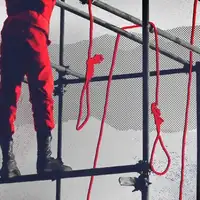
    Rushed trials, public hangings: Iran courts race to crush dissent

  • Israeli envoy says no victory until Islamic Republic falls

    Israeli envoy says no victory until Islamic Republic falls

  • Russia may fill Iran gap if support for Yemen Houthis falters
    ANALYSIS

    Russia may fill Iran gap if support for Yemen Houthis falters

  • Bid to oust Pezeshkian exposes rift among Iran conservatives
    INSIGHT

    Bid to oust Pezeshkian exposes rift among Iran conservatives

  • Iran’s hardliners bet on escalation as options narrow
    ANALYSIS

    Iran’s hardliners bet on escalation as options narrow

•
•
•

More Stories

Heavy fighting spreads in southeastern Iran, with security force casualties reported

Sep 12, 2026, 09:04 GMT+1
100%
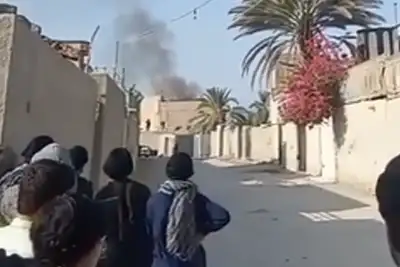
A screengrab from videos of clashes in Saravan, Sistan-Baluchestan province, September 12, 2026

Heavy fighting between Iranian security forces and unidentified gunmen spread across parts of Saravan in southeastern Iran on Saturday, with reports of attacks on military vehicles and dozens of security personnel killed or wounded, the rights group Haalvsh reported.

The clashes began around a residential property in the Bakhshan area before dawn and were still continuing nearly eight hours later, extending to the vicinity of the Madani Grand Mosque and parts of Jahadabad, according to the group’s updates.

Local sources cited by Haalvsh said gunmen attacked at least three vehicles carrying military and security personnel, as well as two locations where forces had gathered. The reported casualty figures have not been independently confirmed.

Sources described sustained gunfire, repeated explosions and the use of heavy weapons, with fighting resuming after brief pauses. Haalvsh said it had not independently established the precise locations of all the exchanges.

  • Iran's forces beat Baluch women protesting over mines and local resources

    Iran's forces beat Baluch women protesting over mines and local resources

  • Armed group claims deadly attack on Guards members in southeast Iran

    Armed group claims deadly attack on Guards members in southeast Iran

Several ambulances were reportedly stationed nearby. Local sources said wounded personnel and bodies had been removed by other security forces, with some transported by ambulance to medical facilities. The identities and exact number of those killed or wounded remained unknown.

Roads blocked around residential area

Security forces blocked streets and access routes around the Madani Grand Mosque, roughly 200 meters from the house targeted in the initial operation, local sources said. A substantial deployment remained in the area, restricting movement around the fighting.

Gunmen inside the house exchanged fire with security personnel, some of whom were wearing traditional Baluch clothing, according to the sources. The property was described as belonging to a local resident, but the reports did not establish his connection, if any, to the gunmen.

Haalvsh reported civilians close to some of the clashes. Their situation remained unclear as fighting continued and roads were blocked, with no confirmed information on civilian casualties.

The gunmen’s identities and affiliations, the reason for the initial operation and any casualties among the armed group were also unknown. Military and security authorities had not issued an official account by the time of its latest update.

Saravan is in Sistan and Baluchestan, a southeastern province bordering Pakistan and Afghanistan and home to Iran’s mainly Sunni Muslim Baluch minority. The province has a long history of armed insurgency, although the reports provided no established link between Saturday’s gunmen and any known group.

As costs soar, healthcare is becoming a luxury for Iranian women

Sep 11, 2026, 02:01 GMT+1
•
Hooman Abedi
100%
A woman undergoes an ultrasound examination at a medical clinic.

Routine screenings and consultations for Iranian women can now cost more than two months of average pay, as healthcare prices rise much faster than wages and force some women to postpone preventive care.

An analysis published by Tejarat News on Wednesday estimated that a package of common women’s screenings and consultations could cost as much as 518 million rials in 2026, up from 138 million rials two years earlier.

For workers earning the average monthly pay of 250 million rials, the upper-end estimate represents more than two months of income.

“People can’t afford bread to eat. Staying healthy has become a luxury, like studying and going to university,” one social media user wrote in response to the figures.

  • Period poverty, stigma deepen hardships for Iranian women

    Period poverty, stigma deepen hardships for Iranian women

Mammograms triple in price

The maximum listed price of a mammogram rose from 10 million rials in the Iranian year beginning March 2024 to 30 million rials in the year beginning March 2026, according to Tejarat News.

That represents a threefold increase in two years for an imaging procedure commonly used to screen for and detect breast cancer.

Ultrasound examinations have also become considerably more expensive. The maximum cost of a transvaginal ultrasound increased by about 80 percent in two years, while an ultrasound of the uterus and ovaries rose from 18 million to 44 million rials, an increase of more than 140 percent.

Pap smears showed an even steeper increase at the upper end of the reported range, with the maximum listed price rising from 9 million rials in 2024 to more than 130 million rials in 2026.

Tejarat News cautioned that the highest figure should not be treated as a typical nationwide price, with testing methods, accompanying services and providers producing substantial differences in the final cost.

Official tariffs for visits to gynecologists have also risen. A specialist consultation increased from just under 2 million to 5 million rials between 2024 and 2026.

The figures are based on tariffs approved by Iran’s Health Ministry, though Tejarat News said many specialists charge more than the official rates.

100%
A woman undergoes a mammogram at a medical imaging center.

Healthcare prices outpace wages

The increases come as Iranian households contend with rapidly rising living costs and a sharp decline in the value of the rial.

The currency has lost around three-quarters of its value against the dollar since March 2024, while annual pay increases for many salaried workers have been around 20 percent. As a result, wages have failed to keep pace with the rising cost of many goods and services.

The burden has particular implications for women, according to journalist Roghayeh Rezaei, who pointed to a contradiction between rising healthcare costs and government policies encouraging women to have more children while restricting access to contraception.

“The issue is no longer simply a woman’s body and her own personal choices. It is a political body that the Islamic Republic uses ideologically,” Rezaei told Iran International.

She said women were expected to serve the state’s population policies while being left to bear much of the financial burden of examinations and treatment.

The problem is particularly acute for women who must choose between preventive healthcare and other household necessities, she said.

“There are women in Iran who see that if they get a Pap smear or a mammogram, they have to take money away from feeding their children,” Rezaei said. “They postpone these tests.”

100%
Healthcare workers wearing protective equipment operate an ultrasound machine at a hospital in Iran.

‘Just don’t live at all’

Rezaei said doctors had described patients, particularly from poorer and more marginalized groups, delaying medical care until their conditions became more serious because they could not afford treatment.

The Tejarat News estimate also excludes medicines, additional laboratory tests, transportation, sanitary products and other medical expenses.

The healthcare figures also prompted broader expressions of frustration over living costs on social media.

One user listed expenses people are increasingly expected to cut, including fuel, restaurants, meat, chicken, shoes and other purchases.

“Just don’t live at all, only so the clerics can rule for two more days,” the user wrote.

Iran cabinet, parliament clash over sweeping ‘infiltration’ measures

Sep 10, 2026, 15:43 GMT+1
100%
File Photo: People walk in a street near Tehran's grand bazaar

A dispute over Iran’s proposed measures to combat foreign infiltration escalated Thursday, with a senior lawmaker accusing President Masoud Pezeshkian’s government of acting illegally after the cabinet opposed a parliamentary committee report on the controversial legislation.

The cabinet has opposed a report by parliament’s National Security and Foreign Policy Committee concerning the proposal, state news agency IRNA reported, citing Iran’s national database of laws and regulations.

The published notice did not specify which parts of the committee report the government opposed. The decision was taken at an August 23 cabinet meeting and formally communicated on September 8 by First Vice President Mohammad-Reza Aref.

Alireza Salimi, a member of parliament’s presidium, hit back Thursday, saying the government had exceeded its authority and was approaching the legislation politically rather than on its merits.

“This is a parliamentary proposal, not a government bill, and therefore the government’s action in opposing it is illegal,” Salimi told parliament’s ICANA news agency.

Controversial measure

The confrontation is the latest stage in a dispute over legislation that would significantly broaden the state’s powers to police contacts with foreign governments, media, universities and international organizations in the name of combating espionage and infiltration.

Parliament approved the proposal’s general principles in August by 183 votes to four, but lawmakers have yet to complete consideration of its individual provisions.

A publicly circulated draft would impose new restrictions on sharing information and contacts with foreign institutions and give the Intelligence Ministry and the Revolutionary Guards’ Intelligence Organization roles in identifying prohibited foreign links.

Critics have warned that its broad language could expose journalists, academics, researchers and others engaged in academic, cultural or civil-society cooperation abroad to prosecution.

Pezeshkian’s administration had already raised objections before the cabinet’s formal decision.

Brain drain risk

Vice President for Legal Affairs Majid Ansari said in August that the proposal conflicted with constitutional protections for individual freedoms and could sharply restrict academic contacts with institutions overseas.

He also argued that Iran already had laws and security agencies to combat foreign intelligence activity.

“If every type of contact and communication faces restrictions and is criminalized by law, naturally they will prefer to migrate and carry out their scientific and research activities in a free environment,” Ansari warned.

Salimi said any defects should instead be addressed as parliament considers the proposal.

“If there are flaws in parliament’s proposal, they should be corrected through expert review,” he said.

He also questioned why government representatives had not raised their objections earlier with the National Security and Foreign Policy Committee.

The dispute leaves the government and parliament at odds not only over the scope of the proposed restrictions, but over the administration’s authority to challenge a security initiative originating in parliament.

War conditions curb mandatory hijab crackdown, Iranian official says

Sep 9, 2026, 14:01 GMT+1
100%
Young Iranian women are seen in a shopping center without mandatory hijab.

Iranian authorities are holding back from enforcing mandatory hijab as extensively as they would like because of “war conditions,” a senior official said Wednesday, even as pressure grows for tougher enforcement.

“Look at how the enemy has managed to promote that decadent Western lifestyle in our society. Look at the hijab issue itself. Because of the war conditions, for now we cannot enter this front the way we should,” Gholam-Ali Haddad-Adel, a member of Iran’s Expediency Council, and Supreme Leader Mojtaba Khamenei’s father-in-law said at a gathering of student associations.

The effects would be visible in schools, making the authorities’ task “much harder than in 1981, when we started working,” Haddad-Adel added.

His comments came a day after an official representing supreme leader in Iranian universities announced that mandatory hijab instructions for universities had been drafted and would soon be issued by the ministries of science and health.

100%
Women without mandatory hijab are seen at an outdoor market in Iran.

Universities prepare hijab rules

Existing hijab regulations were already sufficient but needed renewed attention, Saeed Karami, the cultural and political deputy of leader’s representative body in universities, told Mehr news agency Tuesday.

“We certainly will not see the bitter occurrences in universities that we sometimes see on the streets,” Karami said.

The new rules should be described as “instructions” rather than a “hijab charter,” Karami added.

100%
Women without mandatory hijab are seen at a shopping center in Iran.

Lawmaker Mohammad-Taghi Naghdali also criticized the government Tuesday for what he called a “retreat” on hijab and for failing to promulgate legislation known as the Chastity and Hijab Law.

Parliament would continue pursuing the issue, Naghdali added.

The comments are part of a renewed push by officials for greater enforcement after years of disobedience by women against compulsory veiling.

Officials press for tougher enforcement

The secretary of Iran’s Supreme Council of the Cultural Revolution said Wednesday that mandatory dress rules were not being observed in some government offices and pharmacies.

100%
Women without mandatory hijab walk along a street in Iran.

“In some government offices, hijab is not observed, and in some pharmacies things have gone beyond not wearing hijab,” Abdolhossein Khosropanah said at a meeting of university faculty members in Hamedan.

Government agencies and public-service institutions, including offices and facilities such as pharmacies overseen by ministries, were required to monitor compliance with regulations, Khosropanah added.

The Supreme Council of the Cultural Revolution had adopted “comprehensive and sufficient” measures on hijab over the past two decades, meaning new measures were unnecessary, he said.

100%
A woman without mandatory hijab walks along a street in Iran.

Other officials have made similar calls in recent weeks.

Hossein Akbari, the Revolutionary Guards commander in North Khorasan province, announced Saturday that groups tasked with verbally warning people about their dress would be revived and reorganized to promote mandatory hijab.

Lawmaker Mostafa Moeini Arani has called for action against women deemed improperly veiled and urged parliament speaker Mohammad-Bagher Ghalibaf to promulgate the hijab law.

Kayhan, a newspaper overseen by a representative of Khamenei, has also urged the government to address what it described as a failure to enforce hijab requirements.

Government supporters have staged demonstrations in several cities. They formed a human chain in Qom on August 29 demanding enforcement, while Friday prayer attendees demonstrated outside the South Khorasan governor’s office in Birjand a day earlier.

100%
Young Iranians attend a social gathering without mandatory hijab in Iran.

A video sent to Iran International showed a group of women supporting the government demonstrating in Isfahan on August 24 and chanting for the hijab law to be implemented.

Women continue to defy mandatory hijab

Women have continued to appear without mandatory hijab in public despite pressure from authorities, extending a form of civil disobedience that expanded after the 2022 Woman, Life, Freedom protests.

Citizens have sent Iran International videos and messages criticizing renewed enforcement efforts at a time of rising prices and economic hardship.

They have described mandatory-hijab advertisements in Mashhad, confrontations with women in the streets, warnings issued to shops and cafes and the closure of dozens of businesses in cities across the country.

100%
Women without mandatory hijab walk along a street in Iran.

CNN reported in August that authorities had increased pressure on women over mandatory hijab but were avoiding widespread direct street enforcement because of concern that it could trigger another wave of protests.

Authorities were instead relying on legal measures, business closures and economic pressure while women continued their civil disobedience, CNN reported.

Haddad-Adel’s reference to “war conditions” comes as the Islamic Republic faces continuing military conflict alongside a worsening economic crisis and growing pressure on household finances.

The doubling of Iran’s highest petrol price tier has also increased official concern about public discontent and possible protests.

Why did Iran let back a singer who mocked its ‘sacred’ symbols?

Sep 9, 2026, 05:03 GMT+1
•
Negar Mojtahedi
100%
Iranian musician Mohsen Namjoo, who returned to Iran in 2026 after nearly two decades abroad.

Mohsen Namjoo mocked the Quran, ridiculed religious figures and crossed political red lines that have brought severe punishment for others in Iran. Now back in the country, his return contrasts sharply with restrictions still imposed on female singers.

The contradiction is hard to miss. A government that has demanded ideological conformity from Iranians appears willing to overlook Namjoo’s past transgressions at a time when the Islamic Republic is under extraordinary military, economic and domestic pressure and is openly seeking to encourage some prominent Iranians abroad to return.

Rather than a sign of moderation, his return may reveal how flexible the Islamic Republic can become when its own rules are no longer useful.

Siavash Rokni, an expert on Iranian popular culture, and historian Shahram Kholdi told Iran International’s Eye for Iran that the apparent opening serves several purposes. It can distract from executions and political prisoners, project an image of a more tolerant Iran and send a message to the diaspora that even former critics may be able to return — although the state still decides who gets through the door.

“Diversion. I’m going to make this quite simple,” Rokni said.

Kholdi questioned whether the rules were really changing at all.

“Are they bending their own rules and principles?” he asked. “Or are they temporarily deactivating them?”

Namjoo is an extraordinary figure around whom to test that question.

The Mashhad-born musician left Iran in 2007 and was later sentenced in absentia to five years in prison for “insulting sanctities” over his use of Quranic verses in his music. It remains unclear publicly what became of that sentence before his return. Outside the country, he continued to ridicule religious and political symbols, including former Supreme Leader Ali Khamenei.

He has also faced multiple allegations of sexual misconduct and abuse, which he denies.

And yet he has been allowed home.

His return was also highlighted by Iranian state media, which praised what it described as his “patriotic” opposition to US and Israeli attacks. Namjoo himself said he had encountered considerable kindness since returning.

Who gets to break the rules?

The contrast is particularly stark when Namjoo’s treatment is compared with that of female musicians inside Iran.

Singer Parastoo Ahmadi drew international attention after performing without the compulsory hijab in an online concert in 2024. She was briefly detained after the performance. In June 2026, she and members of her production team were reported to have been sentenced to 74 lashes, along with two-year bans on travel and artistic activity.

Rokni also pointed to Hiva Seyfizadeh, another female singer who was arrested during a live performance in Tehran in 2025.

The juxtaposition gets to the heart of the controversy surrounding Namjoo. A male musician known for ridiculing symbols the Islamic Republic considers sacred — and who has faced sexual misconduct allegations abroad can return, while women continue to face state pressure over their clothing and their voices.

“Why are female singers not able to sing and an alleged sexual abuser is back, is invited back to the country?” Rokni asked. “What is this double standard happening in this country?”

Namjoo’s return has generated precisely the kind of attention such a contradiction might be expected to produce. Iranians have argued over his decision to return, his past and what his presence in Tehran means.

That noise may itself be useful.

Rokni described the use of popular culture as part of a sophisticated communications strategy capable of shifting attention away from far more damaging issues for the state — among them executions, political prisoners, economic hardship and the repression of women.

“Namjoo is not, in my opinion, an important subject of conversation,” he said.

The point is not that his return is insignificant. It is that the spectacle surrounding one musician can swallow up the conversation about thousands of people who do not have the luxury of choosing whether to engage with the Islamic Republic.

An invitation with conditions

Namjoo’s homecoming also carries a message beyond Iran.

If someone who mocked the Quran and the country’s former supreme leader can return, other members of the diaspora may reasonably wonder whether the rules have changed for them too. That question is no longer hypothetical. Culture Minister Abbas Salehi has said his ministry compiled a list of more than 100 cultural, artistic and intellectual figures abroad whose return it wants to facilitate.

But the door does not open equally.

“Returning to one’s country has become a game of preferential treatment,” Rokni said.

The Islamic Republic effectively retains the power to determine which Iranians can come home, which critics can be forgiven and what compromises are required to make that possible.

History gives reason to be wary of assuming that an open door will remain open.

Kholdi recalled the experience of writer and dissident Saidi Sirjani, a prominent critic of the Islamic Republic. Following the death of its founder, Ruhollah Khomeini, Sirjani believed a different political era might be emerging and encouraged other Iranian intellectuals abroad to consider returning, Kholdi said.

Sirjani was arrested in 1994 and died in custody later that year under circumstances that remain disputed.

Kholdi also pointed to Iranian-Canadian scholar Ramin Jahanbegloo, who was arrested in Tehran in 2006 and detained for months before eventually leaving the country.

“I would not consider such moves a sign of the fact that they have become more moderate,” he said.

The history even gives Kholdi reason to worry about Namjoo himself.

“As a human who deserves the security and safety of life like any other normal person, I am worried for his safety,” he said.

Today’s welcome, in other words, does not guarantee tomorrow’s protection.

The power of an open door

That uncertainty carries particular weight for millions of Iranians abroad who still have family, professional and emotional ties to the country.

Kholdi said he was warned as a young academic that outspoken criticism of the Islamic Republic could cost him access to Iran, its archives and the field research needed for his career.

The threat did not have to be explicit. Access itself became leverage.

The same calculation can apply to artists, journalists, academics and ordinary diaspora Iranians who want to see parents or relatives. The state controls the door, and the possibility of losing access can shape behavior long before anyone attempts to cross the border.

Namjoo’s return makes that door appear wider.

It also gives the Islamic Republic a useful image to present to the outside world: a former critic who once violated some of its most sensitive taboos is back in Iran. How intolerant can the system be if someone like him is allowed to return?

Kholdi warned that there is another side to that calculation. Iran has repeatedly detained dual and foreign nationals who later became subjects of negotiations or prisoner exchanges, a practice critics of Tehran describe as hostage diplomacy.

The same state that can invite people in retains the power to prevent them from leaving.

That is why Namjoo’s return matters less as a story of one controversial musician coming home than as a glimpse of how the Islamic Republic behaves when under pressure.

It can enforce religious morality against a woman who sings without a hijab while overlooking the past of a man who mocked the Quran. It can imprison critics while advertising the return of another. And it can present selective tolerance as evidence of change without surrendering the power to reverse that tolerance later.

Namjoo’s return also appears to be part of a broader effort to selectively reopen the door to prominent Iranians abroad while the state retains the power to decide who may return and under what conditions.

The Islamic Republic’s red lines have not disappeared.

What Namjoo’s return exposes is that those lines were never equally rigid for everyone and that when the regime sees an advantage in moving them, even the principles it calls sacred can suddenly become negotiable.