• العربية
  • فارسی
Brand
  • Iran Insight
  • Politics
  • Economy
  • Analysis
  • Special Report
  • Opinion
  • Podcast
  • Live TV
  • Iran Insight
  • Politics
  • Economy
  • Analysis
  • Special Report
  • Opinion
  • Podcast
  • Live TV
  • Theme
  • Language
    • العربية
    • فارسی
  • Iran Insight
  • Politics
  • Economy
  • Analysis
  • Special Report
  • Opinion
  • Podcast
  • Live TV
All rights reserved for Volant Media UK Limited
volant media logo

US carrier on high alert as Houthis advance toward Bab el-Mandeb - Fox News

Sep 13, 2026, 00:29 GMT+1Updated: 01:50 GMT+1

The US Navy remains on high alert aboard the USS George Washington in the Arabian Sea as Iran-backed Houthis advance along Yemen’s Red Sea coast toward the Bab el-Mandeb Strait, Fox News reported Saturday.


Most Viewed

Heavy fighting spreads in southeastern Iran, with security force casualties reported
1

Heavy fighting spreads in southeastern Iran, with security force casualties reported

2
ANALYSIS

Russia may fill Iran gap if support for Yemen Houthis falters

3

Saudi Arabia squeezed from Iraq and Yemen ahead of GCC talks with Iran

4

Blogger sentenced to death in Iran on security-related charges

5

Fall of Hezbollah heights ignites blame game in Tehran

Banner
Banner
Banner

Spotlight

  • Rushed trials, public hangings: Iran courts race to crush dissent
    INSIGHT

    Rushed trials, public hangings: Iran courts race to crush dissent

  • Israeli envoy says no victory until Islamic Republic falls

    Israeli envoy says no victory until Islamic Republic falls

  • Russia may fill Iran gap if support for Yemen Houthis falters
    ANALYSIS

    Russia may fill Iran gap if support for Yemen Houthis falters

  • Bid to oust Pezeshkian exposes rift among Iran conservatives
    INSIGHT

    Bid to oust Pezeshkian exposes rift among Iran conservatives

  • Iran’s hardliners bet on escalation as options narrow
    ANALYSIS

    Iran’s hardliners bet on escalation as options narrow

•
•
•

More Stories

Mideast oil flows recover while Iran exports vanish, tracker says

Sep 12, 2026, 20:49 GMT+1
100%
A tugboat guides the crude oil tanker Odessa, carrying UAE crude after passing through the Strait of Hormuz with its Automatic Identification System transponder turned off, navigates the waters at Daesan port, where it is expected to discharge crude oil, in Seosan, South Korea, May 8, 2026.

Middle Eastern oil exporters are finding ways around months of war and shipping disruption, with UAE crude exports back at pre-war levels, according to TankerTrackers.com, which says Iranian exports have effectively vanished.

Southern Iraqi exports are now about 33% below pre-war levels, the vessel-tracking service said, a dramatic improvement from April, when they were down 95%.

The recovery comes despite severe disruption to the Strait of Hormuz and a US naval blockade that has reshaped oil flows from the region.

TankerTrackers said not a single barrel of Iranian crude had crossed the blockade line between the Gulf of Oman and Arabian Sea over the past 60 days.

Iran's loss of export capacity does not appear to be creating the storage crunch that might normally follow such a collapse in overseas sales. TankerTrackers estimates Iranian production has fallen to roughly the level required for domestic consumption and refining, leaving little excess crude to store.

Oil finds new routes

Other data suggest producers and traders are adapting to the disruption.

Ship-to-ship transfers of crude in the Gulf of Oman averaged 7.15 million barrels per day over the past 14 days, TankerTrackers said, up 56% from the previous month.

The service also said some Arab producers have begun using tankers previously involved in sanctions-busting trades to move their oil.

“They can spoof their positions thanks to the military-grade transponders that still operate onboard them,” it posted on X. “It also means that they are pinging on the other side of the planet.”

The adaptations come as oil prices remain elevated after another week of attacks and threats to key Middle Eastern export routes.

Brent crude settled at $104.61 a barrel on Friday despite falling 2.8% on the day, gaining more than 8% over the week. US West Texas Intermediate remained above $100.

The Strait of Hormuz remains severely disrupted after months of fighting and the US blockade, while Iran-backed Houthis have advanced around the Bab el-Mandeb Strait, putting further pressure on shipping between the Red Sea and Gulf of Aden.

Saudi Arabia has meanwhile shut its East-West pipeline as a precaution after a drone attack. The route, which carries Saudi crude west to the Red Sea and bypasses Hormuz, had recently been moving about 4 million to 5 million barrels per day.

Saudi and Iraqi authorities said the drones were launched from Iraqi territory.

Attention now turns to Oman, where Iran and regional states are expected to meet on Monday to discuss Hormuz and regional security.

Iran and Oman have held consultations over arrangements for safe shipping through the strait, although Tehran says their understanding would establish a framework for any eventual reopening rather than reopen Hormuz immediately.

Rushed trials, public hangings: Iran courts race to crush dissent

Sep 12, 2026, 18:54 GMT+1
•
Negar Mojtahedi
100%
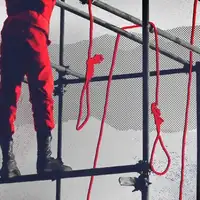
A graphics based on an actual image of a scaffolding with gallows erected for public hangings in Iran

Iran has executed at least 29 people arrested in connection with the widespread protests in January, more than half of whom were not accused of killing anyone, with some put to death in public in what rights groups describe as a campaign to deter further dissent.

The findings are contained in a new joint report by Human Rights Watch and the Abdorrahman Boroumand Center for Human Rights in Iran examining executions following the nationwide protests that erupted in late 2025 and January 2026.

Between March 18 and the end of August, Iranian authorities announced the executions of 29 people arrested in connection with the protests. Several were just 18 or 19 years old, and five were executed in public.

In 16 cases, authorities did not allege that the defendants had killed anyone. Instead, young protesters have been executed over allegations including setting fire to buildings or vehicles, possessing or using Molotov cocktails, entering or damaging government buildings, throwing stones and blocking streets.

The organizations say the speed with which some defendants have gone from arrest to execution has been extraordinary.

Saleh Mohammadi, a 19-year-old wrestling champion, was executed about five weeks after his arrest. Amir Hossein Hatami, 18, was executed 84 days after his arrest.

Sasan Azadvar Jonaqani, a 21-year-old karate champion, was arrested, convicted and executed in under four months. Authorities accused him of acts including breaking the windows of a police bus with stones and a baton.

‘War against God’

The executions mark a new phase in the crackdown that followed the January protests, when Iranian authorities killed thousands and detained tens of thousands as they sought to suppress the unrest.

Human Rights Watch and the Boroumand Center found that at least 59 men were executed during the same period on what they described as politically motivated and vaguely defined national security charges following grossly unfair trials.

At least three had reportedly been arrested in connection with the 2022 Woman, Life, Freedom protests.

Iranian courts have relied heavily on broadly defined capital offenses including “waging war against God” and “corruption on earth.”

Human Rights Watch and the Boroumand Center said those charges have allowed courts to impose death sentences without establishing that defendants were responsible for intentional killings.

‘Helping hostile states’

The report also points to Iran's 2025 Espionage Law as an increasingly important tool in protest-related prosecutions.

At least eight protesters executed following the recent demonstrations were convicted under the law, which expanded the range of conduct punishable as cooperation with “hostile states” and provides for expedited proceedings.

It can also impose lengthy prison terms for sending footage, images or information to foreign media, citizen journalists or foreign social media pages when authorities deem the activity contrary to national security.

‘Torture, forced confessions’

Human Rights Watch and the Boroumand Center documented defendants being denied independent lawyers of their choosing and courts relying on confessions allegedly extracted through torture, as well as unsubstantiated reports from security and intelligence agencies.

Detainees were allegedly beaten, subjected to electric shocks and mock executions, held for prolonged periods in solitary confinement and threatened with sexual violence against themselves or family members.

Some defendants later retracted their confessions in court and said they had been tortured. The report says authorities failed to investigate those allegations.

The organizations also documented the use of televised confessions before cases had concluded.

In one recording broadcast by state media, an interrogator told 18-year-old Shervin Bagherian that he was accused of “waging war against God.”

Bagherian appeared not to know what the charge meant. When the interrogator told him it meant execution, the teenager pleaded not to be put to death.

Public hangings

The report places particular emphasis on the return of public executions in protest-related cases, which the organizations say is intended to instill fear in the wider population.

On July 28, authorities executed Abolfazl Sepahi and Amir Hossein Safari in Alikhani Square in Isfahan, where four members of the security forces were reported killed during protests on January 8.

Three other men — Saleh Mohammadi, Saeed Davoudi and Mehdi Ghasemi — were executed in March “in the presence of a group of people in Qom,” according to the judiciary's Mizan news agency, language the report says indicated a public execution.

Scores could be next

Scores of protesters and political dissidents, including women and children, remain at risk of execution, according to the report.

Amnesty International said in July that it had identified 60 people, including three children, at risk of execution in connection with protests. Iran Human Rights has reported that more than 70 protesters were at risk in Isfahan Prison alone.

The actual number could be substantially higher.

Among those who could still be executed is 26-year-old mixed martial arts fighter and kickboxer Benyamin Naghdi.

A revolutionary court in Shiraz sentenced Naghdi to death for “corruption on earth” after accusing him of using a fire extinguisher as a makeshift flamethrower against security forces riding motorcycles during protests on January 3.

His lawyer, Mostafa Nili, said prosecutors initially accused Naghdi of attempted murder but later dropped charges related to bodily injury. Nili said no one was injured.

Nevertheless, the court concluded that the remaining allegations collectively amounted to “corruption on earth,” and Iran's Supreme Court upheld Naghdi's death sentence in July, according to the report.

Lawyers taking protest-related cases have also faced threats of arrest, while the Boroumand Center documented the arrests of at least 19 lawyers in the month following the January crackdown. Others have faced renewed prosecution or disbarment.

Human Rights Watch and the Boroumand Center describe the campaign as the “weaponization of the death penalty” in the aftermath of the January crackdown, intended to instill fear and deter further dissent.

Iraqi groups deny Saudi pipeline strike, say ‘would be proud if we did it’

Sep 12, 2026, 15:05 GMT+1
100%
Satellite image shows damage to the East-West pipeline facility in the Hejaz Region, Saudi Arabia, on September 11, 2026. 2026

Iran-backed Iraqi armed groups denied responsibility on Saturday for the drone attack on Saudi Arabia’s East-West oil pipeline, rejecting an accusation that has already prompted Baghdad to dismiss a military commander and close border crossings with Iran.

The Islamic Resistance in Iraq said an attack on Saudi Arabia’s critical infrastructure would be “a source of pride” if it had carried it out, but insisted that it had not.

“The accusations against the Iraqi resistance regarding the attack on Saudi Arabia’s vital infrastructure, while a source of pride if we had carried out such an action, are not something we claim,” the alliance said in a statement carried by Iran’s Tasnim news agency.

Iraq closed three border crossings with Iran on Saturday, officials told AFP, after Iraqi and Saudi authorities said the drones that struck the pipeline had been launched from Iraqi territory.

An Iraqi security source said the closures were “part of an intelligence effort to track down the perpetrators and prevent their escape” and to hinder the smuggling of drones through the crossings.

Iraqi Prime Minister Ali al-Zaidi also dismissed the military commander in Maysan province, which borders Iran, after authorities determined that drones had been launched from the province.

No group has claimed responsibility.

The statement criticized the Iraqi government for what it called a rush to accept the accusations “without documented and reliable evidence or an investigation,” and said the alliance was prepared to participate in any government inquiry aimed at establishing what happened.

US President Donald Trump has said Iran was probably behind the attack, while Saudi Arabia has said the drones originated in Iraq. Neither Riyadh nor Baghdad has publicly identified the group responsible.

The dispute has also spilled over into relations between Baghdad and Tehran.

Iran’s ambassador to Iraq, Mohammad Kazem Al-e Sadegh, told Tasnim that the Mehran and Khosravi crossings remained open and said Tehran was in talks with senior Iraqi officials over the closure of the Chazabeh and Shalamcheh crossings.

Al-e Sadegh acknowledged reports that the closures had been ordered in connection with an operation against Saudi Arabia launched from Iraqi territory, but questioned their relevance to the border and said large numbers of Iraqis who had travelled to Iran for pilgrimage or medical treatment had been left stranded.

The attack has taken on wider significance because of the growing importance of the East-West pipeline during the war.

The route carries Saudi crude from the kingdom’s oil-producing east to the Red Sea, bypassing the Strait of Hormuz as shipping through the waterway faces severe disruption.

Blogger sentenced to death in Iran on security-related charges

Sep 12, 2026, 13:42 GMT+1
100%

Marziyeh “Sevda” Ebrahimi Shamsabadi, a 33-year-old blogger from Bandar Abbas who has been detained since March, has been sentenced to death, according to information obtained by Iran International.

Branch 3 of the Bandar Abbas Revolutionary Court convicted her on charges including insulting Iran's supreme leader, media and propaganda activity against national security, intelligence and security activity on behalf of hostile governments, and taking and sending photographs to Persian-language media abroad, according to the information.

The court also sentenced her to between two and five years in prison, barred her from some government services and ordered the confiscation of property. Her lawyer was notified of the death sentence on August 23.

Ebrahimi Shamsabadi was held in solitary confinement for 20 days and faced severe pressure during interrogation, according to information obtained by Iran International. Her family was not told where she was being held or about her condition during that period.

The sentence was issued by Judge Khajeh-Hassani, who was previously praised by judiciary officials as an exemplary judge for, among other things, issuing a high number of rulings and what they described as diligence in his work.

  • Protester blinded in one eye sentenced to death after return to Iran

    Protester blinded in one eye sentenced to death after return to Iran

More political and protest-related death sentences

The case comes amid a series of death sentences against protesters and political detainees in Iran.

Earlier this month, US-based rights outlet HRANA reported that Ali Zarei Doozdarresi, a protester who lost sight in one eye after being shot during the 2022 Woman, Life, Freedom protests, had been sentenced to death after returning to Iran from Germany.

Iran International also reported in August that Leila Abolhassani, a 43-year-old mother of two detained during the January protests in Shahin Shahr, had been sentenced to death on charges of “waging war against God.” Her case was sent to the Supreme Court following an appeal.

  • Iran sentences woman detained during January protests to death

    Iran sentences woman detained during January protests to death

Rights groups warn of rising executions

Rights groups have accused Iranian authorities of increasingly using capital punishment against protesters and political dissidents.

Norway-based Iran Human Rights said last month that 29 people arrested in connection with the January 2026 protests had been executed since March 19, in addition to two protesters from the 2022 Woman, Life, Freedom movement.

The US-based Abdorrahman Boroumand Center said in August that it had documented 950 executions in Iran since the start of 2026, including at least 20 women and 30 protesters. The UN human rights chief has also accused Iran of using executions to “instill fear among the population and suppress dissent.”

Trump says Iran likely behind Saudi pipeline attack

Sep 12, 2026, 13:20 GMT+1
100%
US President Donald Trump walks after delivering remarks to US embassy personnel and business leaders at Deerfield Residence, the residence of the US Ambassador to Ireland, in Dublin, Ireland, September 12, 2026.

US President Donald Trump said on Saturday that Iran was probably responsible for the aerial attack that shut Saudi Arabia’s East-West oil pipeline, while predicting that the war with Tehran would end “very soon.”

“I think they are, probably they are,” Trump told reporters in Dublin when asked whether Iran was behind the attack.

Trump said he expected the conflict to end shortly after the US midterm elections in November. “I think very soon. I think it'll be probably right after the mid-terms,” he said, adding that oil prices would “tumble” once the war ended.

He also said Washington controlled the Strait of Hormuz and that the Iran-backed Houthis “don't want to fight with us.” Asked about Saudi Arabia, Trump described Crown Prince Mohammed bin Salman as “a good friend of mine” and said: “Everything will work out fine.”

Saudi pipeline attack triggers border restrictions

The comments followed an aerial attack on Saudi Arabia’s East-West pipeline, a critical route carrying crude from the kingdom’s eastern oil-producing areas toward the Red Sea. The strike caused injuries and material damage and forced the pipeline to shut.

Saudi Arabia said the drones involved in the attack were launched from Iraqi territory.

Iraq subsequently ordered the closure of the Shalamcheh border crossing with Iran as a precaution, Reuters reported, citing two security sources. The sources said a large-scale operation was underway to pursue those responsible for the attack.

Valiollah Hayati, deputy governor of Iran's Khuzestan province, said Iraqi authorities had also closed the Chazabeh crossing from early Saturday, halting passenger and commercial traffic through both crossings.

Hayati later said Iraq's prime minister had ordered authorities to allow stranded passengers on both sides of the Shalamcheh and Chazabeh crossings to pass. Travelers were given a two-hour window to cross before the borders were to close again, he said.

Sources at Basra airport also reported the suspension of flights to and from Iran.

The attack drew condemnation from several regional governments, while Spain called for urgent de-escalation and said freedom of navigation through both the Strait of Hormuz and Bab el-Mandeb must be guaranteed.

BRICS seeks common ground as Iran-UAE tensions persist

Diplomatic attention also turned to New Delhi, where BRICS leaders unanimously adopted a joint declaration calling for conflicts to be resolved through “dialogue, consultation and diplomacy” and warning about growing nuclear risks.

The declaration condemned unilateral coercive measures that it said violated international law and said nuclear safeguards, safety and security must be upheld even during armed conflicts. Reuters had earlier reported that the text was expected to avoid naming individual countries as members worked to bridge differences between Iran and the United Arab Emirates over the regional war.

The agreement marked a change from a BRICS foreign ministers’ meeting in May, when divisions between Tehran and Abu Dhabi prevented the group from issuing a joint statement.

Iranian President Masoud Pezeshkian met UAE President Sheikh Mohamed bin Zayed Al Nahyan on the sidelines of the summit on Saturday, though Iran’s embassy in India gave no details of their discussions.

Chinese President Xi Jinping meanwhile urged BRICS members to take on a peacemaking role in the Middle East conflict, saying the war did not serve the common interests of the international community.

Tehran hardens military and nuclear rhetoric

Inside Iran, senior officials and lawmakers continued to signal a tougher posture. Lawmaker Esmail Kowsari said Iran had moved beyond a defensive military posture and that its war strategy had become offensive.

IRGC commander Ahmad Vahidi said Israel’s military would “collapse in a very short time” without US support and argued that Washington and Israel had underestimated Iran’s military capabilities.

Another member of parliament’s National Security and Foreign Policy Committee, Mohammadreza Mohseni-Sani, said Iran no longer regarded itself as constrained by the Nuclear Non-Proliferation Treaty and could reconsider its enrichment policy.

“Everything is changing” and “anything is possible,” he said when asked about higher enrichment levels and changes to Iran’s nuclear and defense doctrine.

At the same time, Russia’s state nuclear corporation Rosatom said it planned to increase the number of its specialists at Iran’s Bushehr nuclear power plant to 150 in the near future.