Iran likely to reverse-engineer captured US underwater drone - Reuters

Iran is likely to study and attempt to reverse-engineer a captured US military underwater drone, Reuters reported Wednesday, citing analysts.
The Dive-LD autonomous underwater vehicle, made by Anduril, was recovered by Iranian forces after US Navy officials said the older-model vessel suffered a malfunction and was left “dead in the water.”
“Iranian engineers could definitely reverse-engineer the mechanical systems,” Bryan Clark of the Hudson Institute told Reuters, pointing to Tehran’s history of exploiting captured US technology.
Farzin Nadimi of the Washington Institute for Near East Policy said the seizure could help the IRGC “make better versions of their own designs,” though analysts said Iran was unlikely to gain a decisive military advantage from the drone.
The seizure recalls recalls Iran’s 2011 capture of a US RQ-170 Sentinel stealth drone, which Tehran later said it had reverse-engineered before unveiling domestically produced models resembling the aircraft.




Iran is seeking to turn the US maritime blockade back on Washington by expanding its retaliation beyond the Strait of Hormuz, threatening shipping across a wider area after US attacks on Iranian tankers.
Nour News, a website close to Iran’s Supreme National Security Council, said Wednesday that the latest escalation showed signs of reversing the logic of the blockade.
“The US naval blockade was supposed to target Iran’s economic resilience by cutting or restricting its export routes,” it said.
But with both sides now attacking tankers and military vessels and traffic through Hormuz again sharply reduced, “the cost of the blockade is no longer distributed solely on the Iranian side.”
The Revolutionary Guards (IRGC) said Wednesday that Iranian forces had responded to US attacks on five Iranian tankers by targeting two US warships and eight oil tankers, as well as 10 “violating vessels” attempting to pass through Iran’s restricted zone in Hormuz.
The US denied that its warships had been hit.
‘An eye for an eye’
Iran is now threatening to widen that confrontation geographically.
IRGC spokesman Hossein Mohebbi said a new restricted area would extend from the direction of Chabahar through parts of the Gulf of Oman and Arabian Sea along routes leading towards Hormuz. Its precise coordinates have yet to be announced.
The IRGC has also warned tankers and other vessels at ports and anchorages in Kuwait and Bahrain to leave, threatening those that remain.
Ships entering without Iranian permission would be placed on a sanctions list and denied maritime, insurance and other services, Mohebbi said, including during future passages through Hormuz.
Conservative political activist Amir Chizari, who is close to parliament speaker Mohammad-Bagher Ghalibaf, advocated going further, calling for Iran to prevent ships from using ports in Persian Gulf countries hosting US military bases.
“Head for head, eye for eye—that means all these ports will be blockaded by Iran,” he wrote on X.
Nour News said the significance lay not simply in creating another restricted zone but “in changing the logic of confrontation with the blockade.”
“Tehran does not necessarily need to seize a ship to change the behaviour of an actor; it is enough for the cost of interacting with a vessel or network to rise so that the other side retreats in advance,” it said.
Diplomacy narrows
The increasingly expansive strategy comes as prospects for reviving diplomacy appear to be shrinking.
Foreign Minister Abbas Araghchi said Tuesday that a US return to its commitments and the Islamabad understanding would “pave the way for a return to normality.”
But Middle East Eye reported Wednesday, citing two sources close to the Iranian government, that President Donald Trump had conveyed through Pakistani and Qatari officials that Washington would not return to the previous understanding.
The absence of a diplomatic route raises the stakes of Iran’s strategy: Tehran is betting that making the blockade more expensive for Washington, commercial shipping and regional states will eventually create pressure to ease it.
A costly gamble
Inside Iran, critics warn that the same strategy could inflict enormous damage on the country itself.
Heshmatollah Falahatpisheh, a conservative former chairman of parliament’s National Security and Foreign Policy Commission, accused hardliners of risking Iran’s tanker fleet.
“The National Iranian Tanker Company is the largest tanker company in the world. They are setting the country’s unparalleled wealth on fire. This Iran-burning must end,” he wrote on X.
Hardliners counter that such economic calculations make little sense when they believe Iran faces an existential threat.
One user responding to Falahatpisheh asked what guarantee Iran had that peace would last if it compromised now, or that the United States would not attack again months later.
The costs of escalation are already becoming apparent. Brent crude rose above $100 a barrel Wednesday, while flows through Hormuz fell as low as two million barrels a day after reaching eight to nine million before fighting resumed.
In Iran, the dollar rose above 2.33 million rials on the foreign exchange market, another record low for the national currency.
Iran’s strategy amounts to a gamble that widening the geographic and economic costs of the blockade will eventually make it harder to sustain. But the deeper Tehran extends the confrontation beyond Hormuz, the greater the risk that those costs return to Iran itself.
Moderate and reformist figures in Tehran are increasingly warning that the country cannot sustain a prolonged war, challenging hardline calls for Iranians to accept further economic hardship as the price of resistance.
Their warnings come amid rising tensions in the Persian Gulf and Strait of Hormuz and growing concern that renewed military confrontations could escalate into a broader conflict.
Conservative lawmaker Gholamreza Tajgardoon on Tuesday urged Iranians to be prepared to “pay a price for their resistance.”
But several moderate and reformist figures have argued that years of sanctions, inflation and now war have left ordinary people with little capacity to absorb further economic pressure.
“Right now, in certain border and maritime regions, we are witnessing tension, conflict and military engagements,” veteran reformist figure Mohammad Atrianfar told Khabar Online on Tuesday. “One of the public’s serious concerns is whether these conflicts will lead to a full-scale war.”
Atrianfar said preventing a return to widespread war was an “unavoidable necessity” and called for clear red lines and emergency communication channels to help manage the conflict.
His comments come amid US strikes on Iranian tankers and Iranian attacks on American bases and warships in the region.
Atrianfar argued that diplomatic compromise should not automatically be treated as capitulation, saying the distinction between an honourable compromise and a damaging retreat depended on whether an agreement served national interests and restored stability.
Moderate political figure Mansour Haghighatpour made a similar argument, pointing to inflation and what he described as growing public exhaustion.
While Iran should maintain its ability to defend itself against foreign threats, he said, “the priority should remain securing a peace that guarantees national interests.”
His comments appeared to respond directly to Tajgardoon’s appeal for Iranians to accept the costs of resistance. Expecting people to endure continuing hardship without diplomatic progress was becoming untenable, Haghighatpour said.
Reformist politician Mahmoud Mirlohi focused on the physical and economic risks of a drawn-out conflict, warning that critical infrastructure, including power and petrochemical facilities, could become targets.
“Prolonged war and harsh sanctions have pushed Iranian society to its limits,” he said, arguing that Iranians needed “a chance to breathe.”
Mirlohi also criticised what he described as “extremist rhetoric and maximalist behaviour” at home, saying portraying Iranian political figures as advocates of continued war or nuclear escalation made diplomacy more difficult.
The increasingly public warnings reflect a broader argument within Iran over not only how the war should end, but how much more economic and social pressure the population can reasonably be expected to bear.
Hamidreza Jalaeipour, a reformist political figure generally supportive of the existing system, said Iranians had already endured more than two decades of sanctions, high inflation and stagnant economic growth.
He claimed more than 40% of the population was now below the poverty line and warned that “prolonging a war of attrition exacerbates this severe economic strain and risks severe public fatigue.”
“Iran needs realistic governance rather than radical idealism,” Jalaeipour said, accusing hardliners and partisan media of obstructing the flexibility needed for diplomacy and risking greater social unrest.
The UN nuclear watchdog’s 35-nation Board of Governors voted Wednesday to report Iran to the Security Council over breaches of its nuclear non-proliferation obligations, escalating a two-decade nuclear dispute amid an ongoing war and renewed Western pressure on Tehran.
The resolution was spearheaded by the United States and the E3 (Britain, France and Germany) after the International Atomic Energy Agency said Iran had failed to provide inspectors with access to nuclear facilities and information needed to account for its enriched uranium stocks.
It is the first time Iran has been reported to the Security Council by the IAEA since 2006, when an escalating confrontation over Tehran’s nuclear activities moved from the Vienna-based watchdog to the UN body and eventually led to a series of Security Council sanctions.
The latest referral comes in radically different circumstances. Iranian nuclear facilities have been heavily damaged in US and Israeli strikes, and inspectors have not returned to the affected sites since the attacks began in June 2025.
The IAEA says it has consequently lost track of Iran’s stockpile of uranium enriched to 60% purity, which before the strikes stood at 440.9 kilograms.
Iran maintains that its nuclear program is peaceful and has argued that the US and Israeli attacks themselves made continued inspections impossible.
Tehran’s mission to international organizations in Vienna said on X that the resolution would facilitate the “further erosion and ultimate collapse of the proliferation regime as a whole,” intensifying Tehran’s criticism of the IAEA as politically driven.
China and Russia joined Iran ahead of Wednesday’s vote in opposing the Western-backed resolution, saying the referral “lacks a legal basis” and would aggravate the crisis rather than aid diplomacy.
The three countries described the finding of Iranian non-compliance as “politically motivated and far-fetched” and argued that US and Israeli attacks on Iran’s nuclear facilities were the primary reason Tehran had subsequently denied the IAEA access.
The vote adds another layer of diplomatic pressure as Iran faces an intensifying war with the United States and widening economic sanctions.
Britain this week unveiled tougher restrictions targeting Iran’s access to its financial system, trade and shipping, following the reimposition of UN sanctions under the snapback mechanism initiated last year by Britain, France and Germany.
What happens at the Security Council is less certain. Russia and China both hold vetoes, making substantive action against Iran difficult even as the referral returns the nuclear dispute to the UN body for the first time in two decades.
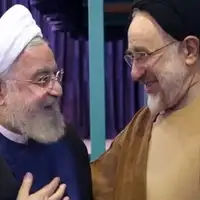
Calls by former presidents Hassan Rouhani and Mohammad Khatami to end Iran’s war with the United States have triggered a fiercer political confrontation after they invoked public opinion in support of diplomacy rather than continued fighting.
Both men have called for an “honourable” end to the war, but Rouhani has gone further, arguing that public opinion should be taken into account in deciding whether Iran continues down the path of confrontation.
“Tell them that our plan is to fight the great powers of the world for another 20 years,” Rouhani said at a recent meeting with former officials. “If the people say they accept this, very well, let us continue. But if the people do not accept it and show us another way, do we not want to accept it?”
The argument has provoked a sharp backlash from hardliners, who say questions of war and national defence cannot be reduced to public opinion while the country remains under attack.
Hossein Shariatmadari, editor of the hardline Kayhan newspaper, accused Rouhani and Khatami on Tuesday of distorting reality, saying their calls amounted to “dishonourable and humiliating surrender” and would deliver the United States and Israel what they had failed to achieve through two wars.
The dispute comes amid renewed military escalation, with the United States and Iran again exchanging attacks after a relative lull and diplomatic efforts failing to produce a lasting settlement.
President Masoud Pezeshkian has nevertheless repeatedly argued that Iran should end the conflict while it remains in a position of “power and dignity,” pointing to inflation, sanctions and a sharp decline in foreign trade as reasons to reach a diplomatic understanding rather than prolong the confrontation.
But Rouhani’s appeal to public opinion has taken the debate into more contested political and constitutional territory.
“We must, according to the overwhelming majority of the people, end the war with dignity so that we can build the country …so that we can have hope for the future,” he said.
Rouhani did not explicitly call for a referendum, but his remarks revived one of the most sensitive arguments in Iranian politics: whether major questions of national policy should be put directly to voters.
Article 59 of Iran’s constitution allows the exercise of legislative power on major economic, political, social and cultural issues through a referendum and direct consultation of voters.
No referendum under the provision, however, has ever been held.
Former Supreme Leader Ali Khamenei rejected calls for referendums to resolve major national disputes in 2023, arguing that ordinary people were not equipped to analyse complex political, economic and international questions.
That divide is now being reframed around the war.
Tabnak, a website close to Supreme National Security Council secretary Mohsen Rezaei, rejected Rouhani’s argument by recasting the choice itself.
“If a referendum is to be held, the question must be precise and honest: ‘Are the people in favour of defending the country against foreign attack?’ or ‘Do you allow the country to surrender?’” it wrote.
“The difference between these two questions is the difference between political analysis and playing with words.”
Tasnim, a news agency linked to the Revolutionary Guards (IRGC), similarly attacked Rouhani as a symbol of a political current that had “simplified complex issues such as negotiations, peace and war.”
It accused the group of “naivety and wishful thinking,” arguing that they believed “a few legal clauses and two signatures” could resolve decades of tensions between Iran and the United States.
Kayhan argued that proposing a referendum during wartime would weaken Iran’s position and that turning the defence of territorial integrity into a factional issue amounted to shirking national duty and assisting the enemy’s pressure campaign.
The attacks have extended beyond the media. At a nightly gathering in a public square, one speaker said that with the Supreme Leader and the Supreme National Security Council in place, Rouhani had no right to take a position on the issue.
Hardline cleric and eulogist Mehdi Salahshour said on X that asking the public whether the war should continue or stop would “only destroy national resolve and sow seeds of doubt in the hearts of fighters on the battlefield and in the streets.”
The response has not been uniformly hostile.
Conservative news website Khabar Online noted that, with the exception of former president Mahmoud Ahmadinejad, who has been largely silent in recent years, Iran’s other living former presidents had chosen to intervene at a critical moment.
“These days Khatami speaks of ‘honourable peace’ and Rouhani of a ‘dignified end’,” it wrote.
Moderate website Rouydad24 contrasted their interventions with what it described as the relative silence of reformists serving inside Pezeshkian’s government, arguing that Rouhani was articulating a position many Iranians had expected to hear from their representatives in government.
Mohammad Ali Sobhani, a former Iranian ambassador to Qatar, Jordan and Lebanon, also backed Khatami’s position, arguing that Iran could not leave the conflict suspended indefinitely.
“We must change the situation, bring the playing field towards dialogue and compromise so that the world supports us and we can impose peace on the other side,” he told Khabar Online.
Iranian authorities are holding back from enforcing mandatory hijab as extensively as they would like because of “war conditions,” a senior official said Wednesday, even as pressure grows for tougher enforcement.
“Look at how the enemy has managed to promote that decadent Western lifestyle in our society. Look at the hijab issue itself. Because of the war conditions, for now we cannot enter this front the way we should,” Gholam-Ali Haddad-Adel, a member of Iran’s Expediency Council, and Supreme Leader Mojtaba Khamenei’s father-in-law said at a gathering of student associations.
The effects would be visible in schools, making the authorities’ task “much harder than in 1981, when we started working,” Haddad-Adel added.
His comments came a day after an official representing supreme leader in Iranian universities announced that mandatory hijab instructions for universities had been drafted and would soon be issued by the ministries of science and health.
Universities prepare hijab rules
Existing hijab regulations were already sufficient but needed renewed attention, Saeed Karami, the cultural and political deputy of leader’s representative body in universities, told Mehr news agency Tuesday.
“We certainly will not see the bitter occurrences in universities that we sometimes see on the streets,” Karami said.
The new rules should be described as “instructions” rather than a “hijab charter,” Karami added.
Lawmaker Mohammad-Taghi Naghdali also criticized the government Tuesday for what he called a “retreat” on hijab and for failing to promulgate legislation known as the Chastity and Hijab Law.
Parliament would continue pursuing the issue, Naghdali added.
The comments are part of a renewed push by officials for greater enforcement after years of disobedience by women against compulsory veiling.
Officials press for tougher enforcement
The secretary of Iran’s Supreme Council of the Cultural Revolution said Wednesday that mandatory dress rules were not being observed in some government offices and pharmacies.
“In some government offices, hijab is not observed, and in some pharmacies things have gone beyond not wearing hijab,” Abdolhossein Khosropanah said at a meeting of university faculty members in Hamedan.
Government agencies and public-service institutions, including offices and facilities such as pharmacies overseen by ministries, were required to monitor compliance with regulations, Khosropanah added.
The Supreme Council of the Cultural Revolution had adopted “comprehensive and sufficient” measures on hijab over the past two decades, meaning new measures were unnecessary, he said.
Other officials have made similar calls in recent weeks.
Hossein Akbari, the Revolutionary Guards commander in North Khorasan province, announced Saturday that groups tasked with verbally warning people about their dress would be revived and reorganized to promote mandatory hijab.
Lawmaker Mostafa Moeini Arani has called for action against women deemed improperly veiled and urged parliament speaker Mohammad-Bagher Ghalibaf to promulgate the hijab law.
Kayhan, a newspaper overseen by a representative of Khamenei, has also urged the government to address what it described as a failure to enforce hijab requirements.
Government supporters have staged demonstrations in several cities. They formed a human chain in Qom on August 29 demanding enforcement, while Friday prayer attendees demonstrated outside the South Khorasan governor’s office in Birjand a day earlier.
A video sent to Iran International showed a group of women supporting the government demonstrating in Isfahan on August 24 and chanting for the hijab law to be implemented.
Women continue to defy mandatory hijab
Women have continued to appear without mandatory hijab in public despite pressure from authorities, extending a form of civil disobedience that expanded after the 2022 Woman, Life, Freedom protests.
Citizens have sent Iran International videos and messages criticizing renewed enforcement efforts at a time of rising prices and economic hardship.
They have described mandatory-hijab advertisements in Mashhad, confrontations with women in the streets, warnings issued to shops and cafes and the closure of dozens of businesses in cities across the country.
CNN reported in August that authorities had increased pressure on women over mandatory hijab but were avoiding widespread direct street enforcement because of concern that it could trigger another wave of protests.
Authorities were instead relying on legal measures, business closures and economic pressure while women continued their civil disobedience, CNN reported.
Haddad-Adel’s reference to “war conditions” comes as the Islamic Republic faces continuing military conflict alongside a worsening economic crisis and growing pressure on household finances.
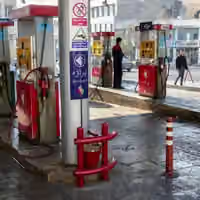
The doubling of Iran’s highest petrol price tier has also increased official concern about public discontent and possible protests.