Baghdad urges action after Iraqi students attacked in Iran over assault claim
Screengrabs from videos shared on social media from the attack on Iraqi students in Semnan on Sept. 6, 2026.
Iraq’s Foreign Ministry called for legal action against those behind an attack on Iraqi students in Iran’s Semnan province after a confrontation reportedly triggered by unconfirmed allegations that several Iraqi students assaulted an Iranian woman.
Iraq’s Foreign Ministry said Monday it was following the attack by “a group of Iranian citizens” with “utmost concern” and was coordinating with Iranian authorities to investigate the incident. Foreign Minister Fuad Hussein ordered the Iraqi embassy in Tehran to examine the circumstances surrounding the violence.
Iranian judicial authorities said two people involved in the confrontation had been identified, while investigations were continuing to identify others.
Baghdad Today, citing its correspondent in Semnan, reported that more than 150 people attacked accommodation used by Iraqi students at Semnan University, entered the compound and beat students, leaving several seriously injured.
[@portabletext/react] Unknown block type "telegram", specify a component for it in the `components.types` prop
The outlet said some Iraqi students remained inside the building as the crowd prevented them from leaving. Police arrived and sought to stop the violence but made no arrests, according to the report.
Videos circulating on social media showed disturbances inside the residence and a crowd gathered outside.
Conflicting accounts of what triggered violence
Iranian news website Rouydad24 said some local reports claimed the confrontation began after Iranian students alleged that several Iraqi students, described in those accounts as affiliated with Iraq’s Popular Mobilization Forces, or Hashd al-Shaabi, had forcibly taken an Iranian woman into the residence.
Social media users also alleged that several Iraqi students had sexually assaulted an Iranian female student, triggering the attack on their accommodation.
No official source has confirmed the allegation, and neither Iranian nor Iraqi authorities have said that sexual assault caused the confrontation.
Semnan University said the incident occurred outside a privately operated residence housing international students and that authorities were investigating its origin.
“There was no confrontation or clash between Iranian students and international students in this incident,” the university said.
Iraq’s ambassador to Tehran, Yasser Abdulzahra, described the episode as a “misunderstanding and verbal altercation” involving Iraqi students that escalated into an assault, according to Iraq’s state news agency.
He said an embassy delegation was sent to the university and stressed that Baghdad would not tolerate attacks on Iraqi students. He also urged Iraqi students to respect Iranian social norms and demonstrate “discipline, academic awareness and mutual respect.”
The Iraqi Foreign Ministry welcomed measures taken by Iranian authorities to protect the students and transport them safely to their university for examinations, but called for legal action against the attackers and safeguards to prevent similar incidents.
Iranian judiciary identifies two people
Mohammad Sadegh Akbari, chief justice of Semnan province, said two people involved in the confrontation had been identified and summoned by police.
He described the incident as a clash between “a number of citizens and some Iraqi students” and said judicial and law enforcement authorities were continuing their investigation.
Akbari also accused what he called “hostile media” of publishing accounts inconsistent with preliminary findings but did not say which claims he was disputing.
The incident comes amid broader debate over the growing number of foreign students in Iran. Science Minister Hossein Simayi Sarraf said in August that more than 50,000 Iraqis were studying at Iranian institutions, more than 95% of them at postgraduate level.
On Saturday evening, Semnan’s Friday prayers leader, Morteza Motiei, said the presence of large numbers of foreign students in the province should not be treated solely as an academic matter and called for a “cultural framework” to accompany it.
He said economic and social issues associated with foreign students had created challenges across Semnan province and required a broader approach.
In 2024, the University of Tehran announced an increase in the admission of members of Hashd al-Shaabi, the Iranian-backed Shiite militia in Iraq, without the need for entrance exams.
Theinflux of the Hashd al-Shaabi members into Iranian universities, particularly the University of Tehran where admission for Iraqis has doubled, is part of a broader plan, the University’s president said at the time.
Tensions over Iraqi students have surfaced before. In October 2025, students and residents in Hamadan protested after an Iraqi student was accused of harassing a female student at Bu-Ali Sina University. Protesters also complained about students they said were affiliated with Hashd al-Shaabi.
Iranian security forces later prevented another planned gathering, while Hamadan prosecutors described the harassment allegation as unproven and warned protesters against unauthorized demonstrations.
CENTCOM handout purporting to show Iranian tanker M/T Kylo sinking in the Gulf of Oman
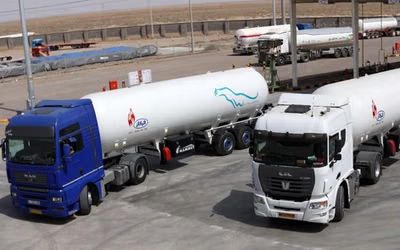
US attacks on Iranian oil tankers could make it far harder and more expensive for Tehran to keep selling its crude, but the strategy carries a potentially much larger cost: turning the Persian Gulf’s energy infrastructure into an expanding battlefield.
The latest US strikes on three Iranian oil tankers mark a significant escalation in Washington’s economic campaign against Tehran, moving beyond sanctions and blockade to the physical destruction of vessels used to export Iranian oil.
US forces on September 5 disabled two tankers near Kharg Island and Jask and destroyed a third in the Gulf of Oman, according to US Central Command, which described the vessels as part of a “multibillion-dollar shadow network” supporting the IRGC and its regional partners.
The strikes followed Iranian ballistic missile attacks on US naval forces that caused no American casualties. CENTCOM commander Adm. Brad Cooper warned Washington was prepared to impose an “even higher economic cost” on Tehran.
The significance of the strikes lies less in the loss of three ships than in the change in tactics. Washington has spent years trying to make Iranian oil harder to sell through sanctions, restrictions on financial transactions and pressure on buyers and shipping networks. Since mid-July, the US naval blockade has added a physical barrier.
Now, the vessels themselves are becoming targets.
From financial to physical risk
The shift comes as Iran’s oil exports are already under severe pressure.
Ship-tracking data indicated Iranian crude loadings fell to roughly 220,000–255,000 barrels per day in August, from about 740,000 bpd in July and peaks close to 2 million bpd before the conflict.
For weeks, no meaningful Iranian crude cargoes were able to reach China through the Strait of Hormuz, leaving more oil in floating storage inside the Persian Gulf.
Iran has spent years building a shadow shipping network capable of operating around Western sanctions, relying on opaque ownership structures, reflagging, manipulation of vessel-tracking systems and ship-to-ship transfers to move crude, particularly to China.
Those methods are useful when the main challenge is avoiding financial sanctions or detection. They offer far less protection if the vessels themselves become military targets.
Sanctions forced Iran to find ships willing to evade Washington. The new strategy may force it to find ships and crews willing to risk being attacked.
That could make the shadow fleet more expensive and difficult to operate. Many of its tankers are aging vessels already working outside conventional Western insurance and maritime-service networks.
If owners, crews and operators come to regard Iranian-linked voyages as carrying a serious risk of attack, some may demand greater compensation or decide the trade is no longer worthwhile.
Washington cannot, however, simply eliminate the shadow fleet overnight. The network is dispersed and adaptable. Ships can change names, flags and ownership structures, while Tehran can alter loading patterns or move ship-to-ship transfers farther from areas dominated by US forces.
But every vessel lost imposes another cost. Iran must replace it, find another operator willing to accept the risk or leave more crude stranded in storage.
Floating storage offers only temporary relief. Oil held offshore does not generate revenue until it reaches a buyer, and prolonged disruption can eventually force producers to cut output as storage fills.
The question is therefore not whether three tanker strikes can dismantle Iran’s export system. They cannot. It is whether repeated physical losses can gradually undermine the commercial network that has allowed Tehran to keep selling oil despite years of sanctions.
A wider energy battlefield
That strategy carries an obvious risk: once Washington treats Iran’s oil-export system as a military target, Tehran has a stronger incentive to widen the energy battlefield.
Iran has already used attacks and threats against maritime traffic as a means of imposing costs on its adversaries. The Strait of Hormuz remains central to that strategy because of the enormous volumes of oil and liquefied natural gas that normally pass through it.
Further reducing Iranian export revenues could weaken Tehran’s ability to finance the IRGC and allied armed groups while increasing the economic cost of continued confrontation.
But direct attacks on tankers could also reinforce the Iranian leadership’s argument that compromise will not end US pressure and that imposing costs on regional energy flows is one of Tehran’s remaining forms of leverage.
That matters well beyond Iran.
Saudi Arabia and the United Arab Emirates have invested heavily in export routes that partially bypass Hormuz, including Saudi pipelines to the Red Sea and the UAE’s link to Fujairah. But those alternatives cannot fully replace normal flows through the Strait, while Kuwait and Iraq remain particularly dependent on the waterway.
Even without major damage to regional infrastructure, greater insecurity can raise war-risk insurance premiums, freight rates and other costs for commercial operators.
The tanker strikes therefore strengthen Washington’s leverage only if they can impose additional costs on Tehran without triggering a broader contest over the region’s energy infrastructure.
Physical attacks may hurt an Iranian oil-export system that has spent years learning to circumvent sanctions. But they also give Tehran stronger incentives to retaliate against the system through which its neighbors export their own energy.
The strategic gamble for Washington is therefore not simply whether tanker strikes can further squeeze Tehran’s oil revenues. It is whether Iran can be made to bear those costs without deciding that its adversaries’ energy exports should bear them too.
Fire and smoke rise during what U.S. Central Command (CENTCOM) says are strikes on Iranian oil carriers, at an unknown location in this screengrab taken from a handout video released on September 5, 2026.
US forces struck three Iranian oil tankers on Saturday, including two near Iran’s coast and one off Kharg Island deep in the western Persian Gulf, roughly 300 miles northwest of Hormuz, a few days after similar attacks on two NITC tankers off Jask.
US Central Command said it “permanently disabled” the M/T Downy off Kharg Island and M/T Stark 1 near Jask after the Islamic Revolutionary Guard Corps launched ballistic missiles toward a US aircraft carrier and guided-missile destroyer. The American warships evaded the attacks and no US personnel were harmed, CENTCOM said.
A third tanker, the unladen M/T Kylo, also known as Noxen, was destroyed in the Gulf of Oman after its crew was directed to abandon ship, the CENTCOM statement said.
Tasnim, a news agency affiliated with the IRGC, reported that an Iranian oil tanker was struck by the US military near Kharg Island on Saturday morning, saying there were no casualties.
Citing an Iranian state television reporter in Jask, Tasnim also reported US attacks on two tankers in waters near the city and said one of them was carrying oil.
Iran’s Foreign Ministry condemned US attacks on Iranian oil tankers in the Persian Gulf and Gulf of Oman as illegal and a “war crime,” warning that Washington and its allies would bear responsibility for the consequences of any continued attacks.
The statement came after US Defense Secretary Pete Hegseth threatened to destroy and sink Iranian oil tankers if Tehran continues attacking US Navy vessels.
The Saturday strikes extended a pattern that appears to have moved increasingly close to Iran’s shoreline.
TankerTrackers.com said Saturday that National Iranian Tanker Company vessels Sinopa and Hawk had also been struck “a few days ago” off Jask in the Gulf of Oman. CENTCOM has not publicly identified those vessels as targets.
TankerTrackers said Sinopa and Hawk appeared to contain some oil cargo when they were struck off Jask.
Iran’s oil heartland
Saturday’s attack on Downy pushed that activity much farther west.
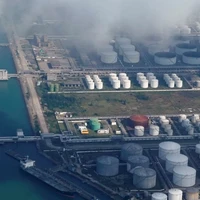
Kharg Island lies about 16 miles off Iran’s coast in the northern Persian Gulf and roughly 300 miles northwest of the Strait of Hormuz. Before the war, around 90% of Iranian crude exports passed through the island, making it the country’s principal oil-export hub.
The proximity to Kharg is particularly notable after months of US threats involving the island.
American forces previously struck military targets there while leaving its oil facilities untouched, and President Donald Trump has repeatedly raised the possibility of seizing Kharg or attacking its infrastructure. Days before Saturday’s strike, Trump posted an AI-generated video depicting explosions at the island’s oil facilities. No such attack had occurred at the time.
Saturday’s strike targeted a tanker rather than Kharg’s terminals, storage tanks or pipelines, but brought US military action into waters immediately surrounding the oil hub.
'You have 3 minutes to clear the crew'
Near Jask, an exclusive video obtained by Iran International captured warnings issued by the US military to Stark 1 shortly before it was hit.
The footage, filmed aboard a nearby vessel, records three messages over VHF radio.
“Motor Tanker STARK 1, this is the United States military aircraft. I am preparing to fire at your stern. You have 3 minutes to clear the crew from the stern of your ship. Over,” an American voice says in the first warning.
A second warning reduces the deadline to one minute. In the final message, the aircraft says: “This was your final warning... get into your lifeboats and abandon the ship immediately.”
Between the transmissions, crew members can be heard speaking in Persian and Urdu. One asks whether the captain and his deputy are at their posts and is told the captain is still asleep.
TankerTrackers said Stark 1 was struck off Kooh Mobarak near Jask after loading crude at the Jask Oil & Gas Terminal a few days earlier.
CENTCOM portrayed Saturday’s operation as direct retaliation rather than routine enforcement of the US maritime blockade.
“Let the message to the IRGC be clear: If you shoot at two of our ships, we will impose an even higher economic cost — taking out three of yours,” CENTCOM commander Adm. Brad Cooper said.
“We will not hesitate to defend American forces, and if necessary, destroy Iran’s limited and exposed oil fleet.”
Donald Trump said again on Friday that the United States may soon strike Pickaxe Mountain, the underground complex near Natanz that is the last significant site linked to Iran's nuclear program still untouched after two wars.
What is it?
A mountain in the Zagros range in Isfahan province, about 1.5 kilometers south of the Natanz enrichment complex, with a large facility dug into it.
The name is a small accident of translation. The mountain is called Kuh-e Kolang Gaz La, and kolang means pickaxe, so foreign analysts began calling the site Pickaxe Mountain. It is not what Iranians call the facility, and Iran has never given it a public name at all.
Why was it built there?
Because of the rock. Most of the surrounding range is sedimentary, but this mountain is hard, dense granite, which gives anything tunneled beneath it substantial natural protection.
Construction began in the autumn of 2020, months after an explosion destroyed an above-ground advanced centrifuge assembly plant at Natanz in an attack widely attributed to Israel. Iran said at the time that the underground halls would replace it.
The destroyed plant had been built to assemble roughly 6,000 advanced centrifuges a year, a capacity sized for the tens of thousands Iran expected to need as restrictions under the 2015 nuclear deal expired between 2025 and 2030.
What is inside?
Nobody outside Iran knows, which is the heart of the problem.
The International Atomic Energy Agency has never been given access. A double security perimeter, a fence and a wall with a patrol route, rings the entire mountain and joins Natanz's own perimeter. There are two pairs of tunnel entrances, one on the east side and one on the west. Analysts assume they lead to a single facility, but even that is not certain.
Iran has said the site is for producing and assembling advanced centrifuges. The Institute for Science and International Security, which has tracked the construction by satellite for years, judges the space beneath the mountain large enough to hold considerably more: not only an assembly plant but a working enrichment plant capable of producing weapons-grade uranium, and probably enough room for weaponization work such as casting uranium metal and shaping it into weapon components.
Two further claims circulate, neither verified. One is that part of Iran's stockpile of uranium enriched to 60 percent, estimated by the IAEA at around 440 kilograms, has been moved there.
The other, from an Israeli intelligence assessment reported by the Wall Street Journal, is that thousands of centrifuges were moved into the mountain last autumn. Neither Israel nor the United States has published evidence.
The institute's reading of the imagery is that the facility is not yet operational, and that construction continues.
How deep is it?
At least 100 meters beneath the mountain, which stands 1,608 meters above sea level.
There is a detail in those measurements worth noticing. The eastern entrances sit about 145 meters below the ridge; the western entrances about 100 meters. That 50-metre difference between the two sets of doors suggests the facility may have more than one level.
Either way it is deeper than Fordow or Natanz, both of which the United States has bombed.
Could American bombs destroy it?
Not the mountain itself. The GBU-57, the largest conventional bunker-buster in the US arsenal, weighs about 13,000 kilograms and is reported to penetrate 18 meters of concrete or 61 meters of earth. Against 100 meters of granite, experts are skeptical.
But a buried facility still has to breathe, and that is where the vulnerability lies. Any working complex needs power, ventilation, heating and cooling, deliveries and people going in and out, and each of those connections surfaces somewhere.
There is a precedent for exactly this. Schematics have been published for two other Iranian tunnel sites built by the Amad nuclear weapons program, Fordow and Shahid Boroujerdi. Both showed ventilation shafts, and in both cases those shafts were directly targeted in air strikes, in June 2025 and March 2026 respectively, because they offered penetrating weapons a way further inside.
No schematics for Pickaxe Mountain have surfaced publicly, but a probable ventilation shaft near the eastern entrances was seen under construction in 2024, fed by a power line that runs above ground before disappearing underground.
The institute's assessment is that an attack would most likely aim at the power supply, the ventilation shafts and the open tunnel mouths, and it notes that as of imagery from July 9 the western pair of entrances remained open.
It also notes that hitting the hardened portals alone would probably deny Iran access only temporarily, adding the mountain to the list of sites that then have to be watched for attempts to dig back in.
Air defenses are not seen as an obstacle. Israel overcame them at Natanz in the opening hours of the June 2025 war.
A June 30, 2026, Vantor Technologies image overview of Pickaxe Mountain. (The Institute for Science and International Security)
The other way in
There is a second possibility, and it has history behind it.
The institute judges that the site, as it now stands, would be more suitable for attack or sabotage by ground forces than from the air. Its model is the 2020 destruction of the Natanz assembly plant, which reportedly involved explosives brought into the building during its construction.
Pickaxe Mountain is still under construction.
A June 30, 2026, Vantor Technologies image of Pickaxe Mountain showing potential locations for ventilation shafts. (The Institute for Science and International Security)
What does Iran say?
That there is nothing there to bomb. Foreign ministry spokesman Esmail Baghaei said in July that "no nuclear activity is taking place" at the site and called the American threats "a fabricated pretext for aggression, destruction, and sabotage."
Others have been less restrained. Mehdi Mohammadi, an adviser to the parliament speaker, called Pickaxe Mountain "the most heavily fortified nuclear facility in the world" and said a strike would "turn the region into hell."
Iran's joint military command has warned that any attack on nuclear or sensitive sites would widen the war.
Every time Trump has threatened it
July 13. On the Hugh Hewitt show: "We have eyes on it and Pickaxe mountain is a possible target for a nice big fat shot right in the front door. We're watching Pickaxe Mountain very closely. We don't see any activity there." He ended the interview more bluntly: "We're going to take out Pickaxe Mountain. Tell the Iranians to be ready."
July 21. After the Israeli intelligence assessment surfaced: "The new site that they're talking about, they're trying to possibly reconstitute a site, we'll hit that site. Any site where they're even thinking about nuclear, we'll be hitting it very, very powerfully." He said the US would hit the area "pretty soon, and very heavily."
July 28. "I know exactly what's going on at Pickaxe. It's not a big problem. We took out their nuclear sites, and we'll have to take out Pickaxe if we don't make a deal."
September 4. Trump said the US may hit the site very soon, crediting the Space Force for the intelligence. "We know everybody that's moving at Pickaxe, we know everybody that's moving everywhere, all over Iran, and if anything goes bad, we hit them. We hit them hard." He called the conflict a "military conflict" rather than a war, and added: "It's small potatoes for us."
So why has it not been hit?
Across two wars, the only recorded strike at the site destroyed a single vehicle on a spoil pile, thought to have been connected to air defense.
One explanation is simply that it is hard to destroy and may not yet contain anything worth destroying.
Iran has spent the interval hardening it further: concrete poured over a western entrance extension, a reinforced structure added at another portal, rock and soil pushed up over an eastern one, and by late April both eastern entrances partially backfilled to block vehicles.
A separate, smaller tunnel complex inside the same perimeter, built in 2007, was sealed shortly after the June 2025 war. What is inside it is unknown.
The other explanation is that Washington wants the option of getting in rather than burying it. Rebeccah Heinrichs of the Hudson Institute has suggested the United States may be preserving the possibility of entering or securing the complex, which would mean a ground operation rather than an air strike. There is no public evidence that one is being planned.
Vessels near the Strait of Hormuz, as seen from Musandam, Oman, August 31, 2026.
A debate is widening in Tehran over whether Iran is exhausting one of its most powerful weapons against the United States, with growing warnings that the Strait of Hormuz could lose its effectiveness the longer restrictions continue.
Iranian officials and state media have long portrayed control of the strategic waterway as a powerful bargaining tool, and many continue to do so.
But a warning from a commentator close to parliament speaker Mohammad Bagher Ghalibaf that Washington was trying to erode that advantage suggested the consensus may not be as solid as before.
“Targeting Iranian ships by the US, in response to Iran confronting any vessel that does not accept the route and arrangements determined by Iran for passing through the strait, is Trump’s dangerous method of reducing Iran’s control over the Strait of Hormuz,” Ali Gholhaki wrote on X on Thursday.
Without a new initiative from Tehran, he said, the United States could gradually “discredit the Strait card for Iran,” urging authorities to “devise a new plan.”
A card to play, not hold
Ghalibaf himself had hinted at this earlier.
“We should not turn the Strait of Hormuz to its opposite,” he said in a televised interview in June. “The Strait of Hormuz is valuable when traffic through it increases day by day, not when it decreases.”
The argument is not that Hormuz has no value, but that its greatest value may lie in the threat of disruption or its use as a short-term shock rather than prolonged restrictions that also damage Iran.
Journalist Arash Hashemi questioned whether that point had already been reached.
“Hasn’t the Strait card been without a payoff for some time? When we close the strait, they impose a blockade; and our own exports and imports decrease as a result, the value of our national currency falls, and everything else follows,” he wrote. “Does the Strait card still have any bargaining value?”
Reformist journalist Mohammad Sohofi similarly argued that closing the strait could work as a short-term shock to create leverage for a deal.
“Closing the Strait of Hormuz had value as a powerful blow and shock to the market, to shape an equation and conduct a deal,” he wrote, “but it was obvious from the beginning that continuing to use this card would turn it against itself.”
The concern is that the longer restrictions persist, the more Iran suffers from reduced trade while the United States and other countries have time to develop countermeasures.
Hardliners push back
Hardliners reject the suggestion that Iran is burning through its leverage, arguing that such claims risk weakening Tehran’s position.
“One of the most ridiculous and baseless things I have heard these days is that the Strait of Hormuz card will soon lose its value,” hardline commentator Alireza Taghavinia wrote on X.
“These are the same people who once claimed that Iran could never close it,” he added. “Some people would do better to remain silent and not break the morale of the people.”
The disagreement therefore turns less on whether Hormuz can impose costs than on whether Iran can sustain those costs long enough to extract political concessions without inflicting comparable damage on itself.
Searching for another weapon
The debate has gained another dimension from an unlikely source.
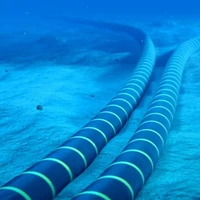
Kayhan editor Hossein Shariatmadari, who has advocated closing Hormuz to US, Israeli and allied shipping for years, has now proposed that Iran’s military and the Revolutionary Guards disrupt or sever international fiber-optic cables beneath the Persian Gulf and the Strait of Hormuz.
Shariatmadari argued that such action could be “many times more frightening and dangerous for the enemy” than keeping the strait closed.
Critics seized on the proposal as evidence that even proponents of maximum pressure were searching for additional leverage.
Journalist Hassan Abbasi warned that disrupting the cables would not hurt Iran’s adversaries alone, because the country’s own trade, banking, communications and digital economy depend on the same infrastructure.
That is increasingly the question running through the debate in Tehran: not whether Iran can impose costs through Hormuz, but how long it can do so before the weapon begins imposing comparable costs on Iran itself.
The Strait of Hormuz has become one of the most dangerous points of leverage in the US-Iran war, but it may also offer Tehran and Washington their clearest route back to negotiations.
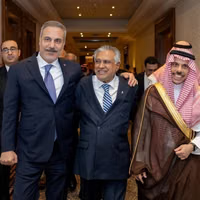
Reports on Friday, including by the Financial Times, indicated that mediators were working to establish a framework for possible fresh talks.
Iranian and Omani foreign ministers have already discussed creating a temporary shipping corridor as a step toward a more permanent arrangement.
Such a deal offers something increasingly scarce after six months of war: a face-saving compromise. Tehran could present it as recognition of its role in securing the strait, while Washington could claim it had restored freedom of navigation.
The possibility comes after months of strikes, economic pressure and intermittent diplomacy have failed to break the deadlock.
Iran’s restrictions on maritime traffic through Hormuz have meanwhile turned the vital energy corridor into one of Tehran’s most important bargaining chips.
A route back to talks
The moderate Fararu website quoted Andreas Krieg, a Middle East security expert at King’s College London, as describing an agreement over Hormuz as the most plausible route from direct confrontation toward broader negotiations.
A limited shipping agreement would not resolve disputes over Iran’s nuclear program, sanctions or regional security. But it could provide a confidence-building measure without requiring either side to publicly concede defeat.
The alternative paths being discussed in Iranian media are considerably darker.
Economic escalation
One is an intensification of the economic confrontation already underway.
Washington has shifted increasingly toward aggressive economic pressure through secondary sanctions under “Operation Economic Exclusion,” alongside its maritime blockade and the threat of further strikes.
Iran’s counter-strategy is to make that pressure costly for others. By restricting shipping and threatening regional energy infrastructure and trade routes, Tehran can force Persian Gulf states and other international actors to bear some of the economic consequences.
The US strategy has its own limitation: China. Enforcing secondary sanctions against major Chinese financial institutions would carry considerably greater economic and geopolitical risks than targeting smaller intermediaries.
Back to military action
Another possibility is renewed large-scale military confrontation.
A collapse in diplomacy, failure of economic pressure or a high-casualty Iranian attack on US forces could trigger further American and Israeli strikes, followed by Iranian retaliation.
Recent attacks on southern Iran have already shown how quickly economic and maritime confrontation can return to the battlefield.
Civilian casualties, including those from a strike on a residential building hosting a wedding, have further raised the costs of escalation, although responsibility for that attack remains under investigation.
A war without an end
Perhaps the bleakest scenario is also the least dramatic: neither diplomacy nor escalation produces a breakthrough.
Instead, the conflict settles into prolonged attrition involving intermittent strikes, maritime disruption, cyber operations, sanctions, covert economic measures and nuclear pressure.
That prospect helps explain the significance of the tentative diplomacy around Hormuz.
The strait has become one of Iran’s most powerful instruments of pressure, imposing costs far beyond the battlefield. Yet that same leverage may now provide the basis for an agreement neither side has to describe as capitulation.
After six months in which war, economic pressure and diplomacy have all failed to break the deadlock, the waterway at the center of the confrontation may also offer the narrowest route out of it.