• العربية
  • فارسی
Brand
  • Iran Insight
  • Politics
  • Economy
  • Analysis
  • Special Report
  • Opinion
  • Podcast
  • Live TV
  • Iran Insight
  • Politics
  • Economy
  • Analysis
  • Special Report
  • Opinion
  • Podcast
  • Live TV
  • Theme
  • Language
    • العربية
    • فارسی
  • Iran Insight
  • Politics
  • Economy
  • Analysis
  • Special Report
  • Opinion
  • Podcast
  • Live TV
All rights reserved for Volant Media UK Limited
volant media logo

Iran rial hits fresh record low at 2.25 million to dollar

Sep 5, 2026, 11:08 GMT+1

Iran's rial fell to a new record low of about 2.25 million to the US dollar on Saturday, extending a sharp decline in recent weeks.

The currency was trading at about 2.2 million per dollar earlier this week and has weakened roughly 12.5% since crossing 2 million for the first time in late August.

Most Viewed

Xi snub reignites Iran’s doubts about China
1
INSIGHT

Xi snub reignites Iran’s doubts about China

2
INSIGHT

Five years ago, Iran’s planners put today’s crisis on paper

3
INSIGHT

US strikes deepen Tehran debate over compromise or confrontation

4
ANALYSIS

If Britain backs US plan, Iran's London bank shuts down on October 22

5
ANALYSIS

Trump’s call for an Iranian uprising runs into a trust problem

Banner
Banner

Spotlight

  • If Britain backs US plan, Iran's London bank shuts down on October 22
    ANALYSIS

    If Britain backs US plan, Iran's London bank shuts down on October 22

  • US strikes deepen Tehran debate over compromise or confrontation
    INSIGHT

    US strikes deepen Tehran debate over compromise or confrontation

  • Xi snub reignites Iran’s doubts about China
    INSIGHT

    Xi snub reignites Iran’s doubts about China

  • Trump’s call for an Iranian uprising runs into a trust problem
    ANALYSIS

    Trump’s call for an Iranian uprising runs into a trust problem

  • Five years ago, Iran’s planners put today’s crisis on paper
    INSIGHT

    Five years ago, Iran’s planners put today’s crisis on paper

  • Women footballers came home under pressure. Now Iran wants them on camera
    ANALYSIS

    Women footballers came home under pressure. Now Iran wants them on camera

Banner
•
•
•

More Stories

Iran's appliance industry is collapsing, and so is the market it was built for

Sep 5, 2026, 09:30 GMT+1
•
Dalga Khatinoglu
100%
An AI-enhanced photo shows a home appliance shop in Tehran.

When a refrigerator breaks in Iran now, the family often cannot replace it, and increasingly cannot afford to repair it either. Behind that is an industry losing its raw materials, its customers and, since March, two of the industrial hubs that supplied it.

Iranian manufacturers are being squeezed from both ends at once. The steel and plastics they build appliances from have multiplied in price since Israeli and US strikes hit the country's main industrial hubs in March, while the households they sell to have been priced out of the market entirely. Production of refrigerators, televisions and washing machines was already falling by a quarter to more than 40 percent a year before the war began.

What the industry cannot do is pass the costs on, because the arithmetic on the shop floor no longer works for anybody.

The price of a working kitchen

Iran's minimum monthly wage is about 166 million rials, roughly $75. Set against that, the price list on the country's largest online retailer reads as a catalogue of things a working household can no longer buy.

The cheapest mini refrigerator sells for 258 million rials, about $117, a month and a half of that wage. A basic 13-cubic-foot fridge-freezer costs 544 million rials, some $247, more than three months. A mid-sized model runs to 890 million rials, about $405. A washing machine, in the band where most models cluster, costs around 920 million rials, roughly $418, or five and a half months of a minimum wage, and a gas cooker starts at about 360 million rials, $164, rising to 638 million.

  • Man from Supreme Leader's empire takes the helm of Iran’s biggest online retailer

    Man from Supreme Leader's empire takes the helm of Iran’s biggest online retailer

Televisions trace the same curve. The cheapest set on the site, a 24-inch model, costs 230 million rials, about $104. A 32-inch television runs to 270 million, and a 43-inch, among the best-selling sizes, to 490 million rials, roughly $223, or nearly three months of wages. A 65-inch set, also a strong seller, costs 1.06 billion rials, about $482, more than six months. At the top of the range, an 85-inch model is listed at 2.9 billion rials, some $1,318, or nearly a year and a half of a minimum wage.

The cheapest dishwasher listed costs 1.34 billion rials, some $609, eight months of wages, which is why dishwashers have moved out of the category of household appliance altogether and into the category of luxury.

At the very top of the market, an imported side-by-side refrigerator is advertised at 4.54 billion rials, about $2,065, or more than two years of a minimum wage.

Iranian media have been documenting what these numbers mean. In May, when conditions were still less severe than they are now, the newspaper Donya-e Eqtesad reported that field observations and consumer complaints showed the breakdown of a refrigerator or washing machine had become an economic and psychological crisis for many families.

  • 'If I'm not happy, they'll execute me': Iran's new grammar of dissent

    'If I'm not happy, they'll execute me': Iran's new grammar of dissent

Until a few years ago, the paper noted, many households could replace an appliance after saving for several months. Today, buying even a refrigerator, a washing machine or a basic vacuum cleaner has become a distant prospect for a growing number of them.

Repair was the fallback. Repair costs have risen too, and for many families that door is closing as well.

A sector that was already shrinking

The industry serving this market was contracting before the war began.

The Statistical Center of Iran's most recent figures, covering the winter that ran through to March, show refrigerator production down 25 percent year-on-year to 531,000 units. Television production fell 36 percent to 332,000, and washing machine production dropped 42 percent, to 270,000 units.

No comparable production data have been published for other major categories, and the government has released no comprehensive industrial production figures for the past six months.

What the Statistical Center has published is the price index: home appliances in August cost 117 percent more than a year earlier.

Bombed inputs

Then came the strikes. Israeli and US attacks in March hit Iran's two main steel hubs, Mobarakeh and Khuzestan, and its two main petrochemical hubs, Asalouyeh and Mahshahr. Together these complexes account for roughly 50 percent of Iran's steel capacity and 70 percent of its petrochemical capacity.

  • Iran fires back, but can missiles ease economic pain?

    Iran fires back, but can missiles ease economic pain?

The effect on manufacturers' input costs has been severe. According to the Iranian Home Appliance Industries Association, the price of the steel used by the industry has risen roughly two and a half times since last summer. Petrochemical feedstocks, including ABS and polypropylene, have gone up three to fourfold.

Authorities have released no detailed figures on the damage or on the operational status of the affected complexes. What is visible is the response: the government has restricted or banned the export of a large share of steel and petrochemical products, while domestic prices for those products have risen sharply.

  • Poverty pushes Iranian children into hazardous border work

    Poverty pushes Iranian children into hazardous border work

  • Iran gold union warns against rising 'gold leasing' schemes

    Iran gold union warns against rising 'gold leasing' schemes

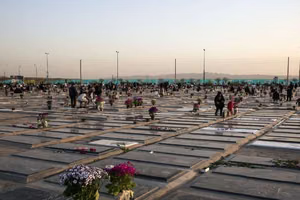
  • Iranians are selling their own graves to pay for living

    Iranians are selling their own graves to pay for living

Protected, and still dependent

The industry these costs are crushing was built behind a wall.

Iran banned home appliance imports in 2016, and in 2021 imposed a particularly strict ban on appliances made by South Korean companies, which had previously held a significant share of the market. The policy shifted the market decisively toward domestic manufacturers, and it has drawn persistent criticism over the quality of what those manufacturers produce.

With foreign competitors largely excluded, domestic firms have faced far less pressure on price. The restrictions have also sustained a thriving trade in smuggled foreign appliances.

What protection has not produced is self-sufficiency. Iran has failed to fully localize production of even its four main categories: refrigerators, washing machines, televisions and dishwashers. According to Hakem Memkan, a member of parliament's economic commission, the country imports around $1.2 billion of components a year for those four categories alone.

So the strategy of substituting domestic production for imports has left manufacturers dependent on imported parts while their domestic input costs multiply.

  • Iran's central bank says it is not hyperinflation. Economists are not convinced

    Iran's central bank says it is not hyperinflation. Economists are not convinced

Nowhere to go

Each of these pressures would be serious alone. Arriving at once, collapsing household purchasing power, multiplied raw material costs, import restrictions, input shortages and continued dependence on foreign components leave the industry with nothing to adjust.

It cannot raise prices without losing more of a market that has already stopped buying. It cannot cut costs without inputs it cannot obtain. And it cannot look abroad, because the wall built to protect it also encloses it.

Most families will simply keep the fridge they have, for as long as it runs.
Iran gold union warns against rising 'gold leasing' schemes

Sep 5, 2026, 08:18 GMT+1
100%

Iranians are being warned against handing their gold to jewelers in return for regular payments, with the head of a provincial Gold and Jewelry Union saying the practice carries a high risk of losses.

Head of the Gold and Jewelry Union in Kermanshah, Mohammad Saeed Jafari, told ISNA that under the arrangement, jewelry businesses use or trade the gold and pay the owner what is described as rent or a return.

Jafari did not specify exactly how the gold is used after it is handed over. Such arrangements can effectively allow a jeweler to use the metal as part of its business inventory, meaning the owner's gold may not necessarily be kept aside in its original form.

"We have received numerous complaints," he said, adding that in some cases operators initially paid attractive returns to gain customers' trust but later failed to return their gold.

  • Iranians are selling their own graves to pay for living

    Iranians are selling their own graves to pay for living

Jafari urged people to avoid such arrangements where possible. Those who still choose to lease out their gold should obtain strong documentation and deal only with licensed, established jewelers, he said.

He also cautioned investors buying melted gold or bullion to avoid online sellers where possible and instead use licensed gold and jewelry businesses.

  • Poverty pushes Iranian children into hazardous border work

    Poverty pushes Iranian children into hazardous border work

Economic pressure fuels search for returns

The warning comes as Iran's economy faces mounting pressure after years of sanctions, high inflation and chronic currency weakness. The rial fell to a record low of about 2.2 million to the US dollar this week, while inflation was running at about 66% in July.

  • What Operation Economic Outcast means for Iran, and for everyone trading with

    What Operation Economic Outcast means for Iran, and for everyone trading with

Washington has also stepped up its economic campaign in recent weeks. In late August, Treasury Secretary Scott Bessent launched a campaign aimed at cutting Iran's financial links abroad, building on measures targeting shadow banking networks, foreign exchange houses, cryptocurrency platforms and shipping channels used to move money and trade revenues.

These steps are designed to make it harder for Iran to access foreign currency and move funds through the international financial system, adding pressure to an economy that was already struggling with sanctions, high inflation and a weakening rial.

In Hormuz, Iran only needs to keep ships guessing

Sep 5, 2026, 07:19 GMT+1
•
Negar Mojtahedi
100%
File Photo: Iran’s Fajr-5 multiple-launch rocket system fires a rocket during a military exercise.

Even the possibility that Iran could put mines into one of the world’s most important shipping routes can deter commercial traffic and force the US military to maintain constant surveillance, former CENTCOM commander Joseph Votel told Iran International.

“The mere threat out there, just the threat of these, is enough to deter traffic, certainly commercial traffic,” Votel told Eye for Iran podcast. .

“It has a huge deterrent effect and it puts the burden on us to keep really, really close watch on this area.”

That creates a paradox in the latest battle over Hormuz: Iran may be turning to rocket-launched mines because more powerful options have been degraded, yet Washington must still behave as though the threat could get through.

The latest US-Iran flare-up began after the US military said it detected Iranian forces on Larak Island preparing to launch rockets carrying sea mines into the Strait. US forces struck the launchers before they could fire.

Iran has traditionally been able to deploy naval mines using small boats, submarines or aircraft. Firing them from rockets would allow Iranian forces to place mines at a distance without exposing boats and crews to US forces watching the waterway.

Why Iran may be turning to rockets

Iranian state television reported on the Fajr-5 multiple-launch rocket system as a weapon for mining Hormuz as early as January 2025, and military analysts have said Iran had been testing the concept.

What has changed is the battlefield around it.

Farzin Nadimi, a senior fellow at the Washington Institute and an expert on Iran’s military and asymmetric warfare, told Eye for Iran that Iran’s conventional military capabilities were significantly degraded during the war, followed by attacks on important IRGC Navy infrastructure.

Nadimi said Iran has lost much of its ability to deploy the larger and more dangerous sea mines it could once put into the water through more traditional means.

“They have little choice but using these smaller, less capable rocket-launched mines,” he said, adding that Iran has also repeatedly tried to strike shipping with anti-ship cruise missiles and one-way attack drones, many of which have been intercepted or jammed.

Iran’s apparent new weapon can therefore be read not simply as evidence of innovation, but as adaptation after military losses.

Less destructive does not mean less disruptive

Rocket-launched mines come with significant compromises. Naval mines capable of badly damaging large ships are heavy. Fitting one into a rocket requires a smaller weapon, limiting its destructive power.

Nadimi said Iran’s rocket-delivered versions are significantly smaller than some older naval mines in its arsenal and consequently less capable of inflicting major damage on large tankers.

But a mine’s effectiveness is psychological as much as it is physical: once mines are believed to be in the water, uncertainty over their location can deter ships from entering.

Votel pointed to the history of mine warfare in the Persian Gulf, including US Navy encounters with Iranian mines during the Tanker War of the 1980s.

Commercial vessels and their insurers therefore do not necessarily need evidence that a mine will hit a ship before taking the threat seriously.

Washington’s burden

That uncertainty shifts part of the burden from Iran to the United States.

The US does not simply have to destroy mines once they enter the water. It has to watch the Strait, Iranian coastal positions and potential launch sites closely enough to prevent Tehran from putting them there in the first place.

“It puts a lot of pressure on us to make sure that we have constant surveillance, not only of the waterways themselves and the main transit routes, but really of the locations where these mines or these weapons can come from,” Votel said.

The latest US strike suggests Washington currently has the intelligence, surveillance and reconnaissance capabilities to do that. American forces identified the Iranian launchers and struck them before the mines could be fired.

But Iran does not necessarily have to defeat that surveillance system to impose a cost. Simply retaining the capability forces the US to keep watching and commercial operators to trust that nothing has slipped through.

For Tehran, that creates an asymmetric advantage even after significant military losses: the US must repeatedly demonstrate that Hormuz is safe, while Iran only has to preserve doubt that it might not be.

Degradation or restraint?

There is an important caveat. The smaller scale of Iran’s recent attacks does not necessarily mean Tehran is incapable of doing more.

Nadimi said there are signs Iran is deliberately exercising restraint with some weapons, particularly ballistic missiles, to avoid triggering a larger escalation involving both the United States and Israel.

The rocket-launched mine claim itself also remains contested. Some maritime specialists have questioned whether Iran has operationalized the system as the US describes, while others consider it technically plausible.

Even if the system is operational, however, Iran would not need to mine the Strait extensively for it to have an effect. All Tehran needs is for military planners, ship operators and insurers to believe there is a credible possibility that it could get some mines into the water.

Votel sees that as part of a broader Iranian strategy: “Their intention is to make this painful for us and for those that are supporting the United States.”

Iran may now have fewer options for mining Hormuz than it once did. But if the threat of a mine is enough to make a ship hesitate—and enough to make the US military watch Iran’s coastline around the clock—Tehran can still impose a cost without a mine ever hitting a vessel.

Debate grows over whether Iran is burning its strongest card in Hormuz

Sep 5, 2026, 06:11 GMT+1
•
Maryam Sinaiee
100%
Vessels near the Strait of Hormuz, as seen from Musandam, Oman, August 31, 2026.

A debate is widening in Tehran over whether Iran is exhausting one of its most powerful weapons against the United States, with growing warnings that the Strait of Hormuz could lose its effectiveness the longer restrictions continue.

Iranian officials and state media have long portrayed control of the strategic waterway as a powerful bargaining tool, and many continue to do so.

But a warning from a commentator close to parliament speaker Mohammad Bagher Ghalibaf that Washington was trying to erode that advantage suggested the consensus may not be as solid as before.

“Targeting Iranian ships by the US, in response to Iran confronting any vessel that does not accept the route and arrangements determined by Iran for passing through the strait, is Trump’s dangerous method of reducing Iran’s control over the Strait of Hormuz,” Ali Gholhaki wrote on X on Thursday.

Without a new initiative from Tehran, he said, the United States could gradually “discredit the Strait card for Iran,” urging authorities to “devise a new plan.”

A card to play, not hold

Ghalibaf himself had hinted at this earlier.

“We should not turn the Strait of Hormuz to its opposite,” he said in a televised interview in June. “The Strait of Hormuz is valuable when traffic through it increases day by day, not when it decreases.”

The argument is not that Hormuz has no value, but that its greatest value may lie in the threat of disruption or its use as a short-term shock rather than prolonged restrictions that also damage Iran.

Journalist Arash Hashemi questioned whether that point had already been reached.

“Hasn’t the Strait card been without a payoff for some time? When we close the strait, they impose a blockade; and our own exports and imports decrease as a result, the value of our national currency falls, and everything else follows,” he wrote. “Does the Strait card still have any bargaining value?”

Reformist journalist Mohammad Sohofi similarly argued that closing the strait could work as a short-term shock to create leverage for a deal.

“Closing the Strait of Hormuz had value as a powerful blow and shock to the market, to shape an equation and conduct a deal,” he wrote, “but it was obvious from the beginning that continuing to use this card would turn it against itself.”

The concern is that the longer restrictions persist, the more Iran suffers from reduced trade while the United States and other countries have time to develop countermeasures.

Hardliners push back

Hardliners reject the suggestion that Iran is burning through its leverage, arguing that such claims risk weakening Tehran’s position.

“One of the most ridiculous and baseless things I have heard these days is that the Strait of Hormuz card will soon lose its value,” hardline commentator Alireza Taghavinia wrote on X.

“These are the same people who once claimed that Iran could never close it,” he added. “Some people would do better to remain silent and not break the morale of the people.”

The disagreement therefore turns less on whether Hormuz can impose costs than on whether Iran can sustain those costs long enough to extract political concessions without inflicting comparable damage on itself.

Searching for another weapon

The debate has gained another dimension from an unlikely source.

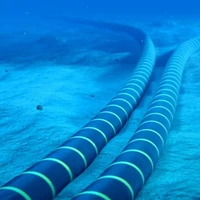
Kayhan editor Hossein Shariatmadari, who has advocated closing Hormuz to US, Israeli and allied shipping for years, has now proposed that Iran’s military and the Revolutionary Guards disrupt or sever international fiber-optic cables beneath the Persian Gulf and the Strait of Hormuz.

Shariatmadari argued that such action could be “many times more frightening and dangerous for the enemy” than keeping the strait closed.

Critics seized on the proposal as evidence that even proponents of maximum pressure were searching for additional leverage.

Journalist Hassan Abbasi warned that disrupting the cables would not hurt Iran’s adversaries alone, because the country’s own trade, banking, communications and digital economy depend on the same infrastructure.

That is increasingly the question running through the debate in Tehran: not whether Iran can impose costs through Hormuz, but how long it can do so before the weapon begins imposing comparable costs on Iran itself.

US sanctions Turkish bank as Iran financial crackdown widens

Sep 4, 2026, 20:58 GMT+1
100%
File Photo: Signage is seen at the United States Department of the Treasury headquarters in Washington

The United States on Friday sanctioned Turkey’s Golden Global Bank and two subsidiaries over alleged financial dealings with Iran, escalating a campaign targeting foreign institutions accused of helping Tehran move money around sanctions.

The Treasury Department said Golden Global Yatirim Bankasi and its asset-management and leasing subsidiaries had facilitated tens of millions of dollars in transactions for the Islamic Revolutionary Guard Corps-Quds Force and provided Iranian institutions with access to international banking channels.

The action was taken under Operation Economic Outcast, a campaign launched on August 24 to target financial networks and foreign institutions that Washington says help sustain the Islamic Republic’s economy and circumvent sanctions.

Treasury alleged that the Istanbul-based bank was established to help Iran’s shadow-banking network transfer oil revenues from China to Turkey, where money exchangers could convert the proceeds into cash and gold. It also accused Golden Global of knowingly offering correspondent banking services that enabled transactions through accounts controlled by the IRGC-QF and its proxies.

Golden Global rejected the allegations, saying it had complied with domestic and international banking and compliance requirements and had no direct or indirect dealings with the individuals and entities named in the US sanctions decision. The bank said it would pursue its legal rights over what it called unfounded allegations.

Iran International also contacted Golden Global for comment on the Treasury allegations and whether it planned to challenge the designation, but had not received a response at the time of publication.

The three entities were added to the Treasury’s Specially Designated Nationals list, blocking property and interests in property under US jurisdiction and generally barring US persons from transactions involving them. Treasury also issued a general license allowing transactions necessary to wind down dealings with the sanctioned entities.

Treasury Secretary Scott Bessent described the designation in an interview with America’s Voice News as “code for you are out of business” and said another bank could be sanctioned as soon as next week.

“We know who you are, you know who you are, it’s over,” Bessent said, adding that US allies were assisting the campaign.

The move comes a week after Washington targeted the UAE operations of Banque Misr, Egypt’s second-largest bank, using a different legal mechanism.

Rather than imposing a full OFAC designation, the Treasury’s Financial Crimes Enforcement Network proposed a rule under Section 311 of the USA Patriot Act that would prohibit US financial institutions from opening or maintaining correspondent accounts for Banque Misr UAE. The proposal is subject to a public comment process before it can be finalized.

Treasury estimated that Banque Misr UAE processed about $1.8 billion between January 2024 and June 2026 for 103 companies potentially linked to Iranian shadow-banking networks.

  • US crackdown leaves much of Iran’s shadow banking untouched

    US crackdown leaves much of Iran’s shadow banking untouched

An Iran International investigation subsequently found that funds originating from Iran’s central bank were being directed to accounts at Banque Misr’s UAE operations as early as November 2022, based on leaked correspondence and transaction records from sanctioned Iranian lender Bank Parsian. The investigation found no evidence that the foreign banks involved knowingly facilitated sanctions evasion.

The Golden Global designation represents a further escalation from the Banque Misr action. Bessent told Reuters last week that Treasury expected to announce new secondary sanctions roughly every week, initially focusing on banks.

“You’re going to see a lot more of these every week,” he said. “We’re starting with the banks, and we’re telling the banks it’s not okay to have Iranian money and to aid the regime.”

The campaign marks an effort by Washington to move beyond already-sanctioned Iranian institutions and target the foreign financial infrastructure that US officials say allows Tehran to turn overseas revenues into money it can use.

When launching Operation Economic Outcast on August 24, Bessent said Washington’s objective was to “sever every economic lifeline” sustaining the Islamic Republic. He also appealed directly to Iranian soldiers facing economic hardship and invoked the fall of the Berlin Wall, when East German forces ultimately declined to fire on civilians.

Friday’s action also marked the first time a bank in a NATO member state had been targeted under the new campaign, according to Reuters, underscoring the widening reach of Washington’s effort as Treasury signals that further action against foreign banks is likely to follow.