Iran’s president denies plans to resign, vows to remain in office

Iranian President Masoud Pezeshkian said on Tuesday that he would not resign and pledged to remain in office, according to a preview of an interview scheduled to air on state TV.
“We are fully coordinated with the military forces. I will not resign, and I will stand firm,” Pezeshkian said. “If I resign, I will formally announce that I have resigned.”
His remarks followed remarks by Mohammad-Bagher Kharrazi, a senior cleric whose sister is married to Supreme Leader Mojtaba Khamenei’s brother.
He said Pezeshkian had threatened to resign “28 times” but stopped after being warned that his next resignation would be accepted.
Iran International reported in May that Pezeshkian had submitted a resignation letter to Khamenei’s office, saying his government had been excluded from major decisions and hardliners had taken control of affairs. Iran denied any resignations at the time.

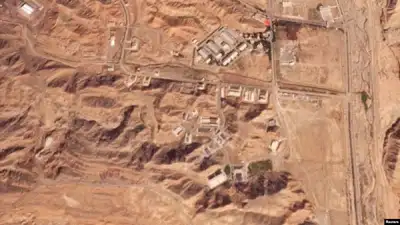





Donald Trump's decision to abandon a planned large-scale military strike against Iran has accelerated regional diplomatic efforts to revive US-Iran negotiations, while deepening political divisions inside Tehran over engagement with Washington.
President Donald Trump's decision to call off a planned large-scale military strike against Iran has once more exposed a key political faultline in Tehran between advocates of diplomacy and those urging the country to prepare for another war.
President Masoud Pezeshkian moved quickly to defend renewed engagement with Washington, portraying the memorandum of understanding (MoU) not as his own initiative but as the collective decision of Iran's security establishment.
Calling it "the product of the collective wisdom of the members of the Supreme National Security Council," he described the agreement as "the cornerstone of Iran's future foreign relations."
The backlash was immediate. The leadership board of the Assembly of Experts dismissed hopes of an agreement with Washington as futile and urged authorities to take legal action against what it called "voices of surrender."
Although the statement did not mention the government by name, it was widely interpreted as an indirect rebuke of Pezeshkian's diplomatic approach.
Hardline lawmaker Mahmoud Nabavian echoed the criticism, arguing that renewed calls for negotiations amounted to rescuing a weakened enemy.
"After the heavy blows inflicted by the Resistance Front, higher energy prices, dwindling strategic reserves and mounting domestic political pressure in the United States, unfortunately some people in Iran are once again seeking negotiations for various reasons, including rescuing the enemy," he wrote.
"They should know that such negotiations will never be accepted by the loyal and resilient people of Iran."
Uncertainty persists
Trump announced on Sunday that Washington was now pursuing two parallel agreements with Tehran: one to reopen the Strait of Hormuz and another addressing Iran's nuclear program. He said direct negotiations would begin on Monday.
That timetable remains uncertain. Pakistani officials say no date or venue has yet been finalized, with Islamabad and Doha among the leading candidates to host the talks.
Pakistani Foreign Minister Ishaq Dar has invited Araghchi to visit Islamabad "at the earliest opportunity," while diplomatic sources told Al Hadath television that Pakistan is preparing formal invitations for both Araghchi and Parliament Speaker Mohammad-Bagher Ghalibaf as mediation efforts continue.
Araghchi, meanwhile, spent Monday speaking with regional officials, including Pakistan's army chief, Asim Munir, Saudi Foreign Minister Faisal bin Farhan, Omani Foreign Minister Badr Albusaidi and Iraqi Foreign Minister Fuad Hussein.
Tehran says negotiations with Oman over arrangements in the Strait of Hormuz are approaching their final stage.
Why diplomacy returned
The renewed diplomatic push also reflects the limits of Washington's military options, analysts say.
Farzin Nadimi, a senior fellow at The Washington Institute, told Iran International that Trump faces a strategic dilemma because the available military options either risk triggering a much broader regional conflict or are unlikely to produce decisive results.
A campaign capable of fundamentally weakening the Islamic Republic would require a much larger operation, potentially including ground forces—an option Trump has consistently sought to avoid, Nadimi said.
Historian Shahram Kholdi said Trump's decision reflected not only Iranian threats against regional infrastructure but also Gulf Arab security concerns, consultations led by Saudi Crown Prince Mohammed bin Salman and progress in Qatari mediation efforts.
Together, the assessments suggest that both Washington and Tehran have entered another round of diplomacy not because either side believes the underlying conflict has been resolved, but because the alternatives remain costly.
Public skepticism
For many Iranians, Trump's decision has reduced the immediate risk of war without easing the uncertainty that has dominated daily life for months.
Social media users described a growing sense of limbo as repeated cycles of military threats and diplomatic reversals continued to disrupt daily life and fuel inflation.
One user wrote that the United States had returned to "sanctions, maritime pressure and Trump's empty rhetoric," leaving ordinary Iranians trapped in uncertainty.
Another complained that the recurring cycle of "war, negotiations, war, negotiations" was "destroying people's lives," arguing that prices rise after every military escalation but never fall when tensions ease.
Another user criticized Trump's inconsistent approach, writing that he "neither fights decisively nor truly makes peace," arguing that the current state of "neither war nor peace" hurts ordinary Iranians more than anyone else.
Formal backchannel negotiations between Iranian and Western envoys resumed in Muscat on Monday after President Donald Trump suspended strikes on Iran's energy infrastructure over the weekend, even as Tehran publicly denied direct contacts with Washington.
Major state news agencies reported that talks had resumed, while Foreign Minister Abbas Araghchi insisted he was traveling to Iraq on a private religious visit and Foreign Ministry spokesman Esmail Baghaei maintained that discussions in Muscat were limited to consultations between Iran and Oman.
Baghaei reiterated that Tehran was not engaged in negotiations with the United States.
Washington has repeatedly acknowledged indirect negotiations that Iranian officials initially denied, only for Tehran to later acknowledge that talks had indeed been taking place through intermediaries. The same pattern now appears to be repeating.
That impression was reinforced over the weekend as Pakistani and Qatari mediators discussed reviving the June memorandum of understanding.
President Massoud Pezeshkian called for the memorandum, which he signed alongside Trump, to once again serve as the foundation of a renewed agreement between Tehran and Washington.
Hormuz returns to the table
The central issue remains the reopening of the Strait of Hormuz.
After Iran rejected an earlier Omani proposal governing maritime traffic through the waterway, ISNA reported on Monday that Iranian negotiators had submitted a revised technical framework proposing joint Iranian-Omani inspection procedures for commercial vessels.
According to the proposal, military escorts and unflagged vessels would remain barred from designated transit routes under Iranian sovereignty.
Semi-official Iranian media also reported that Tehran is seeking explicit guarantees over banking channels for energy exports before agreeing to clear the growing backlog of commercial tankers anchored off the Gulf of Oman.
If accurate, the reports suggest the negotiations have already moved beyond general political contacts into detailed discussions over implementation.
Divisions inside Tehran
The resumption of diplomacy has again exposed divisions within Iran's political establishment.
IRNA and Mehr portrayed Araghchi as leading an intensive regional diplomatic effort to consolidate support for Tehran's position on Hormuz, even as his public schedule raised questions about his direct role in the Muscat talks.
Critics argue that Araghchi's previous diplomatic initiatives have repeatedly coincided with renewed IRGC attacks on commercial shipping, raising questions over how much authority civilian diplomats exercise over military decisions.
The Revolutionary Guards have no formal diplomatic channel of their own. While they can derail negotiations through military action, they have no direct means of conveying their demands to mediators or Washington.
Whether that institutional divide explains Araghchi's apparent distance from the Muscat talks is a question few officials in Tehran are prepared to address publicly.
Hardline daily Kayhan urged officials not to "confirm or validate Washington's narrative" that negotiations were progressing.
Editor Hossein Shariatmadari described Trump's shift from military threats to diplomacy as a psychological operation designed to manipulate oil markets and extract unilateral concessions from Iran.
He also criticized Pezeshkian's description of the memorandum as the cornerstone of future diplomacy, warning that Iranian negotiators must not compromise what he called the country's maritime sovereignty under the guise of technical inspection arrangements.
Writing in the moderate daily Shargh, commentator Ahmad Zeidabadi offered the opposite conclusion.
He argued that sections of Iran's political establishment were living in a "parallel universe" that ignored both economic deterioration and growing public frustration.
Reviving the Muscat process and reaching a practical navigation framework, he argued, offered Iran its best chance of stabilizing the economy and preventing further social deterioration.
Prospects for renewed US-Iran diplomacy remained uncertain on Monday as Washington and Tehran offered sharply different accounts of whether negotiations had already begun.
President Donald Trump told reporters at the White House that Iran had requested talks with the backing of Saudi Arabia, the United Arab Emirates and Qatar.
He said negotiations would proceed in two phases, beginning with reopening the Strait of Hormuz, which he said would be "completely open" by Tuesday, before turning to Iran's nuclear program.
Trump described the talks as Tehran's "last chance" to reach an agreement, saying he wanted to give Iran "every last chance before decapitation."
But Tehran rejected the announcement outright, with Iranian Foreign Ministry spokesperson Esmail Baghaei saying there were no talks and no plans to receive a US delegation or send Iranian representatives to negotiations in the coming days.
Baghaei said Iran's only confirmed discussions were with Oman over a temporary shipping route through the Strait of Hormuz. Reaching an understanding with Muscat over the proposed corridor would not by itself amount to reopening the strait, he added.
‘Deal or surrender’
Later Monday, Trump took to Truth Social to accuse Iran's leadership of duplicity but said more talks were scheduled in the "immediate future."
He added that the US naval blockade would remain in place until "a deal or total surrender is accomplished."
A senior Iranian source also told Reuters that no negotiations were planned and that Foreign Minister Abbas Araghchi, who was visiting Iraq, would be unavailable until at least the end of the week.
CBS News separately cited US officials as saying no new formal negotiations had been scheduled despite Trump's public comments.
The officials said existing indirect contacts were continuing through intermediaries, involving US envoy Steve Witkoff, Jared Kushner and other members of the American negotiating team on one side and Iranian representatives on the other.
The conflicting accounts left unclear whether Trump was referring to formal negotiations, indirect exchanges through mediators or efforts to arrange future talks.
Mediators keep channels open
Diplomatic activity nevertheless intensified across the region on Monday.
Araghchi held separate calls with his Omani, Saudi, Pakistani and Iraqi counterparts and also spoke with Pakistan's army chief, Asim Munir, about regional developments and diplomatic efforts.
Pakistan invited Araghchi to visit Islamabad, while reports said Tehran's chief negotiators could be asked to take part in discussions there.
Islamabad and Doha have both been mentioned as possible venues for indirect talks, though no date or location has been confirmed.
Switzerland, which represents US interests in Iran, said it remained in contact with both sides and was prepared to assist if requested. An Iraqi politician also claimed Baghdad was carrying messages between Tehran and Washington.
Trump identified Saudi Arabia, the UAE and Qatar as supporters of the talks, though he did not explain whether they were directly mediating or had encouraged Iran to engage.
Military pressure remains
The diplomatic push is unfolding under continuing US military and economic pressure.
Trump said the US Navy had complete control over the Strait of Hormuz and that "nothing would reach Iran" unless Washington permitted it. US Central Command said Monday it had redirected 44 commercial vessels, disabled two vessels and boarded two others while enforcing the blockade.
The strait remains the most immediate point of contention. Washington wants unrestricted passage through the waterway, while Tehran insists it retains authority over shipping and says US military action and the blockade must end before conditions can significantly change.
Oil prices fell sharply after Trump suspended the planned strikes, raising expectations of a possible agreement. Brent crude dropped nearly 7% on Monday.
Maritime risks nevertheless persisted. The UK Maritime Trade Operations said a vessel reported an explosion in the water nearby off Oman, although the ship and crew were safe.
Whether Trump's timetable reflects active negotiations, indirect contacts or diplomatic optimism remains unclear. Tehran has so far confirmed neither broader talks with Washington nor any agreement.
A female Iranian police colonel accused of assisting protesters during January's nationwide unrest has been charged with offences including "disclosure of state secrets," according to rights group HRANA, in a rare case involving a serving security official.
Shahrzad Zamiri, 51, remains detained without trial in Mashhad's Vakilabad Prison, HRANA reported on Monday.
Informed sources told Iran International that Zamiri was summoned to report to Iran's police force several days after the protests before being detained. They said the accusations stem from her presence at the protests and alleged assistance to protesters.
Zamiri served as deputy for social affairs at the cyber police, known as FATA, in Khorasan Razavi province.
According to the sources, she spent about two months in solitary confinement after her arrest, during which she was denied telephone calls and family visits.
The sources added that Zamiri has been interrogated but has not been granted access to a lawyer. Her case remains at the investigative stage, with no trial held or verdict issued.
HRANA reported that an investigative hearing was held on Monday at the military prosecutor's office in Mashhad.
The agency said Zamiri faces five charges but identified only two of them: "disclosure of state secrets" and "operational action." Authorities have not disclosed the factual basis for the allegations.
Iran International's sources said authorities have also confiscated Zamiri's property. Her telephone contact and family visits, suspended since late May, have now resumed, according to HRANA, citing a source close to her family.
Cases involving the detention of serving or former members of Iran's police or armed forces rarely become public. Previous reports have, however, pointed to isolated instances of dissent or resistance among security personnel involved in suppressing protesters.
Iranian authorities have not released a comprehensive figure for the number of people detained following the January protests.
In recent months, the judiciary has intensified its crackdown through widespread summonses and arrests, lengthy prison sentences and a sharp rise in executions involving political and protest-related cases.
Iran’s Supreme Leader Mojtaba Khamenei has warned President Masoud Pezeshkian that his next resignation would be accepted, a relative of Khamenei by marriage said in a video released Monday, prompting sharp denials and political backlash.
Mohammad-Bagher Kharrazi, a senior cleric whose sister is married to Khamenei’s brother, claimed Pezeshkian had threatened to resign “28 times” but stopped after being warned that his next resignation would be accepted.
“If he resigns one more time, I will approve it. I will write ‘approved’ underneath it, and that will be the end of it,” Kharrazi quoted Khamenei as saying.
“Pezeshkian no longer dares,” he said. “They all backed down.”
Iran International reported on May 31, 2026, that Pezeshkian had submitted an official resignation letter to Khamenei’s office, saying his government had been excluded from major decisions and hardline Revolutionary Guards factions had taken control of state affairs.
A source familiar with the letter said at the time Pezeshkian argued that he could no longer fulfill his constitutional responsibilities and requested to leave office immediately.
However, Mehdi Tabatabaei, deputy for communications and information at Pezeshkian’s office, dismissed Kharrazi’s resignation allegation as “baseless and an outright lie.”
“A sinister alliance of deceitful agitators and proponents of extremism and incompetence has targeted sacred unity and national cohesion,” Tabatabaei wrote on X.
“Two years after their defeat at the ballot box, they are still seeking revenge against the will of the people,” he added. “They have become puppets of Iran’s enemies. It is deplorable.”
Ali-Asghar Shafieian, an adviser to the Pezeshkian administration, also rejected Kharrazi’s account, saying the cleric had neither met Khamenei nor maintained any contact with him.
“Mr. Kh has neither seen the Leader nor has any connection with him, and he is known for strange stories,” Shafieian wrote. “Do not manufacture rumors or indulge in fantasies.”
Shafieian suggested the remarks reflected anger in the faction associated with the sole dissenting vote in the Supreme National Security Council over the Iran-US memorandum of understanding.
He said the faction was unhappy about the agreement’s signing, Khamenei’s trust in Pezeshkian, the decision now being implemented and praise of the president by both the late Ali Khamenei and the current Supreme Leader.
Reformist political activist Ahmad Zeidabadi separately described Kharrazi’s remarks as a “tension-provoking claim,” saying they served no purpose other than inflaming tensions during an already difficult period.
Zeidabadi cited Kharrazi’s previous threats against political critics during the reform era and urged state institutions to clarify the matter before the widespread circulation of his remarks created a new political controversy.
Khamenei to replace security chief
Kharrazi also claimed Khamenei planned to remove Mohammad-Bagher Zolghadr as secretary of the Supreme National Security Council and replace him with Mohsen Rezaei, the Supreme Leader’s military adviser.
“They are going to replace Mr. Zolghadr, and Mr. Mohsen Rezaei will take his place,” he said.
Kharrazi further claimed Foreign Minister Abbas Araghchi had been told that he had “no right to interfere in the negotiations under any circumstances,” accusing him of repeatedly threatening to withdraw from the diplomatic process.
Zolghadr, a former deputy commander of the Revolutionary Guards, was appointed secretary of the security council on March 24, 2026, replacing Ali Larijani after his death during the war. The appointment was approved by Khamenei and formally issued by Pezeshkian.
Iran International reported on March 25 that senior IRGC commanders had pressured Pezeshkian to appoint Zolghadr despite opposition from the president and other officials.
Rezaei, a former IRGC commander-in-chief and repeated presidential candidate, was appointed Khamenei’s military adviser on March 16.
The claims come amid a continuing struggle between Pezeshkian’s allies and hardliners over responsibility for the Iran-US memorandum of understanding, which was signed by the Iranian and American presidents on June 17.
Pezeshkian said an overwhelming majority of security council members had approved the text, while hardliners argued that the agreement crossed Khamenei’s red lines.
Shortly after the MoU was signed, lawmaker Mohammad-Manan Raisi said Khamenei had taken the unusual step of requiring the support of at least 75% of council members before approving the agreement. He said all but one member voted in favor.
The dispute intensified after Vice President Mohammad-Jafar Ghaempanah said Khamenei had instructed officials to approve the MoU if it secured the three-quarters majority. Ghaempanah said Khamenei subsequently authorized the agreement while warning officials not to retreat in the face of excessive US demands.
His remarks prompted hardliners to accuse the Pezeshkian administration of portraying the Supreme Leader’s position as subordinate to a council vote.