Factory tank explosion alarms residents south of Tehran – state media


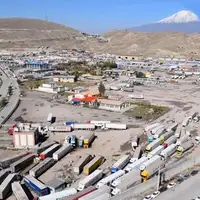
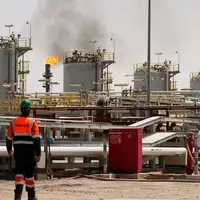
An explosion heard in Fashafuyeh, south of Tehran, came from an internal tank at a factory in the Aluminumkaran Industrial Park, state news agency IRNA reported on Tuesday, citing local official Davoud Vali.
The blast and resulting smoke alarmed nearby residents and prompted rumors about its cause, the report added.


Tehran sustained the heaviest damage of any Iranian province during the 40-day conflict with US and Israel, with more than 50,000 homes damaged and the capital accounting for 650 reported strikes, according to a municipal report published on Monday.
The figures, presented at a public event hosted by the University of Tehran's Faculty of Urban Planning, offer the most detailed breakdown yet of damage across the capital following the conflict.
The report says District 4 in northeastern Tehran recorded the highest number of strikes, followed by District 21 in the west, District 1 in the north and District 22 in the northwest.
"The number of strikes in District 4 alone exceeded the combined total recorded in some provinces," Hossein Nouhi, a certified construction expert in Tehran's municipality, said during the event.
According to the report by Tehran Municipality's Urban Planning and Architecture Department, District 4 was hit 90 times, District 21 Tehran sustained 62 strikes, District 1 recorded 57 and District 22 recorded 55. District 17 in southwestern Tehran was the least affected, with three reported strikes.
Housing damage
The municipality said 50,849 residential units across Tehran sustained damage ranging from broken windows and doors to complete destruction.
Around 40,000 homes required minor repairs, about 8,900 suffered more extensive architectural damage, 415 buildings required structural reinforcement or reconstruction and 2,042 homes were completely destroyed and must be rebuilt, according to the report.
District 4 recorded the largest number of damaged residential units with 7,948, followed by District 2 with 4,037, District 15 with 3,490, District 11 with 3,432, District 21 with 3,205 and District 7 with 3,196.
The report also found that District 7 had the highest number of completely destroyed homes, with 429 units, followed by District 4 with 325 and District 11 with 248.
Estimated economic and environmental costs
Nouhi put the country's economic losses from the 40-day conflict at an estimated $280 billion, excluding psychological impacts and the cost of restoring industrial production. He argued that the conflict highlighted the need to require shelters in new high-rise developments.
Separately, geologist Mehdi Zare’ estimated that military strikes generated around 10 million metric tons of debris across affected urban areas by August 1. He said the waste includes concrete, steel, glass, asbestos and industrial pollutants that could create long-term environmental and public health risks.
Zare’ also said the demolition and cleanup process released millions of tons of greenhouse gases, adding to the environmental impact of the conflict.

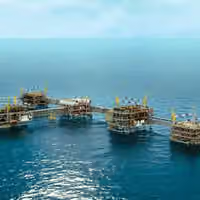
Saudi Aramco is routing crude around the Strait of Hormuz via its East-West pipeline as the Iran-related crisis has cut shipping through the strait to a tenth of pre-conflict levels, Chief Executive Amin Nasser said on Tuesday.
"The ongoing geopolitical crisis continues to aggravate the biggest supply shock in history," Nasser said, as the Saudi oil giant reported a 42% jump in second-quarter profit.
"We continue to optimize the flexibility of the East-West pipeline," Nasser said.
The pipeline gives Saudi Arabia an alternative route for crude exports, carrying oil from the kingdom's main producing areas in the east to the Red Sea and away from the Strait of Hormuz.
Nasser said Aramco had "managed risks effectively for some time" and that the Saudi government was also working to address risks to oil shipments.
"The government is tackling this risk and that has never limited our option to go through Bab el-Mandab," he said.
Aramco's East-West pipeline and global inventories have helped ease the supply shock caused by the crisis, lowering the net loss to around 1.8 billion barrels, Nasser said.
Strait losses mount weekly
"Current trade flows through the Strait of Hormuz are at a tenth of pre-conflict levels and the world will continue to lose more than 100 million barrels for each week the strait is closed," Nasser said.
The world has lost more than 2.6 billion barrels of oil destined for a number of critical industries as a result of the crisis, he said.
An average of 11 million barrels per day of liquids supply had been removed, while Asia's crude oil imports fell by around 6 million barrels per day at the peak of the crisis, Nasser said.
"If the strait were open today it would take up to 18 months at an average rate of 2.1 million barrels a day to replenish depleted inventories," he said.
Nasser also warned that pressure was building elsewhere in the global energy system, saying the global refining system was "stretched heavily."
"There is a disconnect between futures and physical markets," Nasser said, pointing to strong refining margins that reflected tightness in refined products.
"If refineries were to suffer any major unplanned or prolonged shutdown the global energy supply system could face more severe pressure," he said.
Nasser said Aramco continued to hope for "a resolution that restores normal shipping and stabilizes the market," but warned that a recovery would not be immediate.
"Normalization will take time," he said.
Donald Trump's decision to abandon a planned large-scale military strike against Iran has accelerated regional diplomatic efforts to revive US-Iran negotiations, while deepening political divisions inside Tehran over engagement with Washington.
President Donald Trump's decision to call off a planned large-scale military strike against Iran has once more exposed a key political faultline in Tehran between advocates of diplomacy and those urging the country to prepare for another war.
President Masoud Pezeshkian moved quickly to defend renewed engagement with Washington, portraying the memorandum of understanding (MoU) not as his own initiative but as the collective decision of Iran's security establishment.
Calling it "the product of the collective wisdom of the members of the Supreme National Security Council," he described the agreement as "the cornerstone of Iran's future foreign relations."
The backlash was immediate. The leadership board of the Assembly of Experts dismissed hopes of an agreement with Washington as futile and urged authorities to take legal action against what it called "voices of surrender."
Although the statement did not mention the government by name, it was widely interpreted as an indirect rebuke of Pezeshkian's diplomatic approach.
Hardline lawmaker Mahmoud Nabavian echoed the criticism, arguing that renewed calls for negotiations amounted to rescuing a weakened enemy.
"After the heavy blows inflicted by the Resistance Front, higher energy prices, dwindling strategic reserves and mounting domestic political pressure in the United States, unfortunately some people in Iran are once again seeking negotiations for various reasons, including rescuing the enemy," he wrote.
"They should know that such negotiations will never be accepted by the loyal and resilient people of Iran."
Uncertainty persists
Trump announced on Sunday that Washington was now pursuing two parallel agreements with Tehran: one to reopen the Strait of Hormuz and another addressing Iran's nuclear program. He said direct negotiations would begin on Monday.
That timetable remains uncertain. Pakistani officials say no date or venue has yet been finalized, with Islamabad and Doha among the leading candidates to host the talks.
Pakistani Foreign Minister Ishaq Dar has invited Araghchi to visit Islamabad "at the earliest opportunity," while diplomatic sources told Al Hadath television that Pakistan is preparing formal invitations for both Araghchi and Parliament Speaker Mohammad-Bagher Ghalibaf as mediation efforts continue.
Araghchi, meanwhile, spent Monday speaking with regional officials, including Pakistan's army chief, Asim Munir, Saudi Foreign Minister Faisal bin Farhan, Omani Foreign Minister Badr Albusaidi and Iraqi Foreign Minister Fuad Hussein.
Tehran says negotiations with Oman over arrangements in the Strait of Hormuz are approaching their final stage.
Why diplomacy returned
The renewed diplomatic push also reflects the limits of Washington's military options, analysts say.
Farzin Nadimi, a senior fellow at The Washington Institute, told Iran International that Trump faces a strategic dilemma because the available military options either risk triggering a much broader regional conflict or are unlikely to produce decisive results.
A campaign capable of fundamentally weakening the Islamic Republic would require a much larger operation, potentially including ground forces—an option Trump has consistently sought to avoid, Nadimi said.
Historian Shahram Kholdi said Trump's decision reflected not only Iranian threats against regional infrastructure but also Gulf Arab security concerns, consultations led by Saudi Crown Prince Mohammed bin Salman and progress in Qatari mediation efforts.
Together, the assessments suggest that both Washington and Tehran have entered another round of diplomacy not because either side believes the underlying conflict has been resolved, but because the alternatives remain costly.
Public skepticism
For many Iranians, Trump's decision has reduced the immediate risk of war without easing the uncertainty that has dominated daily life for months.
Social media users described a growing sense of limbo as repeated cycles of military threats and diplomatic reversals continued to disrupt daily life and fuel inflation.
One user wrote that the United States had returned to "sanctions, maritime pressure and Trump's empty rhetoric," leaving ordinary Iranians trapped in uncertainty.
Another complained that the recurring cycle of "war, negotiations, war, negotiations" was "destroying people's lives," arguing that prices rise after every military escalation but never fall when tensions ease.
Another user criticized Trump's inconsistent approach, writing that he "neither fights decisively nor truly makes peace," arguing that the current state of "neither war nor peace" hurts ordinary Iranians more than anyone else.
Formal backchannel negotiations between Iranian and Western envoys resumed in Muscat on Monday after President Donald Trump suspended strikes on Iran's energy infrastructure over the weekend, even as Tehran publicly denied direct contacts with Washington.
Major state news agencies reported that talks had resumed, while Foreign Minister Abbas Araghchi insisted he was traveling to Iraq on a private religious visit and Foreign Ministry spokesman Esmail Baghaei maintained that discussions in Muscat were limited to consultations between Iran and Oman.
Baghaei reiterated that Tehran was not engaged in negotiations with the United States.
Washington has repeatedly acknowledged indirect negotiations that Iranian officials initially denied, only for Tehran to later acknowledge that talks had indeed been taking place through intermediaries. The same pattern now appears to be repeating.
That impression was reinforced over the weekend as Pakistani and Qatari mediators discussed reviving the June memorandum of understanding.
President Massoud Pezeshkian called for the memorandum, which he signed alongside Trump, to once again serve as the foundation of a renewed agreement between Tehran and Washington.
Hormuz returns to the table
The central issue remains the reopening of the Strait of Hormuz.
After Iran rejected an earlier Omani proposal governing maritime traffic through the waterway, ISNA reported on Monday that Iranian negotiators had submitted a revised technical framework proposing joint Iranian-Omani inspection procedures for commercial vessels.
According to the proposal, military escorts and unflagged vessels would remain barred from designated transit routes under Iranian sovereignty.
Semi-official Iranian media also reported that Tehran is seeking explicit guarantees over banking channels for energy exports before agreeing to clear the growing backlog of commercial tankers anchored off the Gulf of Oman.
If accurate, the reports suggest the negotiations have already moved beyond general political contacts into detailed discussions over implementation.
Divisions inside Tehran
The resumption of diplomacy has again exposed divisions within Iran's political establishment.
IRNA and Mehr portrayed Araghchi as leading an intensive regional diplomatic effort to consolidate support for Tehran's position on Hormuz, even as his public schedule raised questions about his direct role in the Muscat talks.
Critics argue that Araghchi's previous diplomatic initiatives have repeatedly coincided with renewed IRGC attacks on commercial shipping, raising questions over how much authority civilian diplomats exercise over military decisions.
The Revolutionary Guards have no formal diplomatic channel of their own. While they can derail negotiations through military action, they have no direct means of conveying their demands to mediators or Washington.
Whether that institutional divide explains Araghchi's apparent distance from the Muscat talks is a question few officials in Tehran are prepared to address publicly.
Hardline daily Kayhan urged officials not to "confirm or validate Washington's narrative" that negotiations were progressing.
Editor Hossein Shariatmadari described Trump's shift from military threats to diplomacy as a psychological operation designed to manipulate oil markets and extract unilateral concessions from Iran.
He also criticized Pezeshkian's description of the memorandum as the cornerstone of future diplomacy, warning that Iranian negotiators must not compromise what he called the country's maritime sovereignty under the guise of technical inspection arrangements.
Writing in the moderate daily Shargh, commentator Ahmad Zeidabadi offered the opposite conclusion.
He argued that sections of Iran's political establishment were living in a "parallel universe" that ignored both economic deterioration and growing public frustration.
Reviving the Muscat process and reaching a practical navigation framework, he argued, offered Iran its best chance of stabilizing the economy and preventing further social deterioration.
Prospects for renewed US-Iran diplomacy remained uncertain on Monday as Washington and Tehran offered sharply different accounts of whether negotiations had already begun.
President Donald Trump told reporters at the White House that Iran had requested talks with the backing of Saudi Arabia, the United Arab Emirates and Qatar.
He said negotiations would proceed in two phases, beginning with reopening the Strait of Hormuz, which he said would be "completely open" by Tuesday, before turning to Iran's nuclear program.
Trump described the talks as Tehran's "last chance" to reach an agreement, saying he wanted to give Iran "every last chance before decapitation."
But Tehran rejected the announcement outright, with Iranian Foreign Ministry spokesperson Esmail Baghaei saying there were no talks and no plans to receive a US delegation or send Iranian representatives to negotiations in the coming days.
Baghaei said Iran's only confirmed discussions were with Oman over a temporary shipping route through the Strait of Hormuz. Reaching an understanding with Muscat over the proposed corridor would not by itself amount to reopening the strait, he added.
‘Deal or surrender’
Later Monday, Trump took to Truth Social to accuse Iran's leadership of duplicity but said more talks were scheduled in the "immediate future."
He added that the US naval blockade would remain in place until "a deal or total surrender is accomplished."
A senior Iranian source also told Reuters that no negotiations were planned and that Foreign Minister Abbas Araghchi, who was visiting Iraq, would be unavailable until at least the end of the week.
CBS News separately cited US officials as saying no new formal negotiations had been scheduled despite Trump's public comments.
The officials said existing indirect contacts were continuing through intermediaries, involving US envoy Steve Witkoff, Jared Kushner and other members of the American negotiating team on one side and Iranian representatives on the other.
The conflicting accounts left unclear whether Trump was referring to formal negotiations, indirect exchanges through mediators or efforts to arrange future talks.
Mediators keep channels open
Diplomatic activity nevertheless intensified across the region on Monday.
Araghchi held separate calls with his Omani, Saudi, Pakistani and Iraqi counterparts and also spoke with Pakistan's army chief, Asim Munir, about regional developments and diplomatic efforts.
Pakistan invited Araghchi to visit Islamabad, while reports said Tehran's chief negotiators could be asked to take part in discussions there.
Islamabad and Doha have both been mentioned as possible venues for indirect talks, though no date or location has been confirmed.
Switzerland, which represents US interests in Iran, said it remained in contact with both sides and was prepared to assist if requested. An Iraqi politician also claimed Baghdad was carrying messages between Tehran and Washington.
Trump identified Saudi Arabia, the UAE and Qatar as supporters of the talks, though he did not explain whether they were directly mediating or had encouraged Iran to engage.
Military pressure remains
The diplomatic push is unfolding under continuing US military and economic pressure.
Trump said the US Navy had complete control over the Strait of Hormuz and that "nothing would reach Iran" unless Washington permitted it. US Central Command said Monday it had redirected 44 commercial vessels, disabled two vessels and boarded two others while enforcing the blockade.
The strait remains the most immediate point of contention. Washington wants unrestricted passage through the waterway, while Tehran insists it retains authority over shipping and says US military action and the blockade must end before conditions can significantly change.
Oil prices fell sharply after Trump suspended the planned strikes, raising expectations of a possible agreement. Brent crude dropped nearly 7% on Monday.
Maritime risks nevertheless persisted. The UK Maritime Trade Operations said a vessel reported an explosion in the water nearby off Oman, although the ship and crew were safe.
Whether Trump's timetable reflects active negotiations, indirect contacts or diplomatic optimism remains unclear. Tehran has so far confirmed neither broader talks with Washington nor any agreement.