Iranian threats against Italian leaders are unacceptable, Tajani says


Iranian threats against Italian leaders are unacceptable, Italian Foreign Minister Antonio Tajani told Iran International on Monday.
“It is unacceptable. Italy is not fighting against Iran, so we do not understand this attack against Italy,” Tajani said on the sidelines of an EU Foreign Affairs Council meeting in Brussels.
On Saturday, Tehran municipality-affiliated newspaper Hamshahri published an image of 13 world leaders, including Italian Prime Minister Giorgia Meloni, claiming they were on the Islamic Republic’s revenge list.
Tajani said Italy supported democracy, peace and freedom of navigation, describing any effort to block the Strait of Hormuz as a major mistake.
“Freedom of navigation is crucial for us,” he said. “On this, we support the American position, not the Iranian position.”


Plastic waste has become a major environmental challenge in Iran, with poor enforcement of waste management regulations allowing single-use plastics to pollute natural areas and water resources, the country's environment chief said on Sunday.
More than two decades after Iran adopted its Waste Management Law in 2004, large parts of the legislation remain unenforced, leaving serious shortcomings in the management of household, medical, agricultural and industrial waste, Department of Environment chief Shina Ansari said.
“Plastic waste, particularly single-use plastics, has become a serious problem for nature, coastlines, tourist areas and water resources,” Ansari said. “Studies show that microplastics are entering the food chain, water resources and even drinking water, posing a serious threat to human health and the environment.”
Plastic consumption has become a growing environmental concern in Iran, driven largely by the widespread use of shopping bags, disposable tableware, drink bottles and food packaging. A 2024 review of municipal waste found that plastics account for about 7% of Iran’s waste stream by weight.
Enforcement gaps persist
Regulations governing waste disposal and recycling exist, Ansari said, but have only been implemented sporadically, leaving many environmental problems unresolved.
A 2022 regulation intended to reduce plastic bag consumption required manufacturers to phase out bags thinner than 25 microns and imposed obligations on large retailers. Ansari said the measures, like many environmental regulations, have not been properly enforced.
Many countries, she added, have introduced taxes, restrictions or bans on single-use plastic bags even before negotiations on a global plastics treaty are completed.
Short-lived use, long-term pollution
Around 95% of plastic bags in Iran are used only once, typically for between 12 and 20 minutes, before being discarded.
The problem is compounded by weak waste separation and recycling systems. Research on Iran’s plastic-waste sector points to gaps in regulation, enforcement, funding and technology, while informal collectors continue to play a major role in recovering valuable materials. As a result, much plastic waste is buried, openly dumped or left uncollected rather than being processed through an effective circular recycling system.
The bags can remain in the environment for 400 to 500 years before decomposing, contributing to long-term pollution of land and waterways, Ansari said.
The environmental effects are also increasingly visible. Researchers have detected microplastics in landfill areas, along Iran’s Caspian coast and in seawater, sediment and fish from the Persian Gulf.
Patients in Iran are increasingly turning to artificial intelligence for medical advice as healthcare costs outpace household incomes, prompting concerns from a public health expert that the technology could undermine treatment and trust between doctors and patients.
Unchecked reliance on AI for self-diagnosis and self-treatment risks compromising patient safety because the technology cannot replace physical examinations, diagnostic tests or clinical judgment, epidemiologist Hamid Soori told Khabar Online on Monday.
“Uncontrolled self-treatment and complete trust in AI recommendations, when there has been no physical examination, no diagnostic testing and many factors related to the illness have not been considered, could create a major challenge and dangerous consequences for public health,” Soori said.
The warning comes as AI-powered chatbots and search tools become a common first stop for many Iranians seeking explanations for symptoms before visiting a doctor. While the technology has expanded public access to health information, specialists say many users overestimate its reliability for diagnosing or treating medical conditions.
Healthcare costs fuel self-treatment
Soori said the problem is particularly acute in Iran, where many households struggle to keep pace with rising medical costs, encouraging more people to delay or avoid professional care.
“This situation is worse in countries where treatment costs are not proportionate to people's incomes,” he said. “Self-treatment has existed for years, but the arrival of AI could intensify its consequences.”
He warned that patients who arrive at clinics convinced by AI-generated advice may already have delayed treatment or taken inappropriate actions based on incomplete or inaccurate information.
Doctor-patient trust at risk
Beyond the clinical risks, Soori said greater dependence on AI could alter the relationship between physicians and patients.
“When patients come to doctors with information and recommendations generated by AI, in addition to the risk of worsening and complicating their illness and algorithmic errors, it may reduce trust in physicians' recommendations and disrupt the doctor-patient relationship,” he said.
He added that, like many emerging technologies, AI can be highly beneficial but also carries risks when it is widely accessible to people with limited medical knowledge.
Iranian foreign ministry spokesperson said in response to the death of US Senator Lindsey Graham that “Azrael is just,” referring to the angel of death in Islamic tradition.
Esmaeil Baghaei accused the late senator of building his political life around war, violence and support for mass killings in the Middle East.
“The death of this hot-tempered and foul-mouthed senator will certainly not grieve any free human being,” Baghaei said.
Baghaei did not explain how his assertion that “Azrael is just” applied to the deaths of former Supreme Leader Ali Khamenei and senior IRGC commanders killed in the conflict.
The remark appears to apply a theological standard selectively, celebrating the death of an adversary while portraying the deaths of Iranian leaders as crimes demanding vengeance.
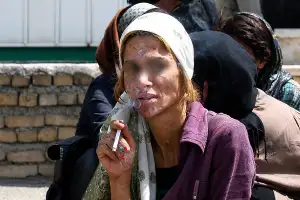
Women’s drug use has increased in Iran over the past decade, with cannabis products now the most commonly used substances among female users, a senior anti-narcotics official said on Sunday.
“The use of drugs among women has unfortunately increased over the past seven to 10 years, and this trend often begins with cigarette smoking,” Soleiman Abbasi, Director General of Treatment at Iran’s Drug Control Headquarters, told the ILNA news agency.
“Hashish and cannabis are the most common drugs used by women in society, and there is not a significant tendency among women to use other specific narcotic substances,” he added.
Women, Abbasi said, still account for far fewer drug users than men, although no precise official figures are available. Even so, he warned that addiction among women carries wider social consequences because of their central role in family life.
“When the mother of a family becomes addicted, the family structure quickly falls apart,” Abbasi said, adding that women who do not use drugs often play a key role in maintaining family cohesion.
Iran faces one of the world's most severe drug-use challenges because of its proximity to Afghanistan, historically the world's largest producer of opium, and the long-standing availability of opiates. Official and expert estimates suggest around 2.8 million Iranians are regular drug users, with broader estimates including occasional users exceeding four million.
Cannabis use gaining ground among younger women
Available research indicates cannabis use among Iranian women remains substantially lower than among men but has been rising, particularly among younger women and university students.
A 2021 systematic review covering 90 Iranian studies found that 0.2% of women in the general population reported cannabis use during the previous year, compared with 1.3% of men. However, researchers identified a statistically significant increase in cannabis use among female university students between 2000 and 2020, reflecting growing consumption among younger, urban women.
Researchers have linked the trend to urbanization, changing social attitudes, easier access through informal networks, and greater exposure to global youth culture through the internet, while cautioning that stigma and legal risks likely result in substantial underreporting.
Abbasi also warned about the dangers posed by increasingly contaminated drugs.
Laboratory testing has found many seized narcotics contain harmful chemical impurities, including lead, which can worsen users' health and may contribute to fatal poisonings beyond the effects of the drugs themselves, he said.
He also highlighted overdose as a growing concern.
A study using data from Iran's Forensic Medicine Organization by Britain's Lancaster University recorded 11,944 drug-related deaths between March 2022 and March 2024, with men accounting for the overwhelming majority of fatalities and the average age at death around 37. Earlier official figures put annual drug-related deaths at roughly 3,000, suggesting the toll has increased sharply in recent years.
Iran will pursue justice and vengeance for the killing of former Supreme Leader Ali Khamenei and in US and Israeli attacks, foreign ministry spokesperson Esmaeil Baghaei said on Monday.
Baghaei said seeking “justice and blood vengeance” was a serious public demand and a clear duty of the Iranian government.
The foreign ministry would use international legal channels to document the attacks and pursue those responsible, he added.