Vance says direct IRGC-CENTCOM channel agreed in Switzerland talks
US Vice President JD Vance said one of the biggest breakthroughs of the Switzerland talks with Iran was an agreement in principle to establish a direct military communication channel between the Revolutionary Guard and CENTCOM in Doha to help prevent future escalation.
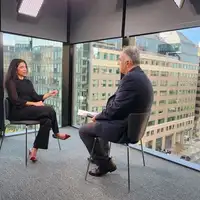
Speaking to UnHerd aboard Air Force Two after the Lake Lucerne summit, Vance said Washington had sought “a channel on the Iranian side” for reducing conflict.
“They were like, ‘OK, fine, we’ll send somebody from the IRGC to go hang out in Doha with somebody from CENTCOM, and that’s how we’re going to settle a lot of these disputes,’” he said.
The talks, mediated by Pakistan and Qatar, brought US and Iranian officials together after the recent war and amid efforts to turn a preliminary memorandum of understanding into a broader settlement.
Vance described the MOU as a “foundational document” rather than a final nuclear deal, saying its basic logic was: “Let’s open the Strait, let’s stop shooting at each other, and let’s see if we can make a nuclear deal.”
He said Iran was offering terms “radically different” from the 2015 JCPOA, including a tougher inspection regime and the “elimination” of its existing enriched uranium stockpile, while also seeking a transformed relationship with the United States and the world.
The vice president also linked the emerging arrangement to wider regional de-escalation, including Lebanon. At the end of the summit, he said progress on Lebanon was “very good” and pointed to a deconfliction mechanism discussed in Switzerland.
Vance said Israel and “every other nation in the region” had the right to self-defense, but added that Washington wanted that right exercised in a context of de-escalation.
He acknowledged that the process remains uncertain, saying Iran is “talking differently than they have in the past,” but that the question is whether Tehran’s actions will follow its words.