• العربية
  • فارسی
Brand
  • Iran Insight
  • Politics
  • Economy
  • Analysis
  • Special Report
  • Opinion
  • Podcast
  • Iran Insight
  • Politics
  • Economy
  • Analysis
  • Special Report
  • Opinion
  • Podcast
  • Theme
  • Language
    • العربية
    • فارسی
  • Iran Insight
  • Politics
  • Economy
  • Analysis
  • Special Report
  • Opinion
  • Podcast
All rights reserved for Volant Media UK Limited
volant media logo

UKMTO says Hormuz route open 'day or night'

Jun 20, 2026, 03:31 GMT+1

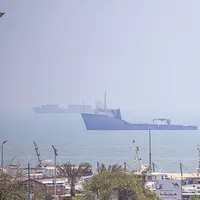
The southern shipping route through the Strait of Hormuz is open "day or night," the UK Maritime Trade Operations Centre (UKMTO) said on Friday, as it lowered its threat assessment for the strategic waterway from "substantial" to "moderate."

In its latest advisory, UKMTO said vessels could continue using the route, which runs close to Oman, but warned mariners of the possible presence of mines and ongoing naval clearance operations.

"Mariners should be advised of the existence of mines and expect naval presence as clearance operations continue," the advisory said.

Most Viewed

Tehran's familiar battle lines return over deal with US
1
INSIGHT

Tehran's familiar battle lines return over deal with US

2

Khamenei shifts responsibility for MoU as Iran, US implement Hormuz terms

3

US says Iran deal will end enrichment, destroy uranium stocks, cap missiles

4
ANALYSIS

Why some think a weakened Iran could emerge stronger

5
ANALYSIS

A fragile compact: ambiguities that could undermine US-Iran MoU

Banner
Banner
Banner

Spotlight

  • Can Iran rebuild ties with Arab neighbours without a US deal?
    INSIGHT

    Can Iran rebuild ties with Arab neighbours without a US deal?

  • Tehran divided over what Khamenei MoU message really meant
    INSIGHT

    Tehran divided over what Khamenei MoU message really meant

  • Trump says Iran is 'finished', experts say Tehran won big
    PODCAST

    Trump says Iran is 'finished', experts say Tehran won big

  • A US-Iran deal alone won't rescue Iran's oil economy
    ANALYSIS

    A US-Iran deal alone won't rescue Iran's oil economy

  • Iran's Qatar power link exposes a deeper energy dilemma
    ANALYSIS

    Iran's Qatar power link exposes a deeper energy dilemma

  • A fragile compact: ambiguities that could undermine US-Iran MoU
    ANALYSIS

    A fragile compact: ambiguities that could undermine US-Iran MoU

•
•
•

More Stories

Tehran divided over what Khamenei MoU message really meant

Jun 20, 2026, 02:58 GMT+1
Tehran divided over what Khamenei MoU message really meant
100%

A message attributed to Iran’s Supreme Leader suggesting he had reservations about the agreement with the United States has sparked a fierce debate in Tehran, with hardliners and moderates offering sharply different interpretations of its meaning and implications.

Supporters of the government presented it as a roadmap for the next phase of diplomacy, while critics argued it showed the leader’s preferred approach had been sidelined during negotiations.

Hardline media outlets and political figures offered a starkly different reading, arguing that the message showed the leader’s views had not been fully reflected in the negotiation process.

Read the full article here.

Iran's top university expels seven students for dissent

Jun 20, 2026, 02:44 GMT+1
Iran's top university expels seven students for dissent
100%
Students protesting at Tehran's Sharif University of Technology, in this undated file photo

Sharif University of Technology has issued preliminary expulsion orders for seven students, according to the student group United Students, in a move that rights advocates say reflects a broader postwar tightening of political and social control inside Iran.

The disciplinary committee at Sharif, widely regarded as Iran's leading technical university, handed down expulsion orders and, in several cases, multi-year bans from higher education, the group said.

The students named in the report include Reza Dalman, a master's student in computer engineering; Fatemeh Khakpour, an undergraduate chemistry student; Hossein Shadman, a master's student in industrial engineering; Sepanta Saeedi, an undergraduate computer engineering student; Masiha Bagheri, an undergraduate computer engineering student; Fariborz Kohanzad, an electrical engineering student; and Parnian Khodabakhshi, an undergraduate materials science and engineering student.

The expulsions come amid a crackdown that has continued since nationwide unrest in January and intensified during the recent war with the United States.

Rights groups say Iranian authorities have used the security climate to tighten control at home, with arrests, student disciplinary cases and executions rising sharply.

Iran has also carried out executions at record levels in recent months, fueling concerns that the political calm following the US-Iran memorandum of understanding could give authorities greater room to suppress dissent away from the battlefield.

United Students said disciplinary cases against three of the students — Saeedi, Shadman and Bagheri — centered on activity on social media. The other four cases were linked to protests in March, the group said.

The group also said detained student Ariana Koochak had been expelled.

Earlier this week, the Islamic Association of Sharif University students said families of several students had received calls from an unidentified number and reported that a number of students had been banned from entering the campus.

Sharif University has long held a special place in Iran's political and intellectual life. Often described as Iran's MIT, it is the country's most prestigious technical institution, with many graduates going on to pursue advanced degrees and careers at leading universities and technology companies abroad.

The university has also been a hotbed of student protest in recent years.

During the war, the campus was bombed in what officials said was an attack on research centers alleged to have dual-use applications.

The strike was condemned by Tehran and by rights organizations, which warned against attacks on civilian educational institutions.

The new expulsions suggest that even as Iran enters a formal diplomatic process with Washington, pressure on students and universities is continuing at home.

Democrats split over Iran deal as criticism grows on Capitol Hill

Jun 20, 2026, 01:57 GMT+1

The memorandum of understanding between the United States and Iran is exposing divisions among Democrats, with some lawmakers criticizing the agreement as a concession to Tehran while others argue the priority should be avoiding a return to war.

Sen. John Hickenlooper denounced the deal in a post on X.

"People have faced increased costs in the US for months because of this war," he wrote. "Iran gets money back. Americans do not. It's despicable."

But Sen. Chris Van Hollen argued that Democrats should frame the conflict itself as a strategic mistake and resist calls for renewed military action.

"The war has been a blunder," Van Hollen said. "There is no good way out of a bad war."

"When you're in a hole, stop digging," he added.

Iran's top Sunni cleric backs US deal, says corruption could squander gains

Jun 20, 2026, 01:19 GMT+1

Molavi Abdolhamid, Iran's most prominent Sunni cleric, welcomed the memorandum signed between Tehran and Washington, saying it could benefit ordinary Iranians if widespread corruption allowed.

Speaking during Friday prayers in Zahedan, the Sunni Friday prayer leader said the agreement was in the interests of the Iranian nation.

"If financial corruption is not eliminated, there is a risk that released assets will also be wasted and the people of Iran will not benefit from them," he warned.

Tehran divided over what Khamenei MoU message really meant

Jun 20, 2026, 01:09 GMT+1
•
Maryam Sinaiee
Tehran divided over what Khamenei MoU message really meant
100%
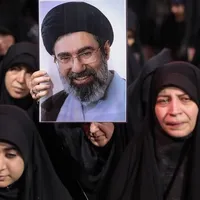
Women attend a Muharram mourning ceremony while holding a portrait of Iran's Supreme Leader Mojtaba Khamenei, Tehran, June 16, 2026

A message attributed to Iran’s Supreme Leader suggesting he had reservations about the agreement with the United States has sparked a fierce debate in Tehran, with hardliners and moderates offering sharply different interpretations of its meaning and implications.

According to the message, Mojtaba Khamenei had "a different view in principle" regarding the memorandum but approved it after receiving assurances from the Supreme National Security Council (SNSC) and its chairman, President Masoud Pezeshkian, that Iran’s rights and the interests of the "Axis of Resistance" would be safeguarded.

The statement quickly produced competing narratives. Supporters of the government presented it as a roadmap for the next phase of diplomacy, while critics argued it showed the leader’s preferred approach had been sidelined during negotiations.

Pezeshkian said the message had "clarified the responsibility of all influential components in the upcoming negotiation process."

Parliament Speaker and lead negotiator Mohammad Bagher Ghalibaf said it strengthened Tehran’s hand in holding Washington to its commitments under the memorandum.

Leader ‘ignored’

Hardline media outlets and political figures offered a starkly different reading, arguing that the message showed the leader’s views had not been fully reflected in the negotiation process.

The conservative website Raja News described Pezeshkian’s response as disrespectful, writing: "Mr. Pezeshkian, your duty is obedience and compliance, not merely consideration."

The outlet also criticized Ghalibaf’s comments, arguing that he appeared to treat the leader’s conditions as negotiating leverage rather than binding red lines.

"It seems he has forgotten that the leader’s red lines are not bargaining tools in negotiations but mandatory boundaries by which his future performance will be judged," the website wrote.

Mohsen Maghsoudi, writing for Fars News Agency, argued that opponents of negotiations had effectively been vindicated because their position had been aligned with that of the leader.

He claimed that "the compromise camp" had made decisions on behalf of both society and officials and that "the principled view of the Guardian Jurist was not followed."

Kian Abdollahi, editor-in-chief of IRGC-linked Tasnim News Agency, wrote that if officials advanced the memorandum despite knowing the leader held a different view, they bore responsibility for the consequences.

Competing narratives

Analysts offered sharply different interpretations of the political significance of the message.

Political analyst Ruhollah Rahimpour argued that Khamenei was seeking to reassure hardliners that he had not abandoned his previous positions and had accepted the agreement only because of state interests and the guarantees he received.

"But this manner of expression unintentionally reveals a reality," he wrote.

"The agreement is so costly and controversial for part of the power structure that the leader of the Islamic Republic felt compelled to clear himself of blame before defending it."

Political analyst Shahir Shahid Saless argued that the statement implicitly acknowledged direct negotiations with Washington, noting that the reference to "future face-to-face talks" amounted to recognition of direct engagement with the United States.

Historian and commentator Abdollah Shahbazi argued that the message would increase pressure on Ghalibaf, Pezeshkian and Foreign Minister Abbas Araghchi from opponents of the memorandum.

He also compared the statement to former leader Ali Khamenei’s habit of maintaining distance from controversial decisions while allowing them to proceed.

The 'poisoned chalice'

The debate quickly spread to social media, where some users compared the statement to Ayatollah Ruhollah Khomeini’s acceptance of the ceasefire that ended the Iran-Iraq War.

But while Khomeini openly accepted responsibility for the decision, famously describing it as "drinking a chalice of poison," critics argued Mojtaba Khamenei’s message emphasized his reservations before endorsing the agreement.

Moderate commentators rejected suggestions that the leader was attempting to distance himself from the memorandum.

Ahmad Zeidabadi argued that relations between the president and the leader remained "close and based on mutual trust."

He said the emphasis on the role of the president and the SNSC amounted to an expression of confidence in Pezeshkian and a reminder of the presidency’s importance as the second-highest office in the political system.

Seraj Mirdamadi similarly argued that the statement reflected trust in an elected official rather than an attempt to shift responsibility, describing it as "democratic and encouraging."

The dispute is ultimately about more than the wording of a single statement. It reflects an emerging struggle over ownership of the memorandum itself.

With talks set to enter a new phase, that battle over credit and blame may prove almost as consequential as the negotiations themselves.