• العربية
  • فارسی
Brand
  • Iran Insight
  • Politics
  • Economy
  • Analysis
  • Special Report
  • Opinion
  • Podcast
  • Iran Insight
  • Politics
  • Economy
  • Analysis
  • Special Report
  • Opinion
  • Podcast
  • Theme
  • Language
    • العربية
    • فارسی
  • Iran Insight
  • Politics
  • Economy
  • Analysis
  • Special Report
  • Opinion
  • Podcast
All rights reserved for Volant Media UK Limited
volant media logo

US official says parties can still walk away from Iran deal

Jun 17, 2026, 18:44 GMT+1Updated: 21:47 GMT+1

A senior US official said Iran and the United States can still walk away from the memorandum of understanding due to be signed on Friday and that upcoming talks would likely focus on the sequencing of steps outlined in the preliminary accord.

Speaking on condition of anonymity, the official read out the 14-point memorandum that is due to be formally signed in Switzerland.

“I think the meeting in Switzerland will be quite critical in order to really see how we get to the next phase,” the official told reporters on Wednesday.

The official said the Switzerland meeting would be critical to determining whether the memorandum of understanding can evolve into a comprehensive agreement.

The document, as read out by the official, was similar to the 14-point memorandum that several media outlets had reported on earlier in the day.

Most Viewed

Text of US-Iran memorandum released
1

Text of US-Iran memorandum released

2
ANALYSIS

Iran hardliners rage over US deal, but experts say regime is closing ranks

3

Toronto shooting probe uncovers trail leading to Tehran

4
EXCLUSIVE

Israel to help oust Iran regime, Bennett tells Iranians frustrated by US deal

5
INSIGHT

Hope, anger and distrust: Iranians debate Iran-US memorandum online

Banner
Banner
Banner

Spotlight

  • Iran markets rally on US deal hopes, but economists warn relief is no cure

    Iran markets rally on US deal hopes, but economists warn relief is no cure

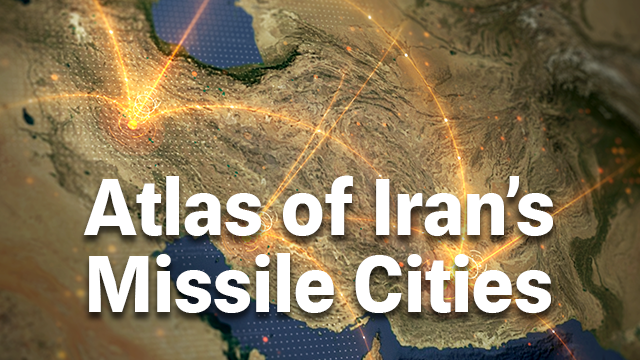
  • Atlas of Iran missile cities: The hidden network behind Tehran’s missile power
    SPECIAL REPORT

    Atlas of Iran missile cities: The hidden network behind Tehran’s missile power

  • Hope meets caution as Tehran weighs economic impact of US deal
    INSIGHT

    Hope meets caution as Tehran weighs economic impact of US deal

  • Toronto shooting probe uncovers trail leading to Tehran

    Toronto shooting probe uncovers trail leading to Tehran

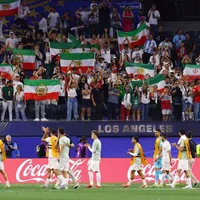
  • Can Iranians cheer Team Melli without cheering the state?
    INSIGHT

    Can Iranians cheer Team Melli without cheering the state?

•
•
•

More Stories

UKMTO says it received report of incident off Yemen's Aden

Jun 17, 2026, 18:17 GMT+1

The United Kingdom Maritime Trade Operations said on Wednesday it received a report of an incident 105 nautical miles northeast of Yemen's Aden, adding that the crew were safe.

“A vessel has been approached to within 4 meters and fired upon by 2 skiffs with an unknown number of armed persons on board,” UKMTO said.

“The vessel has deployed security team and returned fire. The suspect vessels have now disengaged,” it added.

Trump questions calls to bar Iran from having missiles

Jun 17, 2026, 18:07 GMT+1

US President Donald Trump said Iran should be allowed to retain some missiles and said the United States would work with Persian Gulf nations on non-nuclear issues, including ballistic missiles and Tehran's "terrorist proxies."

“We’ll be working on a parallel effort with the (Persian) Gulf nations to address non-nuclear issues, such as the conventional ballistic missiles,” Trump said.

“They have to have some, because other people have some. You gotta have some,” he added.

“There are people around me who say they shouldn’t even have one missile. I asked: what exactly do you suggest? That Saudi Arabia can have missiles and Iran cannot? It just doesn’t work that way,” Trump said.

“We’ll talk also about the terrorist proxies that they have... We don’t want that to happen,” Trump added.

Trump warns US could resume bombing if Iran breaches unwritten 'understanding'

Jun 17, 2026, 17:31 GMT+1

US President Donald Trump said some understandings with Iran were not included in the written memorandum of understanding and warned that the United States could resume bombing if Tehran failed to honor them.

“If they don’t honor the agreement, some things aren’t even mentioned in the agreement. It’s a memorandum of understanding, but we have an understanding of certain things without writing it, and if they don’t honor that, we’ll probably go back to bombing them,” Trump said in remarks at the close of the G7 summit in France.

“It’s amazing what bombs can do,” he added.

Trump says Iran deal likely to be signed 'shortly'

Jun 17, 2026, 17:28 GMT+1

US President Donald Trump said the US-Iran deal would likely be signed shortly, possibly on Friday, in his remarks at the close of the G7 summit in France.

"So, the deal we reached with Iran on Sunday will be signed shortly, tomorrow, maybe the next day," Trump told reporters.

Trump said he had sent a copy of the memorandum of understanding to Israel.

“We will most likely sign a deal,” Trump said.

Hope meets caution as Tehran weighs economic impact of US deal

Jun 17, 2026, 16:57 GMT+1
•
Behrouz Turani
Hope meets caution as Tehran weighs economic impact of US deal
100%
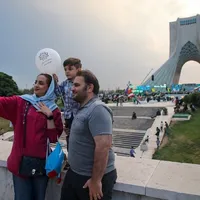
A family takes a selfie near Tehran’s Azadi Tower during a state-sponsored gathering in the capital, June 2026

Economists in Tehran remain divided over the economic implications of the US–Iran Memorandum of Understanding ahead of the scheduled signing on Friday.

State-controlled media initially struck an upbeat tone, highlighting the positive reaction in Iran’s foreign-exchange and gold markets. It also amplified reports about the repatriation of frozen assets and a $300 billion reconstruction package.

But the market rally was short-lived, and both stories about incoming cash were quickly dismissed as fake news and publicly refuted by Trump at the G7 summit in France.

Across Tehran’s media on Tuesday morning, coverage reflected a mix of cautious optimism and skepticism.

The debate is unfolding even as the memorandum itself remains unpublished and some of its key provisions unclear.

The agreement is expected to be formally signed on Friday, but it faces critics in both Tehran and Washington, where opponents have questioned everything from sanctions relief to the handling of Iran’s nuclear program.

The divide was especially clear in two interviews: one with economist Heydar Mostakhdemin-Hosseini in Jahan-e Sanat newspaper, and another with macroeconomist Hadi Haghshenas on the Khabar Online website.

Mostakhdemin-Hosseini’s core message was a warning: while a political breakthrough may calm market psychology and reduce short-term inflationary expectations, it will not resolve Iran’s entrenched structural problems, including chronic budget deficits, excessive money creation and a dysfunctional banking system.

He stressed that political calm can temporarily stabilize markets by reducing panic buying and war-related anxiety, but it cannot cure long-term inflation.

On the dangers of crisis financing, he said: “The greatest danger in wartime conditions is financing the costs of war through printing money… Almost all countries that experienced hyperinflation during periods of conflict repeated this exact mistake.”

He also warned that “capital flees from instability,” arguing that legal stability, respect for property rights, anti-corruption measures and reduced political risk must be top priorities.

“In times of economic crisis, the public’s psychological trust in the government’s economic stewardship is a far more powerful tool for market stabilization than physical gold or foreign currency reserves,” he added.

Offering a starkly different assessment, Haghshenas presented an optimistic outlook for Iran’s economy following what he described as a two-stage agreement with the United States.

He predicted that the post-war period could mirror the economic rebounds seen after the 1988 ceasefire with Iraq under UN Resolution 598 and the 2015 nuclear deal, potentially delivering single-digit inflation and double-digit growth.

He argued that a final deal could reduce inflation by stabilizing the foreign-exchange market and unlocking frozen assets to absorb excess liquidity.

Psychological relief and a decline in inflation would emerge during the current Iranian year ending in March 2027, he said, while more substantial macroeconomic gains, including double-digit growth, would likely materialize in the following year ending in March 2028.

“When blocked resources enter the economy, they will collect a portion of the existing liquidity,” he added. “Therefore, the potential agreement will lead to a reduction in the inflation rate from two directions.”

Whether that optimism proves justified remains uncertain. Even if a broader agreement is reached, many of the structural problems identified by Mostakhdemin-Hosseini—including fiscal imbalances, monetary expansion and weak investor confidence—would remain unresolved.