• العربية
  • فارسی
Brand
  • Iran Insight
  • Politics
  • Economy
  • Analysis
  • Special Report
  • Opinion
  • Podcast
  • Iran Insight
  • Politics
  • Economy
  • Analysis
  • Special Report
  • Opinion
  • Podcast
  • Theme
  • Language
    • العربية
    • فارسی
  • Iran Insight
  • Politics
  • Economy
  • Analysis
  • Special Report
  • Opinion
  • Podcast
All rights reserved for Volant Media UK Limited
volant media logo

Sirens sound in northern Israel after apparent rocket fire from Lebanon

Jun 8, 2026, 13:19 GMT+1

Warning sirens sounded in Kiryat Shmona and surrounding communities in northern Israel on Monday following suspected rocket fire from Lebanon, the Israeli military said, adding that it was investigating the incident.

The apparent launch came shortly after Lebanese media reported Israeli strikes in southern Lebanon and minutes after Iranian officials warned they would respond to any further Israeli military action in the country.

Most Viewed

Don’t feed us, free us: Iranians hit back at Vance over 'hunger' remarks
1
VOICES FROM IRAN

Don’t feed us, free us: Iranians hit back at Vance over 'hunger' remarks

2
EXCLUSIVE

IRGC personnel sheltered in Shiraz lodging complex were target of deadly strike

3
INSIGHT

President's economic reality check fuels Iran's US deal debate

4
EXCLUSIVE

Sources detail Ali Khamenei bunker with blast-resistant room

5

IAEA chief says inspectors will visit Iran enrichment sites under US-Iran MoU

Banner
Banner
Banner

Spotlight

  • Rival visions of Iran take to the streets during Ashura
    INSIGHT

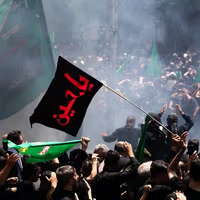
    Rival visions of Iran take to the streets during Ashura

  • Sources detail Ali Khamenei bunker with blast-resistant room
    EXCLUSIVE

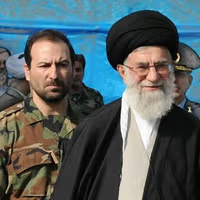
    Sources detail Ali Khamenei bunker with blast-resistant room

  • US sanctions waiver could bring Iran's oil trade out of the shadows
    ANALYSIS

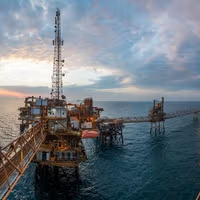
    US sanctions waiver could bring Iran's oil trade out of the shadows

  • Hardline revolt targets Ghalibaf over US agreement
    INSIGHT

    Hardline revolt targets Ghalibaf over US agreement

  • IRGC personnel sheltered in Shiraz lodging complex were target of deadly strike
    EXCLUSIVE

    IRGC personnel sheltered in Shiraz lodging complex were target of deadly strike

  • Don’t feed us, free us: Iranians hit back at Vance over 'hunger' remarks
    VOICES FROM IRAN

    Don’t feed us, free us: Iranians hit back at Vance over 'hunger' remarks

•
•
•

More Stories

EU sanctions IRGC Navy unit, two Iranians over Hormuz transit fees

Jun 8, 2026, 12:54 GMT+1

The European Union imposed sanctions on an Islamic Revolutionary Guards Corps Navy unit and two Iranian individuals on Monday, accusing them of supporting measures that restrict freedom of navigation through the Strait of Hormuz.

The Council of the European Union listed the Hormozgan Provincial Command of the already EU-sanctioned IRGC Navy, saying it helps administer a system requiring vessels transiting the strait to provide identifying, cargo and destination information that can be used to determine whether ships are allowed to pass.

The EU also sanctioned Mohammad Akbarzadeh, the IRGC Navy’s deputy commander for political affairs and spokesperson, and Hamid Hosseini, a representative of Iran’s Oil, Gas and Petrochemical Products Exporters’ Union and a member of Iran’s Chamber of Commerce.

Brussels said Akbarzadeh has supported policies that undermine freedom of navigation through threats against commercial vessels, while Hosseini has promoted the payment of transit fees to Iranian authorities for passage through the Strait of Hormuz.

Those listed face asset freezes and travel bans in the EU, and EU persons and entities are barred from making funds or economic resources available to them.

The EU said restrictive measures under the framework now apply to 26 individuals and 27 entities.

Iran abandoned neither battlefield nor negotiating table, Pezeshkian says

Jun 8, 2026, 12:50 GMT+1

President Masoud Pezeshkian said Iran has neither abandoned the battlefield nor the negotiating table.

“We will defend the nation’s rights with strength and will not retreat in the face of any threat,” Pezeshkian wrote on X.

Pezeshkian described diplomacy and defense as “the two wings of national power” and said Iran remained committed to both tracks.

Grossi says Iran-US deal needs IAEA oversight to be credible

Jun 8, 2026, 12:46 GMT+1

Any agreement between Iran and the United States would require independent verification by the International Atomic Energy Agency to be credible, IAEA chief Rafael Grossi told in response to a question by Iran International reporter on Monday.

Grossi said Tehran and Washington were free to reach any arrangement they chose, but argued that an agreement without effective monitoring and verification would provide no assurance that either side was complying with its commitments.

He also said that if previous UN Security Council restrictions on Iran were fully restored, the agency would be responsible for verifying compliance, adding that ongoing military conflict had limited Iran's cooperation with inspectors.

Iran says security forces dismantled four militant cells in southeast

Jun 8, 2026, 11:59 GMT+1

Iranian security forces dismantled four operational cells belonging to what authorities described as militant groups in the southeastern province of Sistan and Baluchestan, the semi-official Fars news agency reported on Monday.

Five militants were killed and 19 others arrested before they could carry out attacks, Fars reported, citing Iran's Intelligence Ministry. Authorities said weapons and military equipment were also seized during the operation.

Sistan and Baluchestan, which borders Pakistan and Afghanistan, has long been the scene of clashes between Iranian security forces and militant groups.

What Israel hit at Iran's Karoon Petrochemical and why it matters

Jun 8, 2026, 11:50 GMT+1
What Israel hit at Iran's Karoon Petrochemical and why it matters
100%
A view of the Karun petrochemical plant in southern Iran at night

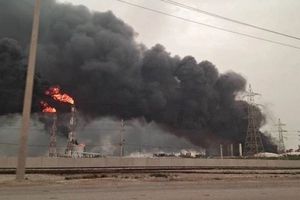
A strike on the Karoon Petrochemical complex in southwestern Iran on Monday put the spotlight on a key industrial facility with roles in both civilian production and sectors tied by Israel and Western governments to Iran's military capabilities.

Officials in Khuzestan province said the facility was hit during Israeli attacks, with reports indicating damage to chlorine-related units and storage facilities. Any prolonged disruption could affect both domestic supply chains and exports from one of Iran's most important petrochemical hubs.

Karoon is located in Mahshahr, home to a concentration of petrochemical facilities that form a major pillar of Iran's non-oil economy.

Links to the IRGC

Karoon is owned by Persian Gulf Petrochemical Industries Company (PGPIC), Iran's largest petrochemical holding group.

The United States sanctioned PGPIC and dozens of affiliated companies in 2019, saying the group generated billions of dollars that helped finance the Islamic Revolutionary Guards Corps and its construction arm, Khatam al-Anbiya.

According to the US Treasury, PGPIC subsidiaries worked with Khatam al-Anbiya through engineering, construction and financing contracts worth hundreds of millions of dollars. Washington said revenue from the petrochemical sector provided an important source of funding for the IRGC's military activities.

The Guards have long maintained a significant presence in Iran's energy and industrial sectors through a network of companies, contractors and affiliated organizations that oversee major infrastructure projects and benefit from export revenues.

Role in missile-related industries

Petrochemical facilities are primarily civilian enterprises, but some of their products can have military applications.

Chemical compounds produced in Mahshahr and other petrochemical centers such as Assaluyeh can be used as precursor materials in the production of propellants and other components associated with missile programs.

During previous operations targeting industrial facilities in the Mahshahr area, Israel said sites in the region were involved in producing materials used by Iran's missile program.

Israeli military officials said on Monday that one of their objectives was to destroy infrastructure used to manufacture raw materials essential for ballistic missile production.

The dual-use nature of petrochemical production means facilities can simultaneously support civilian industries while supplying materials that may have military applications.

Critical supplier for domestic industry

Despite scrutiny over military links, Karoon remains one of the most important suppliers to Iran's civilian manufacturing sector.

The company is the region's only producer of isocyanates, advanced chemical compounds used in the production of polyurethane materials.

These products serve as the foundation for a wide range of industrial and consumer goods, including insulation, adhesives, coatings, automotive components, footwear, furniture and household appliances.

Karoon receives feedstock such as benzene and toluene from neighboring petrochemical plants and combines them with chlorine, carbon monoxide and hydrogen to produce isocyanates and related products.

The facility's strategic importance increased after the implementation of the HYCO (Hydrogen and Carbon Monoxide) project, which enabled domestic production of carbon monoxide and hydrogen and reduced dependence on imported supplies.

Impact on supply chains and exports

Industry experts say damage to chlorine production units could have consequences beyond the immediate facility.

Chlorine is essential for the production of phosgene, a key intermediate chemical used in manufacturing isocyanates. Any interruption to chlorine supplies can halt downstream production, affecting multiple industries dependent on polyurethane products.

  • Strikes on petrochemical hubs leave Iran short of plastics

    Strikes on petrochemical hubs leave Iran short of plastics

The effects could extend throughout the Mahshahr industrial zone, disrupting manufacturers that rely on Karoon's output.

Karoon also serves export markets. The company ships products including aniline to India and sells other chemical products to customers in Turkey, Russia and neighboring countries.

Those exports have helped Iran maintain a regional presence in specialty chemical markets while generating valuable foreign currency earnings.

A strategic target

The strike illustrates how Iran's petrochemical sector occupies a position at the intersection of economic and security concerns.

For Tehran, facilities such as Karoon support industrial self-sufficiency, exports and employment. For Israel and Western governments, parts of the sector are viewed as supporting broader military and missile-related capabilities through financial links to the IRGC and the production of dual-use materials.

As a result, major petrochemical complexes have become increasingly significant targets in a confrontation that extends well beyond the battlefield and into the infrastructure underpinning Iran's economy and defense industries.