Trump says US to 'go in with Iran' to recover uranium stock, bring it to US


The United States will work with Tehran to recover its enriched uranium and bring it back to the United States, President Donald Trump told Reuters on Friday.
"We're going to get it together. We're going to go in with Iran, at a nice leisurely pace, and go down and start excavating with big machinery... We'll bring it back to the United States," Trump said in a phone interview.
The US president said the nuclear "dust" would be retrieved "very soon."



"President Trump is directly talking to the Iranians. He is negotiating himself," Republican Senator Lindsey Graham told Fox News.
"He was on the phone with the Iranians a couple of days ago, and it got rather sporty to the point that President Trump loudly told Iran what would happen if they keep playing games. He actually lost his voice," Graham, an ally of Trump, said.
"I'd hate to be the Iranian on the receiving end of that. So President Trump is now directly involved in the negotiations."
Iran considers the continuation of a US naval blockade as a violation of the ceasefire and would close the Strait of Hormuz again if the blockade is not lifted, the IRGC-affiliated Fars News reported citing an informed source close to the Supreme National Security Council.
The source said Iran had initially agreed, as part of a Pakistan-mediated ceasefire plan, to allow a limited number of vessels to transit the Strait of Hormuz daily but suspended the arrangement after the ceasefire was not implemented in Lebanon and was not extended to Hezbollah and Israel.
According to the source, Iran has now reopened the Strait following the ceasefire in Lebanon, subject to three conditions:
"Ships must be commercial. The passage of military vessels is prohibited, and neither the ships nor their cargo may be linked to hostile countries. Vessels must pass through routes designated by Iran, and transit must be coordinated with Iranian forces responsible for managing passage."
"The US will get all nuclear ‘dust’ created by our great B-2 bombers," US President Donald Trump said in a post on Truth Social, referring to Iran's 400 kg of highly enriched uranium stockpile.
"No money will exchange hands in any way, shape, or form," he added, hours after a report by Axios said the US and Iran are negotiating a three-page plan to end the war, including a proposal for Washington to release $20 billion in frozen Iranian funds in exchange for Tehran giving up its stockpile.
Trump also denied that a deal with Iran would be linked to Lebanon, but said "the US will, separately, work with Lebanon and deal with the Hezbollah situation in an appropriate manner. Israel will not be bombing Lebanon any longer."
"They are PROHIBITED from doing so by the USA. Enough is enough!!!"
Iran’s foreign minister said passage through the Strait of Hormuz is fully open for commercial vessels for the duration of a ceasefire linked to Lebanon, in remarks on Friday.
Abbas Araghchi said shipping will follow routes coordinated by Iran’s Ports and Maritime Organisation.
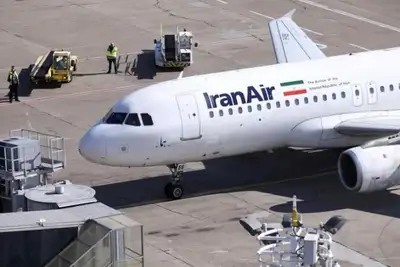
Pakistan deployed fighter jets to escort an Iranian delegation home from talks with the United States after concerns were raised they could be targeted during their return, sources told Reuters.
The move came after Iranian officials discussed the possibility of an Israeli strike following last weekend’s inconclusive talks in Islamabad, according to three sources familiar with the matter.
About 20 aircraft, including fighter jets and an airborne warning system, were involved in the operation to сопровide cover for the delegation, two Pakistani sources said.
A regional diplomat said the threat was described as a possibility rather than an imminent risk, but Pakistan moved ahead with the escort as a precaution.
“When the talks failed, the Iranians were wary that things had not gone right,” a security source said. “It was their suspicion that they might be targeted.”
The delegation, which included senior Iranian officials, was escorted beyond Pakistani airspace, one source said, adding that similar measures could be used for future rounds of talks.
The episode underscores the tensions surrounding the negotiations, even as both sides signal willingness to continue dialogue.