• العربية
  • فارسی
Brand
  • Iran Insight
  • Politics
  • Economy
  • Analysis
  • Special Report
  • Opinion
  • Podcast
  • Iran Insight
  • Politics
  • Economy
  • Analysis
  • Special Report
  • Opinion
  • Podcast
  • Theme
  • Language
    • العربية
    • فارسی
  • Iran Insight
  • Politics
  • Economy
  • Analysis
  • Special Report
  • Opinion
  • Podcast
All rights reserved for Volant Media UK Limited
volant media logo

Iran ships 9 million barrels of crude oil since US blockade

Apr 16, 2026, 15:13 GMT+1

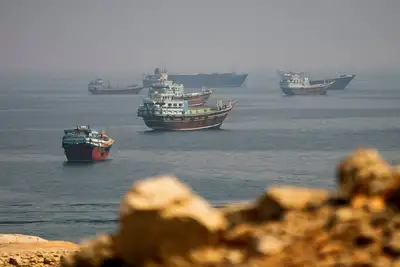
Iran has shipped about 9 million barrels of crude oil from floating storage in the Gulf of Oman since the US blockade took effect on April 13, Tanker Trackers said on Thursday.

An additional 2 million barrels departed on April 12, a day before the blockade began, the maritime analytics firm added.

Most Viewed

100 days after carnage: Iran economy reels from war, inflation, unemployment
1
INSIGHT

100 days after carnage: Iran economy reels from war, inflation, unemployment

2
OPINION

The Hormuz get out of jail card turned to a grave

3

State media slam Araghchi's Hormuz tweet, say it let Trump claim victory

4
PODCAST

Too early to tell who is winning Iran war, experts say

5

IRGC fires at Indian vessel in Hormuz

Banner
Banner

Spotlight

  • A nation in limbo: 100 days after the massacre, has the world moved on?
    INSIGHT

    A nation in limbo: 100 days after the massacre, has the world moved on?

  • 100 days after carnage: Iran economy reels from war, inflation, unemployment
    INSIGHT

    100 days after carnage: Iran economy reels from war, inflation, unemployment

  • The Hormuz get out of jail card turned to a grave
    OPINION

    The Hormuz get out of jail card turned to a grave

  • How Tehran bends its own red lines to boost state rallies
    INSIGHT

    How Tehran bends its own red lines to boost state rallies

  • Iran blackout cripples freelancer, small business incomes
    VOICES FROM IRAN

    Iran blackout cripples freelancer, small business incomes

•
•
•

More Stories

Iran, US shift to interim deal as nuclear gaps persist - Reuters

Apr 16, 2026, 14:09 GMT+1

Iran and the US have shifted focus to a temporary deal to prevent a return to conflict as major disagreements over Tehran’s nuclear programme persist, Iranian sources told Reuters.

The move follows inconclusive talks in Islamabad last weekend, with disputes remaining over the fate of Iran’s highly enriched uranium and how long it should curb nuclear work.

A senior Iranian official said some progress had been made, including on managing the Strait of Hormuz, but core issues remain unresolved.

The sources said Iran is seeking a memorandum that would include the unfreezing of funds in exchange for allowing more ships through the strait.

They added that under proposals discussed, ships could pass through parts of the waterway with reduced risk if a broader deal is reached.

Germany to offer demining, surveillance support for Hormuz mission - report

Apr 16, 2026, 14:01 GMT+1

Germany is prepared to support a potential mission to secure the Strait of Hormuz by providing demining and maritime surveillance capabilities, the Sueddeutsche Zeitung newspaper reported on Thursday.

Chancellor Friedrich Merz is expected to present the proposal at a meeting in Paris on Friday with counterparts from France, Britain and Italy, the report said.

The initiative comes as European countries explore options to help safeguard shipping in the strategic waterway amid heightened tensions.

Iran leaders frustrated over failed Hormuz revenue plan

Apr 16, 2026, 13:58 GMT+1

Senior Iranian officials have grown frustrated with a plan to generate revenue from shipping in the Strait of Hormuz, with little money collected despite expectations of significant income, sources familiar with the matter told Iran International.

Iran moved early in the war to control traffic through the strait and charge tankers about $2 million for transit permits, setting up a committee led by Mohammad-Bagher Zolghadr, secretary of the Supreme National Security Council.

But the effort has produced limited results, with only about 60 permits issued, payment requests sent for just eight shipments and no funds collected so far, the sources said, citing weak management of the process.

The outcome has triggered concern at high levels of government and within the office of Iran’s supreme leader, they added.

Discussions have taken place about removing Zolghadr from the role and shifting oversight of the file to President Masoud Pezeshkian, according to the sources.

Iran highly motivated to maintain ceasefire, Hegseth says

Apr 16, 2026, 13:37 GMT+1

US Defense Secretary Pete Hegseth said on Thursday that Iran’s ability to coordinate under the ceasefire is weakened, but its incentive to maintain the truce remains high.

“Their command and control capabilities are highly degraded, so their ability to organize is the worst it’s ever been,” Hegseth said at a Pentagon briefing.

However, he said Iran was likely to stick to the ceasefire to avoid renewed military action.

“Their motivation to want to stay in the ceasefire is very high, because they understand that a violation means a commencement once again of Admiral Cooper’s forces,” he said.

Hegseth added that US operations had previously inflicted significant damage.

“That went very poorly for them,” he said.

On the Houthis, Hegseth said the group has so far stayed out of the conflict.

“Thus far, they have stayed out of it, which we think is a good decision by them,” he said.

US CENTCOM chief highlights operations against Iran, says forces remain ready

Apr 16, 2026, 13:33 GMT+1

The head of US Central Command Admiral Brad Cooper highlighted US military operations against Iran and said forces across the region remain ready during the current ceasefire.

Cooper said he had recently visited troops deployed across around 70 locations in the Middle East during both active operations and the ceasefire period.

He pointed to actions including strikes on Iranian missile launchers before they were fired and attacks on military targets in and around Tehran.

Cooper also said US forces intercepted Iranian ballistic missiles and carried out drone operations, while using artificial intelligence to process battlefield data and support decision-making.

He said US troops were working alongside regional partners to maintain what he described as a broad air defense network across the region, including in the Persian Gulf.

Cooper added that military partnerships with allies had strengthened after joint operations and that forces were now rearming and adjusting tactics while maintaining a high level of readiness.