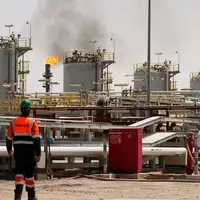
Iranian hospital staff vacate housing in Dubai after UAE order


Staff of an Iranian hospital in Dubai have vacated accommodation linked to the facility after an order by authorities in the United Arab Emirates, Iran International has learned.
Residents were initially given one month to leave, but the deadline was cut to one week after the hospital was shut. Doctors, nurses and other staff living in the housing began leaving on Tuesday, and the evacuation was completed on Wednesday.
The visas of some employees whose residency was tied to the hospital were canceled. Those affected have had to return to Iran through third countries, including Afghanistan.
Earlier, housing linked to Iranian schools in Dubai was also vacated after those schools were shut, and staff returned to Iran.




A missile fired from Iran struck Lebanon’s coast hours after Beirut expelled Tehran’s ambassador, sources told Iran International, contradicting earlier reports that it had been intercepted.
The projectile was not intercepted in Lebanese airspace and instead landed on the coast, according to Iran International sources, disputing earlier reporting by Reuters.
The strike came shortly after Lebanon declared Iran’s ambassador to Beirut, Mohammad Reza Raouf Sheibani, persona non grata and ordered his expulsion.
Lebanese Foreign Minister Youssef Raggi said on X that the decision had been formally communicated and that the envoy must leave the country by March 29.
Lebanon also recalled its ambassador from Tehran for consultations, accusing Iran of violating diplomatic norms and established protocols between the two countries.
Israel’s military said that, based on its assessments, a ballistic missile launched from Iran fell in Beirut around the same time as missile attacks targeting Israel. In a statement, the army said the projectile was fired by the “Iranian regime” and landed inside Lebanon.
Diplomats from several Persian Gulf states told Iran International on Tuesday that Tehran was acting like a “runaway horse,” warning that attacking another Arab country crossed a new red line and would not be tolerated.
According to Iran International sources, since the start of the current conflict following US and Israeli strikes in early March, Iran has targeted at least 12 countries in the region. Lebanon is now the 13th.
Reactions to Lebanon’s move were swift. Israel’s President Isaac Herzog called the expulsion a “very courageous decision,” according to Israeli media. Foreign Minister Gideon Sa'ar welcomed the move, describing it as “justified and necessary” in response to Iran’s actions in Lebanon, including its backing of Hezbollah.
Israeli Defense Minister Israel Katz said Israel would continue its attacks against Iranian positions “with full force.”
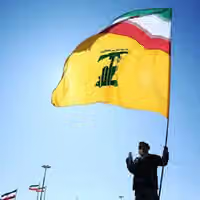
Hezbollah condemned the decision, warning it could undermine national unity and deepen internal divisions.
Meanwhile, Bloomberg reported on Tuesday that Saudi Arabia and United Arab Emirates are growing increasingly impatient after attacks on energy infrastructure and airports, and could join US- and Israeli-led strikes if Iran targets critical facilities.
Several safe houses in Tehran were targeted in attacks early on Monday, according to reports received by Iran International, as security deployments intensified across the country.
The strikes hit locations in multiple parts of the capital, including Aghdasieh, Majidiyeh and Chizar. It was not immediately clear who had been staying at the sites at the time of the attacks.
The strikes came as eyewitness accounts described a growing security presence nationwide from late Sunday into early Monday, with Basij patrols and checkpoints reported in several cities.
In Tehran, security forces were seen stationed in Park-e Shahed, while witnesses reported the movement of vehicles marked as “Basij Patrol,” contributing to a heavy security atmosphere.
Checkpoints were also reported at the entrances to the industrial town of Arak and across the northern city of Rudsar, while in Sari, witnesses said IRGC forces and equipment had been repositioned within the city.
The commander of US Central Command said Iran has increasingly targeted civilian sites across the Middle East out of "desperation" as its military capabilities deteriorate in the third week of the war.
"They're operating in a sign of desperation... In the last couple of weeks, they've attacked civilian targets very deliberately, more than 300 times," Adm. Brad Cooper said in an interview with Iran International.
Cooper also said Iran’s strain has reduced the volume of its attacks.
“At the beginning of the conflict, you saw large volumes in the dozens of drones and missiles. You no longer see that. It’s all one or two at a time,” Cooper said this in his first interview since the start of the war between Iran and the United States on Feb. 28.
Iranian officials have vowed to sustain a prolonged conflict and deny that their military capabilities are fading.
In one of its most severe attack on Israel to date, Iran targeted the Israeli towns of Arad and Dimona on Saturday, leaving dozens of people injured, according to Israeli authorities.
'Hormuz is physically open'
US and allied forces are working to secure shipping lanes in the Strait of Hormuz—through which about a fifth of the world’s oil passes—by weakening Iran’s naval capabilities, Cooper said.
He added that coalition operations have sunk or severely damaged about 140 vessels since the start of the campaign.
“The Strait of Hormuz is physically open to transit,” he said. “The reason ships are not transiting right now is because the Islamic Republic is shooting at them with drones and missiles.”
President Donald Trump warned on Saturday that the United States could strike Iran’s power plants within 48 hours if Tehran does not fully open the waterway.
Iranian officials have warned such a move would trigger retaliation against energy and water systems across the region.
'Ahead or on plan'
Cooper blamed Tehran for the continued conflict, saying it was putting the lives of civilians at risk.
“They could stop this war right now, absolutely, if they chose to do so,” he said, "They need to stop putting the wonderful Iranian people at risk by firing missiles and drones from inside populated areas... They need to stop immediately attacking civilians throughout the Middle East region."
US and Israeli forces launched strikes on Iran as the two sides failed to reach an agreement over the Tehran’s nuclear program.
Cooper said the military campaign was progressing faster than expected. US forces were “ahead or on plan” in efforts to dismantle Iran’s military assets used to project power beyond its borders.
"We're also going after the manufacturing," he said. "So it's not just about the threat today. We're eliminating the threat of the future, both in terms of the drones, the missiles, as well as the navy."
He added that it would be up to Trump to decide how and when the war ends.
The United States and its allies in the region have established “the largest umbrella of air defense in the Middle East history,” Cooper said, adding that there is now “a very thick defensive umbrella” over countries across the region.
He also pointed out that Israel has played an important role in countering Iranian threats against neighboring countries: "Israel is attacking drones and ballistic missiles that are aimed at Arab countries, attacking and defeating them."
Commanders in safe bunkers
Cooper said there was a sharp contrast between Islamic Republic officials, who remained in safe bunkers, and the soldiers who bore the brunt of the war.
"I'd like everyone to note is I've watched this over the last week, this extraordinary contrast between the comfort and protection that you're seeing with the senior generals in the Islamic Republic, at least those that are still alive, who are up in deep bunkers and facilities in and around Tehran. And contrast that with the soldiers who are down on the ground who are unprotected. The generals are protected. The soldiers are not protected."
Cooper warned Iranian civilians to exercise caution, saying the government did not care about their safety.
"They're launching missiles and drones from populated areas and you need to stay inside for right now," he said. "There will be a clear signal at some point, as the President has indicated, for you to be able to come out."
Revolutionary Guard Aerospace Force commander Majid Mousavi has come under criticism from senior IRGC officials for being absent during ongoing clashes and leaving his forces without leadership, sources with knowledge of the matter told Iran International.
The main criticism, according to the sources speaking to Iran International on condition of anonymity, centers on the commander’s lack of presence on the ground at a time when operational pressure has significantly intensified since the start of the war in late February.
Sources say that as casualties have mounted within the Aerospace Force—responsible for missile and drone launches—Mousavi’s absence has been cited as a key factor contributing to the deteriorating situation.
Aerospace Force operators have described the operational conditions as highly dangerous, with each missile launch mission carrying extreme risk and, in some cases, likened to near-suicidal operations, according to the informed sources.
At the same time, sources say families of some personnel have filed complaints with senior IRGC authorities, saying that the commander did not maintain an effective presence under dangerous conditions and that forces were effectively left without adequate support.

Revolutionary Guard Aerospace Force commander Majid Mousavi has come under criticism from senior IRGC officials for being absent during ongoing clashes and leaving his forces without leadership, sources with knowledge of the matter told Iran International.
The main criticism, according to the sources speaking to Iran International on condition of anonymity, centers on the commander’s lack of presence on the ground at a time when operational pressure has significantly intensified since the start of the war in late February.
Sources say that as casualties have mounted within the Aerospace Force—responsible for missile and drone launches—Mousavi’s absence has been cited as a key factor contributing to the deteriorating situation.
Aerospace Force operators have described the operational conditions as highly dangerous, with each missile launch mission carrying extreme risk and, in some cases, likened to near-suicidal operations, according to the informed sources.
At the same time, sources say families of some personnel have filed complaints with senior IRGC authorities, saying that the commander did not maintain an effective presence under dangerous conditions and that forces were effectively left without adequate support.
Additional allegations have also surfaced, including claims of mismanagement and the provision of inaccurate data regarding missile strikes and launch figures by the force.
Seyyed Hossein Mousavi Eftekhari, known as Majid Mousavi, is a brigadier general in the IRGC. He was appointed commander of the Aerospace Force on June 13, 2025, following the killing of his predecessor, Amir-Ali Hajizadeh, in an Israeli strike.
Prior to his appointment, Mousavi served from 2009 to 2025 as deputy commander of the Aerospace Force, where he played a key role in the development and management of Iran’s missile and drone programs.
The IRGC Aerospace Force is considered one of the Islamic Republic’s most important military branches, overseeing the country’s ballistic missile program, offensive drone capabilities, and parts of its air defense systems.
Mousavi is under US sanctions. On December 18, 2024, the US State Department announced sanctions against him over his role in the development of Iran’s ballistic missile and drone programs.
His appointment came at a time when the Aerospace Force was already under intense operational and security pressure. The force continues to play the most important role in the ongoing conflict.