The main criticism, according to the sources speaking to Iran International on condition of anonymity, centers on the commander’s lack of presence on the ground at a time when operational pressure has significantly intensified since the start of the war in late February.
Sources say that as casualties have mounted within the Aerospace Force—responsible for missile and drone launches—Mousavi’s absence has been cited as a key factor contributing to the deteriorating situation.
Aerospace Force operators have described the operational conditions as highly dangerous, with each missile launch mission carrying extreme risk and, in some cases, likened to near-suicidal operations, according to the informed sources.
At the same time, sources say families of some personnel have filed complaints with senior IRGC authorities, saying that the commander did not maintain an effective presence under dangerous conditions and that forces were effectively left without adequate support.
Additional allegations have also surfaced, including claims of mismanagement and the provision of inaccurate data regarding missile strikes and launch figures by the force.
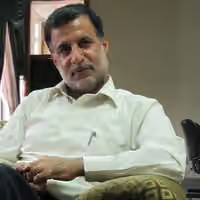
Seyyed Hossein Mousavi Eftekhari, known as Majid Mousavi, is a brigadier general in the IRGC. He was appointed commander of the Aerospace Force on June 13, 2025, following the killing of his predecessor, Amir-Ali Hajizadeh, in an Israeli strike.
Prior to his appointment, Mousavi served from 2009 to 2025 as deputy commander of the Aerospace Force, where he played a key role in the development and management of Iran’s missile and drone programs.
The IRGC Aerospace Force is considered one of the Islamic Republic’s most important military branches, overseeing the country’s ballistic missile program, offensive drone capabilities, and parts of its air defense systems.
Mousavi is under US sanctions. On December 18, 2024, the US State Department announced sanctions against him over his role in the development of Iran’s ballistic missile and drone programs.
His appointment came at a time when the Aerospace Force was already under intense operational and security pressure. The force continues to play the most important role in the ongoing conflict.